There is a small coincidence buried in Google's Genie 4 announcement that makes this comparison more confusing than it needs to be: one of the robotics demonstrations paired Genie 4 with Gemini 4 Argon to run a multi-step simulation of an Apptronik Apollo humanoid playing checkers. That Apollo is a robot. The Apollo World in this article is Baidu's driving world model, disclosed on 3 November 2026 at Baidu AI Day in Shenzhen. Genie 4 is Google DeepMind's general-purpose interactive world model, announced on 27 October 2026. The two share a launch window and a category label, and almost nothing else.
The real comparison is breadth against depth. Genie 4 will generate almost any scene you can describe, with sound, and let you steer it live. Apollo World will generate one kind of scene — a road network with traffic — and insists that the camera and LiDAR agree with each other while a safety decision lands inside 33 milliseconds. Google is building an imagination engine. Baidu is building an examiner. If you are choosing between them, the first question is which of those you actually need, and the second is whether either company will let you have it.
What Genie 4 shipped, and what it did not
Genie 4 is a real-time, interactive world model. You describe a scene, it generates an explorable environment, and you steer it with text prompts and ordinary keyboard controls for movement and camera. Its headline addition is native audio: ambient sound, music-like audio and interactive character dialogue generated alongside the visuals, which Google describes as a first for a real-time world model. The company also says the model handles realistic physics and human movement better than its predecessor.
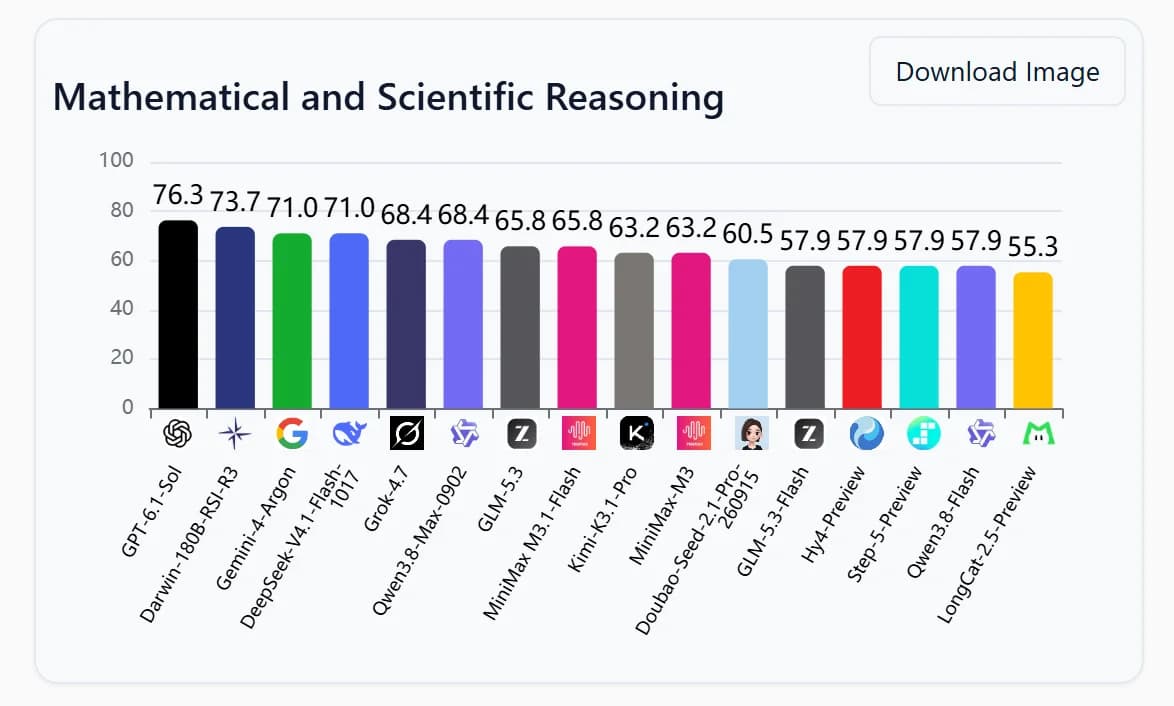
The Gemini integration is the part that matters architecturally. Gemini Omni grounds the simulation in realistic appearance and behaviour; other Gemini models supply reasoning for coherence and continuity; and Gemini 3.8 Flash acts as a guiding agent that observes the scene, plans steps and checks progress. That last role is effectively an in-loop verifier — a language model watching the world model to keep it on task. Google also tested Gemini 4 Argon with Genie 4 on multi-step robotics simulations, including that Apptronik Apollo checkers demo.
What Google did not publish is a long list: no resolution, no frame rate, no model size, no price, and no scene-consistency duration. The blog says coherence holds over brief sessions and that visual details and object permanence can drift during longer runs, after complex edits, or while navigating. It lists complex physical interactions, audio accuracy, legible in-world text, spatial accuracy and long-term consistency as open research problems. Every output carries a SynthID watermark.
Access is a research preview for trusted testers. Google plans to expand to AI Ultra subscribers through Project Genie, which has a waitlist, and to early-access partners through the Gemini API and Google AI Studio. No date and no pricing for either.
What Apollo World shipped
Apollo World is narrower by design. Baidu's model generates synchronised camera imagery and LiDAR point clouds, with weather and lighting changes propagating across both modalities. Every traffic participant is an AI agent with a decision policy rather than a scripted prop. It runs complete trips between arbitrary origins and destinations — pickup, drive, drop-off — with the environment reacting to the ego vehicle. Baidu says the system is already used for global testing and validation of Apollo Go, its robotaxi service, and claims 100,000 simulated kilometres per day, roughly three years of safety-driver testing on Baidu's arithmetic.
The constraint that separates it from a general model is latency. Baidu says safety-relevant decisions need to land within about one-thirtieth of a second, and its "2+3" evaluation rubric makes real-time performance an advanced requirement rather than a nice-to-have. Causality and interactivity are the baseline: time runs one way, the next state is predicted from the current one, and the scene responds to injected actions. Physical accuracy, persistence and low latency are the advanced attributes. None of that is a claim about visual beauty.
Like Genie 4, Apollo World has no public access, no price, no weights and no independent benchmark. Baidu has published no parameter count or architecture description. The difference is that Genie 4 has a stated path to access — waitlist, Ultra subscription, partner API — while Apollo World has no announced path at all.
The scoreboard
• Scope — Apollo World covers one domain, road traffic, in depth vs Genie 4 covers any scene a prompt can describe.
• Sensor fidelity — Apollo World generates camera and LiDAR together, physically consistent vs Genie 4 generates RGB video plus audio, with no depth, range or LiDAR channel.
• Evaluation target — Apollo World is judged on causal fidelity, interactivity and latency vs Genie 4 is judged on visual realism, steerability and audio coherence.
• Driving validity — Apollo World runs closed-loop trips with agent traffic vs Genie 4 has no lane, signal or right-of-way model and is not positioned as a driving validator.
• Published limits — Apollo World says it cannot fully simulate reality and must be combined with real-road data vs Genie 4 lists object permanence, physics, audio accuracy, legible text and long-horizon consistency as open problems.
• Access — Apollo World internal to Baidu vs Genie 4 trusted testers now, with a stated path to Ultra
Why audio is not a small feature
It is tempting to treat Genie 4's native audio as a consumer gimmick next to Baidu's LiDAR. That reading misses what audio implies about the underlying model. Generating sound that stays synchronised with a scene requires the model to represent events, not just pixels: a door slamming has to happen at the right moment and from the right direction, and dialogue has to be attributable to a character. Event-level representation is the same property that lets a driving simulator know a car braked rather than merely render brake lights.
It also exposes the gap. Audio is a second modality, and Google treats its accuracy as an open problem. Apollo World's second modality is LiDAR, where accuracy is measurable in metres and centimetres rather than in perceptual plausibility. The two companies have made different bets about which second modality buys the most capability per unit of risk. For entertainment and general robotics, sound is a large win. For a safety case, range data is non-negotiable.
Both models are generative, and both can lose the world over time. Google is explicit that Genie 4's object permanence and visual detail drift during longer runs. Baidu's rubric includes persistence as an advanced attribute precisely because drift is the default failure mode of autoregressive world models: errors compound, and a coherent ten-second clip becomes an incoherent two-minute one.
For a game or a creative tool, drift is an annoyance that a user can steer around. For a driving test, drift is a validity failure. If a building moves, a lane disappears or a previously seen pedestrian vanishes after ninety seconds, the episode cannot be used as evidence about the planner. Neither vendor publishes a measured drift curve — the time-to-failure distribution that would tell a buyer how long a scenario stays trustworthy. That is the single most important missing number in both launches.
If you want to use either one
For most teams the answer today is that you cannot. Genie 4 is a trusted-tester preview with a waitlist and a planned API; Apollo World is internal Baidu infrastructure. Neither is in the OrcaRouter catalogue, and we do not host either model.
There is one practical route worth naming, because it is the part of Google's stack that is actually callable. Gemini 3.8 Flash is the model Google uses as Genie 4's in-loop guiding agent — it observes the simulated scene, plans the next steps and checks progress. That model is hosted on OrcaRouter, so a team prototyping an agent that watches generated video and decides what to do next can build against the same model Google describes, through one key, at 0% markup on provider list price, with automatic failover if a provider throttles. It will not give you Genie 4. It will let you build the control layer around a world model you do have.
For everything else, the honest advice is to watch the access announcements rather than the demos. A world model you cannot call is a research result, not a tool.
The verdict
Genie 4 is the more capable general system and the more likely one to reach a broad audience, because Google has a distribution path and a consumer product to attach it to. Apollo World is the more credible driving validator, because it is constrained to a domain where the failure modes are measurable and because it is already running inside a robotaxi fleet with real mileage behind it.
The mistake would be to treat Genie 4's breadth as evidence that it can do Apollo World's job. A general world model that renders a street beautifully, with convincing engine noise and a talking pedestrian, still has no idea what the right-of-way is. And a driving examiner that cannot generate a kitchen is not failing at anything — it was never asked to. Pick the test you need to pass, then look for the model that was built for it.