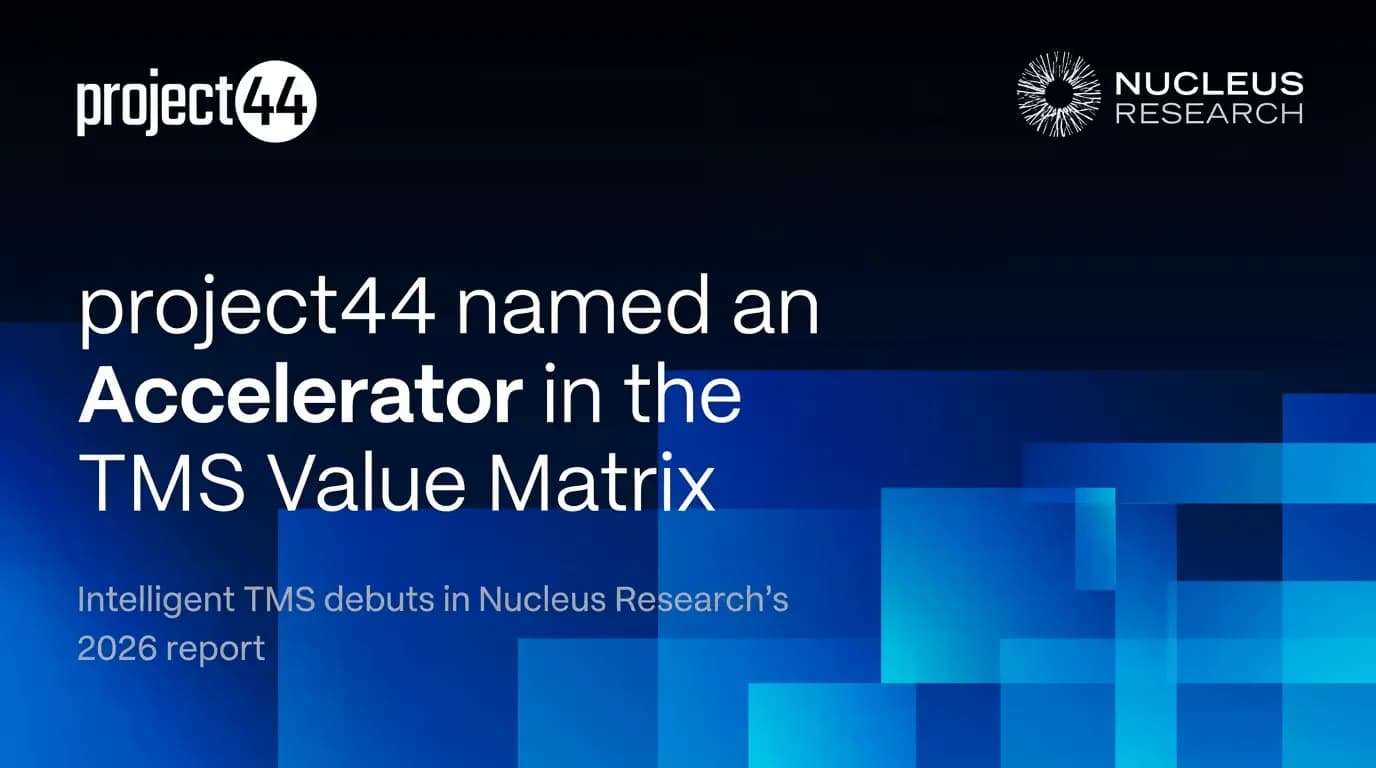
In October, project44’s Intelligent TMS (iTMS) was named an Accelerator in the 2026 Nucleus Research Transportation Management System (TMS) Technology Value Matrix. Given that Nucleus defines an “Accelerator” as a TMS solution that is quick to deploy and easy to use, it rings as a strong endorsement for the continued development and focus project44 has placed on expanding its TMS capabilities.
We especially take pride in being called easy to use. While “ease of use” is typically nothing more than a footnote in most TMS evaluations, we’ve found that the greatest indicator of success for a TMS is if your team actually uses it!
Why usability matters in a TMS evaluation
Nucleus’ Value Matrix places vendors on two equal axes: functionality and usability. Its methodology guide explains that these two factors indicate whether a solution will deliver ROI tomorrow and in five years’ time.
This is especially important because a functional TMS is more than just a feature checklist. While most buyers are used to evaluating TMS platforms by this metric, a long feature list doesn’t really matter if the team doesn’t know how to or is willing to leverage those same features on a day-to-day basis. Proper evaluation requires not only that you have the right tools, but that you also have a clear pathway to use them effectively.
When buyers over-index on functionality, issues often surface quickly after go-live. Bad UIs lead to slower learning paths and inconsistent adoption. Incomplete or unclear functional levers create confusion and delays in planning. Some managers will speak up right away. Others will silently revert back to the spreadsheets and phone calls the TMS was meant to replace. In either case, it delays ROI and hinders the full value of the TMS from being realized.
What the Accelerator placement means
With all that said, “usability” is almost impossible to gauge from a demo. That’s why, for Nucleus’ evaluation, it interviewed real users and ranked us accordingly, scoring our platform based on how intuitive our application is and the effect that intuitiveness had on productivity.
The end result? We actually achieved a top-two ranking in usability score against all vendors evaluated.
This is important for a few reasons:
- It is a very vocal endorsement by our customers as to the value and adoption our platform engenders amongst their teams
- It marks the unique value that project44’s Intelligent TMS brings to market compared to other vendors
Beyond this, Nucleus’ Accelerators are also noted for rapid deployment of their solutions. Compared to traditional systems, which typically take 12-to-18 months to deploy, project44’s Intelligent TMS goes live in just 3-to-6 months. Then, once live, our combined functionality and usability lead to immediate, substantial gains, including:
- 60% reduction in check calls
- 70% reduction in manual effort thanks to automation and AI agents
- Up to 4% reduction in freight costs through data-driven carrier selection and targeted mini-bids
How a TMS delivers sustained value
As discussed, Nucleus’ Accelerators are easy-to-use, have high functionality, and are quick to implement, all leading to faster, higher ROI over time. Even compared to other Accelerators, though, project44’s Intelligent TMS adds depth and sustained value via contextual intelligence. In other words, shippers get quick wins that validate investment early, along with the data foundation to ensure they continue to deliver value year-over-year.
That foundation piece is key. Functionality represents what a TMS can do today. But a strong data foundation is what enables future AI use cases. While a roadmap can indicate where a product is headed, it is based on the assumption that the data underneath it will be able to perform well when conditions change. It’s not simply the ability to act autonomously or automate at-scale, but ensuring consistency and reliability that can translate and adapt to tomorrow’s transportation challenges with ease.
To that end, iTMS is built on the world’s largest, most accurate, real-time logistics data graph, with intelligence from 285,000 carriers and over 1.5 billion shipments observed each year. It grounds every recommendation in verified, market-wide carrier performance that shippers can use to make decisions to reduce freight costs and maintain service levels across their network, all key necessities for driving ROI to their businesses.
“Plenty of shippers have bought a TMS their teams never fully adopted or run on siloed systems and spreadsheets. Intelligent TMS was named an Accelerator because it delivers the capabilities modern teams need and is designed for the future of transportation management. What sets iTMS apart is the world’s largest, most accurate, and real-time logistics data graph underneath, which makes it faster to deploy, easier to use, and more context-aware,” said Jett McCandless, founder and CEO, project44.
Conclusion: Balancing usability and functionality
Functionality determines if the system can handle your modes, your lanes, and the complexity of your network. Usability determines whether your team can reasonably deliver the promised results.
By receiving a top-two usability score and the highest functionality score of any Accelerator, project44’s iTMS value for transportation managers is clear: easy to use from day one, with depth to add value long after go-live.
Want to see iTMS in action? Request a demo at https://www.project44.com/get-a-demo/.