Few industries operate with the complexity and constraints that define pharmaceuticals. In Deloitte's 2026 Life Sciences Outlook, executives named pricing and access (44%), supply chain disruption and inflation (38%), and competition from generics and biosimilars (37%) among their top challenges.
With these pressures converging, every decision must balance patient outcomes, regulatory compliance, and financial performance.
From fragmented processes to integrated planning
In this environment, planning cannot be disconnected from financial and operational realities. Yet many pharmaceutical companies still rely on fragmented processes that struggle to align these dimensions.
We must replace this friction-laden approach with a new way to strategize, plan, and track the business. Integrated Business Planning provides the framework needed to unify them.
Integrated Business Planning connects commercial demand, operational capacity, and financial outcomes into a single solution, allowing decisions to be evaluated holistically rather than in silos.
Scenario A: Responding to a supplier shutdown
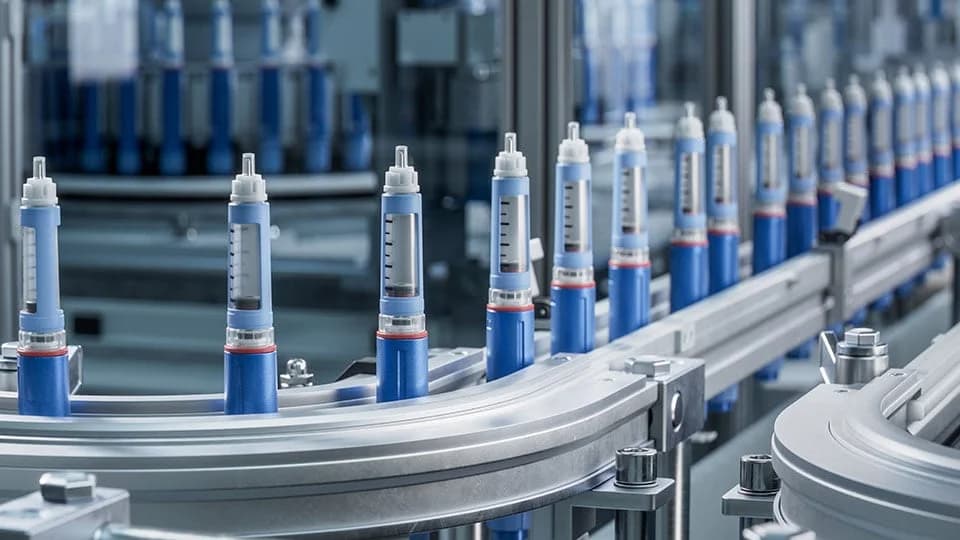
Consider a scenario involving a critical shortage of components for a GLP-1 product line where a key supplier of injection delivery systems shuts down due to regulatory action, constraining output for a high-demand therapy. At the same time, a competitor launches an alternative treatment, increasing competitive pressure.
Without Integrated Business Planning, the organization may prioritize volume fulfillment without fully understanding downstream financial implications. With Integrated Business Planning, leadership can simulate multiple allocation strategies—prioritizing high-margin private markets, maintaining presence in government-funded programs, or balancing both to preserve long-term market share.
As you can see, an organization with Integrated Business Planning can respond more effectively because each analyzed scenario reflects gross-to-net outcomes, including rebates, payer discounts, and contract obligations, ensuring decisions are financially grounded.
Scenario B: Balancing a demand surge with pricing pressure
Imagine a global surge in demand for a blockbuster diabetes treatment coinciding with a shortage of specialized glass vials. At the same time, insurers apply new pricing pressure to reduce costs.
With Integrated Business Planning, the company can simultaneously adjust supply allocation, simulate pricing strategies against formulary positioning, and evaluate the trade-offs between maintaining access versus protecting margin. The system can also factor in long-term contract implications, ensuring short-term decisions do not erode future profitability.
Bringing transparency to gross-to-net
This level of integrated decision-making is critical in pharma and medtech, where revenue is shaped as much by financial constructs as by volume. In the U.S. alone, rebates, discounts, and other price concessions on brand-name drugs reached an estimated $416 billion in 2025.
Integrated Business Planning also brings transparency to gross-to-net calculations, a longstanding challenge for industry CFOs. According to a report, 99% of life sciences leaders said gross-to-net has become more complex.
By continuously linking operational decisions to net revenue outcomes, it reveals each product, market, and contract's true profitability.
Equally important is corporate memory. Pharma has already experienced major disruptions—from vaccine rollouts to supply shortages. Integrated Business Planning ensures those experiences aren't lost; they become embedded in future decision-making.
A connected operating model for a changing world
In a high-stakes, highly regulated industry, Integrated Business Planning ensures decisions are fast and right for the business.
The future of the enterprise isn't about building plans that ignore operational realities; it’s about a new operating model that is connected, aligned to value, and delivers regardless of change. Learn how your organization can accelerate business outcomes with Blue Yonder Integrated Business Planning.