If you freelance, sell products online, consult or run any kind of business from a home office, it’s easy to assume your homeowners policy has your back. After all, your business is in your home, and that’s already insured. Though your business may share the same roof as your home, it doesn’t automatically get the same protection.
Homeowners insurance is designed to protect your personal property and your living space — not the day-to-day risks of running a business. That can leave some surprising gaps and vulnerabilities for many small business owners and independent entrepreneurs, including the costs of damaged inventory, stolen laptops, customer lawsuits or cybercrime.
So does your homeowners insurance cover your home business? Usually not. And that’s something a lot of small business owners don’t realize until it’s too late.
Does homeowners insurance cover a home business?
Homeowners insurance may provide limited coverage for some business-related property, depending on your policy. But it generally isn’t designed to protect the risks that come with running a business.
For example, if your product inventory in the garage is damaged in a fire, a customer sues you because you made a work mistake that cost them money, or laptops or other expensive equipment is stolen, your homeowners policy may offer little or no coverage.**
Every homeowner’s policy is different, but in general, the more your home functions as a business, the more likely you’ll need business insurance designed for these types of business risks.
Here’s a quick look at how homeowners insurance and home business insurance typically compare:
Compare: Homeowners insurance vs. home business insurance
If your business earns income, owns valuable equipment or inventory, or interacts with customers, don’t assume your homeowners insurance has you covered. It’s there to protect your home — not your business.
The low limits of homeowners insurance coverage
According to the Insurance Information Institute, a typical homeowners policy provides about $2,500 in coverage for business equipment kept at home, though amounts vary by insurer and policy.
That may sound like enough coverage at first. But when you start adding up everything your business relies on to run — computers, printers, cameras, lighting, temperature control, products, inventory, specialized tools, office furniture or other equipment — suddenly $2,500 doesn’t go very far.
Your homeowners insurance could provide a small amount of protection for business-related property. But coverage is often limited. And if you plan to grow your business, you may quickly outgrow your homeowner’s policy.
What homeowners insurance won’t cover
Homeowners insurance wasn’t built for running a business — it was built for running a household. It may offer limited coverage for certain business property, but there are many important gaps for business people who work from home.
Products and inventory for your business aren’t protected by a homeowners policy
As your business grows, inventory can become one of your biggest assets. But storing products in your garage or spare bedroom doesn’t mean it’s protected by your homeowners policy.
Picture a few shelves of handmade candles or a garage with boxes waiting to ship. If a fire, burst pipe or theft damages that inventory, your homeowners policy may provide little or no coverage for the products themselves.
Lost business income isn’t part of homeowners coverage
Say a fire damages your home-based catering or baking business equipment. You may have to cancel orders for weeks or months during repairs.
If your home business has to close temporarily after a covered event like a theft, fire, winter storm damage or a burst water pipe, you may have to stop business operations. And if that’s your prime source of income, without business insurance, your cash flow could be at risk.
Business insurance could help protect your business income while your business recovers after a covered event.
Employee injuries won’t be covered by your homeowners policy
If you hire employees, even part-time or seasonally, you’re taking on a set of responsibilities and risks that homeowners insurance won’t cover.
If an employee suffers a work-related injury on the job, homeowners insurance typically isn’t the policy that responds. Workers’ compensation requirements vary by state, but it is often required for any business owner — home business or otherwise — who hires employees.
Business lawsuits aren’t a part of homeowners coverage
If a client claims that your professional negligence or a work mistake — such as a missed deadline, a miscalculation or the use of the wrong materials — cost them money, they could take legal action against your business for damages. For instance, a freelance business consultant could be accused of a forecast drafted with inaccurate data.
If a customer claims that one of your products made them ill or caused damage to their property, they could seek reimbursement. An online seller of a dietary supplement that caused an allergy attack or a candlemaker accused of a product that ruined expensive furniture could receive a product liability claim. Even if the claim isn’t valid, responding to it can be expensive.
Homeowners insurance is not meant to cover those claims against your business.
Homeowners won’t cover cybercrime
Running your business from home doesn’t make it immune to cyber risks, which can be especially important if you sell online or store client financial data, health data, contact information or other sensitive info.
If a hacker steals customer information, locks your files with ransomware or compromises your online accounts, homeowners insurance can’t help cover those business-related losses.
Business liability isn’t usually addressed in a homeowners policy
If someone is injured because of your business activities, homeowners insurance isn’t going to help cover those claims.
Let’s say a client visits your home office and trips on a rug. Or a delivery driver slips while picking up work-related shipment from your porch or driveway. In either case, the injured person visiting your business asks you to cover their medical bills. Your homeowners liability coverage may not apply.
Do you need business insurance if you work from home?
Maybe you’re a freelancer with nothing more than a laptop. Or you’ve turned your garage into a workshop that you use to build and sell furniture. Could small business insurance help to protect your business?
If the answer is “yes” to any of these questions, business insurance is probably right for you:
- Do you earn income from work you do at home?
- Do you store business equipment, tools, products or inventory in your home?
- Do customers, clients or delivery drivers visit for your business?
- Do you sell products or provide professional services from a home office?
- Would losing your business equipment keep you from earning income?
- Would it be difficult to pay out of pocket if someone filed a legal claim against your business?
Which type of business insurance could help protect a home business?
The right insurance specific to your business depends on the type of business you run and the risks you face. A marketing consultant doesn’t have the same needs as a handyman, photographer or Amazon seller.
These are some of the most common types of business insurance that may help when homeowners insurance doesn’t.
General Liability insurance
Homeowners insurance may not apply to business-related injuries for non-employees or property damage to other people’s property. General liability coverage could help fill that gap.
General liability is one of the most common types of business insurance and is often one of the first policies small business owners buy.
Professional Liability insurance
When people pay for professional services or expertise, such as notary services, consulting, real estate or property management, or engineering, they expect you to stand behind your work. Homeowners insurance isn’t designed to cover claims involving your professional advice.
Professional liability insurance could help cover claims that your business made a professional mistake, was professionally negligent or misrepresented a product or service, depending on the policy. For example, it could help you defend yourself if a client says your advice caused them a financial loss.
Commercial Property insurance
A lot of home-based business owners assume commercial property insurance doesn’t apply to them because they don’t work from a commercial building. But this type of coverage is about protecting your business property from where you work — even if that means you work from home.
Property coverage could help cover inventory and gear that’s damaged by certain covered events, such as fire, theft or vandalism.
While homeowners insurance could provide some coverage, commercial property insurance is designed to help protect your business equipment like laptops or POS systems, products and inventory, furniture, lighting and flooring, and other business assets.
Cyber Liability insurance
Running your business from home doesn’t make you immune to cyber risks. If you store customer information, accept online payments or rely on cloud-based software, cyber liability insurance could help cover certain costs related to data breaches, ransomware attacks or other cyber incidents.
Workers’ Compensation insurance
If you hire employees, your insurance needs can change. Workers’ comp insurance could help cover medical expenses and lost wages if an employee is injured on the job. Requirements vary by state, but homeowners insurance isn’t intended to cover workplace injuries involving employees.
How ERGO NEXT can help protect your home-based business
Working from home doesn’t eliminate business risks. ERGO NEXT makes it fast, easy and affordable to protect your small business — and you can do it all online.
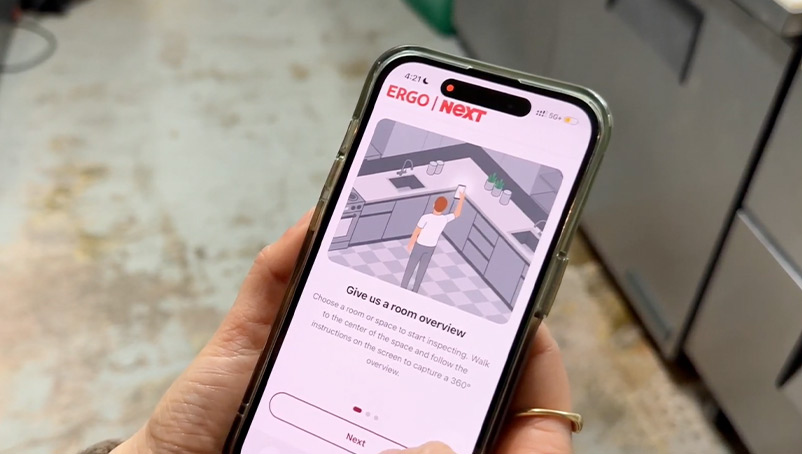
We’ll ask a few questions about your business and give you a quote. You can select your coverage options and buy your policy in about 10 minutes. Share your certificate of insurance at no extra cost, and you can access your policy 24/7 via web or mobile app.
If you have questions, our licensed, U.S.-based insurance professionals are available to help.
Start a free quote with ERGO NEXT.