Dave Myszewski • October 15, 2026
This post is accurate as of the above date. We update information in certain posts on an ongoing basis.
Certain posts contain information that we update on an ongoing basis without changing the publication date. This information includes, but is not limited to, the APY and FDIC insurance offered through our program banks in our Cash Account, yield and return figures in our Automated Bond Portfolio, and other editorial notes. If and when we make wholesale material updates to a post, we will update its publication date.
At Wealthfront, we want to help you build long-term wealth on your own terms. That’s why we’ve built a robust suite of accounts powered by automation, with the goal of keeping both your costs and taxes low. If you’re looking for guidance on which accounts are best suited to your needs and situation, we’re here to help. That’s why we’ve put together this handy cheat sheet of the highlights of our Cash Account, Bond Ladder, Wealthfront Portfolio, direct indexing portfolios (Wealthfront S&P 500 Direct and Nasdaq-100 Direct), and Brokerage Account.
Here’s what you need to know.
Cash Account: Industry-leading APY and Zero Account Fees
What is the Cash Account?: The Wealthfront Cash Account is a high-yield cash account designed to help you earn more on your short-term money with no account fees until you’re ready to invest. It combines the best features of high-yield savings accounts and checking accounts so you can spend and save from the same account.
Who is a Cash Account good for?: We built the Cash Account to be an ideal home for your short-term cash until you’re ready to invest. Because your funds are easily accessible, even on weekends and holidays, it’s also a great place to let your cash earn a high Annual Percentage Yield (APY) up until the moment you need it. When you need to pay bills, your credit card, or your mortgage, you can do so directly from your Cash Account. And if you’re saving for specific expenses, you can organize your cash into categories and even set up an automated savings plan to take the work out of saving for your goals.
How the Cash Account works: The Cash Account is a cash management account that sweeps cash to one or more of our FDIC-insured program banks and that provides checking features through our partner banks. This is how the Cash Account is able to offer an industry-leading APY, up to $8 million in FDIC insurance, and more innovative checking features than a bank account. Broker-dealers have partnered with banks to offer cash management accounts since the 1970s; first created by Merrill Lynch, their popularity has expanded and cash management accounts are now offered by longstanding financial institutions including Vanguard, Edward Jones, LPL Financial, Interactive Brokers, and Fidelity, as well as fintech companies.
Key Cash Account features:
- 3.55% APY from our program banks
- Up to $8M in FDIC insurance (up to $16M for joint accounts) through our program banks
- Free instant withdrawals to eligible accounts, even on weekends and holidays
- Transfer to invest in minutes
- Unlimited transfers
- Compatibility with your favorite payment apps (Venmo, CashApp, PayPal, Apple Pay, Google Pay)
- Free wire transfers from Wealthfront Cash Accounts
- Send and deposit checks
- Debit card with two ATM fee reimbursements per month (up to $7.50 each) and access to 19,000+ free ATMs
- Account and routing numbers so you can set up direct deposit and pay bills
- Automated savings plans and categories to automate and organize your savings
- No monthly fees
Earn more on your savings and enjoy fast, easy access to your cash. Open a Cash Account.
Which Investment Account is right for me?
All of Wealthfront’s managed investing products, regardless of which one you choose, are based on a passive, index-oriented investing philosophy, designed with an intuitive user experience and automated so you don’t have to talk to anyone. All of our products are optimized to help clients build long-term wealth on their terms. We think investors should take a passive approach to long-term investing and focus on what they can control: fees, taxes, and risk.
Below is a framework for how to decide which of our investing products is right for you. We believe the best way to characterize our products is by whether you want to delegate the selection and management of your portfolio to us or pick and choose your own products for each asset class. You can think of this as analogous to a prix-fixe and à la carte menu respectively:
Built & Managed for you
The Wealthfront Portfolio: Global diversification and best practices in one account
What is the Wealthfront Portfolio?: The Wealthfront Portfolio is designed to help you build long-term wealth with a globally diversified portfolio of low cost index funds and academically proven best practices aimed at keeping your returns steady in volatile markets. It’s fully managed by us, built around your personal risk level and helps minimize your taxes. The Wealthfront Portfolio has generated outstanding annualized returns over the past 10 years:
Annualized Returns reflect actual pre-tax performance for client accounts invested in the Classic Wealthfront Portfolio, with a composite risk score of 9 (Ranges 0.5-10). Performance is shown net of advisory fees and expenses, and represents one-, five-, and ten-year periods through 09/30/2026. The performance shown is the annualized rate of return, which compounds the daily returns of client accounts from the time they were initially funded until the as of date provided above, assuming compounding through annual reinvestment of returns earned over the full period. Past performance does not guarantee future results. Disclosure continued at bottom.
And these returns do not include the benefit of tax-loss harvesting, which has the potential to significantly enhance your after-tax returns and long-term net worth growth. Read more about tax-loss harvesting results here.
Who is The Wealthfront Portfolio good for:
- First time investors who are comfortable with added risk and want to outperform high yield savings over the long-term and build their confidence while learning to invest.
- Seasoned passive investors who want to improve their index portfolio’s after-tax returns with our Tax-Loss Harvesting software, even if they want to apply it to their own choice of ETFs.
How the Wealthfront Portfolio works: The Wealthfront Portfolio uses ETFs representing 5-8 asset classes (depending on our evaluation of your personal risk score) to build a globally diversified portfolio of low-cost index funds. This portfolio is automatically managed by Wealthfront, but it’s easily customized. We make it easy to change your risk level, add and remove ETFs, or edit the investment mix/allocation to meet your needs.
The benefit: It’s incredibly simple and cost-effective. You get instant diversification across thousands of US stocks, global stocks, and corporate and municipal bonds with just a few ETFs. Our automation is designed so that your portfolio stays balanced to your risk level, dividends are reinvested tax efficiently and our Tax-Loss Harvesting software automatically looks for potential tax savings daily. Our award-winning automation runs smoothly in the background so you can invest without ever having to talk to (or wait on) anyone else.
As the balance in your Wealthfront Portfolio grows, we offer an enhanced form of Tax-Loss Harvesting that looks for movements in individual stocks within a broad market US equity index to harvest more tax losses and help lower your tax bill even more. This feature that replaces your US equities ETF is called US Direct Indexing and is available for Wealthfront Portfolios with a balance of at least $100,000.
Manage your risk, maximize your potential returns, and help lower your taxes with a Wealthfront Portfolio.
Build your own:
Direct Indexing Portfolios: S&P 500 and Nasdaq-100 performance, with additional tax savings
What is Direct Indexing?: Direct indexing is a sophisticated strategy designed to improve the after-tax returns of investing in a specific index, for a similar fee as comparable ETFs. We currently offer this strategy on two major indices: the S&P 500® and Nasdaq-100®. Unlike a globally diversified Wealthfront Portfolio, these sophisticated products are not meant to be your only investment as they are solely focused on investing in the US equities asset class.
Who is Direct Indexing good for?:
- Investors who want exposure to a popular US stock market index while unlocking tax savings.
- Investors with capital gains to offset––potentially from selling company RSUs or other stock.
- Investors who want to choose their own investments when diversifying across asset classes.
How Direct Indexing works: Instead of owning an S&P 500® ETF like SPY, you own shares in up to 500 companies that comprise the S&P 500 directly in your account. This enables us to conduct tax-loss harvesting on the individual stocks that comprise the index. For example, if Coca-Cola misses an earnings estimate and drops precipitously in value, we may sell Coca-Cola and use the proceeds to buy more PepsiCo to maintain the correlation with the index in the absence of Coca-Cola. Note, we generally do not immediately sell the stock purchased (PepsiCo in this case) and buy back the original stock (Coca-Cola in this case), even after the 30-day wash sale period ends. This is designed to avoid realizing unnecessary gains. If, in the future, PepsiCo drops in value, we may sell PepsiCo and buy Coca-cola, but we would only do so if this helps with tax-loss harvesting or tracking the index.
The benefit: We seek to match the performance of an index closely while generating potential tax savings. Applying tax-loss harvesting to the individual stocks that comprise an index means you could get opportunities to harvest losses even on days when the index as a whole is up. The losses can be used to reduce the taxes on your gains and up to $3,000 of ordinary income. Wealthfront’s S&P 500 Direct has an annual advisory fee of 0.09% (equal to the expense ratio of SPY), and the fee for Nasdaq-100 Direct is 0.12% (which is less than the expense ratio of any Nasdaq-100® ETF, including QQQ® or QQQM). The minimum to get started with Direct Indexing is $5,000. We estimate that on average clients received a tax benefit equal to 4.54% of their S&P 500 Direct portfolio value in its first year.
Invest in stocks that make up popular indices and unlock tax saving opportunities with S&P 500 Direct and Nasdaq-100 Direct.
Bond Ladder: Low risk, locked in yield
What is a Bond Ladder?: Our Bond Ladder is an automated portfolio of US Treasuries designed to earn you a steady yield for your chosen duration, with no state income taxes so you can keep more of what you earn.
Who is the Bond Ladder good for?:
- Investors looking to invest in the fixed income asset class where they can “lock in” an interest rate at purchase with very low risk that incurs zero state taxes. The Bond Ladder is designed to earn more on an after-tax basis than most bond ETFs, savings accounts, and some CDs.
- Investors who want a low-risk portfolio to balance out riskier investments, or save for an important future expense like a home down payment, or planned tax payment.
How does a Bond Ladder work?: A bond ladder is a portfolio of bonds designed such that an equal amount matures each month for however long you desire. The amount of principal that matures each month is called a rung and in aggregate the rungs comprise a ladder. For example, if you invest $24,000 in a bond ladder over a desired period of two years, each rung will consist of $1,000 in principal. As those bonds, or rungs, mature, you’ll get your principal back, which can then be withdrawn or reinvested into existing or new rungs.
The benefit: In times of uncertain interest rates, a bond ladder offers a steady yield on your extra cash, without limiting access to your funds (you may withdraw from your account at any time with no penalty or fee, though selling before maturity can result in reduced yield). The interest you earn is exempt from state and local taxes, and it has a low annual advisory fee of 0.15%. You are also assured of recouping all your principal, if held to maturity.
A Bond Ladder can help you earn more on your cash with zero state taxes. Open a Bond Ladder.
Brokerage Account: Build your own portfolio of stocks and ETFs
What is the Brokerage Account: The Brokerage Account is designed to be a simple and intuitive way to invest in individual ETFs and stocks. You have control over what you invest in–without distractions that encourage frequent trading.
Who is the Brokerage Account good for?: New or seasoned buy and hold investors who want to invest in the US equities asset class at the individual stock level or use ETFs to represent other asset classes.
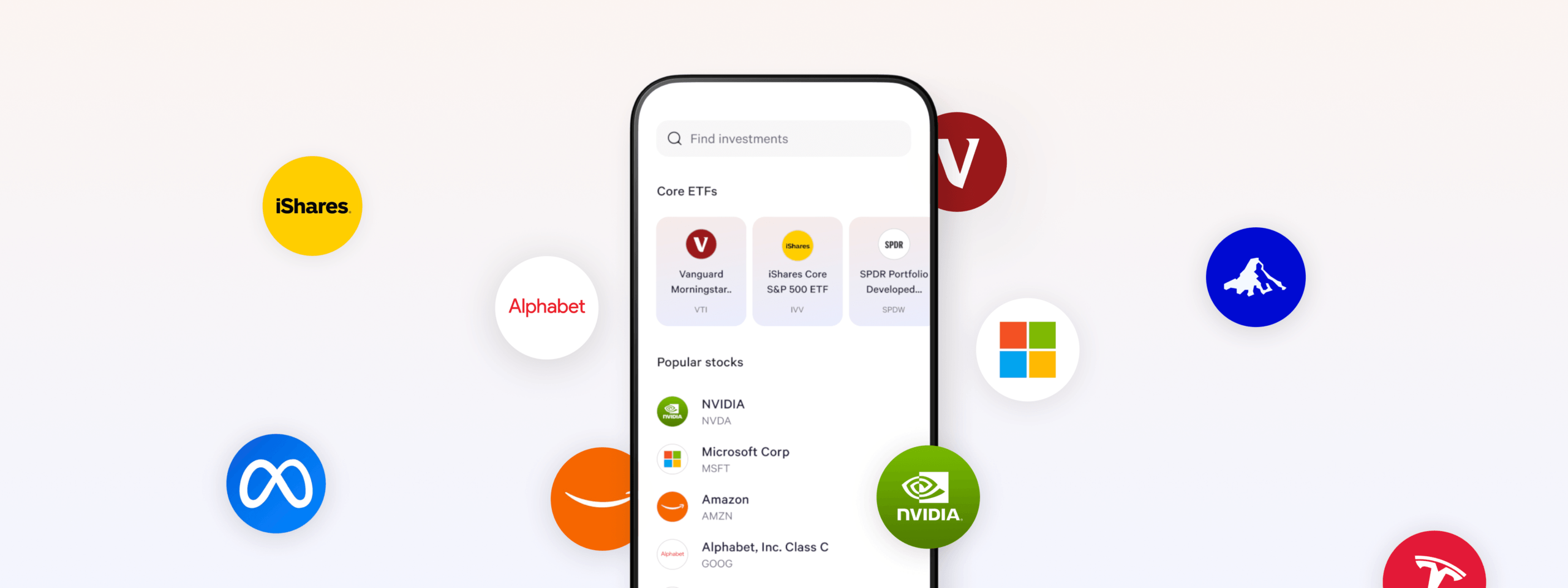
How it works: Invest in what you want, with thousands of stocks and ETFs to choose from.
The benefit: The ability to purchase stocks and ETFs with fractional shares, and no commissions or fees. You can start with as little as $1.
Discover and invest in relevant stocks and ETFs that might be off your radar. Open a Brokerage Account.
How do all Wealthfront investing accounts compare side by side?
US Direct Indexing for accounts with $100,000 or more
Tax aware dividend based rebalancing
Tax efficient withdrawals
Option to choose Socially Responsible portfolio
Build long-term wealth on your own terms
We’re delighted to offer you a suite of accounts to choose from to help you build and grow your wealth over time, whether you’re comfortable with a little bit of risk or a lot. No matter which products you choose, we’re excited to help you meet your financial goals with confidence.
You've successfully subscribed to our blog.
Disclosure
1529 Plan total fees range from 0.39% to 0.45% of managed assets, including Wealthfront’s 0.25% advisory fee, a 0.06% program administration fee (0.01% to the Board of Trustees of the College Savings Plans of Nevada and 0.05% to Ascensus Broker Dealer Services, Inc.), and 0.08%–0.14% in underlying ETF expense ratios. For Nevada residents who open a 529 account, Wealthfront will waive its advisory fee on the first $25,000 of assets across all of your Wealthfront investment advisory account(s).
The Cash Account is offered by Wealthfront Brokerage LLC (“Wealthfront Brokerage”), Member of FINRA/SIPC. Neither Wealthfront Brokerage nor any of its affiliates are a bank, and the Cash Account itself is not a deposit account. The Annual Percentage Yield (“APY”) on cash deposits as of [APY-date], is representative, requires no minimums, and may change at any time. References to the APY for the Wealthfront Cash Account, including any APY increase, are to the APY paid by insured depository institutions that participate in our cash sweep program (the “Program Banks”). Wealthfont Brokerage does not pay interest. Wealthfront sweeps available cash balances to Program Banks where they earn a variable rate of interest and, subject to the satisfaction of certain conditions, are eligible for FDIC insurance. A list of current Program Banks can be found here: [www.wealthfront.com/programbanks]. Deposit balances are not allocated equally among the participating program banks. FDIC pass-through insurance is not provided until the funds arrive at the Program Banks, and protects against the failure of Program Banks, not Wealthfront. While cash balances are at Wealthfront Brokerage, and while they are transitioning to and/or from Wealthfront Brokerage to the Program Banks, they are not eligible for FDIC pass-through insurance, but are eligible for SIPC protection, subject to the limit of $250,000 for cash. FDIC insurance coverage is limited to $250,000 for the total amount of all deposits a customer holds in the same ownership capacity per banking institution, regardless of whether those deposits are placed through Wealthfront Brokerage, so you are responsible for monitoring your total deposits at each Program Bank to avoid exceeding FDIC limits. Wealthfront Brokerage partners with more than one Program Bank to make available up to $8 million (or up to $16 million for joint accounts) of FDIC pass-through coverage for your cash deposits. For more information on FDIC insurance coverage, please visit www.FDIC.gov. Customers are responsible for monitoring their total assets at each of the Program Banks to determine the extent of available FDIC insurance coverage in accordance with FDIC rules. The deposits at Program Banks are not covered by SIPC.
The mention of “Award winning” in this article refers to Investopedia’s Best Robo-Advisor, 2024 award. Investopedia receives cash compensation of $8 per click and $80 per application submission from Wealthfront Advisers via sponsored advertising materials which create a conflict of interest. While they receive compensation for referring potential clients, the statements and rankings provided above represent independent endorsements by Investopedia, which are not directly tied to such compensation. Investopedia is not a client of Wealthfront Advisers. Wealthfront Advisers is not associated with Investopedia and has no formal relationship outside of this arrangement. Investopedia’s opinions are their own, and their awards and ratings are determined by their editorial team. Investopedia designed a system that rates robo-advisors based on nine key categories and 59 variables. Each category covers critical elements users need to thoroughly evaluate a robo-advisor. The ratings reflect data and evaluations for the 12-month period ending in February 2024. Learn more about their methodology and review process: https://www.investopedia.com/robo-advisor-ranking-methodology-4693455. Investopedia award received February 21, 2024.
Real-Time Payments (RTP) transfers: These may be limited by destination institutions, daily transaction caps, and by participating entities such as Wells Fargo and the RTP® Network. New Cash Account deposits are subject to a 2-4 day holding period before becoming available for transfer. Wealthfront doesn’t charge for transfers, but receiving institutions may impose an RTP fee.
ATM access and transactions: Fee-free ATM access applies to in-network ATMs only. The domestic out-of-network ATM fee reimbursement program (the “Program”) allows Wealthfront Brokerage clients with open and funded individual Wealthfront Brokerage Cash Accounts (“Cash Account”) who have requested and received an accompanying debit card (“Debit Card”) issued by Green Dot Bank (“Green Dot”) to be eligible for certain account benefits when using their Debit Card for a domestic out-of-network ATM cash withdrawal of U.S. dollars (“ATM Transactions”). In order to maintain eligibility for this Program, all your Wealthfront accounts and Green Dot accounts (collectively, “Accounts”) must remain in good standing and your Cash Account and Debit Card must remain open and active.
Each calendar month, current eligible clients with ATM Transactions will receive a reimbursement of certain fees associated with their first two ATM Transactions. Wealthfront Brokerage will utilize its best efforts to reimburse Green Dot’s $2.50 “out-of-network fee” and up to $5.00 of any operator or owner’s fee for your ATM Transactions, up to a maximum reimbursement of $7.50 per ATM Transaction (the “Reimbursement”). Your maximum total monthly Reimbursement shall be $14.50 ($7.50 + $7.50). If an ATM operator charges fees other than out-of-network fees and/or owner’s fees, Wealthfront Brokerage will not reimburse any portion of those fees. Once the maximum total monthly Reimbursement has been reached, no subsequent out-of-network ATM fees or charges that occur that calendar month will be reimbursed.
Your Reimbursement(s) will be credited to your Cash Account typically within one business day, though this timing is not guaranteed (“Reimbursement Date”). To receive the Reimbursement, your Cash Account must remain open until after the Reimbursement Date or you will forfeit any pending Reimbursement(s). If any of your Accounts are placed under review or are deemed not in good standing by Wealthfront Brokerage, Wealthfront Advisers and/or Green Dot, you may not be eligible to earn or receive Reimbursement(s) during the time your Account(s) are in such status. ATM Transactions completed before September 16, 2024 shall not be eligible for Reimbursement in connection with this Program. See full Terms and Conditions here.
Wealthfront Brokerage has partnered with Green Dot Bank to offer certain checking features including The Wealthfront Visa® Debit Card, send a check, and mobile check deposits to Wealthfront Cash Accounts. The Wealthfront Visa® Debit Card is issued by Green Dot Bank, Member FDIC, pursuant to a license from Visa USA. Inc. Visa is a registered trademark of Visa International Service Association. Green Dot Bank also offers certain Wealthfront Cash Accounts account & routing numbers which support additional checking features including bill pay, direct deposits, and payments through third-party sites. The checking features provided by Green Dot Bank for Wealthfront Cash Accounts are subject to identity verification by Green Dot Bank and the Wealthfront Visa® Debit Card is optional and must be requested. Green Dot Bank operates under the following registered trade names: GO2bank, GoBank and Bonneville Bank. All of these registered trade names are used by, and refer to, a single FDIC-insured bank, Green Dot Bank. Deposits under any of these trade names are deposits with Green Dot Bank and are aggregated for deposit insurance coverage. Wealthfront brokerage and advisory services are not affiliated with Green Dot Bank.
Wealthfront Brokerage has established a relationship with UMB Bank, National Association (“UMB Bank”), Member FDIC, which may allow certain Wealthfront Cash Accounts to opt-in to a limited-purpose account number and UMB Bank routing and transit number which will enable certain withdrawals and deposits into Wealthfront Cash Accounts including bill pay, direct deposits, and payments through third-party sites through the Automated Clearing House network. Wealthfront brokerage and advisory services are not affiliated with UMB Bank.
Fees and Eligibility requirements may apply to certain checking features, please see the Deposit Account Agreement for details.
Apple Pay, Face ID and Touch ID are trademarks of Apple Inc. Google Pay is a trademark of Google LLC.
For more information about wires, visit www.wealthfront.com/legal/online-transfer-agreement.
Automated Bond Ladder: Investing in U.S. Treasuries involves risks, including but not limited to interest rate risk, credit risk, and market risk. While U.S. Treasuries are considered to be among the safest investments, they are not entirely risk-free, and there is a potential for loss of principal. Returns on U.S. Treasuries can also be affected by changes in the credit rating of the U.S. government, although such occurrences are rare. Investors should consider their tolerance for these risks and their overall investment objectives before investing in U.S. Treasuries. Past performance does not guarantee future results.
The yield earned from U.S. Treasuries is exempt from state and local income taxes. However, interest income from Treasuries is subject to federal income tax. Tax treatment may vary depending on your individual circumstances. To understand implications for your specific financial situation, consult with a tax professional.
The S&P 500® (the “Index”) is a product of S&P Dow Jones Indices LLC and/or its affiliates
All investing involves risk, including the possible loss of money you invest, and past performance does not guarantee future performance. Please see our Full Disclosure for important details.
Wealthfront Advisers, Wealthfront Brokerage, and Wealthfront Software are wholly-owned subsidiaries of Wealthfront Corporation.
About the author(s)