For the past 20 years, enterprise software was judged by what users saw: usability, workflow, onboarding and training. Buyers picked the products that they believed their teams would actually use.
That’s changing.
A user can now type a request into a chat interface, an agent can call several systems behind the scenes, and an answer appears. Multiple vendors did the work. The user opened none of their apps.
Gartner estimates that up to $234 billion in enterprise application spending could be exposed to agents completing tasks across systems by 2030.
That raises a harder question: Which jobs should a general-purpose AI handle itself, and which are better left to a specialist?
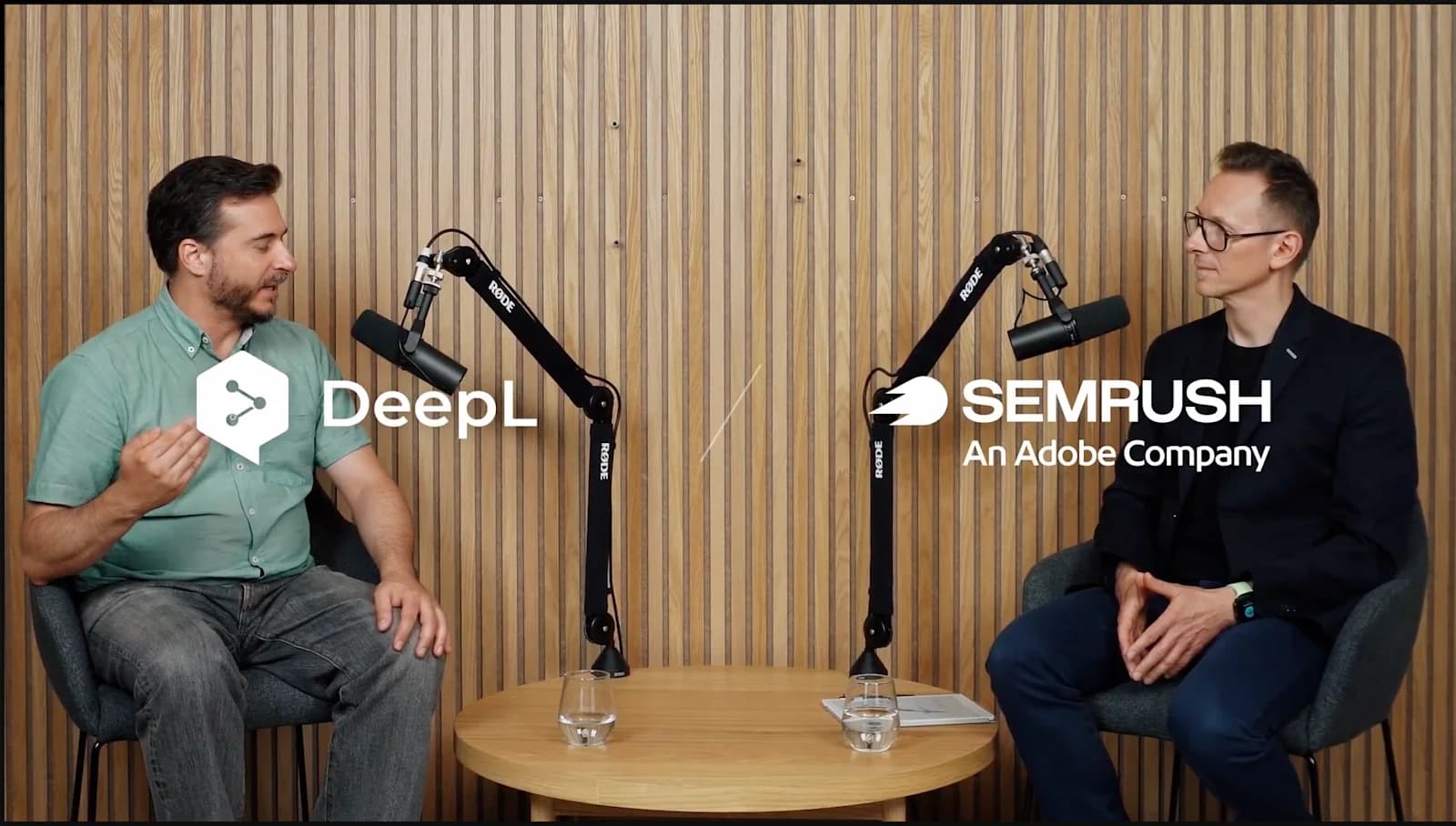
We put that question to Marcus Tober, Semrush's SVP AI & Innovation, andSteven Syrek, who leads DeepL's work on agentic experience.
Intelligence is only part of the job
Ask a general-purpose model to do specialist work, and it often has to reason its way there from scratch, reading the context, inferring the rules, and checking the output. That reasoning is billed as it happens, so cost grows with usage and complexity.
A specialist system is built the other way around. The workflow is defined, domain expertise is built in, and the cost and output are easier to predict.
"Our product is not a UI or an app or a website," Syrek says. "It's actually a set of capabilities, and our customers don't need to care how those are implemented."
That distinction matters more as agents become the interface. General-purpose models provide reasoning, while specialist systems provide a capability built for a specific job.
So was the SaaSpocalypse wrong?
The "SaaSpocalypse" thesis was simple: If frontier models can reason through any workflow, and anyone can vibe-code a wrapper around it in a single weekend, why keep paying for specialist tools?
Tober argues that this underestimated what comes after the prototype.
"Everyone is a builder now, and most things can be assembled in a few vibe-coding sessions," he says. "The enterprise bill arrives afterwards: legal compliance, ISO 27001, security, stability and a guarantee the software is still maintained in three years. Maintenance is the cost, and it never stops."
AI has made software easier to build, but it hasn’t removed the cost of making it reliable, secure and maintainable at an enterprise scale.
Where MCP fits: The seam, not the story
None of this requires picking a side. It requires a way for one to call on the other.
That's where the Model Context Protocol (MCP) comes in. MCP gives AI agents a standardized way to connect all external tools and capabilities, reducing the need for custom integrations for every combination.
MCP is the practical answer to the "build vs. buy vs. embed" question. The generalist assistant can stay at the front door, and when a task needs a specialist capability, it can call on that system directly.
"What changes," Syrek explains, "is the number of places a customer can reach your capabilities." Not because the interface changes, but because it stops needing to.
What’s emerging now looks less like one model swallowing the other, and more like a division of labor where general-purpose systems can handle reasoning and orchestration, while specialist systems do the jobs they are built for. The MCP connects the two.
We recently launched the DeepL MCP Server, bringing DeepL’s Language AI capabilities directly into AI assistants like Microsoft Copilot, ChatGPT and Claude, as well as other compatible tools.
Connect DeepL MCP to your stack.