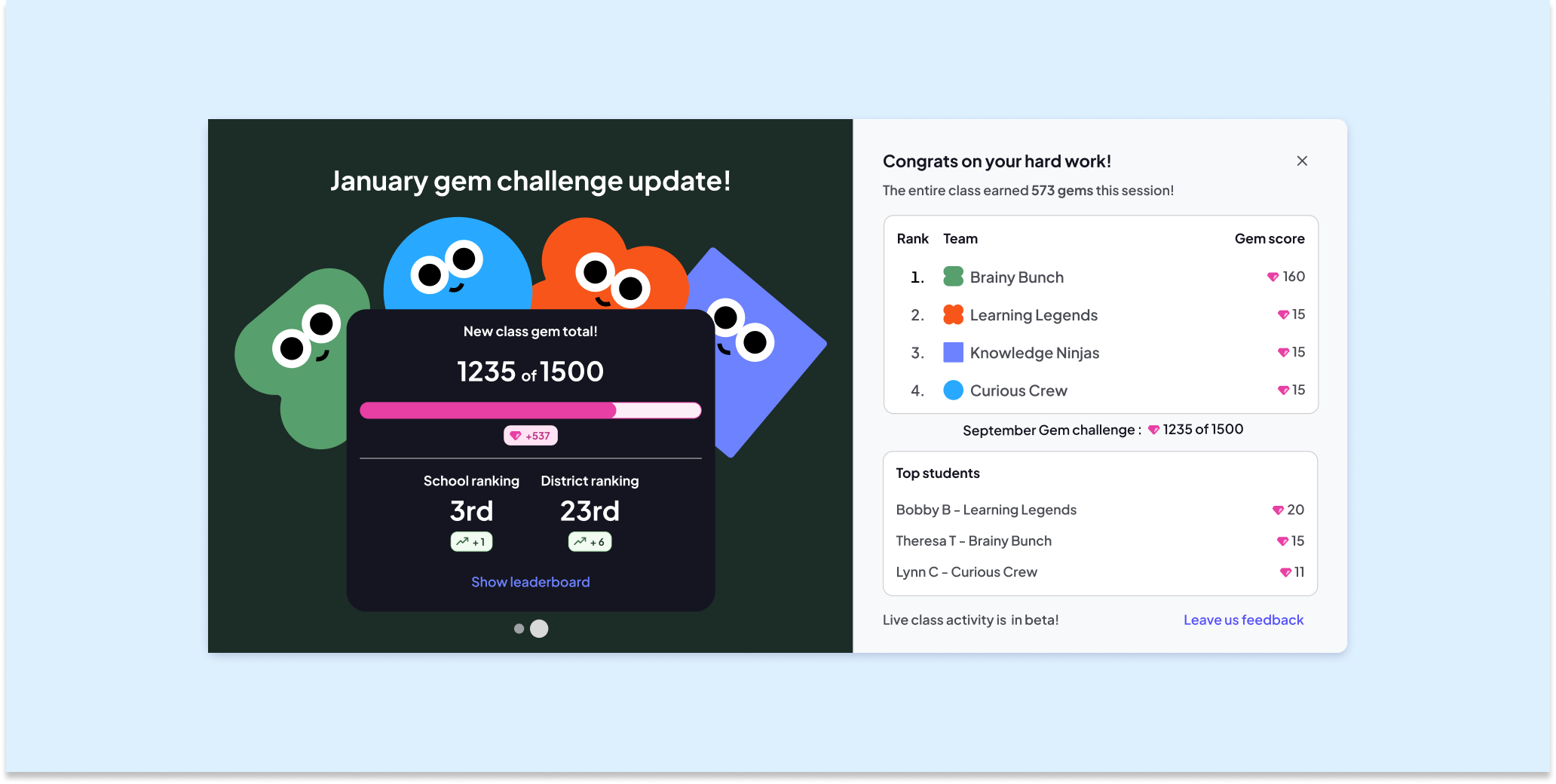
In a recent post, we shared five ways Khan Academy is making student practice more motivating: clearer next steps, more visible progress, Gems students can earn, shared class goals, and celebrations that help students feel proud of their work.
That work is part of a bigger challenge Khan Academy has been thinking about for years: How do we help students start, persist, and keep practicing long enough for learning to stick?
We saw the power of shared goals with LearnStorm, which launched in 2015 with growth-mindset activities built alongside PERTS at Stanford. LearnStorm showed us that students work harder when their individual practice contributes to something the whole class is working toward.
Our pilot districts (Detroit, Hanover, and Taft ISD) helped us see the next opportunity. In many classrooms, that kind of motivation already exists—on a whiteboard, in a class competition, or in a challenge a teacher tracks by hand. It works, but it often depends on teachers doing the extra work to keep it going.
For district leaders, the question became: How do you make that kind of motivation easier to sustain across classrooms and schools?
That’s where Gem Challenges and Gem Jam come in.
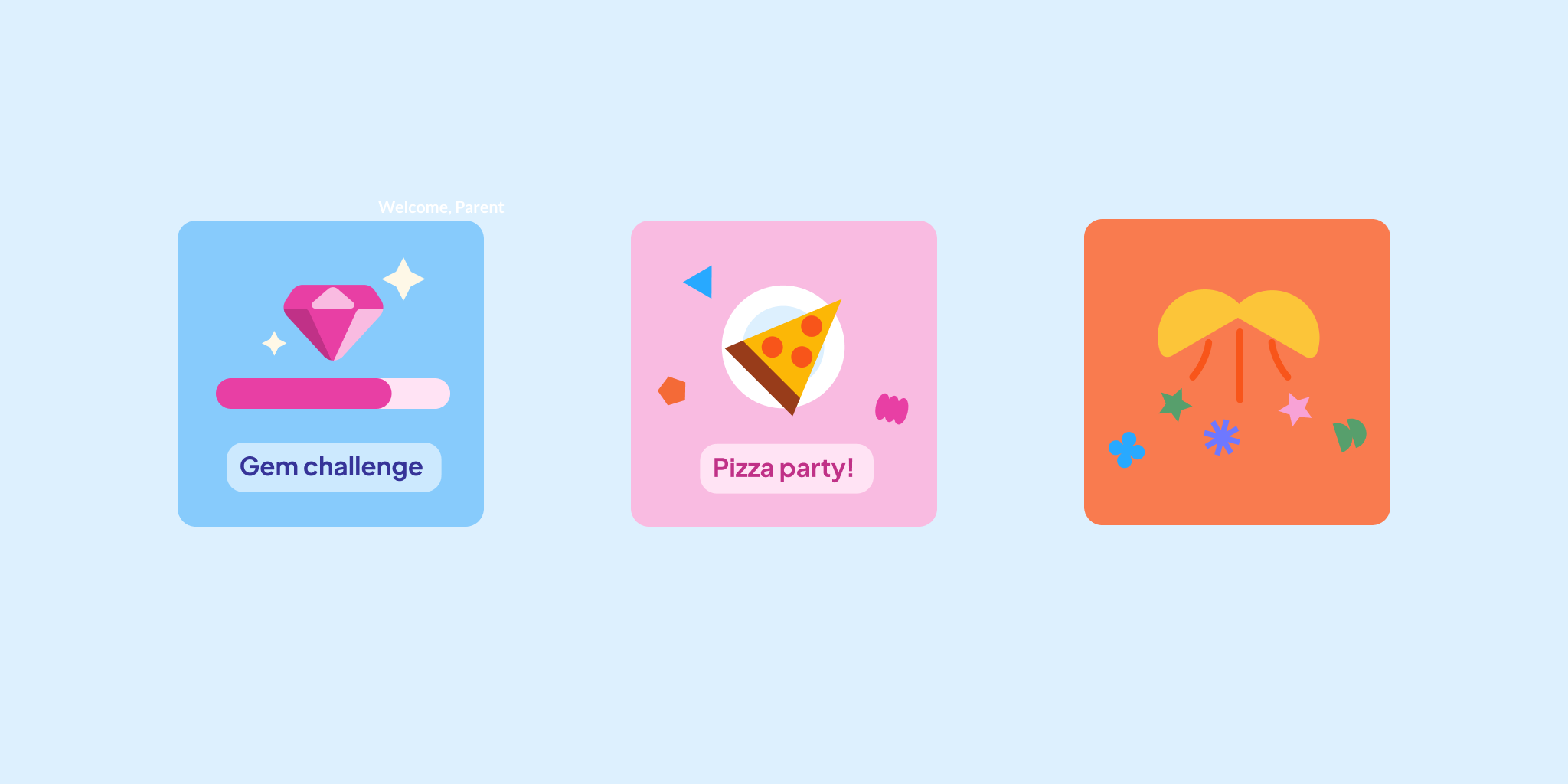
Gem Challenges turn the practice students are already doing into a goal the whole class is working toward. Gem Jam, available to Khan Academy district partners, turns that same mastery-based progress into a live class game.
“Teachers were hearing kids tell other kids, ‘Hey, you better pull your weight. I want to win this Gem competition.'” — Phil Misecko, Assistant Superintendent, Hanover Community School Corporation
“Teachers were hearing kids tell other kids, ‘Hey, you better pull your weight. I want to win this Gem competition.'” — Phil Misecko, Assistant Superintendent, Hanover Community School Corporation
Gem Challenges are the month. Gem Jam is the moment.
Students earn Gems by building skills. Those Gems power two connected experiences: a goal that runs all month and a live team race a teacher can start any day.
Gem Challenges: the monthly goal
As students move skills forward in Khan Academy, they earn Gems. The more they learn, the more they earn.
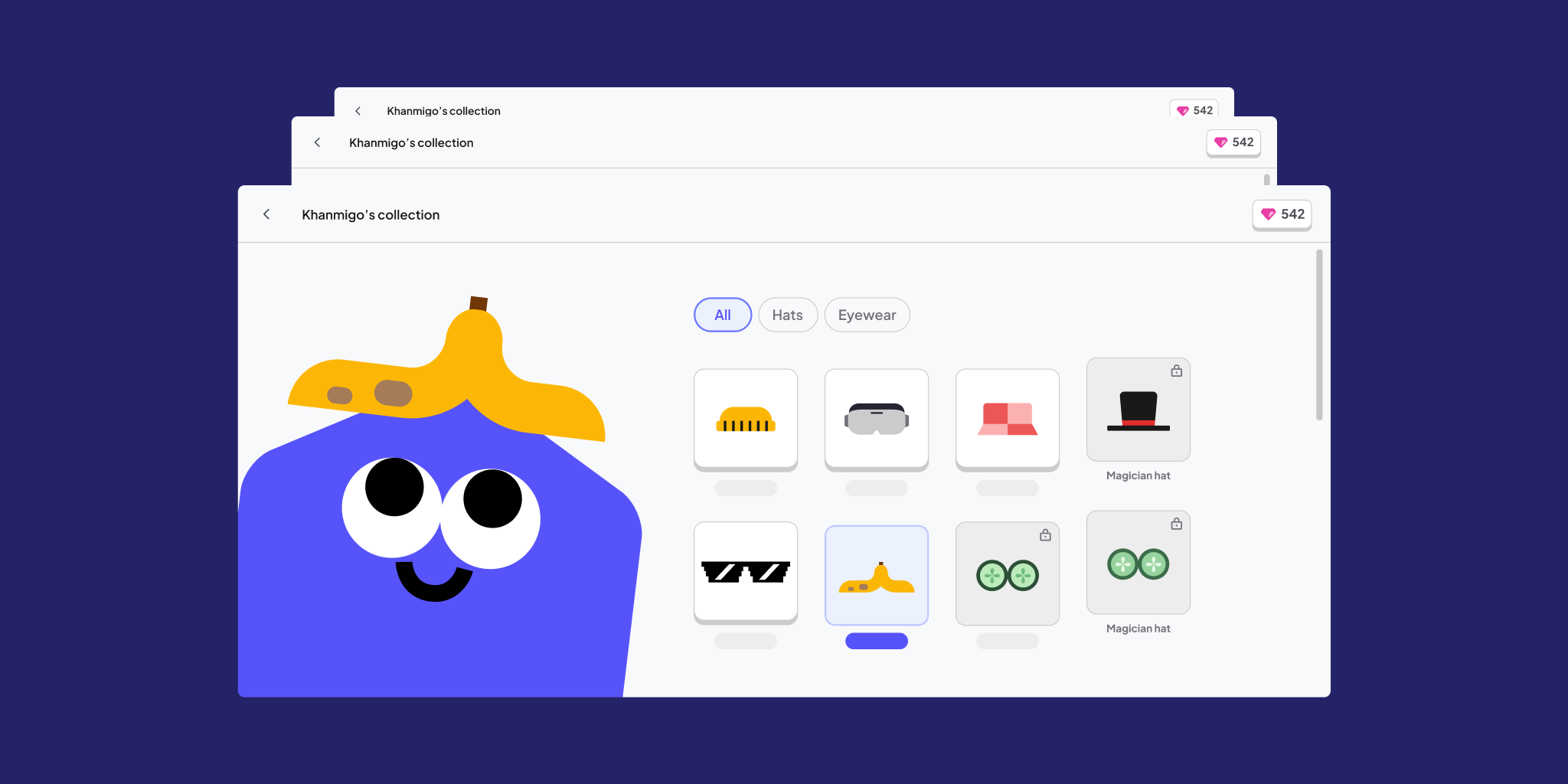
Every Gem counts twice: it unlocks Khanmigo accessories students choose for themselves, and it counts toward a shared class goal.
Teachers can keep the class moving by assigning Unit Missions and choosing a reward when the class hits the goal, whether that’s free-choice time, a silly-hat day, a homework pass, or a classroom tradition students already love.
When the class gets there, students see a celebration moment together. Then the next challenge begins.
Gem Jam: the live class game
Gem Jam brings that same momentum into a single class period. See how it works in the video below.
A teacher starts a Gem Jam from the Class Overview page: set a timer, choose who plays, and teams form automatically.
Students race to reach Proficient in skills from their assigned work while the teacher projects the live leaderboard, so the whole class can watch the standings move.
Because only assigned, mastery-enabled work earns Gems during a Jam, the game runs on your core curriculum, not on whatever a student happens to click.
And it all connects: Gems won in a Gem Jam count toward mastery progress and the class’s monthly Gem Challenge total. One class period can move a school up the district leaderboard.
Gem Jam is available to Khan Academy district partners.
Why it works for districts
Gem Challenges and Gem Jam help students collaborate inside the classroom while classes compete across the district, all on the same monthly cycle.
Progress is measured in mastery, not minutes.Gems track skill progress. Students earn the most Gems by advancing new skills to Proficient or Mastered, not by spending more time on a problem or answering more questions.
Every student can move the class forward.Because Gems come from advancing skills rather than from already being ahead, a student working two grade levels back can contribute in the same way as a student reaching ahead.
Rankings are visible to teachers and students.Each class can see where it ranks within its school and district in the monthly Gem Challenge tile, so progress shows up in the classroom, not just in a report.
The rhythm can last all year.Challenges run monthly, giving campuses a repeatable way to recognize effort rather than a one-time kickoff. Districts can build their own traditions around that rhythm, like a traveling trophy for the leading campus or a treat for the leading classroom.
Built on what teachers loved about class games
Students do a lot of work independently on Khan Academy, but learning does not have to feel lonely.
Gem Challenges and Gem Jam carry forward the same feeling teachers have always loved about class games: collective goals, shared wins, and classroom energy, now inside the everyday Khan Academy experience.
The difference is that the fun stays connected to the work.
Students are building skills. Gems are tied to mastery progress. Class goals are built from practice. Gem Jam runs on assigned work. And the progress students make during a live game still counts toward the class’s monthly goal.
One pilot student put it simply:
“No joke. Khan Academy is low-key kinda fun now.”
That is the goal—instead of a separate game students play in place of learning, it’s practice students can see, feel, and rally around.
Bring Gem Jam to your district
Gem Challenges and Gem Jam give districts a simple way to connect what motivates students to the learning that matters most.
Students still get the focused practice for which Khan Academy is known. Now, that practice can become something a whole classroom—and a whole district—can get behind.