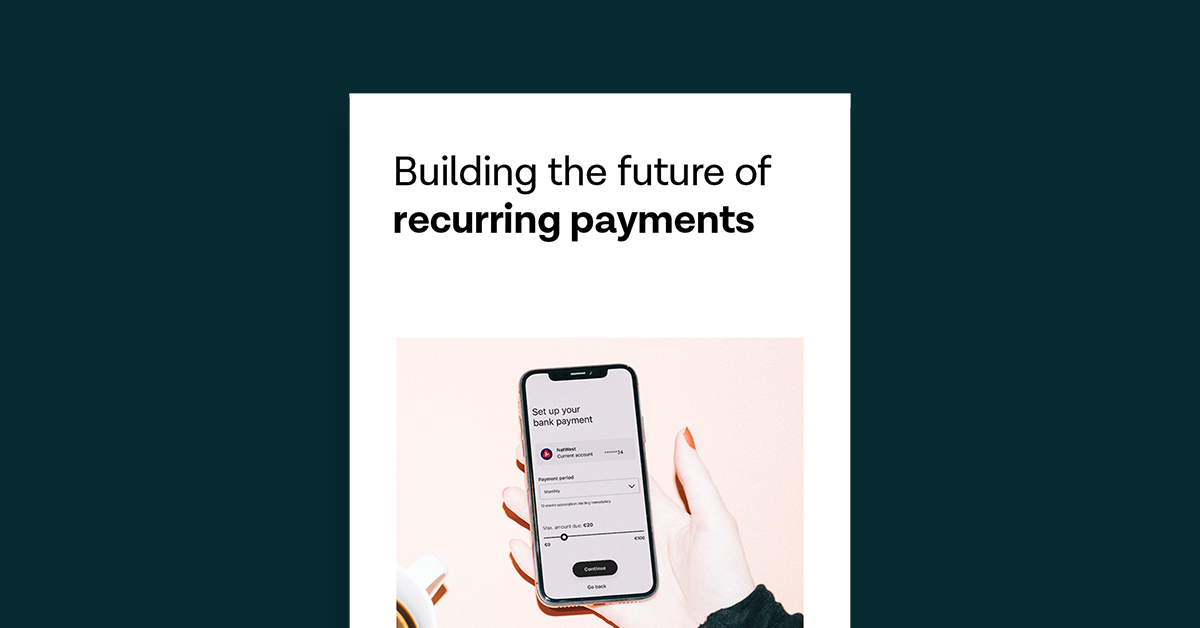
Variable Recurring Payments, powered by open banking, have huge potential for merchants and consumers in the UK. Scroll down to download our VRP guide to find out how they work and why they are important.
The potential for VRP to change the face of consumer payments as we know it, is real. The Open Banking Implementation Entity (OBIE) completed its consultation phase on VRP and Sweeping three years ago. Since then there’s been quite a lot happening, and things are starting to get exciting.
In this guide we get to the heart of what exactly VRP is – and how it’s different to the recurring payments already in use – as well as hearing from Tink’s Andrew Boyajian, one of the leading industry voices on this topic.
More specifically, you will learn about:
- How VRPs work (and where they’ve come from)
How VRPs work (and where they’ve come from)
- The difference between sweeping VRP and commercial VRP
The difference between sweeping VRP and commercial VRP
- The issues faced by consumers and how merchants can solve for them
The issues faced by consumers and how merchants can solve for them
- Commercial VRP vs. direct debits
Commercial VRP vs. direct debits
- Use cases, including smart meter billing
Use cases, including smart meter billing
- The future and industry development
The future and industry development
More in Product
2025-10-07
Beyond instant: Building reliable Pay by Bank payments
As instant payments roll out across Europe, merchants still face challenges with reliability and settlement. Our Smart Routing and Risk Signals products provide a reliability layer for Pay by Bank, optimising payment routes and blocking likely-to-fail transactions.
Get started with Tink
Contact our team to learn more about what we can help you build – or create an account to get started right away.