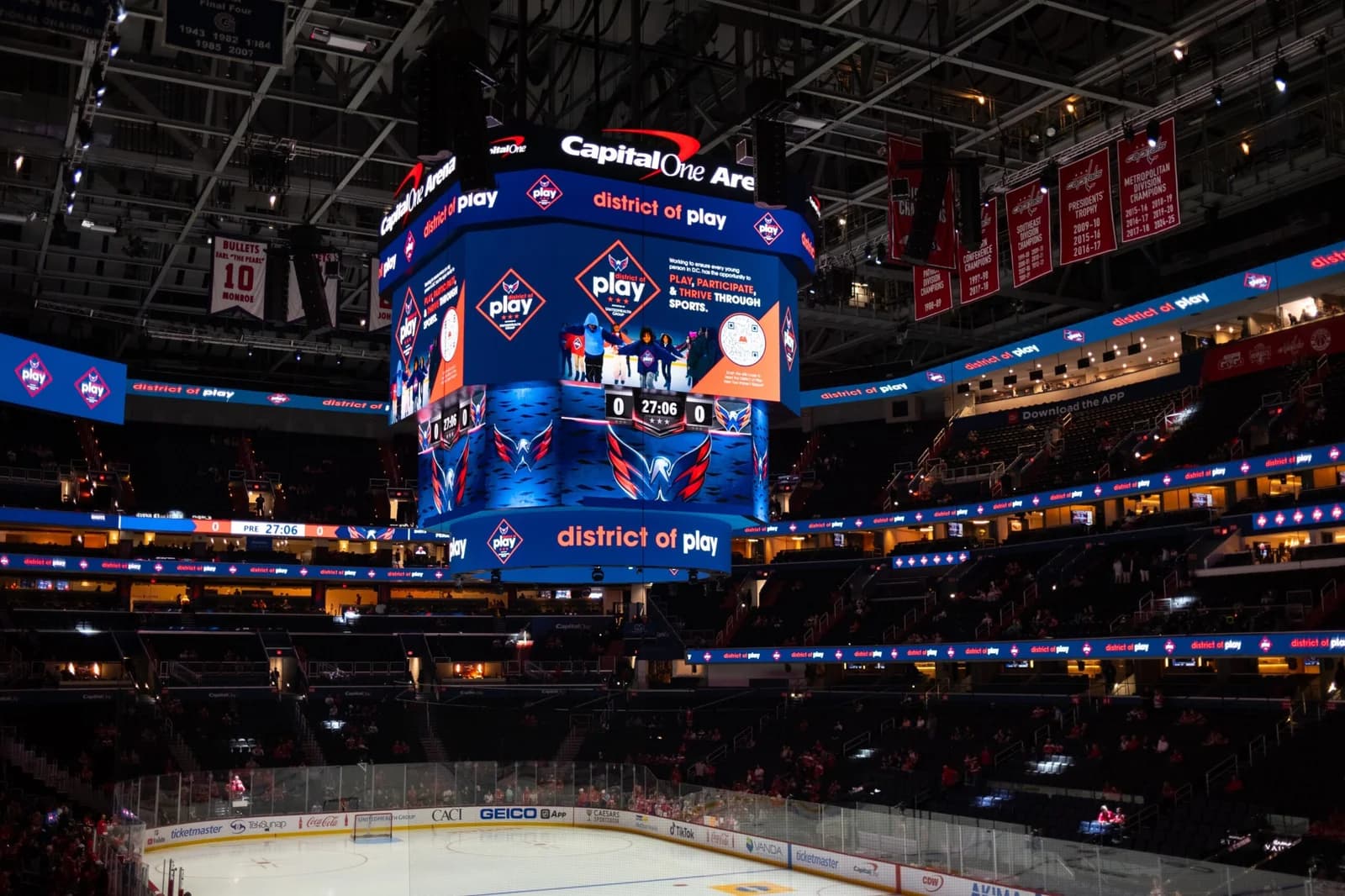
Monumental Sports & Entertainment unified networking, compute, and observability on one Cisco platform for Capital One Arena—replacing siloed systems with an AI-ready foundation that allows our IT team to efficiently deliver secure, reliable fan experiences.
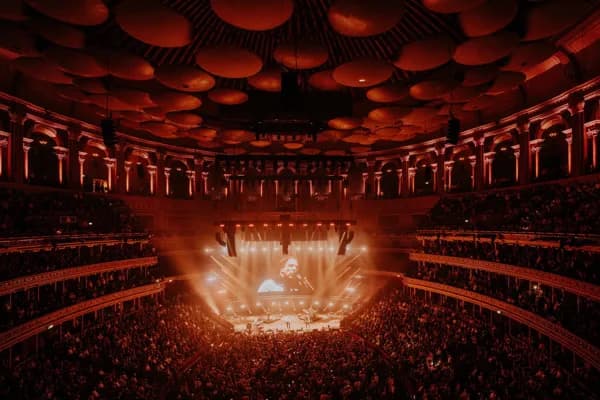
For years, my team has been on the front lines. We’re responsible for managing the infrastructure across our arena, broadcast, and corporate environments that support more than three million fans across 250 events a year. Whether it’s an NHL game, an NBA game, or a concert, our primary goal is to deliver the best experience for every fan.
But that’s a moving target as evolving technology, including AI, reshapes what fans expect. Our fans are the “end user,” so the network that supports their ticketing, Wi-Fi connectivity, and broadcast viewing cannot be an afterthought.
As we looked at the future of Capital One Arena for Monumental Sports & Entertainment, the technology stack was one of the first things we knew would have the biggest impact on our fans’ experience—not just today but in the future, and the multi-vendor patchwork of systems that we’d accumulated over 25+ years wasn’t going to cut it.
Fragmented technology forced reactive operations
As any network architect knows, managing a hyper-distributed landscape while relying on disconnected tools, technologies, and vendors can be challenging, to say the least.
Managing siloed, aging systems created real operational pain. With limited visibility, game days forced our team into a “full court press,” jumping between multiple tools and dashboards to build a working picture of our environment. Without integrated telemetry and observability, we couldn’t easily isolate problems, so troubleshooting meant reactively checking cables, switches, routing, firewalls, and access points before finding a solution. Mean time to resolve (MTTR) stretched while event staff and fans felt the consequences.
Our reactive operational approach could no longer keep pace, and refreshing individual components across the stack wasn’t going to cut it anymore. With the next generation of live entertainment in mind, it was clear that we needed to look beyond just a network refresh. We needed a unified platform; one built for the complexity of live events today and flexible enough to support and scale AI in the future, and we found a technology partner in Cisco.
Modernizing the full stack from the ground up
We built our new infrastructure to support a new reality. Today, live entertainment is internet centric. Production workflows depend on validated internet paths. Broadcast environments need to move large video files instantly. Staff and coaches need high-speed access to applications and data. Fans expect reliable connectivity, both in and around the venue.
Cisco’s portfolio breadth allowed us to look holistically at our entire tech stack: networking, compute, observability, and integrated it all under one, secure platform, allowing us to:
- Help ensure fan connectivity: We deployed Cisco Wi-Fi 7 and invested heavily in fiber pathways throughout the arena, which enables us to adapt as technology standards evolve. The 6GHz spectrum lets us dedicate bandwidth to internal operations while fans use 5GHz. In high-density concourses with thousands of people walking around, we can dynamically shift bandwidth where it’s needed most, ensuring seamless connectivity for every fan. Every fiber pathway back to the data center is built so that the video can be processed and distributed in real time without bottlenecks.
- Broadcast for in-arena and fans at home: In the data center, we built a AI-ready infrastructure designed to power both today’s broadcast demands and AI workloads in the future. We deployed 1.2 terabits per second of aggregate backplane capacity. Today, Cisco IP Fabric for Media and N9000 Series switches power in-house production and efficient 4k video delivery, all managed by Nexus Dashboard Fabric Controller for complete visibility of the environment. With this foundation, we are enabling the acceleration of real AI use cases: attendee engagement, predictive analytics, and increased operational efficiency for our team.
Simplifying operations with increased visibility
This project was not about replacing hardware alone. It was about creating a unified operating model.
With Cisco, we consolidated management across three integrated platforms.
- Cisco Catalyst Center gives our team immediate control and visibility of campus network health—port status, bandwidth, and Wi-Fi diagnostics. We can now adapt our network, optimize Wi-Fi coverage, and deliver services in real time.
- Splunk Cloud Platform serves as our central observability hub. When an alert fires in Catalyst Center, we instantly pull correlated logs and enrich our dashboards with complete context. Before, troubleshooting meant 20 to 30 minutes of working across disparate tools and disconnected dashboards with no clear starting point for remediation. Now, we see what’s down, why it failed, and who it affected, all in one unified view. This enriched context eliminates guesswork and enables us to be proactive.
- Cisco Intersight provides unified compute management across our data center environment, giving us real-time visibility into hardware health, power supplies, and resource utilization—letting us automate responses and prevent issues.
With Cisco, we now have increased visibility across the entire tech stack, meaning we can isolate problems faster and get ahead of issues before they impact revenue or fans. On game days, our team operates with confidence and ease.
And by consolidating networking, observability, and compute into a future-proofed architecture, we’ve laid the groundwork to deliver “championship-caliber” fan experiences and power AI-driven operations.
Being able to run AI workloads at scale will enhance the capabilities of our team—helping with correlation, detection, and integrations across the tech stack. With the right foundation and networking infrastructure, we can build faster, remediate issues, and simplify operations.
By working with Cisco, we now have a solid and consistent infrastructure that allows us to layer AI and security on top, insulating us for future growth. With AI, we can shift our focus from simply keeping things up and running to anticipating issues, running data-driven operations, and driving future innovation.
Cisco’s integrated technology platform empowers our team to deliver and maintain a world-class venue experience with confidence—so fans remember the moment, not the technology behind it. And that’s something any IT team can get behind.
Hear more from the Monumental Sports & Entertainment team:
- Read the full Monumental Sports & Entertainment case study: The critical infrastructure behind Capital One Arena
- Watch the LinkedIn Live conversation with Monumental Sports & Entertainment CTO Charlie Myers and Cisco CMO Carrie Palin to explore how secure, always-on infrastructure can help shape the future of sports and entertainment: From Street to Seat: Building Capital One Arena’s AI-Ready Future