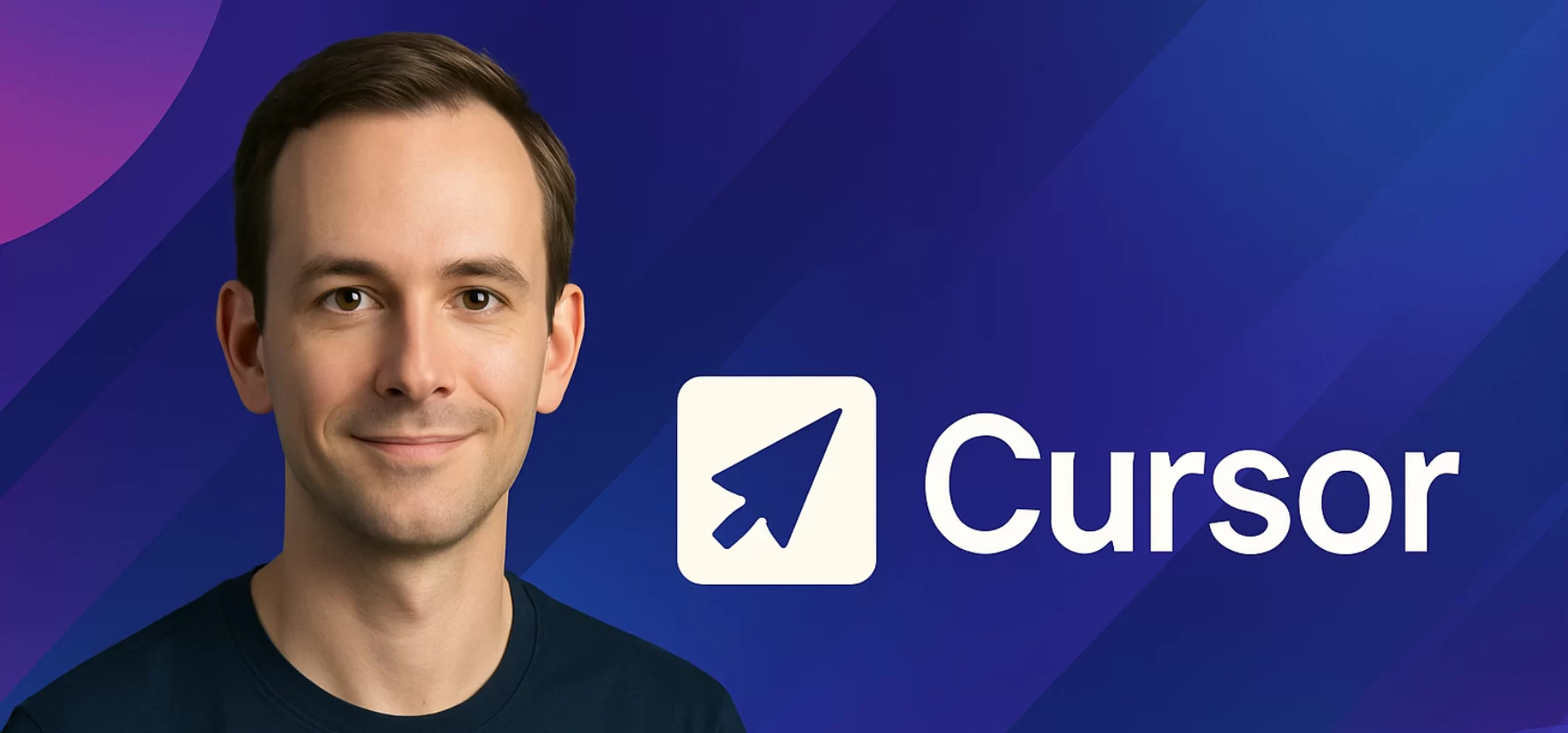
Anysphere’s Cursor, the AI coding assistant that achieved $1 billion in annualized revenue and a $29.3 billion valuation, is charting an ambitious path to compete against OpenAI, Anthropic, and other tech giants entering the AI development tools market. CEO Michael Truell’s strategy focuses on product-specific models, superior user experience, and enterprise-grade features rather than direct competition on foundational AI capabilities. This analysis explores the implications for enterprise software development and the evolving landscape of AI-powered coding tools.
Understanding Cursor’s Meteoric Rise in the AI Development Tools Market
The artificial intelligence revolution in software development has produced few success stories as remarkable as Cursor. In less than two years, the company has evolved from a promising startup to a market-defining force achieving $1 billion in annualized revenue. This trajectory places Cursor at the forefront of a fundamental transformation in how software is created, maintained, and evolved.
Speaking at Fortune’s AI Brainstorming conference in December 2025, Cursor co-founder and CEO Michael Truell articulated a vision that extends far beyond simple code completion. His strategic framework addresses the central challenge facing AI coding assistants: how to maintain competitive advantage when the foundational AI models powering these tools are increasingly commoditized and the model makers themselves are entering the application space.
The Competitive Landscape: AI Coding Assistants in 2025
The AI coding assistant market has evolved into a complex ecosystem where traditional boundaries between model providers, platform companies, and application developers increasingly blur. Understanding this landscape is essential for organizations making strategic decisions about development tooling.
This crowded landscape presents both challenges and opportunities. While the entry of well-resourced tech giants might seem threatening to independent players like Cursor, Truell argues that these competitors are producing what he calls “concept cars” rather than production-ready vehicles.
Cursor’s Differentiation Strategy: Beyond the Model
Truell’s competitive framework rests on several interconnected pillars that extend far beyond simply accessing the best AI models. His automotive metaphor proves instructive: OpenAI and Anthropic’s coding products represent powerful engines, but Cursor provides the complete, production-ready automobile with superior engineering, design, and user experience.
Multi-Model Orchestration and Product-Specific Intelligence
One of Cursor’s most significant strategic moves has been the development of proprietary, product-specific models that complement the foundational models from OpenAI, Anthropic, and other providers. In November 2025, the company revealed that its in-house models “now generate more code than almost any other LLMs in the world.”
This hybrid approach provides several advantages. First, it reduces dependence on any single model provider, mitigating both strategic risk and the bargaining power of suppliers. Second, it enables Cursor to optimize for specific use cases where general-purpose models may underperform. Third, it creates a proprietary data asset that becomes increasingly valuable over time.
Superior User Experience and Integration
Truell emphasizes that Cursor’s competitive advantage extends beyond model capabilities to encompass the entire user experience. The company has invested heavily in understanding developer workflows and building seamless integrations that reduce friction in the development process.
Key User Experience Differentiators:
- Native IDE Experience: Cursor provides a complete development environment rather than a plugin or extension, enabling deeper integration and optimization
- Contextual Awareness: The system understands entire codebases, not just individual files, providing more intelligent suggestions
- Predictive Assistance: Cursor anticipates developer needs, proactively offering solutions before explicit requests
- Seamless Tool Integration: Deep connections with version control, testing frameworks, deployment pipelines, and other development tools
- Customizable Workflows: Flexibility to adapt to diverse team processes and organizational standards
The Pricing Evolution: From Subscription to Consumption
Cursor’s journey with pricing models illustrates broader challenges facing the AI coding assistant market. The company’s evolution from flat-rate subscriptions to usage-based pricing reflects fundamental economics of AI-powered applications while also highlighting the importance of transparent communication with customers.
The pricing controversy, while challenging, forced Cursor to develop sophisticated cost management capabilities that have become strategic assets. As Truell explains, the company now offers enterprise-grade spend controls, billing groups, and visibility tools that help organizations manage their AI coding costs effectively.
Enterprise Cost Management Features:
Cursor has built an entire team dedicated to enterprise engineering, developing tools comparable to cloud computing cost management platforms. These include:
- Real-time usage monitoring and alerts
- Departmental and team-level billing segregation
- Spending caps and approval workflows
- Cost attribution and chargeback mechanisms
- Usage analytics and optimization recommendations
These capabilities address a critical pain point for CTOs and financial decision-makers, transforming a potential weakness into a competitive advantage.
The Strategic Roadmap: Agentic AI and Team Collaboration
Truell outlined two primary focus areas for Cursor’s development in 2026, both representing significant technical and market opportunities.
1. Complex Agentic Task Execution
The evolution from code completion to autonomous task execution represents the next frontier in AI-powered development. Cursor aims to handle end-to-end tasks that are “concise to specify but really hard to do,” with bug fixes serving as the canonical example.
This vision directly competes with Amazon’s recently announced coding tool that can operate autonomously for days on end. The race to effective agentic AI will likely define the next generation of development tools, with significant implications for how organizations structure their engineering teams and allocate development resources.
2. Team-Centric Development
Truell’s second strategic focus area involves shifting from serving individual developers to treating teams as the “atomic unit” of service. This represents a natural evolution for a tool achieving significant enterprise penetration.
Team-Centric Features and Benefits:
The OpenAI Acquisition That Wasn’t: Strategic Implications
The revelation that OpenAI approached Anysphere about a potential acquisition in early 2025 provides valuable insight into market dynamics and strategic positioning. Anysphere’s decision to decline the offer, combined with the similar outcome of OpenAI’s discussions with Windsurf, suggests a broader pattern in the AI coding assistant market.
Anysphere’s choice to remain independent proved prescient. Within months of declining the acquisition, the company achieved $1 billion in annualized revenue and secured a valuation approaching $30 billion. This trajectory would have been impossible within OpenAI’s corporate structure and validates the founders’ confidence in their independent path.
Industry Collaboration: The Agentic AI Interoperability Consortium
The recent launch of an agentic AI interoperability consortium under the Linux Foundation, with participants including Anthropic, OpenAI, Microsoft, and AWS, signals a maturation of the AI development tools market. This collaborative effort, which includes Anthropic’s Model Context Protocol (MCP), addresses critical standardization needs.
Implications of Industry Standardization:
- Reduced Lock-In: Standards enable easier switching between tools and providers, increasing competitive pressure based on value rather than integration costs
- Ecosystem Growth: Interoperability standards lower barriers to entry for complementary tools and services, expanding the overall market
- Enterprise Confidence: Standardization reduces perceived risk of AI adoption, accelerating enterprise implementation
- Innovation Focus: With basic interoperability solved, companies can focus on higher-value differentiation
- Market Maturation: Standardization efforts typically coincide with market transitions from early adoption to mainstream deployment
Competitive Threats and Market Dynamics
While Truell expresses confidence in Cursor’s competitive position, the threats facing the company are substantial and evolving. Understanding these competitive dynamics is essential for organizations evaluating AI coding assistants and for industry observers tracking market evolution.
Implications for Enterprise Software Development
The evolution of AI coding assistants, exemplified by Cursor’s trajectory, carries profound implications for how enterprises approach software development strategy, team structure, and technology investment.
Development Productivity and Economics
Organizations implementing advanced AI coding assistants are reporting productivity improvements ranging from 30% to 100% depending on task complexity and implementation maturity. These gains translate directly to economic benefits that justify significant investment in these tools.
ROI Calculation Framework for AI Coding Assistants:
- Direct Productivity Gains: Reduced time for code writing, debugging, and refactoring (typically 30-50% improvement)
- Quality Improvements: Reduced bug rates, better code consistency, improved documentation
- Onboarding Acceleration: Faster ramp-up for new developers, reduced mentorship burden
- Knowledge Retention: Reduced impact of developer turnover through codified organizational knowledge
- Cost Considerations: Tool subscriptions, training, change management, potential model API costs
Organizational Structure and Skill Requirements
As AI coding assistants become more capable, particularly with agentic features that can handle multi-day tasks, organizations will need to reconsider team structures and skill requirements.
Strategic Recommendations for Development Organizations
Based on the analysis of Cursor’s strategy and the broader AI coding assistant market, we offer the following recommendations for development organizations:
1. Adopt a Multi-Tool Strategy
Rather than standardizing on a single AI coding assistant, maintain flexibility to leverage multiple tools for different use cases. Evaluate tools based on specific team needs, integration requirements, and cost-benefit analysis. Consider pilot programs with multiple vendors before making enterprise-wide commitments.
2. Invest in AI Literacy and Prompt Engineering
The effectiveness of AI coding assistants depends heavily on user skill in articulating requirements and interpreting AI-generated outputs. Develop training programs that help developers understand AI capabilities, limitations, and best practices for collaboration with AI systems.
3. Implement Robust Cost Management
As consumption-based pricing becomes standard, organizations need sophisticated cost monitoring and control mechanisms. Establish clear policies for AI tool usage, implement spending caps and approval workflows, and regularly analyze usage patterns to optimize costs.
4. Prepare for Agentic AI Transition
The shift from assistive to agentic AI will fundamentally transform development workflows. Begin preparing now by:
- Identifying tasks suitable for autonomous AI execution
- Establishing quality assurance processes for AI-generated code
- Developing organizational policies for AI agent deployment
- Training teams on effective AI agent supervision and validation
5. Maintain Strategic Flexibility
The AI coding assistant market remains highly dynamic with rapid technological evolution and competitive repositioning. Avoid deep lock-in to any single vendor or approach. Prioritize tools that support standard protocols and interoperability, enabling easier transitions as the market evolves.
The Path Forward: What to Watch
Several key developments will shape the AI coding assistant market over the coming 12-24 months:
Conclusion: Navigating the AI-Powered Development Future
Cursor’s strategic positioning offers valuable lessons for the entire software development industry. Michael Truell’s vision demonstrates that success in the AI coding assistant market requires more than access to the best foundational models. Instead, sustainable competitive advantage comes from superior product design, deep workflow integration, proprietary specialized models, and comprehensive enterprise capabilities.
For enterprise development organizations, the key takeaway is that the AI coding revolution is not a single tool or technology but an ecosystem of capabilities that must be thoughtfully integrated into development processes. Success requires strategic thinking about tool selection, organizational change management, cost optimization, and continuous adaptation as capabilities evolve.
The next 12-24 months will prove critical in determining the long-term structure of the AI coding assistant market. Organizations that move strategically now, building AI literacy, establishing effective processes, and maintaining flexibility, will be well-positioned to capitalize on the productivity revolution that AI-powered development enables.
How Artezio Can Help Your Organization Navigate AI-Powered Development
At Artezio, we specialize in helping enterprises successfully adopt and optimize AI development tools. Our comprehensive services include:
- AI Tool Assessment and Strategy: Evaluate AI coding assistants for your specific use cases and organizational requirements
- Implementation and Integration: Deploy AI development tools with proper integration into existing workflows and systems
- Training and Enablement: Develop your team’s capabilities in AI-assisted development, prompt engineering, and output validation
- Process Optimization: Redesign development workflows to maximize AI tool effectiveness and productivity gains
- Cost Management: Implement monitoring and control systems for AI tool expenses with ROI tracking
- Custom Development: Build specialized AI integrations and extensions tailored to your organization’s needs
Contact our expert team today to discuss how we can accelerate your organization’s journey to AI-powered development excellence.