At Khan Academy, we’ve always believed that learning should be available to anyone, anywhere.
Our mission starts with access: free, high-quality learning resources students can use wherever they are. But access alone does not guarantee learning. Students still have to start the work, stay with it when it gets hard, learn from mistakes, and keep practicing long enough for understanding to stick.
That makes student motivation one of the hardest problems to tackle in education.
In a recent Kristen’s Corner, Khan Academy’s Chief Learning Officer Dr. Kristen DiCerbo argued that schools should begin technology decisions by asking a simple question: What problem are you trying to solve? She cautioned that schools have often adopted exciting new technologies in ways that lead to scattered pilots, tool sprawl, initiative fatigue, and little change in outcomes. Instead, she recommended prioritizing problems that are important, tractable, at least partly within a school’s control, and supported by evidence that an intervention could help.
Student motivation certainly meets that bar.
Motivation affects whether students engage in the practice that leads to learning. While motivation can be difficult to improve, it is shaped by factors schools and learning tools can influence: clarity, feedback, practice opportunities, classroom routines, and whether students can see their own progress.
That is why Khan Academy is treating motivation not as a layer of points or prizes added after learning, but instead as part of the learning experience itself. You can see a quick video of our latest, most popular tools available to districts: Live Team Game.
Why you can’t just gamify motivation
There is a familiar temptation in education technology: if students are not engaged, make learning feel more like a game.
But motivation is more complicated than that.
A game-like experience can spark interest. A reward can help students start. A celebration can make progress feel good. But if those elements are disconnected from learning, students can end up chasing the reward instead of building the skill.
The goal is not to make learning feel fun instead of challenging. The goal is to make the challenge feel worth sticking with.
That means motivation has to show up in the moments when learning often breaks down.
Five moments where motivation matters most
Students do not usually stop learning all at once. Motivation often drops in smaller moments.
1. When students do not know where to start
A student may be willing to practice but also feel unsure about where to begin. They may not know which skill matters most, what assignment to prioritize, or whether the work they are doing is moving them forward.
That uncertainty creates friction. And friction makes it easier to stop before starting.
Motivation begins with clarity: I know what to do next.
2. When effort feels invisible
Even when students start, practice can feel discouraging if progress is hard to see.
A student might spend time wrestling with a skill, make mistakes, get feedback, and improve but still feel like all they did was struggle. If the work does not feel visible, the student may not experience it as progress.
Motivation grows when effort feels cumulative: What I’m doing is adding up to something I care about.
3. When learning feels like a solo effort
A student can see their own progress and still feel like they are working alone. A shared class goal gives each student’s practice a place in something bigger. Students can see the class moving forward together, encourage one another, and celebrate what they accomplish as a group.
Motivation grows when progress feels shared: What I learn helps our class move forward.
4. When students get stuck
Getting stuck is part of learning, but it can also be where motivation fades fastest.
A student who is unsure about what to do next may guess, click through, wait for help, or decide the work is not for them. The wrong kind of help can also short-circuit learning. If students are given the answer too quickly, they may move on without doing the thinking that builds understanding.
Motivation needs support during productive struggle: I can get help without losing ownership of the work.
5. When mistakes feel like failure
A wrong answer can feel like a stop sign.
But mistakes are also one of the most valuable moments for learning. The question is whether students understand what went wrong and if they get a chance to recover.
Motivation depends on what happens next: I made a mistake, but I learned from it and understand how to keep going.
What better motivation systems should do
If motivation breaks down in these moments, then better learning systems need to support students through them.
That does not mean adding more badges, more prizes, or more entertainment. It means designing learning experiences where students can do the following:
- Understand what to do next
- See their effort turn into progress
- Get help when they are stuck
- Learn from mistakes
- Feel part of shared progress with their class
The best motivation systems stay connected to meaningful work. They reinforce the learning behaviors that matter: practicing, building skills, moving toward proficiency, and persisting.
They also create a way in for every learner. In every classroom, some students are catching up, some are working on grade-level skills, and some are ready to reach ahead. Motivation should help students see growth from where they are.
How Khan Academy is applying these learnings
Khan Academy’s reimagined experience is designed around this broader view of motivation.
- Students need clarity, so Missions help them understand what to work on next.
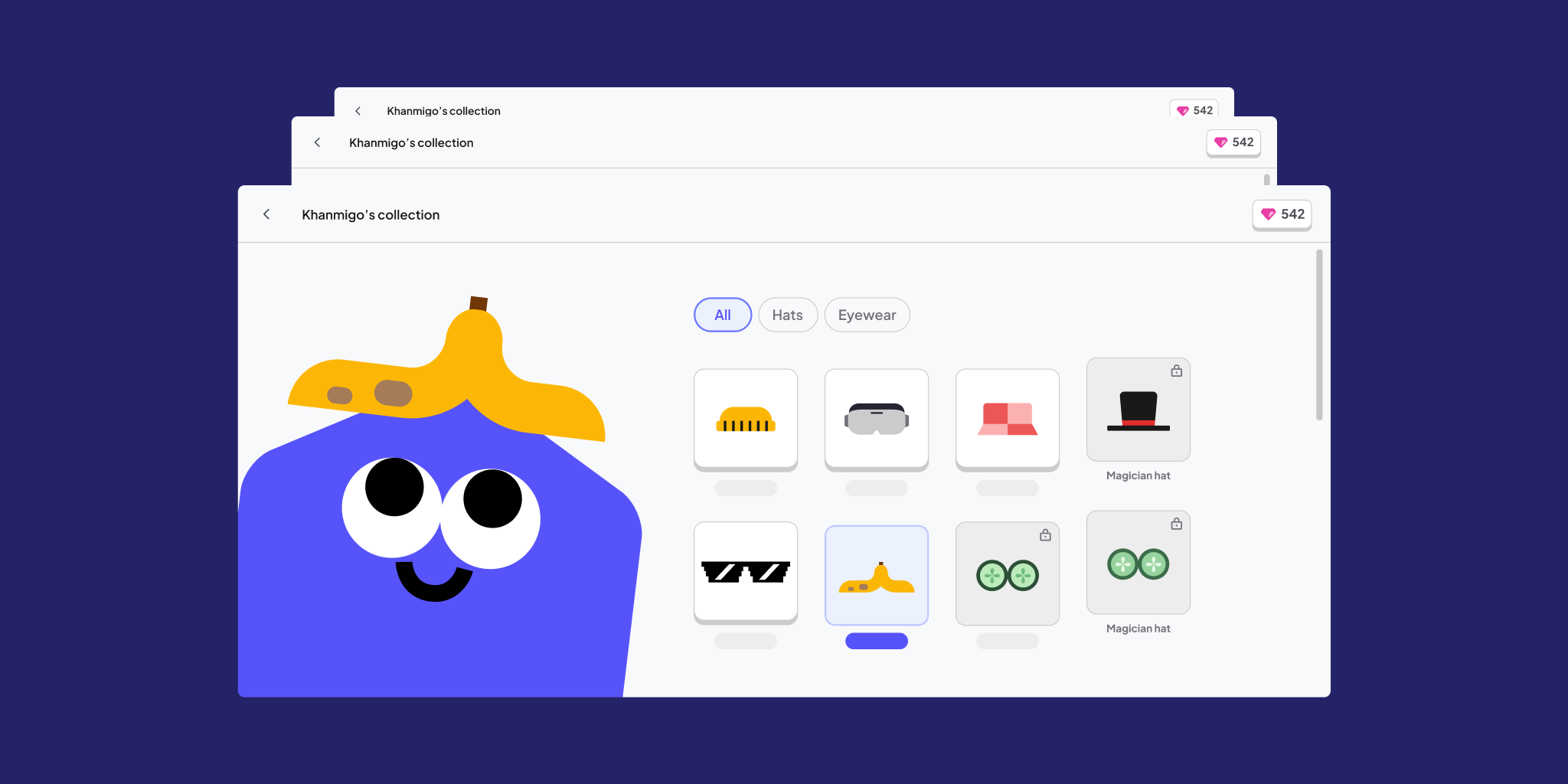
- Students need visible progress, so Gems make effort feel cumulative as they practice and build skills.
- Students can also unlock Khanmigo accessories, giving them a visible reminder that their effort counts.
Students need support when they are stuck, so Khanmigo is designed to act more like a good tutor sitting beside them. Before a student submits an answer, Khanmigo holds back the answer, asks questions, offers hints and strategies, and encourages the student to try the work themselves. The goal is productive struggle: students are not left alone, but they are also not rushed past the thinking that helps make learning happen.
Students need to learn from mistakes, so Khanmigo shifts its approach after a student submits an incorrect answer. Once the student has tried, Khanmigo can review a mistake side by side, explain plainly, give feedback on the student’s work, and follow up with practice on the same skill.
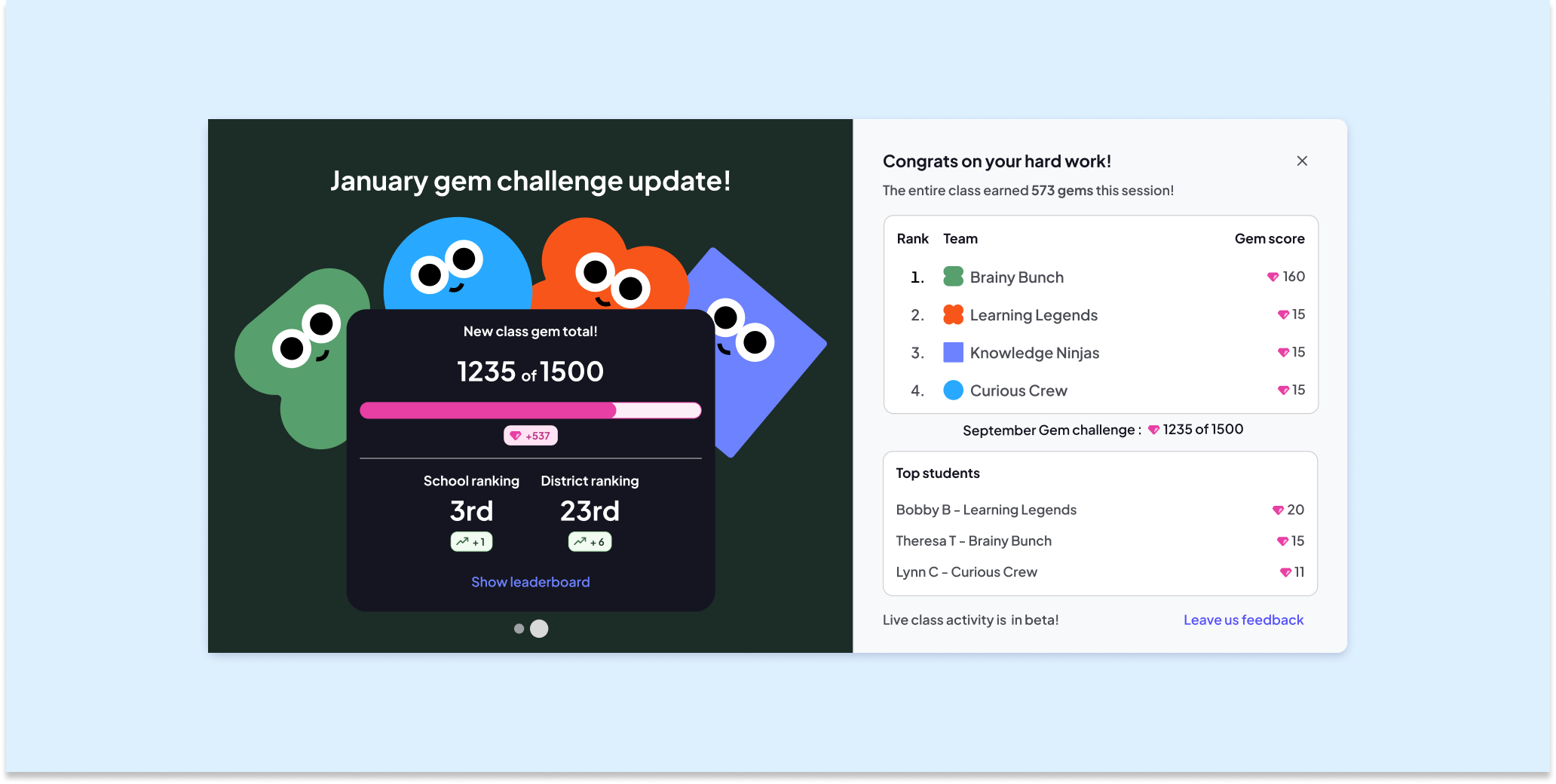
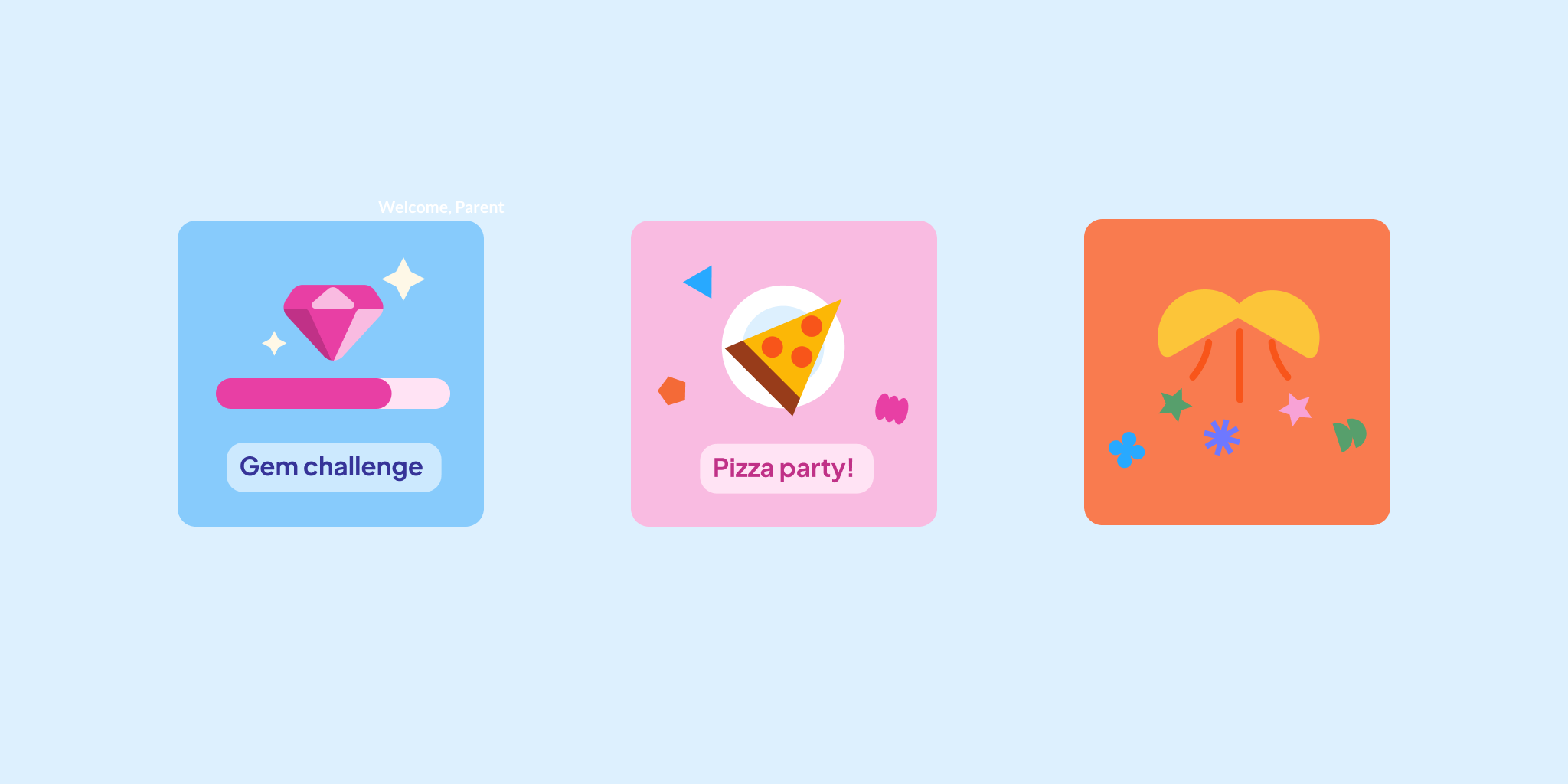
Students also need to feel part of something bigger than their own assignment. Gem Challenges and Gem Jam help turn individual practice into shared classroom momentum. Gem Challenges create a monthly class goal built from the Gems students earn as they practice. For district partners, Gem Jam turns assigned, mastery-enabled practice into a live class experience in which teams race and the whole class can watch progress move in real time.
Together, these pieces are designed to support the same goal: helping students keep going through the moments when learning gets hard.
Why “fun” is not the whole point
One pilot student summed up the shift this way:
“No joke. Khan Academy is low-key kinda fun now.”
That quote makes our team smile because students do not always describe practice that way.
But “fun” is not the end goal. Persistence is.
Students are earning by working. They are getting help when they are stuck. They are learning from mistakes instead of stopping. They are seeing effort count.
That is the kind of motivation that can support learning.
Khan Academy tackles hard problems
Khan Academy began with a student who needed help with math. That grew into a mission to make learning available to anyone, anywhere.
Access remains essential. But having a learning resource in front of a student is only the beginning. They still need a reason to start, support when they get stuck, and the confidence to try again.
That is why we are working on motivation. When students know what to do next, see their effort add up, learn from mistakes, and feel part of their class’s progress, they have more reasons to keep practicing.
Every time they keep going, they have another chance to learn.