Singapore's growth has always been dependent on its people. The government's national commitment to an AI transition with no jobless growth is the boundary condition every organization here operates within. It means raising productivity without raising unemployment, helping workers move into new or redesigned roles and ensuring growth comes with good jobs and clear career progression.
Within that boundary, every AI decision a CEO makes is also a workforce decision. Hidden under the technology decision is a more consequential one: which capabilities people will retain and build, how they develop and grow, and who will be able to answer for the work when something goes wrong.
This requires leaders to rethink the nature of work. For a century, the unit of account for work was the hour of human effort. That is no longer true after the introduction of agents, and what is needed is a new way to measure value. Agentic AI is a new producer of work, with its own economics, its own failure modes and the inability to be held accountable for anything it does. The opportunity lies in creating value with agents, with humans in the lead, rather than simply adopting agents as a technological tool.
Project Stonehenge: Our answer to what’s next for Singapore
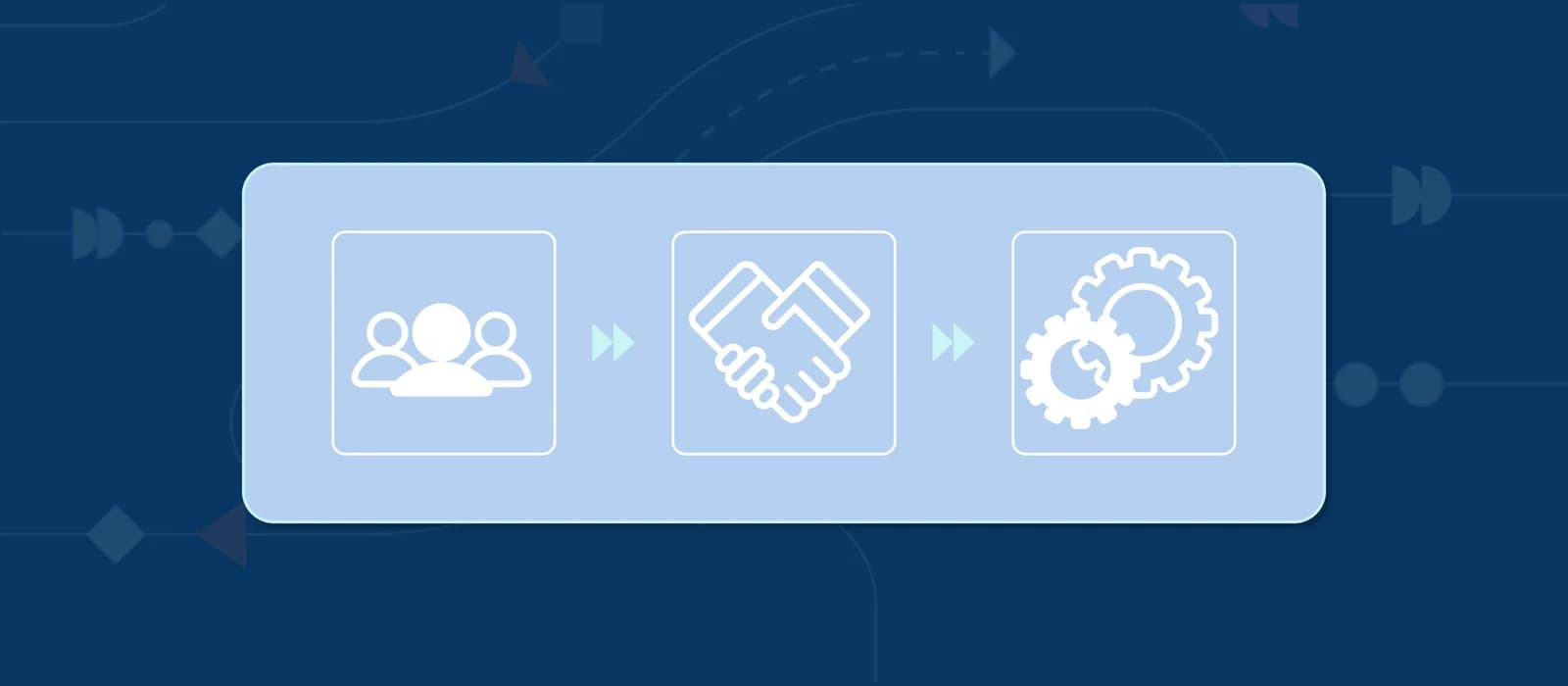
Project Stonehenge is an applied approach to redesign work where humans and agents work in sync. Built on research and our direct experience with clients, Stonehenge consists of a three-step decision flow that turns a new understanding of labor into a practical system for designing, deploying and governing the hybrid workforce.
To put the framework into practice, we collaborated with the Trustworthy Artificial Intelligence Lab (TRACE) at the University of Cambridge's Center for Human-Inspired Artificial Intelligence (CHIA) on three deployment mechanisms that organizations can adapt to design the boundary between human and machine work.
The three-step solution:
Re-architect
WORK BY TIER, NOT TITLE
Decompose work to task level and design it for two producers, with the human signature of each job deliberately preserved.
Re-allocate
ACROSS HUMANS AND AGENTS
Decide who does which part, where accountability sits, and how the handoff is designed rather than left to default.
Re-calculate
THE COST FOR BOTH
Price what business cases leave out – the capability, accountability and continuity that used to come bundled with a person.
The key to capturing AI’s transformative potential is people. AI transformation is ultimately a people-led growth agenda: building the capabilities people need to work alongside technology and pursue new opportunities so that the organization keeps growing. For Singapore, the choices made now will shape organizations for generations to come. The transition to a hybrid workforce is therefore a question of stewardship as much as technology transformation.