At a Glance: This guide explains how stereolithography (SLA) 3D printing works, from UV laser curing in a resin vat to post-processing and final part finishing. It covers the key advantages of SLA printing, common resin types, and typical applications such as prototypes, wind-tunnel models, composite , and investment casting master . The article also compares SLA with other 3D printing technologies including FDM, DLP, PolyJet, and SAF.
What Is SLA 3D Printing?
Stereolithography (SLA) is an additive manufacturing process that uses a UV laser to cure liquid photopolymer resin into solid parts, one layer at a time. A precision laser traces each cross-section across the surface of a resin vat, producing parts with high dimensional accuracy, smooth surface finishes, and fine detail resolution.
How SLA Printing Works Step by Step
Stereolithography (SLA) 3D printing is an additive manufacturing process that uses a vat of liquid, UV-curable photopolymer resin and a precision UV laser to build parts one layer at a time. The laser cures the resin, gradually forming the part within the vat, while the build platform lowers to the specified thickness, repeating the process until the part is fully formed. After printing the build platform lifts the finished part out of the resin vat. Support material is removed and the parts are cleaned in solvent to remove uncured resin. Finally, parts are placed into a UV curing unit to complete the polymerization process and allow parts to achieve their full mechanical properties.
Build Preparation and File Set Up
The process begins with a part designed in CAD which is then exported as an STL, STEP or OBJ file. The build preparation software is then used to orientate and position the geometry on the platform before supports are generated and the build is then sliced to the correct layer thickness. This generates the slice layer contours that the scanning systems follows to draw the part on the printer.
SLA Post-Processing Workflow
When a part comes off an SLA printer, it isn’t ready to use yet. The part is still attached to the platform, coated in uncured SLA resin, and the material hasn’t reached its final mechanical properties.
Post-processing removes excess resin, completes the curing reaction, and prepares the part for use. The exact workflow varies depending on the SLA 3D printer and material, but the overall steps are similar across most SLA printing systems.
Solvent Washing to Remove Uncured Resin
First the part is removed from the platform and washed to remove any remaining liquid resin. Cleaning is typically done using isopropanol (IPA), propylene carbonate, or TPM, either manually or in a wash station. This removes residual photopolymer resin that could affect surface quality or curing. After washing, parts are usually left to dry so any remaining solvent can evaporate.
UV Post-Curing for Final Mechanical Properties
Next, the part goes into a UV curing chamber. At this point the part is still in a “green state,” meaning the polymerization reaction is not fully complete. UV post-curing finishes the reaction and brings the material up to its final strength and stability.
This step is important for functional prototypes and other SLA models that require consistent mechanical properties.
Support Removal and Surface Finishing
mplete, the supports generated during build preparation are removed. Additional finishing steps like sanding, polishing, painting, or coating can be applied depending on the application, though because SLA printing already produces smooth surfaces and fine details, minimal work is usually needed.
Safety Considerations and PPE Requirements
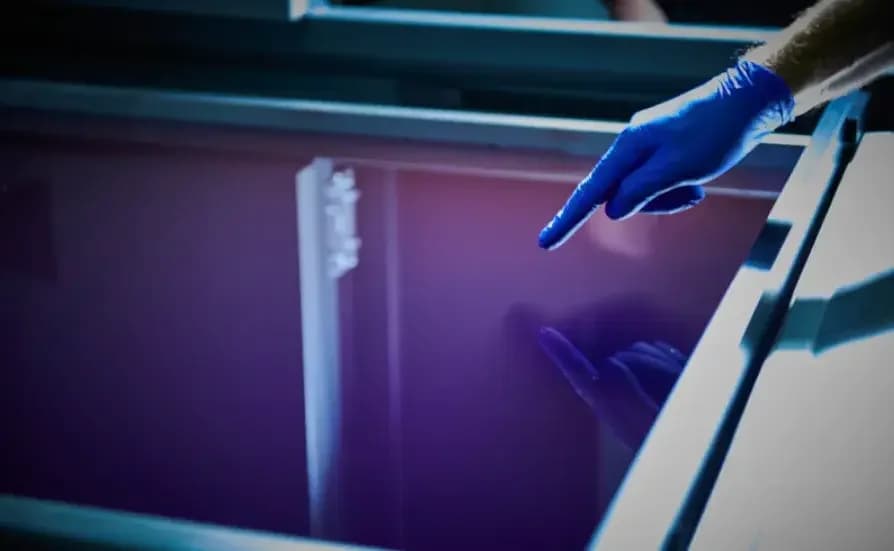
Uncured SLA resin should be handled carefully. Photopolymer materials can irritate skin and should not be touched directly. Gloves and safety glasses are standard PPE when handling resin, removing parts from an SLA 3D printer, or cleaning components. Good ventilation is also recommended when working with resins and solvents, and it’s important to follow the manufacturer's safety guidelines.
SLA Resin Types and Material Properties
harden when hit with ultraviolet light. Different SLA resins have different mechanical, thermal, and optical properties. That range is a big part of what makes SLA useful across so many applications, from accurate prototypes and functional testing through to master patterns and specialized tooling.
Resin type
Typical properties
Example applications
Example material
General-purpose resins
High detail, smooth surfaces, good dimensional accuracy
Design validation models, visual prototypes, fit and form testing
Somos® NeXt™
Tough engineering resins
Improved impact resistance and durability
Functional prototypes, housings, mechanical components
Somos® Taurus™
Clear / water-resistant resins
Transparency, smooth internal surfaces, low moisture absorption
Fluid flow testing, lighting components, transparent SLA models
Somos® WaterShed® XC+
High-temperature resins
High stiffness and thermal resistance
Wind tunnel models, tooling patterns, functional SLA prototypes
Somos® PerFORM™
Castable resins
Clean burnout and low ash content
Investment casting patterns for metal parts
Somos® WaterShed AF (Antimony Free)
Thermoplastic-like resins
Balanced strength and durability similar to thermoplastics
Engineering prototypes, testing components
Somos® EvoLVe 128™
The exact materials available will vary depending on the SLA printer and vendor, but these categories show the range of material properties that SLA can support.
Key Benefits of SLA 3D Printing
Stereolithography 3D printing is widely used when parts require high detail, smooth surfaces, and precise geometry. The controlled UV laser curing process can handle ine detail that other additive manufacturing technologies struggle with, which is why teams keep choosing SLA printing for high-fidelity prototypes, detailed models, casting patterns, and tight-tolerance components.
Resolution and Surface Finish Quality
Surface finish is where SLA really stands out. The UV laser traces fine patterns across the resin vat with enough precision to produce thin walls, small features, and intricate textures that extrusion-based processes tend to blur or lose. Because each layer cures inside liquid resin, there's minimal layer line visibility in the finished part. This means there’s less finishing work and cleaner results for visual prototypes, cosmetic models, and design validation.
Dimensional Accuracy for Intricate Geometries
Dimensional accuracy is another area SLA printing handles well. Parts come out close to the original digital model, which starts to matter a lot when you're working with small components, tight tolerances, or detailed assemblies. SLA prototypes are a solid choice for fit and form testing, or any precision model where the geometry ne
Isotropic Mechanical Properties
Each layer chemically bonds to the one below it during curing. This results in near-isotropic parts, meaning strength is similar in multiple directions. Isotropic strength is not something you can always count on with other additive processes, so for functional testing and evaluation, SLA’s consistency makes a difference.
Watertight and Non-Porous Parts
Because the resin fully cures during both printing and post-curing, SLA parts come out dense and non-porous. Depending on the material and design, that usually means the part can hold fluid or air pressure without leaking. It’s useful for fluid flow testing, mold patterns, medical models, and functional prototypes where a sealed surface isn't optional.
Limitations of SLA 3D Printing
SLA 3D printing delivers excellent accuracy, fine detail, and smooth surface finishes, but it doesn’t fit every application. It’s important to consider:
Material properties. SLA uses thermoset photopolymer resins, not thermoplastics. SLA materials cover a decent range of properties, but for applications that need real durability or long-term mechanical performance, engineering thermoplastics used with technologies like FDM® may hold up better.
UV sensitivity. Some SLA resins degrade or change properties under prolonged UV exposure. For anything outdoors, a weatherable material like Somos WaterShed Black resin, or a protective coating on top, can improve long-term performance.
- Post-processing. SLA parts need washing after printing to clear uncured resin, then UV post-curing to reach their intended properties. This adds additional steps to the production workflow.
- Support structures. Overhangs and similar features usually need supports during printing. Careful part orientation can help keep supports away from appearance-critical A-surfaces, reducing the risk of support marks on visible areas.
- Build speed. SLA traces each layer with a laser, so print time increases with part size and complexity. Technologies that expose a whole layer at once, such as DLP, may be faster for some jobs. But the large build volumes on Neo® 3D printers mean you get larger and more parts per build.
SLA Compared to Other 3D Printing Technologies
Stereolithography is one of several additive manufacturing processes used to produce plastic parts and prototypes — and each one works differently, with its own strengths and tradeoffs. SLA printing tends to win out when surface finish, detail, and dimensional accuracy are the priority. For raw durability, speed, or production-scale output, other technologies might be a better fit. Knowing where SLA sits relative to the alternatives makes it easier to pick the right process for the job.
SLA vs FDM
FDM® technology builds parts by extruding melted thermoplastic filament through a heated nozzle. The material is deposited layer by layer to form the final part.
FDM is widely used for durable prototypes, tooling, and production parts because it uses engineering thermoplastics such as ABS, nylon, or polycarbonate.
While both processes can easily handle large-scale parts on larger industrial printer, teams usually opt for SLA printing when they need greater precision, smoother surfaces, and finer detail. FDM parts tend to be stronger and more heat resistant though, which makes them a better fit for structural or functional components that will undergo rigorous testing.
SLA vs DLP
SLA and DLP are both resin-based. They both cure liquid photopolymer with ultraviolet light, but they go about it differently. SLA uses a UV laser that traces each layer; DLP flashes an entire layer at once using a projector.
That difference makes DLP faster for small parts or batches. SLA printing is generally valued for consistent precision and surface quality, particularly on larger parts or more complex geometries. In practice both turn up regularly for prototypes, dental models, and casting patterns.
SLA vs PolyJet
PolyJet™ technology works by jetting tiny droplets of photopolymer onto the build platform and curing them with UV light. Its big advantage is the ability to combine multiple materials and colors in a single print, which makes it useful for realistic prototypes, overmold simulations, and anatomical models. It also needs l
SLA printing tends to be the choice for large high-detail models, casting patterns, and precision prototypes. If you need multi-material capability, color, or soft-touch materials in the same part, PolyJet is probably the better option.
SLA vs SAF
SAF® technology is a powder-based process built for production-scale manufacturing — a fusing agent is applied to layers of powder and fused with infrared energy, and the process can knock out large numbers of parts in a single build.
SLA printing operates in a different part of the development cycle. It's typically used earlier on for detailed prototypes, design validation, and precision models. SAF is more at home once you're past that stage and need durable, functional parts at volume.
When to Choose SLA Over Other Processes
Stereolithography 3D printing is most often chosen when teams need highly accurate parts, smooth surfaces, or complex geometries that other processes struggle to reproduce cleanly. In practice, that usually means things like detailed prototypes for design evaluation, accurate models for fit and form testing, intricate geometries or thin features, and casting patterns for investment casting workflows. It's also a natural fit when a part needs to be watertight or hold fluid. Enclosure validation and fluid flow testing are common examples.
That said, SLA isn't the right tool for everything. If the priority is impact strength, high-temperature performance, or producing end-use parts at volume, something like FDM or a powder-bed process is probably going to serve better.
Which is why a lot of engineering teams don't treat it as an either/or. SLA printing handles the early, detail-critical work, like high-detail prototypes, wind tunnel models, investment casting patterns, tooling components.
SLA Printer Options by Use Case
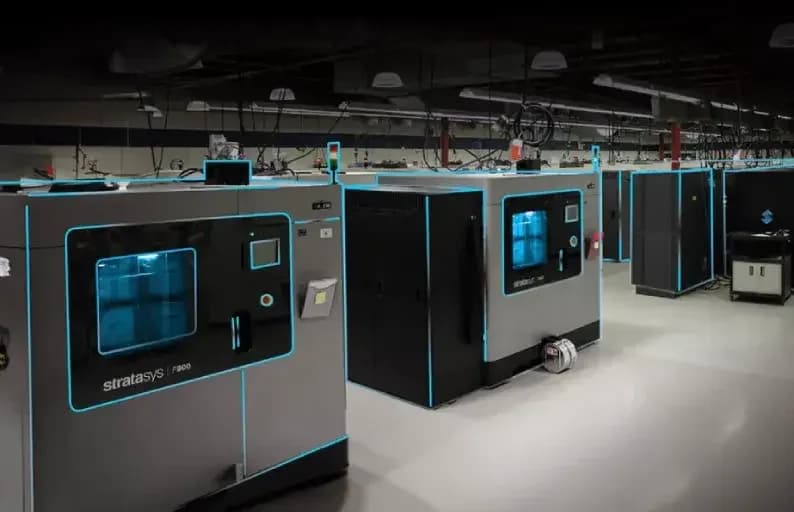
Not all SLA printers are built for the same job. There's a meaningful difference between a professional system sitting in an engineering office and a large-format industrial machine like Stratasys Neo® running parts for utomotive or production tooling. Which one makes sense depends on where stereolithography fits in the workflow and what the parts actually need to do.
Professional SLA Printers for Engineering and Product Development
For product development teams, engineering departments, and design studios, a professional SLA printer is usually handling detail-critical early-stage work, such as high-fidelity prototypes, design validation models, fit and form components, and casting patterns. SLA printing is renowned for smooth surfaces and dimensional accuracy, so engineers can physically evaluate a design before anyone commits to tooling or production. That's a fast, low-risk way to catch problems early.
Industrial SLA Systems for Production and Certified Applications
These industrial SLA systems are built for larger parts, higher throughput, and workflows where reliability and repeatability really matter. You'll find them in applications like wind tunnel models, large-format prototypes, manufacturing tooling, investment casting patterns, and selected end-use parts.
For applications like aerodynamic testing or precision automotive tooling, Neo Stereolithography brings together accuracy and surface quality at an industrial scale.
The Neo®450s printer offers a 450 × 450 × 400 mm build volume, while the Neo®800 and 800+ printers step up to 800 × 800 × 600 mm for larger parts and batch production.
Across the range, Neo® printers use solid-state UV lasers to cure photopolymer resin with high precision.
Common Applications for SLA 3D Printed Parts
Stereolithography shows up across a lot of industries, and for good reason. When precision, surface quality, and complex geometry all matter, SLA printing covers a lot of ground, from early-stage prototyping through to specialized production parts.
Functional Prototypes
Functional prototyping is probably the most common use. SLA prototypes let engineers get hands-on with a design before anyone commits to manufacturing — fit and form testing, assembly checks, early functional evaluation. Because the parts closely match the digital model, they're a reliable way to catch problems during development rather than after.
Large, Accurate Parts and Models
Industrial SLA systems can produce large, highly detailed parts that would be difficult to pull off with traditional manufacturing. Full-scale design models, large prototype components, demonstration models for engineering review — surface quality and geometric accuracy hold up even as parts get bigger, which is where a lot of other processes start to struggle.
Models for Wind-Tunnel Testing
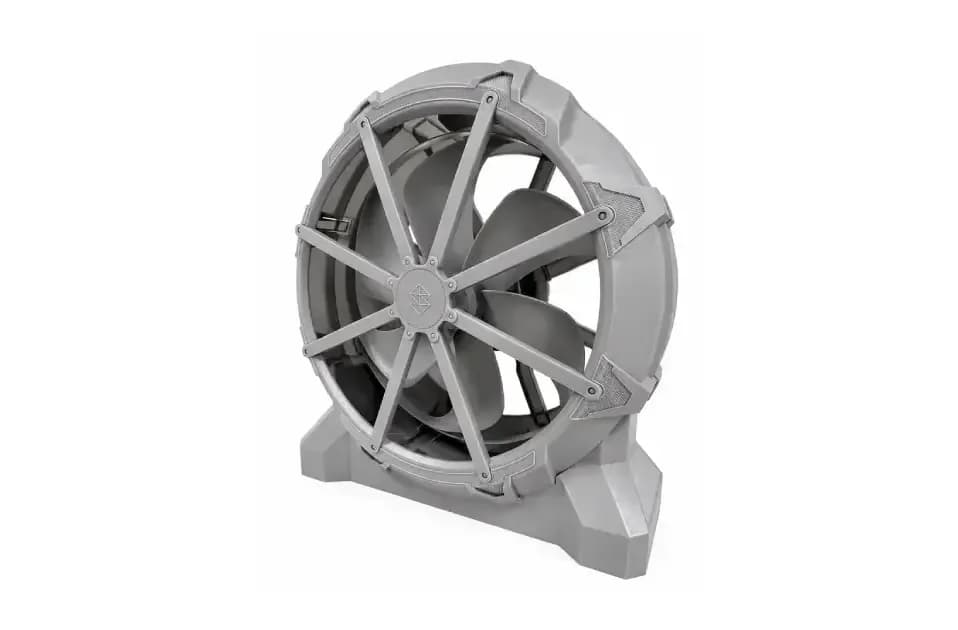
Wind tunnel testing is demanding. Surfaces need to be smooth and the geometry needs to be precise, because tiny imperfections can affect airflow measurements. SLA printing handles both well, and materials developed for SLA offer the stiffness and heat resistance needed to withstand tunnel conditions. That’s why it's a go-to 3D printing technology for scaled aircraft, automotive, and motorsport models used in aerodynamic research and development.
Manufacturing and Industrial Tooling
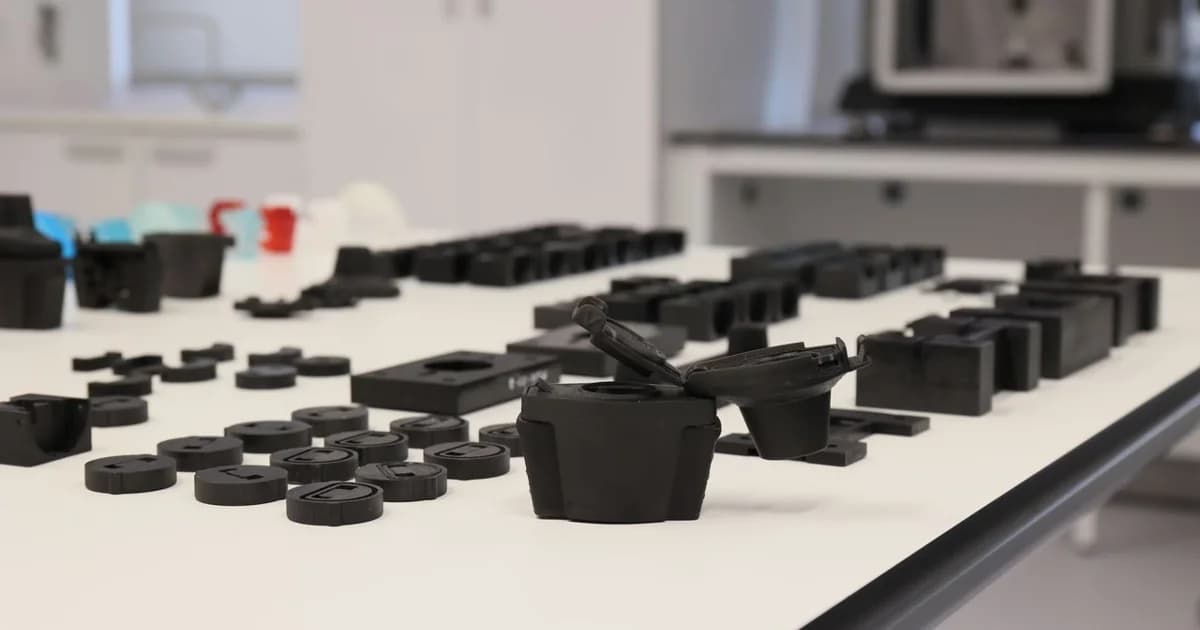
SLA printing can also be used to produce manufacturing tools and fixtures, like assembly fixtures, drill guides, vacuum forming molds, and tooling patterns. These tools can be produced quickly compared with traditional machining, allowing manufacturers to reduce lead times during product development or production setup.
Functional prototyping is probably the most common use. SLA prototypes let engineers get hands-on with a design before anyone commits to manufacturing — fit and form testing, assembly checks, early functional evaluation. Because the parts closely match the digital model, they're a reliable way to catch problems during development rather than after.
Industrial SLA systems can produce large, highly detailed parts that would be difficult to pull off with traditional manufacturing. Full-scale design models, large prototype components, demonstration models for engineering review — surface quality and geometric accuracy hold up even as parts get bigger, which is where a lot of other processes start to struggle.
Wind tunnel testing is demanding. Surfaces need to be smooth and the geometry needs to be precise, because tiny imperfections can affect airflow measurements. SLA printing handles both well, and materials developed for SLA offer the stiffness and heat resistance needed to withstand tunnel conditions. That’s why it's a go-to 3D printing technology for scaled aircraft, automotive, and motorsport models used in aerodynamic research and development.
SLA printing can also be used to produce manufacturing tools and fixtures, like assembly fixtures, drill guides, vacuum forming molds, and tooling patterns. These tools can be produced quickly compared with traditional machining, allowing manufacturers to reduce lead times during product development or production setup.
Investment Casting Patterns
SLA printing is often used to produce master patterns for investment casting.
The printed part becomes the pattern. A mold is formed around it, and when the mold is heated, the castable SLA resin burns out, leaving a cavity that is filled with molten metal. Materials such as antimony-free SLA resins are made to produce a cleaner burnout with very low ash content, which means the final metal component picks up the geometry accurately. Aerospace, automotive, and precision manufacturing all use this approach because it's a practical way to produce complex metal components with shorter lead times and lower costs than traditional tooling or machining methods.
Fluid-Flow Components
SLA printing is well suited for producing fluid flow components used in testing, validation, and engineering development.
Smooth internal surfaces and accurate geometries make SLA printing a good fit for fluid flow work. Channels and manifolds, pump and valve housings, air ducts, ventilation components, test parts for fluid dynamics or water-intrusion studies — surface finish matters here because even small imperfections skew results. SLA parts can usually go straight into functional testing or experimental setups, which helps teams validate designs well before committing to production.
Choosing the Right SLA 3D Printer
The right SLA 3D printer depends on several things, such as part size, materials, and how it fits into your existing workflow. Smaller desktop SLA printers tend to suit design models and small prototypes well enough. But when you step up to an industrial system, you're looking at machines designed for large parts, 24/7 reliable operation, and production-oriented workflows, supported by dedicated software, materials and service infrastructure that a smaller machine simply isn't built for.
When evaluating options, build volume, accuracy and surface quality, material compatibility, and reliability are the factors that tend to matter most. Different vendors bring different printer architectures, software, and material portfolios to the table, and those differences affect part quality, workflow efficiency, and what the system can actually be used for.
For teams that depend on stereolithography for demanding engineering or manufacturing work, industrial systems like Neo stereolithography printers are built to deliver the accuracy, repeatability, and build capacity those workflows require.
Frequently Asked Questions
What materials can be used with SLA 3D printing?
SLA runs on liquid photopolymer resins that cure under UV light. There's a material for most requirements, general-purpose, tough, clear, water-resistant, high-temperature, casting, and the Somos® range covers a lot of that ground: Somos® NeXt™, Somos® Taurus™, Somos® WaterShed® XC+, Somos® PerFORM™, Somos® WaterShed® AF, and Somos® EvoLVe™ 128.
What is the difference between SLA and FDM?
SLA cures liquid thermoset resin with a UV laser. FDM® melts and extrudes thermoplastic filament instead, building the part layer by layer. Reach for SLA when smooth surfaces, fine detail, and dimensional accuracy top the list, and FDM when the part needs the durability, heat resistance, or mechanical properties that engineering thermoplastics bring. Stratasys offers both.
What is the difference between SLA and DLP?
Both cure photopolymer resin with light, but they go about it differently: SLA traces each layer's geometry with a laser, while DLP projects the whole layer at once. That makes SLA well suited to large, highly detailed parts, while DLP can print faster for smaller parts and production runs. Stratasys offers P3™ DLP alongside SLA.
How accurate is SLA 3D printing?
Stratasys Neo SLA printers can hold tolerances as fine as ±0.1 mm (±0.004 in.) on dimensions under 100 mm (3.94 in. ), and ±0.15% for larger dimensions. Layer thicknesses range from 50 to 200 µm, depending on material. High dimensional accuracy, fine feature resolution, and smooth surface finishes are what SLA is known for.
What are the limitations of SLA 3D printing?
SLA is limited to photopolymer resins and needs additional post-processing, including washing and UV post-curing. Supports may also be required, so careful part orientation is important to keep them away from appearance-critical A-surfaces. Some resins are also sensitive to prolonged UV exposure, though UV-resistant materials and protective coatings can help where that matters.
How long does SLA post-processing take?
Post-processing can add anywhere from one to two hours, depending on the part’s size and complexity. That typically breaks down into 15–30 minutes of solvent washing, followed by 30 minutes of drying, then 15–30 minutes of UV post-curing. Support removal and any extra finishing add more time, depending on the part.
What industries use SLA 3D printing?
SLA is used across industries that need accurate parts with fine detail and smooth surfaces, including wind-tunnel models and other functional prototypes, automotive tooling, manufacturing jigs and fixtures, and investment-casting patterns for foundries.