International shipping comes with its fair share of moving parts. Customs forms, product details, carrier requirements. Just when you think you’ve got everything figured out, another change comes along.
If you’re shipping orders to customers in the European Union, there’s a new one to keep on your radar.
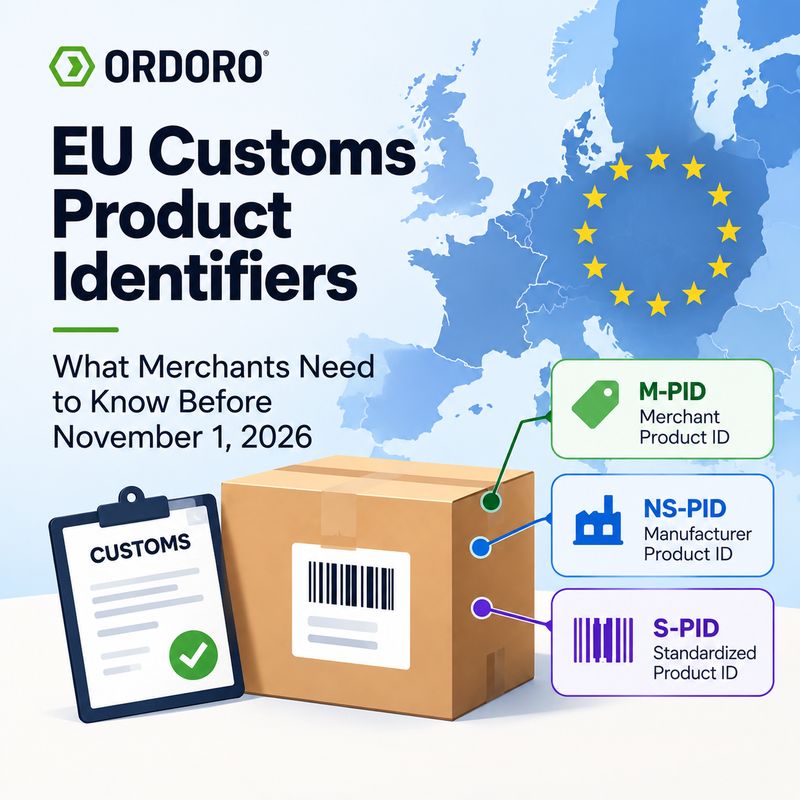
Starting November 1, 2026, qualifying business-to-consumer (B2C) shipments entering the EU from outside the region will need additional product-level identifiers. For ecommerce businesses, that means making sure the right product information is ready before those packages head overseas.
The last thing anyone wants is an order sitting at customs because of a missing detail.
The good news? Ordoro has you covered. We’ve added support for these identifiers when shipping via UPS, FedEx, and DHL eCommerce, so you can prepare for the changes without upending your fulfillment routine.
What the New EU Customs Requirements Mean for Sellers
When you ship internationally, customs authorities need information about what’s inside each package. You’re probably already familiar with providing product descriptions, declared values, and other shipment details. The upcoming requirements add another layer: product-level identifiers that help identify the specific items being shipped.
The changes are especially relevant to qualifying B2C shipments valued at €150 or less that enter the EU from outside the region. Depending on the shipment and carrier, additional identifiers may be required to help customs process the package.
And while November 1 is the main date to remember, carrier timelines can differ. UPS has communicated an earlier October 25 implementation date for applicable shipments, so it’s worth checking your carrier’s guidance rather than waiting until the last minute.
You don’t need to become a customs expert overnight. You just need to know what’s changing and have the right information ready.
Less Customs Guesswork, More Shipping
Here’s where Ordoro comes in.
We’ve added support for EU product identifiers across UPS, FedEx, and DHL eCommerce, making it easier to manage the additional information within the same platform you already use to ship orders.
Instead of tracking down product details every time an international order comes through, you can save product identifiers directly in Ordoro and keep that information alongside your existing product records.
Once those details are saved, Ordoro can automatically populate them in the customs fields when you prepare an applicable shipment. That means less repetitive data entry and fewer opportunities for something to get missed.
And when you’re ready to ship, you can choose to send the additional product information with supported carrier services. It’s a small change to your workflow that can make a big difference when you’re managing international orders, especially during a busy shipping season.
Want to see how it works? Our step-by-step guide to adding EU product identifiers in Ordoro walks you through the setup.
A Little Prep Now Goes a Long Way
Nobody wants to discover a missing customs detail when a customer’s order is already packed and ready to go. With November 1 approaching, now’s a good time to give your EU shipping workflow a quick once-over.
- Review your EU-bound products. Identify which items you regularly ship to customers in the European Union.
- Double-check your product information. Make sure you have the identifiers needed for applicable shipments.
- Save those details in Ordoro. Keep everything organized and ready for future orders.
- Check with your carriers. Requirements and implementation dates may vary, so review any updates from UPS, FedEx, or DHL eCommerce.
A few minutes of preparation today could save you a lot of back-and-forth tomorrow.
Keep Your International Orders Moving
Customs requirements may change, but your goal stays the same: get orders out the door and into your customers’ hands. Whether you’re shipping a handful of international orders or sending packages overseas every day, having your product information organized can help make the transition easier.
Ordoro’s expanded EU customs support gives you another way to stay prepared without adding unnecessary complexity to your shipping process.
November 1 is almost here. Get your product details in order, review your carrier requirements, and keep those international shipments moving.
Ready to get set up? See how to add EU product identifiers in Ordoro.