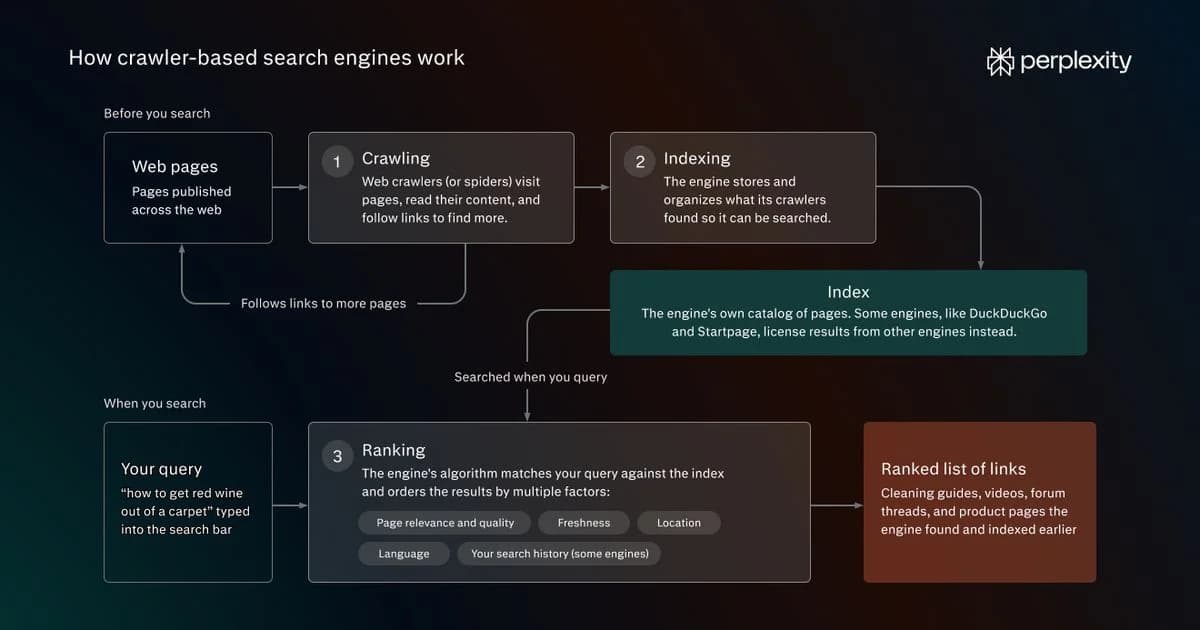
The web changes every second. Applications or agents that query web information need to know when and how it changed. A sales agent needs to know when an account announces funding. A coding agent requires an alert when an API ships a breaking change. A product team has to track changes to a competitor’s pricing page.
Most teams handle this monitoring by running scheduled searches and maintaining custom code to remove duplicates and identify changes. That works for a few queries, but gets harder to maintain across hundreds of topics and pages.
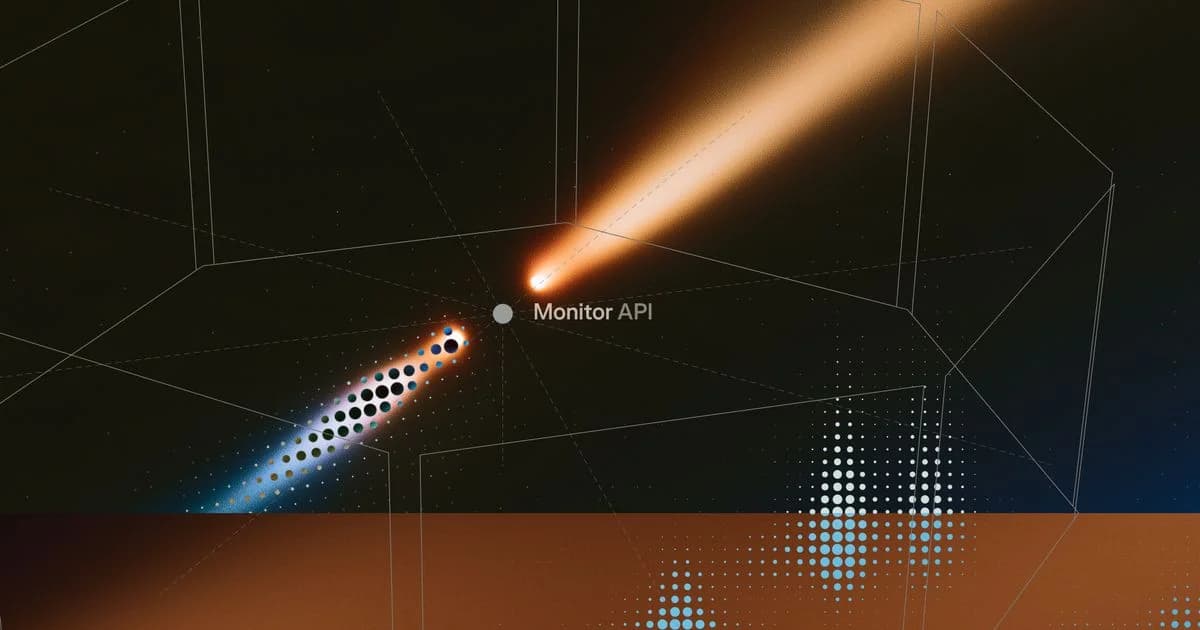
Today, we’re launching the Monitor API to handle web monitoring at scale. Monitor can watch the web as a whole for new developments on a topic or track changes to a specific page. It checks on a schedule and sends a webhook when it finds a relevant update.
Monitoring across use cases and industries
Developers can define and create a Monitor in plain language. Each monitor has a search query or a list of pages, plus an optional goal that can be specified in plain language. The example below shows how to detect new funding rounds in the AI infrastructure space with the goal of identifying companies that’ve raised Series A or B levels of funding.
Monitor supports both broad topic monitoring and checks on specific pages. The mode depends on whether an application needs to discover new information across the web or follow a known source:
- Monitor the web: Track new developments on a topic, company, or question. Monitor runs the query through Perplexity Search across web and news results.
- Monitor pages: Track changes to up to 10 specified pages, like a pricing page, a changelog, or a policy page. The initial check saves a baseline. Subsequent runs return a text diff of what changed.
Perplexity Decider checks every result against a given goal. Web Monitor results must pass the following four checks: relevance, source legitimacy, new information, and freshness. For Page Monitor changes, Decider checks whether the change is meaningful for the goal.
An update is sent only if every check meets its threshold, and each update includes a confidence score. Thresholds are adjustable per check. Developers can also update the goal without recreating the monitor. Developers can change what counts as relevant at any time by updating the goal, without recreating the monitor.
Flexible scheduling and delivery
Monitors run on a fixed interval, such as every 15 minutes, hourly, daily, or weekly, or on a custom cron schedule. Each run picks up where the last one ended, and Monitor handles result deduplication across runs.
Relevant updates are delivered through signed webhooks, with automatic retries for transient delivery failures. These webhooks can trigger agent workflows, such as researching an account after a funding announcement or recommending changes to pricing after a competitor update. Monitors can also notify you when they are automatically paused.
Pause, resume or run monitors on demand, from the API or the API Console.
More fresh and relevant results
We tested Monitor against Search API providers across 60 topics drawn from production Search API queries, including company news, technology releases, and regulation. Each monitor watched for new information on its topic for eight hours. A separate model then checked the results for relevance and publication timing.
In this evaluation, Perplexity delivered the most fresh, relevant results across the widest range of topics. Many of the results were not returned by any other provider.
Monitor works across different industries
Monitor helps teams build applications and agents that act on new information. Some production use cases include:
- GTM engineering: Monitor funding announcements, executive hires, and product launches to trigger account research, CRM updates, and timely outreach through connected agent workflows.
- Equity research: Track earnings releases, guidance changes, acquisition announcements, and adverse media, to summarize developments and flag potential implications for an analyst’s investment thesis.
- Competitive intelligence: Maintain a pulse on competitor activity across pricing, product launches, and changelogs to flag changes and update competitive briefs.
- Regulatory monitoring: Watch regulators’ announcements and guidance pages so agents can summarize changes and route them to compliance teams for review.
Pricing and availability
Web monitors cost $1 per 1,000 successful runs. Page monitors cost $1 per 1,000 URLs fetched, since a single run can fetch many pages. A run is one scheduled or on-demand check.
The Monitor API is available today through the API and the API Console using the same API key as Search, Context and Agent API.
Getting started
text
curl --request POST https://api.perplexity.ai/v1/monitors \ --header "Authorization: Bearer $PERPLEXITY_API_KEY" \ --header "Content-Type: application/json" \ --data '{ "name": "AI infra funding", "targets": [ {"type": "search", "query": "AI infrastructure funding rounds"} ], "goal": "New Series A or B announcements", "schedule": {"type": "interval", "interval": "1d"}, "webhook": {"url": "https://agent.example.com/hooks"} }'
Each run that finds relevant updates sends them to your webhook: new results with a title, snippet, and confidence score, or a text diff for page changes. Add metadata to route each update back to the right user, workspace, or agent.
Read the Monitor API docs or create a monitor in the API Console.