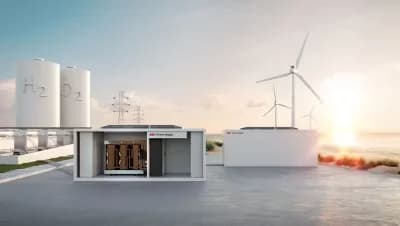
The emergence of blue hydrogen (with carbon capture and storage) and green hydrogen (using renewable electricity) represents a pathway to decarbonizing power generation at scale, and although most current production relies on fossil fuels, investment in clean hydrogen projects is accelerating. This shift is driven by decreasing renewable energy costs, improving electrolyzer technology, and strengthening government support through national hydrogen strategies and funding commitments.
THE CHALLENGES OF TRANSITIONING TO CLEAN HYDROGEN
<p>The transition to clean hydrogen does face several hurdles:</p>
High Cost
<p>Production costs within energy industries remain high, particularly for green hydrogen where electricity represents over 70 percent of operating costs.<sup>2</sup> This requires optimized energy management systems and more efficient electrolysis processes.</p>
Slow Infrastructure development
<p>Infrastructure development is progressing; however, most potential production is still in planning stages. The industry needs standardized solutions for production, storage, and distribution, alongside robust safety systems and control technologies.</p>
Inconsistent policies
<p>Policy frameworks are crucial in guiding the growth and adoption of hydrogen energy. However, inconsistencies across different regions can create uncertainty and discourage investment. To foster a supportive environment, policymakers should establish clear, comprehensive policies that promote research, development, deployment, and commercialization of hydrogen technologies.<sup>3</sup></p>
Nascent supply chain
<p>While hydrogen production must scale up from kilowatt and megawatt to eventually gigawatt capacity, the supply chain remains nascent, with insufficient manufacturing capacity for key components like electrolyzers, and lack of standardization. These limitations pose significant challenges for achieving the required scale of production.</p>
SCALING UP GREEN HYDROGEN - WHAT WILL IT TAKE?
Watch the ABB Process Automation podcast on the challenges and solutions required to scale up green hydrogen.
HYDROGEN SOLUTIONS REQUIRED
<p>While energy efficiency, electrification and renewables can achieve 70 percent of the mitigation needed to reach net zero by 2050<sup>4</sup>, hydrogen-based integrated solutions across four key areas will be needed to decarbonize end uses where other options are less mature or more costly, such as the production of derivatives, heavy industry, long-haul transport and energy storage.</p>
Derivatives Production
<p>Hydrogen plays an unavoidable role in the production of ammonia, methane and methanol as key ingredients. Here the migration from natural gas will enable further energy security and energy access to a carbon neutral future. The demand for ammonia is growing as new applications, apart from fertilizers, are developed and methanol is an attractive path for carbon neutral fuels- efuels.</p>
Heavy Industry
<p>Steel and cement manufacturing typically feature high-temperature processes that are difficult to electrify directly, resulting in high CO2 emissions. These ‘hard-to-abate’ sectors are therefore attractive candidates for green hydrogen power and require reliable hydrogen supply systems and advanced process controls to maintain production efficiency.</p>
Transportation
<p>Long-haul shipping and heavy-duty vehicles - including trains and trucks - need efficient fuel cell systems, safe storage solutions, and reliable power conversion technologies to make hydrogen a viable alternative to conventional fuels.</p>
Power Generation
<p>Using hydrogen for energy storage requires efficient conversion systems between electricity and hydrogen, sophisticated energy management, and integration with renewable power sources.</p>