The Lusk family pumpkin farm ships almost 10 million pumpkins a year. Jason Lusk says the team did the math in anticipation of our interview and almost couldn’t believe the number.
Their farm in Dalhart, Texas is one of the largest pumpkin and jack-o-lantern farms in the country. They reckon they pick and process pumpkins faster than almost anyone else. And three Rivian R1Ts help keep it all moving.
Jason is a fourth-generation farmer. They planted about 1,600 acres of pumpkins this year in a season that included a heat wave, but Jason says the crop is coming along better than the team expected.
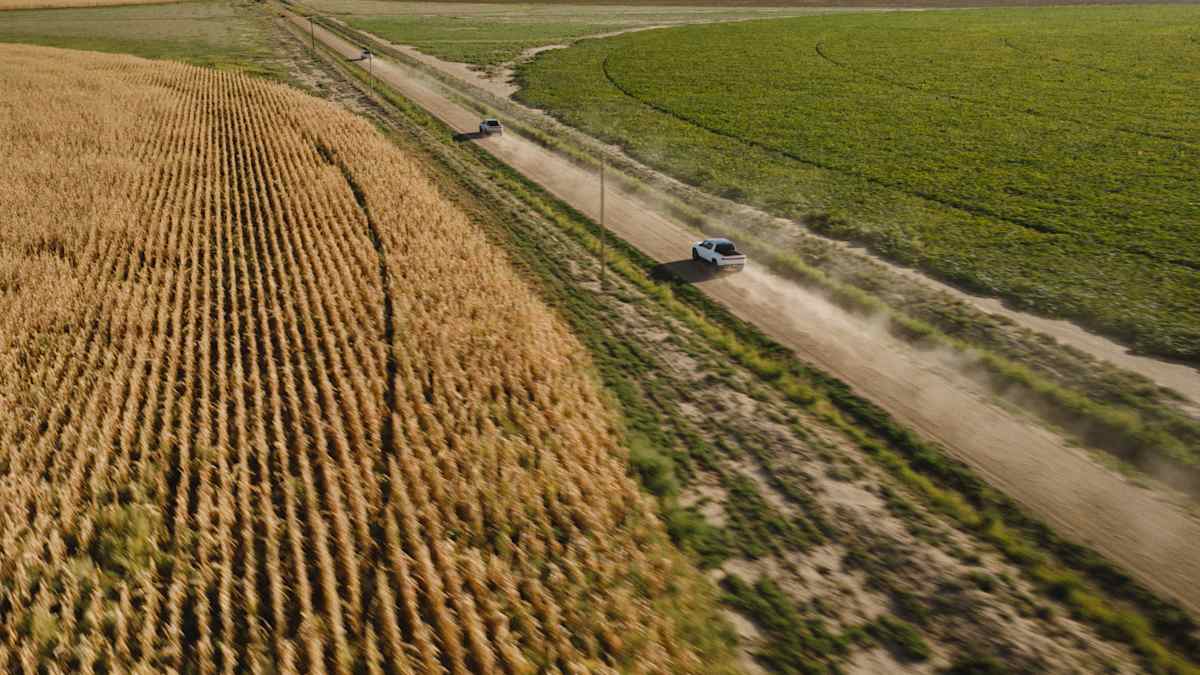
The R1T holds up well to the rigors of their dirt-first daily driving routine. “We’re off the road all the time,” Jason says. “We spend more time on the dirt.”
A farm this big and this busy means lots of miles and lots of repetition. He estimates he gets in and out of the truck close to 100 times a day. The suspension keeps it comfortable in spite of that. “You’re never wore out at the end of the day from riding that pickup,” he says.
The R1T changes how much they’re able to get done. “You can probably do twice as much work in one day, since the suspension and capability of the trucks gets us to where we need to go quicker,” Jason says. The team uses Rally mode to move around the farm—a good way to have a little fun along the way.
“We figured between maintenance and fuel we’re saving about $5,000 per vehicle per year.”
The truck covers other work too. The heaviest job is towing enormous water tanks—which each weigh over 10,000 lbs—to the middle of the farm circles. And all the little jobs add up, too. Chris often spends less time in the field and more time making sure everyone else has what they need. “The Rivian will also do what I need when I'm picking up parts and running these emergency runs through the field,” he says. He carries tools and parts in the front trunk and the Gear Tunnel of the R1T. “You can take four guys to lunch, and you don't have to unload your pickup,” he says. “And you're not forgetting to put tools back in.”
He also likes the turning radius. “They turn so sharp you can get it in a parking lot faster and easier,” he says.
A lot of the driving on the farm is stop and go. The team says that is hard on fuel mileage in a gas truck and does not bother an EV much. Gas trucks tend to idle for long stretches in the heat. “You might be in the field for half an hour, making a loop through, checking things, and you come back to a hot pickup,” one manager says. That’s no fun in a west Texas heat wave.
Ryan sets the cabin to hold its temperature when he leaves the truck for a long walk. “It's 60 degrees when I get back and it's wonderful,” he says.
The team figures it saves about $5,000 per vehicle per year on maintenance and fuel. They also cite the warranty and the service from Rivian as reasons Jason pushed the group toward the trucks.
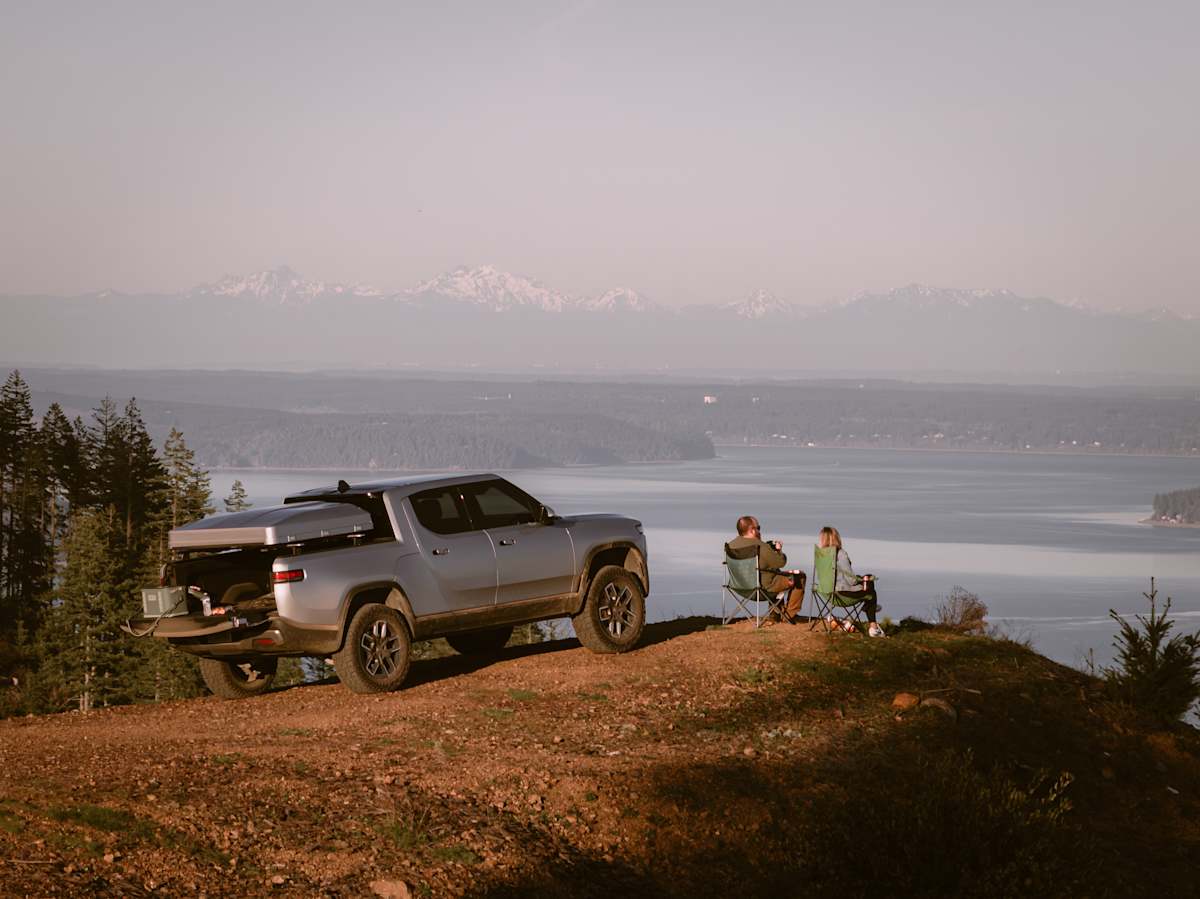
The trucks can charge both at home and right on the farm, which simplifies refueling and the logistics for Jason and team.
Jason's first Rivian was an R1S for his wife. “I really wanted the sport aspect of it, the performance,” he says. “I really didn't even consider driving the pickup on the farm.”
“Our goal is to get this crop to market and put smiles on little kids’ faces . We have a lot of fun doing it, and now that we have Rivians, we have a lot more fun doing it.”
He took her R1S out to the farm a couple of times. The suspension seemed good, and that was enough for him to buy an R1T. The first year he still used his old truck most days and “babied” the new truck. But over time he stopped wanting to drive the other one.
Ryan and Chris followed. “We had the luxury of watching Jason take the first big bite,” Chris says. “After we had ridden in them and driven his truck, it was a pretty easy decision.”
“Now we just got a couple more guys to talk into it,” Ryan says.
Few people nearby drive EVs, so the trucks stand out, both in terms of looks and performance. The roads around the farm are mostly two-lane, and the team passes semis on them. “It’s really nice to be able to hit the gas or electricity or whatever you want to call it, and just haul past everybody,” Jason says. “I don’t care whether you like gas cars or electric cars—If you prove to me something is better, I'm going with the better option.”
The goal each year, Jason says, is to get the crop to market and “put smiles on little kids’ faces.” They’ve always loved their work. “And now we have Rivians. We have a lot more fun doing it.”