Every online transaction runs through a gauntlet of automated checks before a payment goes through. One of the most influential checks is the fraud score, a numerical rating that predicts whether a transaction is legitimate or suspicious. Get it wrong, and you lose revenue to false declines or expose your business to chargebacks. Understanding how these scores shape your payment processing outcomes is the first step to improving checkout performance.
This article breaks down what fraud scores are, how they influence approval rates at checkout, and what you can do to keep legitimate transactions flowing without opening the door to fraud.
Key Takeaways: Payment Fraud Scores and Checkout Approval
- A fraud score is a real-time numerical value that estimates the risk level of each transaction at checkout.
- Overly aggressive fraud thresholds cause false declines, directly reducing approval rates and costing you revenue.
- Machine learning models outperform static rules by adapting to new fraud patterns and reducing false positives over time.
- Rapyd Protect uses AI modelling and a customisable rules engine to help merchants reduce chargebacks while keeping approval rates high.
- Sharing richer transaction data with issuers improves authorisation accuracy and helps recover otherwise declined payments.
What Is a Fraud Score in Payment Processing?
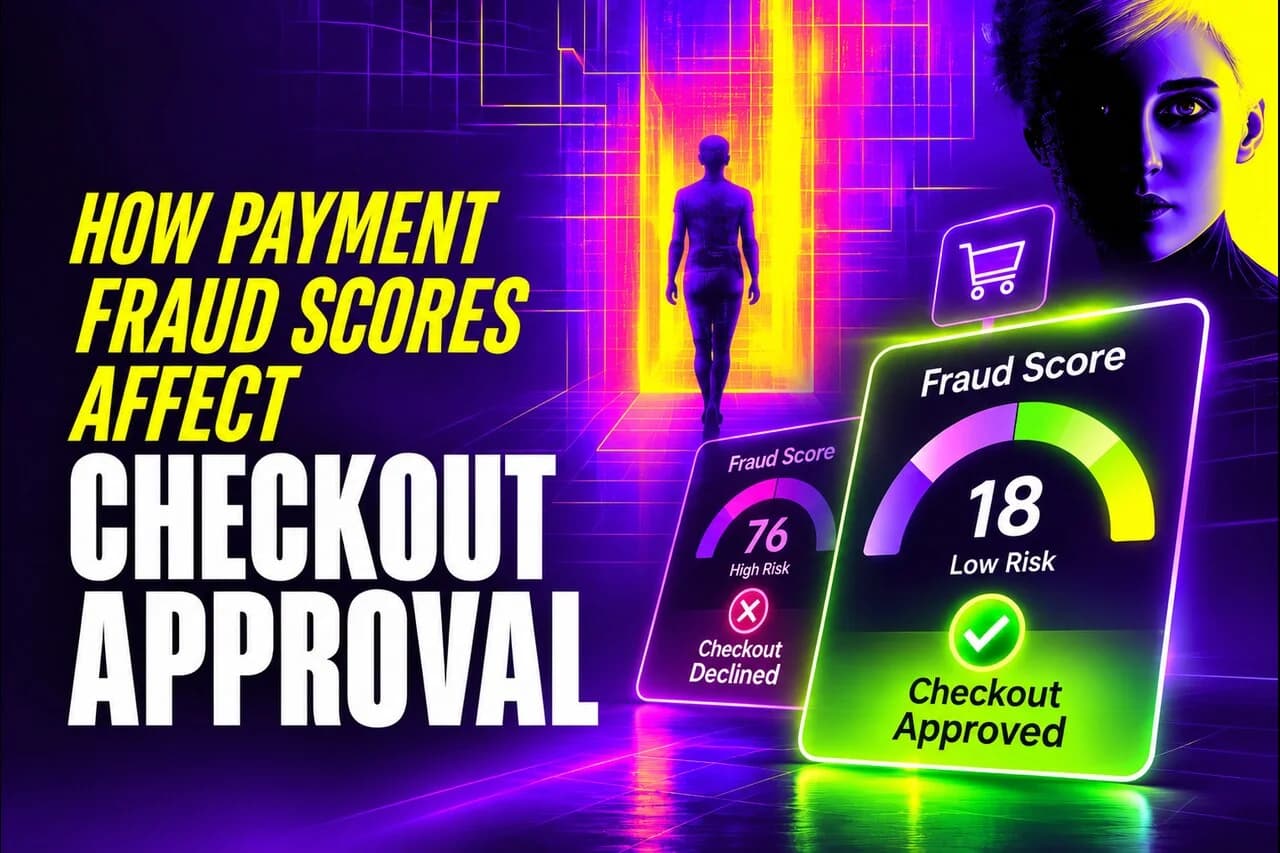
A fraud score is a numerical value, typically on a scale from 0 to 100 or 0 to 1,000, that a risk engine assigns to every transaction in real time. Lower scores suggest the transaction is legitimate. Higher scores indicate a greater probability of fraud.
The scoring engine analyses dozens of signals simultaneously: device fingerprints, customer location, transaction amounts, purchase velocity, and historical spending patterns. All of these data points feed into a model that outputs one number, giving your payment system a clear basis for its next move.
Based on that score, your system takes one of three actions. Low-scoring transactions are approved automatically. Mid-range scores can trigger step-up authentication, such as 3D Secure verification. And transactions above your risk threshold are declined or flagged for fraud protection review.
How Do Fraud Scores Directly Affect Checkout Approval Rates?
Your fraud score thresholds act as the gatekeepers of your checkout. Set them too low, and you block legitimate customers. Set them too high, and fraud slips through.
False declines, where a legitimate purchase gets rejected because the fraud score exceeded your threshold, are one of the most expensive problems in ecommerce. According to a 2025 report from Sift, global payment fraud losses reached $48.2 billion in 2024, but the revenue lost to false declines often surpasses actual fraud losses.
Every false decline means a lost sale, a frustrated customer, and a higher chance that shopper never returns. Your approval rate drops, and so does customer lifetime value. For businesses processing payments across multiple markets, the impact compounds quickly.
Why Static Fraud Rules Hurt Your Approval Rates
Traditional rules-based fraud filters operate on fixed conditions. For example: decline any transaction over a certain amount from a specific country. These rules are simple to set up, but they lack context.
A customer travelling abroad, placing a large gift order, or using a new device can easily trigger a static rule. The result is a false decline on a perfectly valid purchase. Static rules also fail to evolve with shifting fraud tactics, meaning they become less effective over time while continuing to block good customers.
The limitations of rules-based systems include inflexibility when fraud patterns change, high false positive rates that frustrate legitimate buyers, and an inability to weigh multiple risk signals together. This is why many global ecommerce businesses are moving toward AI-driven scoring models that adjust dynamically.
How Machine Learning Improves Fraud Scoring Accuracy
Machine learning models analyse millions of transactions to identify patterns that static rules miss. They evaluate behavioural signals, such as typing speed, navigation patterns, and device health, alongside traditional data points like location and transaction history.
The key advantage is adaptability. As fraud tactics evolve, the model learns from new data and recalibrates its scoring. This means fewer false positives over time and more accurate risk decisions at the point of checkout.
Rapyd uses AI-native infrastructure across its global payments network to help merchants achieve authorisation rates of up to 97%. That performance comes from combining real-time scoring with intelligent retry logic and transaction enrichment, all working together to recover revenue that would otherwise be lost to unnecessary declines.
What Data Feeds Into a Fraud Score?
A fraud score is only as good as the data behind it. Modern scoring engines pull from a wide range of inputs to build a complete risk picture for each transaction.
Common data inputs include transaction amount and currency, the customer’s device fingerprint, IP address and geolocation, billing and shipping address match, historical purchase behaviour, and email domain reputation. The broader and richer the data set, the more precise the score.
Sharing additional trust signals with card issuers, such as customer purchase history or verified device data, can further improve card acquiring authorisation accuracy. When issuers receive better context about a transaction, they are more likely to approve it on the first attempt.
How to Reduce False Declines Without Increasing Fraud Risk
Reducing false declines starts with moving away from a one-size-fits-all approach to risk management. Here are practical steps that help you protect revenue while keeping fraud in check.
Adopt Dynamic Thresholds
Rather than applying a single risk threshold to every transaction, use tiered responses. Approve low-risk transactions instantly. Route mid-range scores to 3D Secure authentication instead of declining them outright. Reserve hard declines only for the highest-risk activity.
Enrich Transaction Data
Send as much contextual data as possible with each authorisation request. Details like device ID, customer account age, and order history give issuers a clearer signal, which translates to fewer unnecessary rejections.
Monitor and Adjust Regularly
Fraud patterns shift constantly. Review your score-to-outcome mapping on a regular schedule. If a score band that used to be safe starts producing chargebacks, recalibrate. If a band that triggered declines is producing zero fraud, loosen the threshold.
Use a Provider with Built-in Fraud Management
Rapyd Protect is embedded directly into the Rapyd payments stack, covering cards and local payment methods across 190+ markets. It combines AI modelling, a drag-and-drop rule-building engine, velocity controls, and manual review workflows, all without requiring additional integration. This gives you real-time protection that adapts to your risk profile and regional requirements.
The Role of Your Payment Service Provider in Approval Rates
Your choice of payment service provider has a direct effect on your approval rates. Providers with local acquiring licences can process transactions closer to the issuer, which reduces the chance of cross-border declines.
A provider that offers both payment gateway services and integrated fraud management gives you a unified view of risk data. That consolidation means faster, better-informed decisions at the point of authorisation.
Rapyd holds direct Visa and Mastercard acquiring licences across the UK, Europe, LATAM, Hong Kong, Israel, and Singapore. Combined with hundreds of local payment methods and built-in fraud controls, this helps businesses approve more legitimate transactions while keeping fraud prevention tight.
In Conclusion: Smarter Fraud Scoring Means More Revenue
Fraud scores are not just a security tool. They are a revenue lever. When your scoring model is accurate and your thresholds are well-calibrated, you approve more legitimate transactions, reduce chargebacks, and deliver a checkout experience that keeps customers coming back.
The key is to invest in adaptive, AI-driven fraud scoring, enrich your transaction data, and work with a payment provider that gives you the tools to fine-tune your risk strategy. Rapyd Protect helps you do exactly that, with real-time fraud management built into a global payments network that covers 190+ markets.
FAQs About Payment Fraud Scores and Checkout Approval
What is a good fraud score for approving a transaction?
There is no universal “good” score, because thresholds depend on your industry, risk appetite, and customer profile. Most businesses set approval thresholds that let low-scoring transactions pass automatically and route mid-range scores to additional verification. Rapyd Protect lets you customise these thresholds to match your specific needs.
Can a fraud score block a legitimate customer?
Yes. This is called a false decline, and it happens when a legitimate transaction receives a score above your risk threshold. Common triggers include customers shopping from a new device, an unfamiliar location, or making an unusually large purchase. Rapyd helps reduce false declines with AI-driven scoring that considers behavioural context alongside traditional data points.
How often should I update my fraud scoring rules?
Review your rules and thresholds regularly, ideally monthly or whenever you notice shifts in your approval or chargeback rates. Machine learning models update continuously, but manual rules and thresholds need active management. Rapyd Protect’s rule-building engine makes it straightforward to adjust your configuration as conditions change.
What is the difference between a fraud score and a credit score?
A fraud score evaluates the risk of a single transaction in real time. A credit score, by contrast, measures an individual’s long-term ability to repay debt based on their financial history. Both use data to generate a numerical rating, but they serve entirely different purposes in the payment lifecycle.
Does using 3D Secure improve approval rates?
Yes, when applied strategically. 3D Secure adds a verification step that can shift fraud liability to the issuer, making issuers more willing to approve the transaction. Rapyd integrates 3D Secure into its payment flows so you can apply it selectively to mid-risk transactions, protecting revenue without adding unnecessary friction for low-risk buyers.