What if your biggest quality costs aren’t showing up in your quality metrics?
Most life sciences manufacturers track what they can see: scrap, rework, deviations and recalls. These visible costs are real, and they demand attention. But a larger drain on performance often sits underneath them. It shows up in the hours teams spend searching for information, reconciling data across systems, and waiting for investigations to close.
These hidden costs don’t appear on any single dashboard. They accumulate across departments, systems, and the gaps between them. Together, they push up the total cost of quality and quietly erode productivity, cycle time and compliance readiness. Poor quality management practices have caused billions of dollars in lost revenue for the pharmaceutical industry over the past two decades.
Why disconnected systems increase quality costs
Every deviation, every batch hold and every release delay carries a cost that goes beyond the scrap or rework itself. When manufacturing, quality and facility systems operate independently, teams spend significant time simply finding and connecting the information they need to act.
Consider what happens when an investigation begins. Quality teams pull batch records from the manufacturing execution system (MES), lab results from the laboratory information management system (LIMS), and environmental data from the building automation system (BAS). Each system holds part of the picture. None holds all of it. The work of assembling that picture is where the hidden costs accumulate. It’s done manually, across platforms, and often under time pressure.
The figures are striking. The financial impact of deviations can be substantial. Industry-average deviation costs generally range from €22,000 to €48,000 and can exceed €880,000 per deviation when product loss is involved.
These are the costs that surface. The ones that don’t surface are harder to measure: time spent searching, manual reconciliation and duplicated effort across teams. But they are no less expensive.
Why more data isn’t solving the problem
Most organizations already have plenty of data. Manufacturing execution systems, quality management systems, laboratory information systems and building automation platforms each capture detailed records every day. The problem is not volume. It’s fragmentation.
When these operate independently, data stays locked in silos. A quality team can see deviation records but not the environmental conditions that preceded them. A manufacturing team can see batch execution data but not the lab results that determine whether a batch can be released. Facility teams monitor cleanroom conditions but have no direct line to the quality events those conditions may influence.
This fragmentation creates a specific kind of inefficiency: the need for people to act as the connective tissue between systems. Data is re-entered, attachments are emailed, screenshots are copied into investigations, and information is manually reconciled. No single system has the connections needed to compute the total cost of a quality event. Over time, these manual handoffs introduce delays, inconsistencies and risk.
The result is a paradox. Organizations have more data than ever, but less clarity. More dashboards, but fewer answers. The investment in data collection has outpaced the investment in connection.
The business impact
The hidden costs of fragmented operations show up across the business:
- Reduced productivity. Teams spend hours reconstructing events instead of resolving them, directly reducing manufacturing productivity. Investigation efforts, which rely heavily on senior staff time, consume capacity that could otherwise be directed toward continuous improvement.
- Longer cycle times. Adoption of continuous manufacturing has been reported to reduce manufacturing and testing cycle time by 80% and reduce time from testing to release by 66% in a pharmaceutical manufacturing operation. The gap is not processing time; it's the dwell time spent waiting for QC, batch record review, and signatures. Batch release optimization starts with closing that dwell-time gap.
- Increased compliance risk. When information is scattered across systems, investigations take longer and the risk of error increases. Manual processes introduce interpretation gaps and human error that compound over time.
- Lower right-first-time performance. Fragmentation makes it harder to identify root causes accurately the first time, leading to recurring deviations and repeated investigations.
- Higher total cost of quality. Industry analyses estimate quality-related costs in life sciences manufacturing at 15% to 20% of sales revenue, with some organizations reaching as high as 40% of total operations. Much of that cost is driven not by visible failures but by the inefficiencies that surround them.
What leading manufacturers are doing differently
The manufacturers making progress are not adding more systems. They’re connecting the ones they already have.
Connected operations bring manufacturing, quality and facility data into a shared operational view, creating the foundation for unified quality operations. Instead of reconstructing what happened across platforms, teams start with a more complete picture: batch history, environmental conditions, equipment state and quality events, together in context.
This shared view changes how teams work. Investigations start faster because the data is already assembled. Root-cause analysis goes deeper because the connections between systems are visible. Release decisions come sooner because the evidence is in one place, not spread across five. For organizations pursuing operational excellence, this connected approach turns existing data into a competitive advantage without requiring a full system replacement.
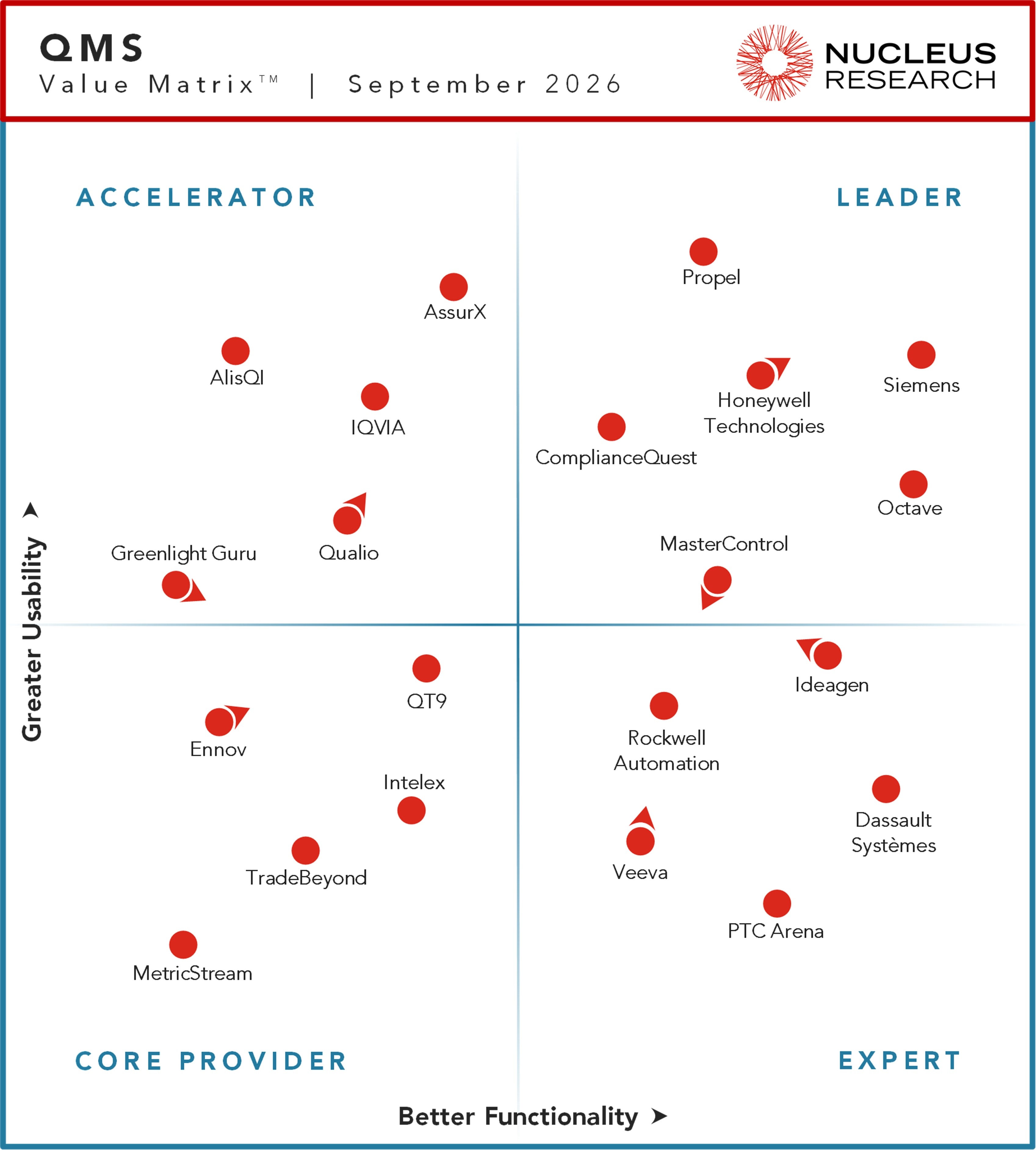
Honeywell Technologies helps life sciences manufacturers build this kind of connected visibility. It brings manufacturing, quality and facility data together so teams can get a more complete operational picture and act on it with confidence.
The shift doesn't require replacing every system at once. It starts with connected manufacturing: linking the data that already exists so it works harder for the people who depend on it. For many organizations, this is the practical starting point for digital transformation.
Find the quality costs your metrics miss. Read the white paper for more.