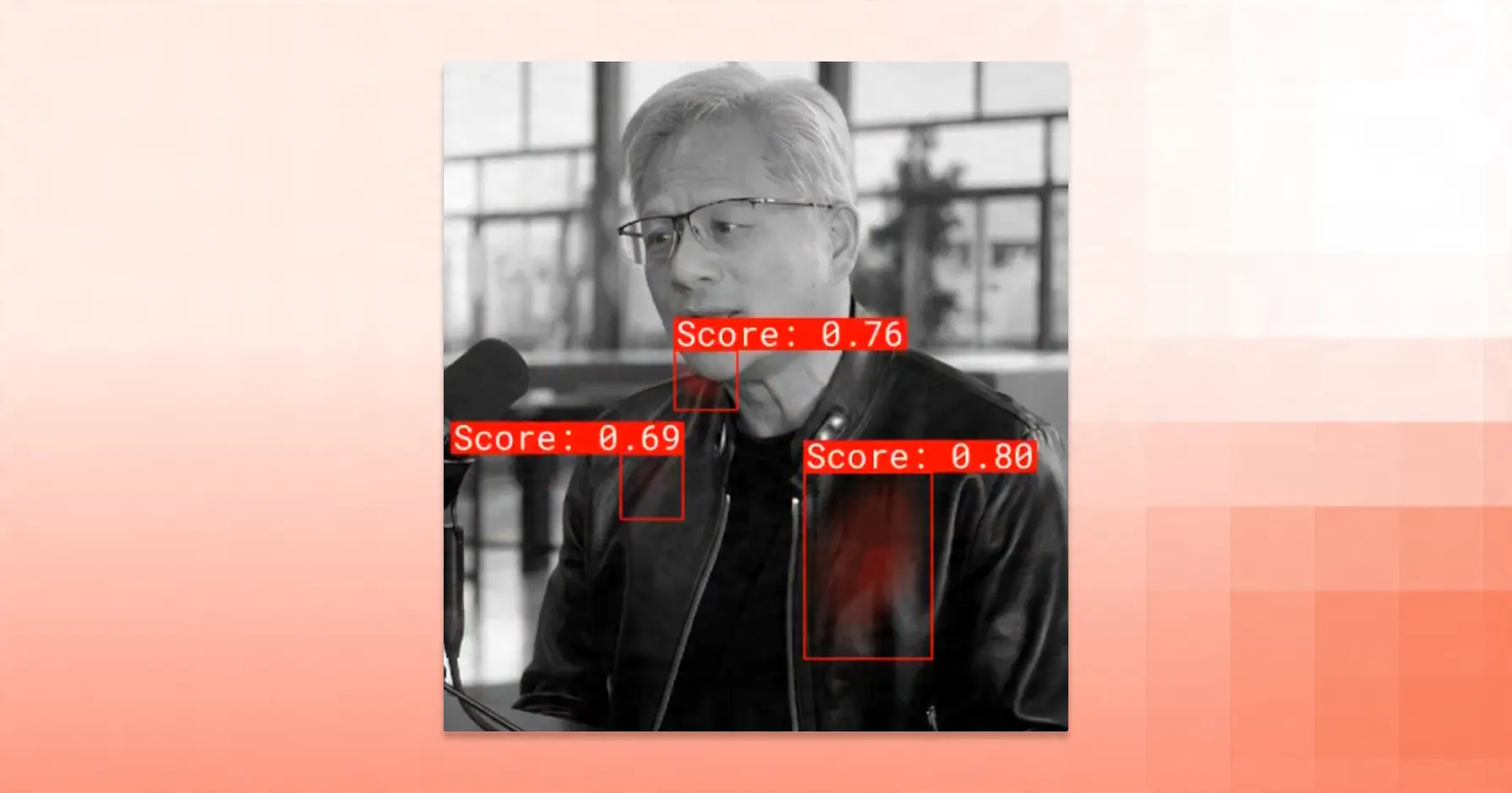
Deepfake detection technology has become increasingly important as AI-generated images, videos, and audio grow more realistic and widely accessible. Organizations, governments, and technology providers are working to identify manipulated content that may affect trust, security, identity verification, and public communication. As synthetic media becomes more prevalent across social platforms, digital services, and enterprise workflows, distinguishing authentic from AI-generated content is increasingly critical.
Despite growing awareness, deepfake detection remains a complex and often misunderstood field. A variety of methods are used to detect possible manipulation, including machine learning, forensics, provenance signals, and behavioral indicators. This guide explores how deepfake detection technology works, the risks deepfakes create, the methods used to identify them, and the practical considerations organizations should evaluate when building a deepfake detection strategy.
TL;DR
- Deepfake detection technology analyzes media for signs of synthetic generation or manipulation.
- It is used in fraud prevention, identity verification, content moderation, security operations, and media authenticity workflows.
- Modern systems may examine visual artifacts, audio patterns, metadata, provenance signals, and behavioral inconsistencies.
- Detection is not foolproof. Performance can drop when media is compressed, noisy, multilingual, or generated by newer models.
- Before choosing a solution, test it on your own media, workflows, and threat scenarios rather than relying solely on vendor claims.
What Are Deepfakes?
Deepfakes are AI-generated audio, video, or image files designed to imitate real people. They can make someone appear to say, do, or express things that never actually happened. What makes deepfakes challenging to identify is their realism. In many cases, the content closely resembles authentic media, making manual detection difficult.
These systems are typically trained on large amounts of real-world data, such as videos, photos, or voice recordings. By learning patterns in speech, facial expressions, movements, and appearance, AI models can generate highly convincing synthetic content. Deepfakes first gained attention through celebrity face swaps and manipulated videos, but their use has expanded far beyond entertainment.
Today, deepfakes are increasingly associated with risks such as impersonation, misinformation, identity fraud, and social engineering. As voice cloning and synthetic media tools become more accessible, organizations are paying closer attention to methods for detecting and verifying digital content before acting on it.
Why Deepfakes Are a Growing Concern
Deepfakes are not a theoretical risk. They are already being used in active fraud campaigns, and the cost of generating them continues to fall as tools become more accessible.
The primary threat categories include:
- Executive impersonation fraud: Attackers use cloned voices to impersonate CFOs or CEOs over phone calls or audio messages, directing finance teams to authorize transfers.
- KYC and identity verification bypass: Synthetic faces and voices are used to spoof biometric verification during digital onboarding.
- Disinformation and reputational attacks: Fabricated audio or video of public figures, politicians, or executives can be used to spread false information or damage trust.
- Call center social engineering: Synthetic voices impersonate customers to manipulate agents into account changes or unauthorized payouts.
- Unauthorized voice and likeness use: A person's voice or face is replicated without consent for commercial, political, or fraudulent purposes.
Recent reporting has highlighted large financial losses linked to deepfake-enabled scams, while researchers continue to warn that the cost and accessibility of generating synthetic media are decreasing.
Why Deepfake Detection Matters in 2026
Deepfake detection is becoming a trust layer for digital communication. In many workflows, organizations need a way to estimate whether media may have been synthetically generated or manipulated before acting on it.
The key reasons detection has become operationally critical include:
- Real-time attack surfaces: Fraud happens during live calls, onboarding sessions, and meetings, not in post-processed files. Detection systems need to operate in real time or near real time to be useful.
- Multimodal attack complexity: Modern attacks often combine audio, video, and contextual social engineering. A detection system that covers only one modality leaves the others exposed.
- Regulatory and compliance pressure: Governments and industry bodies are increasingly requiring synthetic media safeguards, particularly in financial services, public sector communications, and media.
- Vendor accountability gaps: Many detection-only tools provide a score but no provenance trail, no watermarking, and no forensic depth, leaving organizations without the full picture.
Detection matters not because it is perfect, but because operating without it removes the ability to identify and respond to synthetic media threats at all.
Most Deepfake detection systems do not simply "recognize fakes." They analyze multiple signals and estimate the likelihood that the media has been manipulated. Different approaches work better for different media types and threat models.
In audio, detection systems typically examine:
- Spectral artifacts: Inconsistencies in frequency-domain patterns that differ between synthetic and natural speech.
- Waveform anomalies: Irregularities in raw audio signals that can indicate model-generated output, such as unnatural pitch transitions or micro-timing artifacts.
- Prosodic inconsistencies: Deviations in rhythm, stress, or intonation that fall outside the natural range of human speech.
- Environmental noise mismatches: Synthetic audio often lacks the consistent background noise patterns of genuine recordings.
These signals helpaudio detection systems identify characteristics that may indicate synthetic or manipulated speech.
Example: Resemble's DETECT-World, a multimodal detection model, is tested against 250+ generative AI models and returns results in under 300 milliseconds.
In video and image content, detection systems may analyze:
- Visual artifacts: Inconsistencies in lighting, shadows, reflections, skin texture, or image composition that may indicate AI generation or manipulation.
- Facial blending anomalies: Distortions around facial boundaries, hairlines, ears, or other regions where synthetic content is composited.
- Temporal inconsistencies (video): Irregular frame-to-frame facial movements, blinking patterns, lip synchronization, or expression transitions that differ from natural motion.
- Metadata and provenance signals: When available, systems may also evaluate metadata or authenticity information alongside visual analysis to strengthen verification.
Audio detection systems analyze spectral patterns, waveform characteristics, prosody, temporal artifacts, and environmental signals that may distinguish synthetic speech from authentic recordings. Their effectiveness can vary under real-world conditions such as compression, resampling, and background noise.
Core Deepfake Detection Technologies Used in 2026
Deepfake detection is not a single technology. Organizations typically combine several approaches depending on the media type and risk level.
Need a faster way to screen suspicious media across audio, video, and images? Explore Resemble AI's DETECT-Worldto analyze multiple formats through a single API and get confidence-based results in real time.
Key Methods Used in Deepfake Detection
Detection platforms typically implement one or more of the following methods, each with distinct trade-offs in accuracy, speed, and coverage.
The most common methods include:
- Forensic model analysis: Offline or batch scanning of uploaded media for signs of AI generation. Well-suited for investigative use cases, content moderation review queues, and pre-publication verification in newsrooms or media organizations.
- Real-time streaming analysis: Systems that process audio or video in real time, flagging synthetic signals mid-call or mid-session. Critical for call centers, identity-verification workflows, and live-meeting security. Latency performance is the key variable to evaluate.
- Confidence scoring and explainability: Most enterprise detection systems return probability scores rather than simple "real" or "fake" labels. However, confidence alone is often insufficient for security or compliance teams. Explainable detection provides additional forensic context, such as the signals, artifacts, or model behaviors that influenced the assessment, helping analysts investigate flagged content, support audit requirements, and make more informed decisions within existing workflows.
- Replay attack detection: A specific challenge where synthetic audio is played through a speaker and re-recorded, stripping digital artifacts.
- Watermark verification: Checking whether an expected authenticity marker is present in content that should have been generated by a known system. Most relevant in closed content pipelines where generation and distribution are both controlled.
No single method covers every attack type. Effective detection typically involves combining real-time streaming with forensic-depth scanning and provenance verification, particularly in environments where both the speed and origin of content matter.
The Challenges to Deepfake Detection
Detection systems are not infallible. Understanding where they fall short helps organizations build realistic expectations and design safeguards that account for gaps.
Core challenges include:
- Adversarial adaptation: As detection models improve, generation systems adapt. Attackers with access to detection outputs can iteratively refine their synthetic media to reduce detection confidence scores.
- Generalization failures: A model trained heavily on one generation architecture may underperform against newer methods. Independent research on cross-dataset generalization has repeatedly found that detection techniques trained on one generation method often underperform against others.
- Half-truth audio: Partially manipulated audio in which only portions of a clip are synthetic is substantially harder to detect than fully fake audio. Classifiers trained on fully fake content may miss targeted splicing.
- Compression and transmission degradation: Audio transmitted over phone networks, compressed via a codec, or re-encoded, loses signal integrity. Artifacts that indicate synthetic generation can be masked by transmission noise, reducing detection confidence.
How to address these challenges:
- Layer detection with watermarking and provenance tracking for stronger content authenticity verification.
- Authenticity markers provide verification paths beyond traditional artifact analysis methods.
- Train detection models using diverse datasets and multiple generation techniques.
- Evaluate benchmark results across various generation tools and content types.
- Set confidence thresholds based on organizational risk levels and workflow requirements.
- Use human review for borderline cases in high-stakes decision environments.
- Apply stricter thresholds for fraud detection and identity verification workflows.
- Update detection models regularly as generation technologies continue evolving rapidly.
- Prioritize platforms that retrain models against emerging deepfake generation methods.
- Review published benchmark updates to assess ongoing detection performance improvements.
What Resemble AI Offers for Deepfake Detection
Deepfake defense is not only about identifying suspicious media. Organizations also need verification workflows, integration options, and controls that fit real operational environments.
Resemble AI positions its deepfake detection capabilities around practical deployment and verification rather than marketing claims. Resemble AI's detection capabilities span audio, video, and image analysis, with particular depth in voice-cloning detection and authenticity verification, given the company's origins in voice AI.
- DETECT-World: The first detection model built on world architecture that analyzes audio, video, and images through a single API. It delivers confidence-based assessments in under 300 milliseconds, making it suitable for real-time detection workflows.
- Multimodal AI Watermarking: Resemble AI embeds robust, imperceptible watermarks into AI-generated audio, images, and video to help establish content provenance and authenticity. These cryptographically verifiable markers are designed to remain detectable after common transformations such as compression, re-encoding, or format conversion, enabling organizations to verify trusted content throughout its lifecycle and support fraud prevention, compliance, and intellectual property protection.
- Forensic Analysis Tools: Teams can upload audio, video, or image files for deeper analysis. The system returns confidence-based results to support investigations, content moderation, and media verification workflows.
- Real-Time Deepfake Detection: Advanced multimodal detection instantly identifies manipulated video, audio, and other media formats. It provides confidence-based assessments that support faster content verification decisions. This helps security, fraud, and media teams respond before suspicious content spreads further.
- Multilingual Detection Coverage: Detection capabilities are designed to operate across more than 50 languages, supporting global customer operations and international media environments.
- Voice Enrollment for Identity Security: Uses biometric voice verification to confirm the identity of authorized users before granting access to sensitive systems. The system compares a user's voice against a previously enrolled voiceprint during authentication.
Questions To Ask Before Choosing A Deepfake Detection Platform
- Which media types are supported: audio, image, video, or all three?
- What happens under compression, noise, and real-world transformations?
- How are confidence scores presented and validated?
- Can the platform integrate with existing security or fraud systems?
- What provenance or watermarking support is available?
- How are privacy, data retention, and deployment options handled?
Final Thoughts
Deepfake detection is no longer a niche security capability. Organizations that rely on voice verification, customer interactions, content publishing, or digital identity workflows increasingly need ways to assess media authenticity before making decisions. As synthetic media continues to improve, detection systems must perform under real-world conditions, not just in controlled testing environments.
The most effective approach combines multiple layers, including real-time detection, forensic analysis, watermarking, and provenance verification. Together, these provide stronger coverage against evolving threats than any single method alone.
Ready to build a stronger defense against synthetic media? Contact Resemble AI for a demo to see how we can help your team evaluate, verify, and respond to emerging deepfake threats with greater confidence.
FAQs
1. What does deepfake detection mean?
Deepfake detection means analyzing media to estimate whether it may have been synthetically generated or manipulated using AI. Detection systems typically examine visual artifacts, audio patterns, metadata, provenance signals, or behavioral inconsistencies rather than making an absolute yes/no judgment. The goal is to provide evidence that can support verification, moderation, fraud prevention, or investigative workflows.
2. Can deepfake detection technology identify fake audio?
Many modern deepfake detection systems can analyze synthetic speech and voice-cloning attempts. Audio detectors may examine spectral characteristics, timing patterns, prosody, and other acoustic signals that can differ from authentic recordings. However, performance varies depending on audio quality, compression, background noise, language, and the generation model used.
3. How accurate are deepfake detectors?
Accuracy depends on the media type, generation technique, data quality, and evaluation conditions. A detector may perform well on benchmark datasets but less well on compressed social-media videos, multilingual audio, or new generation models. Research repeatedly shows that robustness under real-world conditions remains a major challenge.
4. What is the difference between deepfake detection and content provenance?
Deepfake detection analyzes the media itself for signs of manipulation. Content provenance focuses on verifying where the content came from, how it was created, and whether authenticity information is attached. Technologies such as content credentials and watermarking aim to preserve provenance information throughout the media lifecycle.
5. What are the main types of deepfake detection technologies?
Common categories include image forensics, video analysis, audio analysis, metadata and provenance checks, and machine-learning classifiers. More advanced systems may combine multiple signals using ensemble or multi-modal approaches.
6. Why do deepfake detectors sometimes fail?
Failures often occur because generators improve over time, media is compressed or transformed, or the detector encounters examples it was not trained to recognize. Compression, resampling, background noise, and social-media processing can reduce useful signals.
7. How can an organization evaluate an AI-based deepfake detection system?
Start by defining the threat model: voice fraud, identity verification, content moderation, or media authenticity. Then test the system using your own media samples, including compressed, noisy, and multilingual content when relevant. Measure false positives, false negatives, latency, integration effort, and reporting clarity.
8. Are there deepfake detection platforms that work in real time?
Yes. Some platforms are designed to analyze live audio or video streams, flag suspicious content, and integrate into fraud, moderation, or customer-service workflows. Real-time detection is increasingly important for contact centers, video meetings, and payment-verification scenarios.
9. What is deepfake image detection?
Deepfake image detection focuses on identifying AI-generated or manipulated images. Systems may analyze pixel-level artifacts, lighting inconsistencies, metadata, compression traces, or statistical patterns that differ from camera-captured photos. As image generators improve, obvious visual flaws become less common, which is why detection increasingly relies on more sophisticated signals and provenance information.
10. Can deepfake detection software prevent fraud by itself?
Detection software is usually a risk-reduction layer, not a complete fraud-prevention solution. It works best when combined with identity verification, behavioral analytics, transaction monitoring, and human review.
11. How do I get technical support for a deepfake detection setup?
Look for vendors that provide implementation guidance, API documentation, integration support, deployment options, and operational monitoring. For enterprise deployments, ask about model updates, performance reporting, incident response, and support channels.
12. What should I verify before deploying deepfake detection in production?
Verify that the system supports your media types, languages, latency requirements, and deployment environment. Test it with real-world samples, including compressed and noisy content. Review confidence scoring, false-positive handling, privacy controls, and integration requirements.