- Record revenue, led by AI servers. Q3 revenue reached NT$258.8 billion, up 36% year on year. Server revenue doubled, and we expect fourth-quarter server revenue to grow about 280% year on year.
- AI PCs are going mainstream. AI PC revenue doubled year on year, and AI PCs are now close to 60% of our shipments. The first batch of our RTX Spark-based ProArt laptops sold out.
- Agents are the next reason to upgrade. At CES 2027 in January, we will unveil the full ASUS Agentic AI Ecosystem, with ASUS Zenni agents that coordinate tasks across your apps and devices.
- Introducing Gallop. Our first humanoid robot is already being tested on ASUS production lines. We plan to begin customer pilots in the second half of 2027 and are targeting market availability in the second half of 2028.
Watch the full interview on CNBC.
On November 13, I joined Sri Jegarajah and Mandy Drury on CNBC’s Squawk Box, just after we reported our third-quarter results. We talked about the shift to AI PCs and agents, how we’re handling higher memory prices, and where ASUS AI goes next. I also used the time to share news I’ve been looking forward to for a while: ASUS is building a humanoid robot.
A record quarter, with AI servers setting the pace
It was a record quarter. Revenue reached NT$258.8 billion, up 36% from a year ago, and operating profit rose 161% to NT$22.0 billion, lifting our operating margin to 8.5% from 4.4%. Net profit more than doubled to NT$21.6 billion. AI servers set the pace: server revenue doubled, and we expect fourth-quarter server revenue to grow about 280% year on year, with our full-year outlook unchanged. PCs did well too. Revenue grew 25%, ahead of the broader industry, and high-value products made up more than 65% of PC revenue.
Demand for AI compute is still running ahead of supply, and our customer base is broadening from the largest cloud providers to neoclouds, governments, and enterprises. I see this as a long build-out, not a short cycle. As it matures, the question shifts from how much compute you can get to what each workload costs, and that’s where we focus. We deliver systems like the ASUS AI POD, built on NVIDIA Vera Rubin NVL72, quickly and with liquid cooling that cuts energy costs. And the same logic applies on the desk: our hybrid AI PCs split work between the device and the cloud, cutting token costs by up to 70%.
AI PCs are going mainstream, and agents are next
AI PCs have moved into the mainstream. Industry research puts them at more than half of PC shipments, and for ASUS the share is already close to 60%. AI PC revenue doubled year on year in the third quarter, and our commercial PC shipments grew more than 30% as businesses refreshed older fleets.
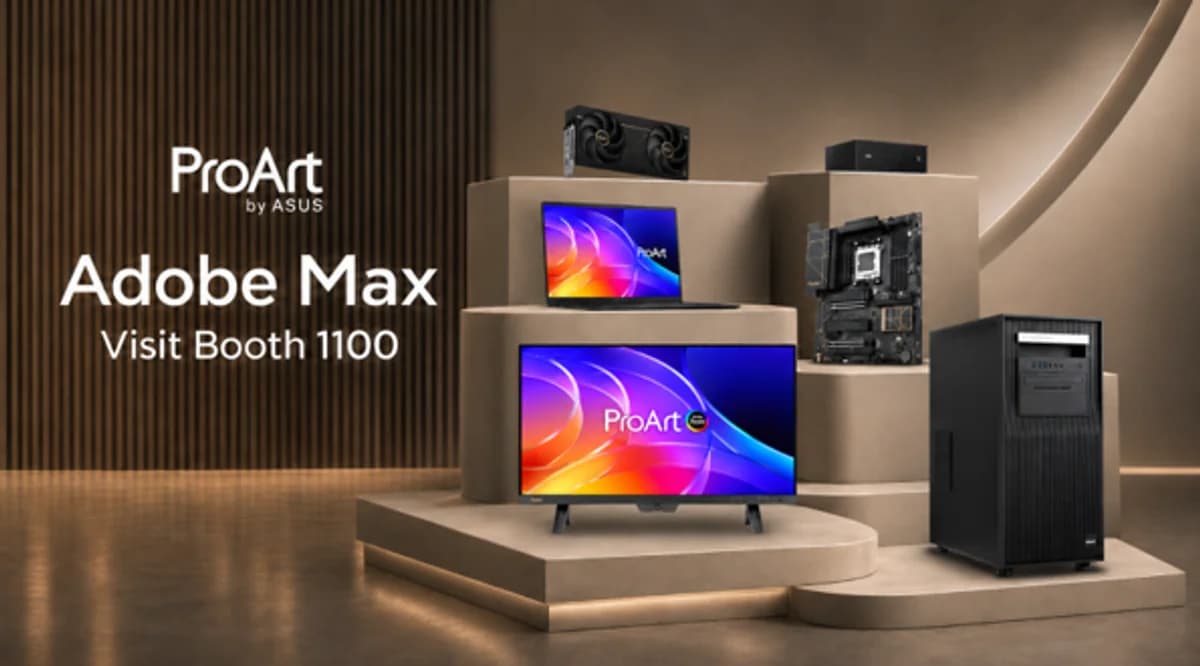
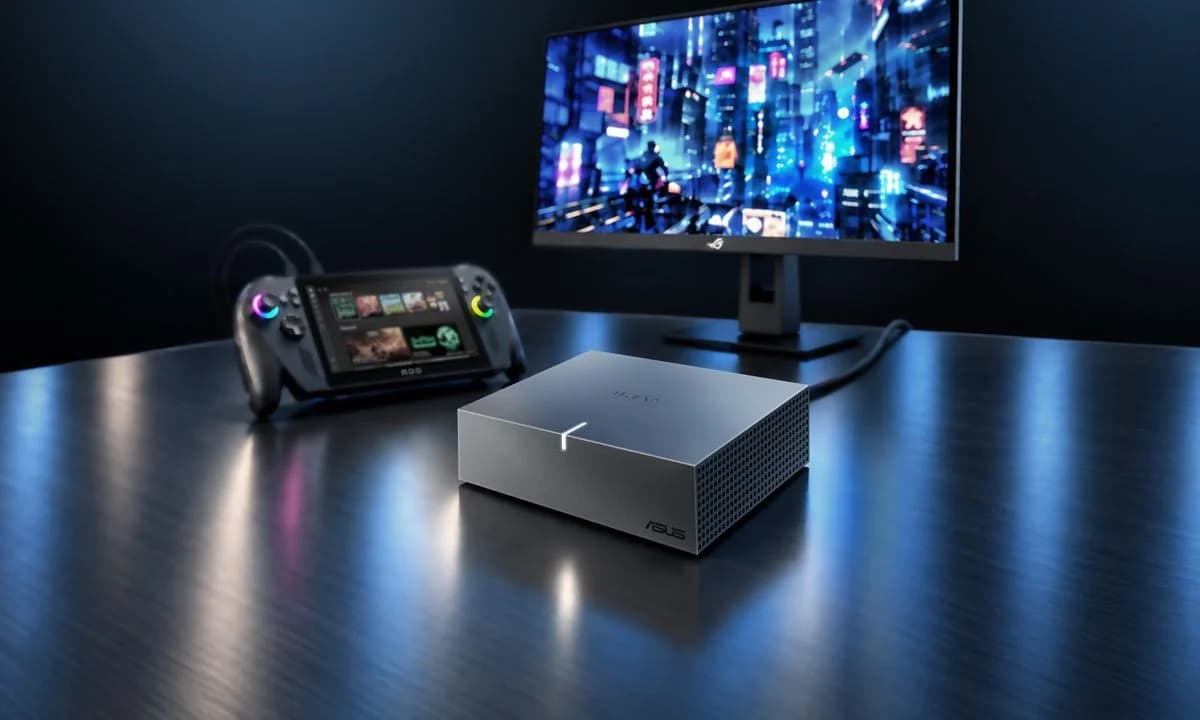
The next reason to upgrade is AI agents, and agents need local computing power and memory. That’s why our ProArt P16 and P14 with NVIDIA RTX Spark are built to run agents on the device, and why the ProArt GR1X mini PC keeps them working at your desk after you log off. Our first batch of RTX Spark products sold out, and demand has far exceeded our expectations. ASUS is No. 1 in RTX Spark market share.
Hardware is only part of the story, though. Customers want a complete solution. We introduced ASUS Zenni Claw at Computex this year, and at CES 2027 in January we will unveil the full ASUS Agentic AI Ecosystem: powerful local computing, advanced AI built in, and ASUS Zenni agents that understand what you want and coordinate tasks across your apps and devices.
Memory: move early, price by segment
Memory is on everyone’s mind. It now makes up almost a quarter of what it costs to build a PC, and some customers are hesitating before they buy a new device. But our AI PCs sit in the high-end segment, where people know the job they need to get done and are willing to pay for a machine that does it. Our RTX Spark systems ship with 128 GB of memory, and customers are choosing them because agents lift their productivity.
On supply, we moved early. We’re working closely with our DRAM and storage suppliers and holding more buffer inventory, so our supply is steady. On pricing, we stay flexible by segment. Gaming, creator, and commercial AI PCs are where customers still pay for performance, and that’s where ASUS is strongest. That approach is helping us keep growing and gain share while component costs weigh on the wider market.
AI where the work happens
Most companies aren’t comfortable sending their most sensitive data off-site. Because we offer the full stack, from AI servers to the AI PC on an employee’s desk, a company can run AI on its own premises and keep that data in-house.
Edge AI goes a step further by putting intelligence where the work happens: in factories, hospitals, and stores. Revenue from our edge AI systems grew more than 50% year on year, led by workstations and compact systems like the Ascent GX10. That’s also why, in September, we repositioned our AIoT group as the Physical AI Solutions Business Group, which brings together AI solutions, autonomous platforms, and humanoid robotics.
Meet Gallop
Which brings me to Gallop, our first humanoid robot. Gallop is already being tested on production lines in our own factories. Its first job is packing motherboard accessories: 15 small parts, many of them in soft plastic bags, that take a delicate touch to handle. Gallop uses dexterous hands and cameras to see, check, and pick up each item, and it learns from our own workers, on the same parts and to the same quality rules.
People ask why a PC company is building a humanoid robot. The answer is simple. For decades, ASUS has integrated hardware and software, from motherboards to PCs to servers. A robot is the hardest version of that challenge: computing, sensors, motion, and AI all working together, safely, in the real world. And we have something most robotics companies have to rent: our own factories to test in, every day.
A humanoid also makes sense because factories are already built for people. Gallop uses the same workstations and tools as our workers, so a factory doesn’t have to be rebuilt around it. That makes it a good fit for low-volume, high-mix production, where the work changes from one run to the next and traditional automation is hard to justify.
Gallop is built on NVIDIA’s Jetson Thor platform, which makes it easy to put a new AI model on the robot. Each time a more advanced model arrives, Gallop’s capability improves, with no need to rebuild it.
This is still an early-stage program, so we’ll prove Gallop in our own factories first. We plan to begin customer pilots in the second half of 2027 and are targeting the second half of 2028 for market availability. Electronics manufacturing comes first, with hospitals and service sites later. Gallop is designed for the repetitive, physically demanding tasks that are hardest to staff, and the workers who teach it become more valuable, not less, as they move into setting up, supervising, and improving the robots.
Albert Chang, who co-leads our Physical AI Solutions Business Group, has written more about how Gallop works and what comes next- Factory-Proven Physical AI: Why ASUS Is Building a Humanoid Robot .
Where this goes next
What I hope came through in the conversation is that our AI strategy doesn’t stop at the screen. “Ubiquitous AI. Incredible Possibilities” means AI in the data center, on the desk, and now on the factory floor. Our ambition is to become the world’s most comprehensive AI company, which means taking AI wherever useful work gets done. Thank you to Sri, Mandy, and CNBC for the conversation. I look forward to sharing Gallop’s progress as it moves from our factory floor to our customers.
ASUS (2357.TW) is an innovative technology leader delivering the world’s most comprehensive AI solutions across Infrastructure, Physical AI, AI PC/Devices, and Engineering the AI Advantage. Guided by its “Ubiquitous AI. Incredible Possibilities” strategy, ASUS is bringing enterprise-to-edge AI to life. The ASUS portfolio also includes the ROG and ProArt sub-brands, which serve gamers and creators worldwide.
https://asus.com