When should you send an email, when does a text make more sense, and when would a conversation on WhatsApp help someone decide? For brands looking to grow revenue, choosing the channel is only part of the answer. The bigger opportunity is making those interactions work together.
A product launch might need the storytelling space of email. A back-in-stock alert might call for a timely text. A shopper hesitating over sizing may need a helpful answer, not another discount. In each case, the choice should also reflect where that customer prefers to hear from your brand.
That’s the difference between using multiple channels and building a connected customer journey. Email, SMS (including richer experiences through RCS), and WhatsApp should each add something useful, rather than repeat the same message.
Here’s how to combine them with relevant recommendations, thoughtful timing, and conversations that help customers move from discovery to purchase and back again.
Email, SMS, RCS, and WhatsApp at a glance
Use this as a starting point, rather than a rule that every customer should follow.
Channel
Best for
Example
Considerations
Storytelling, product education, onboarding, and ongoing discovery
Introduce a collection with product details, reviews, and relevant recommendations
Explicit consent, deliverability, and an easy way to unsubscribe
SMS
Timely alerts and short, useful reminders
Let an interested shopper know their size is back in stock
Explicit consent, quiet hours, message frequency, easy opt-out required and costs that vary with message length and destination.
RCS
Visual discovery and clear actions within the phone’s messaging app
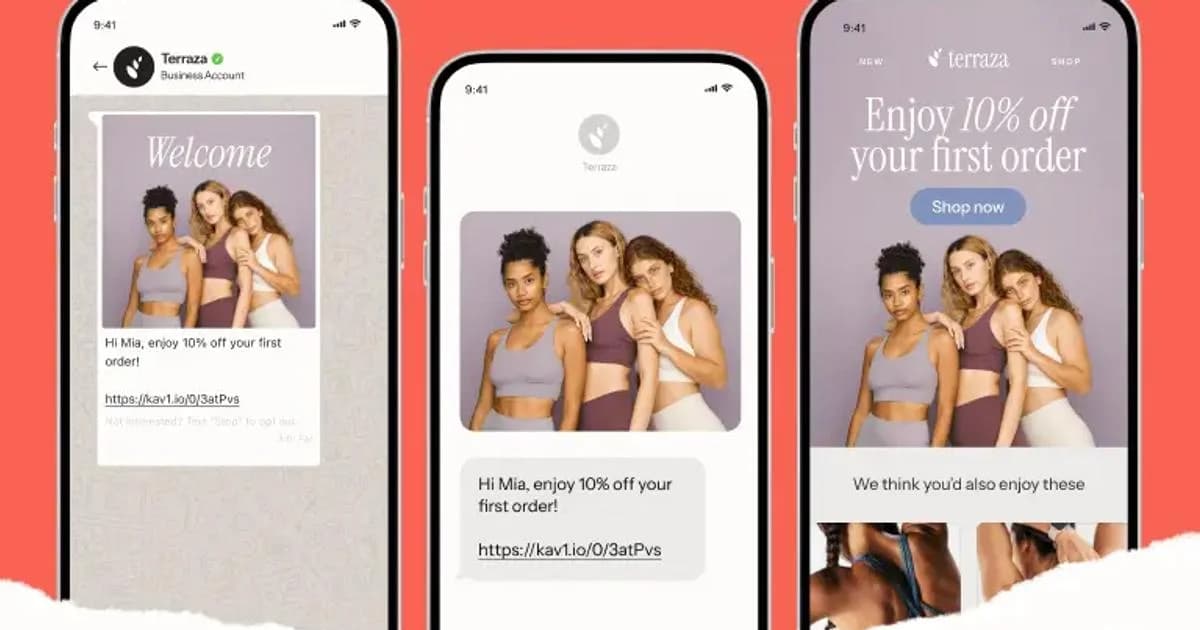
Showcase products in a carousel with buttons to explore them
An approved sender in the recipient’s country, device and network eligibility, and an SMS/MMS fallback
Guided discovery, conversational marketing and global audiences.
Help a shopper choose a product, then answer their follow-up questions.
WhatsApp-specific consent, approved templates where required, and market-specific messaging rules
RCS isn’t another app customers need to download. It brings richer experiences to supported native messaging apps. In Klaviyo, once an RCS agent is active in a country, eligible recipients receive RCS messages; others receive the SMS or MMS fallback. Think of it as an evolution of your text-messaging strategy, not another audience you need to build from scratch. Learn how RCS works.
Email: give customers the detail they need to decide
Email is your dependable storyteller. It gives you room to explain why a product matters, show it in context, and build a relationship beyond the next offer.
Where email wins
Space for stories, education, and discovery
Some products need more than a quick nudge. A skincare routine needs explanation. A considered purchase may need reviews, comparisons, or reassurance about returns. Email lets you bring those elements together rather than squeeze everything into one line.
Personalization that goes beyond a first name
Instead of sending everyone the same product lineup, use customer behavior and purchase history to make the content more useful.
For returning customers, Next Best Product can recommend what they’re most likely to buy next based on their most recent purchase. An email product block becomes a relevant next step rather than another generic bestseller list. That recommendation can also be used in
Less manual work using Composer
Composer, Klaviyo’s AI marketing agent, can help turn a goal into email campaign content, using your brand’s voice and context. It can also audit flows for structural issues, overlapping messages, and improvement opportunities. You review and approve the work before sending.
For example, start with a campaign brief for customers who bought a starter kit and are ready to explore the wider range. Use Composer to prepare the email, then review the audience, recommendations, and offer before launch.
Email use cases worth prioritizing
- Welcome journeys that introduce your brand and help subscribers find their first product.
- Product launches that combine the story, benefits, and proof behind a collection.
- Post-purchase education that helps customers get more from what they bought.
- Relevant cross-sells, replenishment guidance, and win-back messages.
Email can also start a conversation. Customer Agent can answer replies to marketing emails when the reply-to address routes to the support address it handles. That gives shoppers a route to ask questions rather than abandon their decision. See how Customer Agent handles email replies.
SMS and RCS: make the next action easy
If email gives customers the full story, text messaging helps them act on the part that matters now.
That might be a restock they’ve been waiting for, a reminder about an appointment, or a product recommendation that arrives when they’re ready to buy again.
Where SMS and RCS win
Timely, focused messages
SMS works well when there’s one clear reason to get in touch and one clear next step. You don’t need to recreate an entire email campaign in a text. Tell the customer what’s relevant and make acting on it straightforward.
“Your size is back” can do more for the relationship than another generic “shop now.”
Richer experiences through RCS
RCS gives eligible recipients more than a plain-text link. Klaviyo supports rich cards, images, videos, carousels, buttons, and quick actions, letting customers explore products and take the next step from a more visual message.
For a new collection, that might mean a small carousel rather than a single link. For a restock, it could be a product image with a clear button to shop.
Always review the fallback version, too. Someone receiving SMS should still get a complete, useful message, not a reference to a carousel they can’t see.
More relevant copy without endless manual variations
Composer can draft SMS campaign content alongside email, helping you adapt the same idea to each format rather than copy and paste it. You still review the content and approve the send.
For supported automated journeys,Personalized Content in Flows serves a different purpose: it adapts text-message wording to the customer’s engagement. It works with SMS and the plain text in MMS or RCS messages in supported flows, including cart, browse, checkout, back-in-stock, price-drop, and win-back journeys. It changes the copy, not the audience or send timing.
SMS and RCS use cases worth prioritizing
- Back-in-stock alerts for products a shopper has already shown interest in.
- Cart and checkout reminders that make returning to the purchase easy.
- Early access and loyalty perks for relevant subscribers.
- Replenishment and next-product recommendations for existing customers.
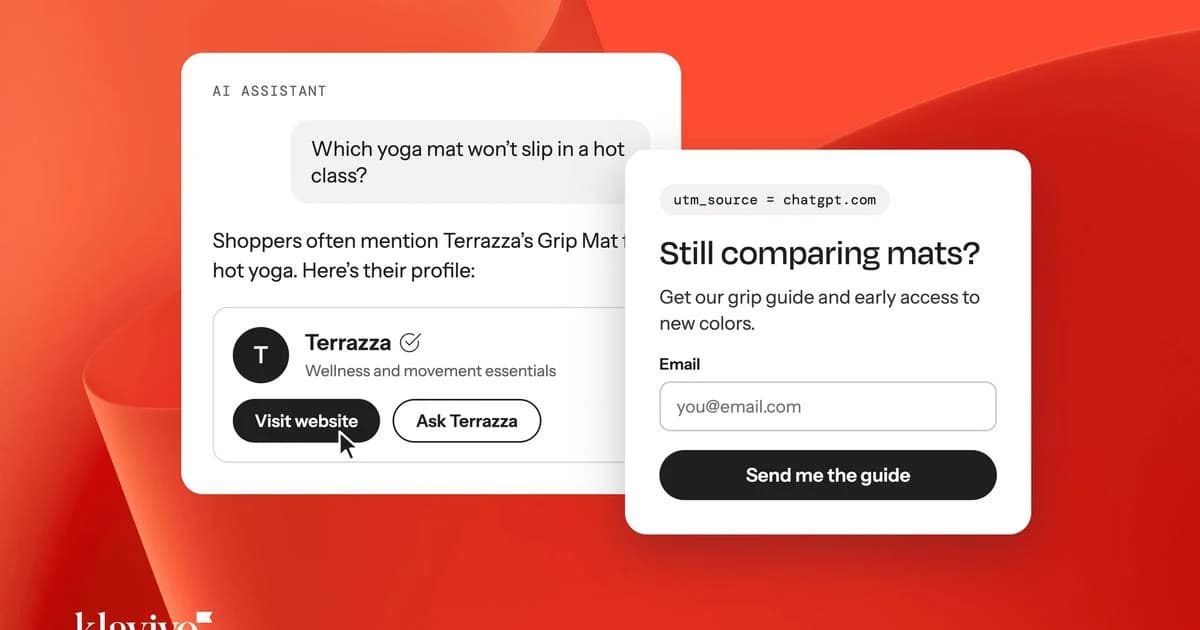
And leave room for replies. With two-way SMS and Customer Agentenabled, a shopper can text a product question and get help, with human handoff when needed. The point isn’t just to send a reminder. It’s to remove whatever is stopping the purchase.
WhatsApp: turn interest into a useful conversation
WhatsApp is the world’s most popular messaging app, with more than 3 billion monthly active users. Like SMS, it’s a familiar place to chat with friends, family and, increasingly, brands.
The choice of channel should reflect where each customer prefers to hear from your brand. WhatsApp is particularly valuable when customers need help choosing, not just another reason to click.
Rather than treating it as the final reminder after email and SMS, give it a role of its own: discovery, reassurance, and ongoing conversations in an app your audience already uses.
Where WhatsApp wins
Guided product discovery
Rich media, buttons, and quick replies can help shoppers move from a broad interest to a more specific choice. A beauty brand might ask what result someone wants from their routine. A homeware brand might help them narrow down styles or product categories.
Keep the interaction useful. Ask a question because the answer will improve the recommendation, not simply because you can.
Help before and after the purchase
Customer Agent can answer inbound WhatsApp messages, using the same knowledge and behavior settings as its other supported channels. With the relevant tools and integrations enabled, it can answer product questions, recommend products, track orders, and hand off to a human.
That makes WhatsApp useful beyond campaigns. The shopper who asks about a product before buying may later need delivery information or help using it.
WhatsApp use cases worth prioritizing
- Product discovery and guided recommendations.
- Early access for subscribers who want to hear from you there.
- Order updates and follow-up questions.
- Post-purchase advice that helps customers use and enjoy their purchase.
How to orchestrate the channels without overwhelming customers
The goal isn’t to send every message everywhere. It’s to make each touchpoint earn its place.
Connect the customer context first
A shared customer profile connects purchases, engagement, channel consent, and relevant service interactions. That context helps you recognise the same person across marketing and service, rather than treating each channel as a fresh start. Your flow rules, exclusions, and service setup then turn that context into coordinated action.
Orchestrate based on channel preference
A customer subscribing to email doesn’t automatically give you permission to contact them through WhatsApp or SMS. Establish which channels are available to you before deciding which one to use.
Then consider the person, the message, and the moment. Channel Affinity predicts a profile’s likelihood of engaging through different channels and makes those rankings available for segmentation and flow branching. Use that signal alongside urgency, recent behavior, and messaging costs.
Personalize the product, the wording, and the timing
These are separate decisions:
- What should you recommend? Use purchase context and Next Best Product where appropriate.
- How should you say it? Match the format to the channel, and use Personalized Content in supported text-message flows.
- When should it arrive? Use Personalized Send Time for suitable campaigns rather than assuming one send time works for everyone.
What a connected journey looks like
Here are two illustrative examples of connected customer journeys.
Help an undecided shopper buy with confidence
Jessica adds a jacket to her cart but leaves without buying. She has opted into email and SMS, and her engagement history suggests text is a good place to start.
She receives a simple reminder: “Still thinking about the jacket? Take another look, or reply if you have a question.”
“Does it run small?” she replies.
With two-way SMS and Customer Agent set up, the agent can draw on the brand’s available product information to help, or hand off when a person is needed. Maya gets reassurance, returns to her cart, and buys. A purchase-based flow filter stops the remaining recovery messages.
She didn’t need the same reminder in three places. She needed an answer.
Make the second purchase feel like a natural next step
After buying a skincare starter kit, Alex receives an email explaining how to use it. Later, an eligible cross-sell journey uses Next Best Product to suggest a complementary item.
Alex prefers WhatsApp and has opted in, so the brand sends an approved recommendation there. Alex replies, “Can I use this with the products I already bought?” Customer Agent can help using the available product guidance or hand the question to the team.
The channels do different jobs: email provides the education; WhatsApp carries the follow-up conversation. The recommendation builds on the purchase instead of starting from scratch.
Measure revenue, not just reactions
Clicks can tell you whether a message caught someone’s attention. They don’t tell you whether your channel mix is profitable or whether adding another message helped.
Evaluate conversion, revenue per recipient, messaging costs, repeat purchases, and opt-outs together. Where possible, use control groups to test whether an additional channel or personalization feature improves results.
Choose the next useful interaction
Email, SMS, RCS, and WhatsApp don’t need to compete for the same job.
Use email when customers need depth. Use text messaging when a timely, focused action matters, with RCS adding richer experiences where supported. Use WhatsApp when a conversation can help someone discover, decide, or get support.
Then connect those choices around the customer: relevant recommendations, thoughtful timing, useful replies, and fewer unnecessary follow-ups.
The smartest omnichannel strategy isn’t the one that sends the most messages. It’s the one that makes the next interaction worth having.