Cloudera Blueprints Bring Proven AI Prototypes
AI coding assistants can turn an idea into a running program in about an hour. Many engineers now use them daily, and for good reason: they collapse the gap between a whiteboard sketch and working code.
For businesses, reliability and security matter as much as speed. The tokens for the generation are cheap, but the trust is expensive. A generated prototype usually runs against sample data and a local computing environment. It works at that time, but the draft that has been made in an hour says nothing about whether the program will work in an enterprise environment. Teams end up spending weeks validating the trustworthiness of the program. Checking if it is secure, performant at scale, and reliable across heterogeneous inputs and abnormalities can take a significant amount of time. As a result, we see that many pilots stall before they ever reach production.
Cloudera Blueprints start from the other end, giving teams solid starting points, and they’re built around specific business problems. Rather than generating code and then asking whether it's secure or if it will run in another environment, each Blueprint begins as an architecture that Cloudera engineers have already built and verified. You start from solid ground, not from scratch.
Introducing Cloudera Blueprints
Cloudera Blueprints are a collection of working examples for common enterprise AI use cases. Each blueprint has been purpose-built to provide a capability and use case known to be valuable to a specific industry. Blueprints run on Cloudera, where secure data already lives, so you can marry private AI with private data.
Each Blueprint offers the same two-step path:
- See the demo. Open an interactive demo via Reprise in your browser and watch the Blueprints work. There's nothing to install and no environment to configure.
See the demo. Open an interactive demo via Reprise in your browser and watch the Blueprints work. There's nothing to install and no environment to configure.
- Deploy the program. When you're ready, stand it up in your own computing environment, against your own data, in a day, not months.
Deploy the program. When you're ready, stand it up in your own computing environment, against your own data, in a day, not months.
The first step lets a business expert judge whether the use case fits before engineering time is committed. The second gives the engineering team a start with a verified foundation instead of a blank repository with stochastic generation.
What’s Inside Every Blueprint
Each Blueprint packages everything needed to evaluate the business value, understand the architecture, and run and tailor the solution. Some pieces are written for the engineers who will build it; others help decision-makers judge fit and cost. Each blueprint includes the following components:
- Use-case context: The business problem it solves and its key features.
Use-case context: The business problem it solves and its key features.
- Interactive demo: Click through a working Blueprint in your browser, with nothing to install or configure. See the inputs, outputs, and workflow before you commit any time.
Interactive demo: Click through a working Blueprint in your browser, with nothing to install or configure. See the inputs, outputs, and workflow before you commit any time.
- Reference architecture: How the components fit together and which Cloudera services they use.
Reference architecture: How the components fit together and which Cloudera services they use.
- Source code: Open source so you can build your own use cases.
Source code: Open source so you can build your own use cases.
- Deployment guide: Step-by-step setup instructions and prerequisites.
Deployment guide: Step-by-step setup instructions and prerequisites.
- Requirements: Which libraries, programming languages, data, compute, and GPU resources are needed.
Requirements: Which libraries, programming languages, data, compute, and GPU resources are needed.
- Use-case context: Each blueprint has been purpose-built to solve a real-world business problem.
Use-case context: Each blueprint has been purpose-built to solve a real-world business problem.
What’s Available Today
Cloudera Blueprints launched with 18 use cases across multiple industries, each with a demo you can open in minutes. Here are three examples from Cloudera Blueprints.
Transaction Foundation Model for Fraud Detection
Card-fraud models built only on raw transaction features, such as amount, merchant, and time, tend to plateau. They score each transaction in isolation and miss the signal in a card's history: where, when, and how it has been used.
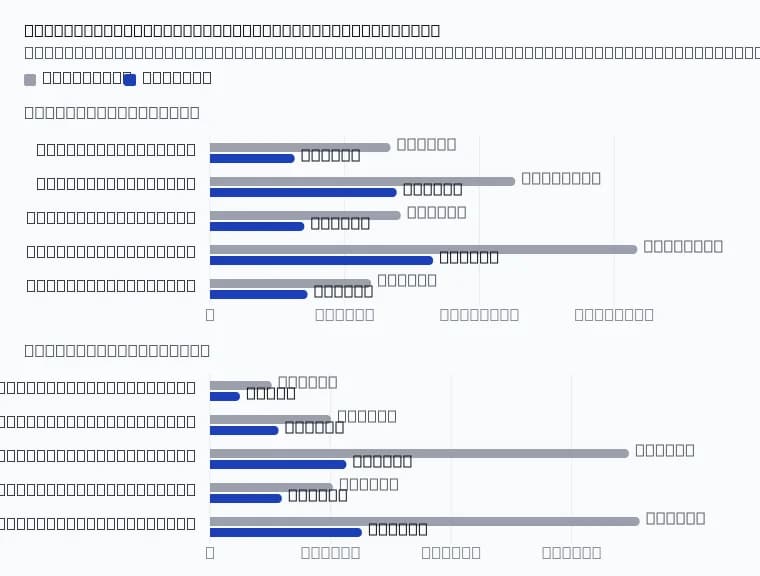
This Blueprint uses a pretrained transaction foundation model to turn each card's payment history into embeddings. It then trains fraud models side by side on raw features, on the embeddings, and on both, using governed data in Impala. Lift is reported in area under curve (AUC) and average precision (AP) scores, the standard measures of how well a model separates fraud from legitimate activity. For the business, that means catching more fraud while declining fewer good customers.
Built for machine learning engineers and data scientists in financial services.
Retail New Item Evaluation
Retail managers review hundreds of supplier product proposals, and approving the wrong one can cannibalize sales of items already on the shelf.
In this Blueprint, each proposed item is matched against the current catalog by image and text similarity and checked against how full its category already is. A deterministic decision matrix turns those signals into an authorize, modify, or decline verdict, and AI agents then write the risk and financial analysis that explains it. Because an LLM never picks the verdict, every decision is consistent and auditable: the same inputs always produce the same answer.
Built for retail merchandising and category teams.
Real-Time Agentic DataOps
Agents built on Apache Flink continuously monitor NiFi, Kafka, and Cloudera Manager. They catch problems such as a stopped processor or growing consumer lag, and produce step-by-step runbooks to fix them.
For NiFi and Kafka, the agents can apply fixes themselves, but only in heal modes an operator turns on, with an optional approval step before any change. Cloudera Manager stays recommend-only. Operations leaders get faster incident response without giving up control.
Built for data platform and operations teams; runs on Docker Compose, with a documented path to CDP Private Cloud Base.
Cloudera Blueprints and AMPs
If you've used Cloudera's Accelerators for ML Projects (AMPs), Blueprints will feel familiar. Those accelerators are open-source, end-to-end machine learning projects that deploy with a single click inside Cloudera AI, and many of them are now part of the Blueprints catalog.
Cloudera Blueprints are the broader umbrella. Some entries are packaged as AMPs for one-click deployment. Others are delivered as reference architectures and code with a guided setup, typically because they span several Cloudera services. Each Blueprint is labeled by deployment type, so you can see at a glance which path it follows. Existing AMPs work exactly as before. They now sit alongside the rest of Cloudera's reference solutions in one place.
What’s Next
The blueprint catalog will keep growing. We'll add new Blueprints seasonally, shaped by the use cases customers and partners bring to us.
Have one you'd like to see? Check out our webpage.
Get started
- Try a demo. Pick any Blueprint and click through it in about five minutes, with nothing to install.
Try a demo. Pick any Blueprint and click through it in about five minutes, with nothing to install.
- Browse the catalog. Find the Blueprint that fits your use case from the Blueprints catalog.
Browse the catalog. Find the Blueprint that fits your use case from the Blueprints catalog.
- Deploy it. Follow the deployment guide, or launch it in one click if it's an AMP.
Deploy it. Follow the deployment guide, or launch it in one click if it's an AMP.
- Talk to your account team about extending it with your own data and workflows.
Talk to your account team about extending it with your own data and workflows.
- Cloudera Blueprints
Cloudera Blueprints
- Cloudera AI
Cloudera AI
- About Cloudera
About Cloudera
About Cloudera Cloudera is the only hybrid data and AI platform company that large organizations trust to bring AI to their data anywhere it lives. Unlike other providers, Cloudera delivers a consistent cloud experience that converges public clouds, on-prem data centers, sovereign clouds, and the edge, leveraging a proven open-source foundation. As the pioneer in big data, Cloudera empowers businesses to apply AI and assert control over 100% of their data, in all forms, improving security, governance, and real-time and predictive insights. The world’s largest brands across all industries rely on Cloudera to transform decision-making and ultimately boost bottom lines, safeguard against threats, and save lives.
To learn more, visitCloudera.com and follow us onLinkedIn andX. ©2026 Cloudera and associated marks are trademarks or registered trademarks of Cloudera, Inc. All other company and product names are trademarks of their respective owners.