In Tuesday’s momentous midterm elections, all seven Democrats who flipped Republican-held Senate seats—James Talarico in Texas, former Sen. Sherrod Brown in Ohio, former Gov. Roy Cooper in North Carolina, Josh Turek in Iowa, Troy Jackson in Maine, Dr. Annie Andrews in South Carolina, and Rev. Adam Hamilton in Kansas—ran a Substack publication during the race. Two Senate races remain too close to call, and both challengers also have Substacks: Mary Peltola in Alaska and Scott Colom in Mississippi.
But the Senate races were only one slice of what happened across Substack this election cycle, with officeholders and candidates up and down the ballot writing, posting, going live, and filming videos for voters. In Texas, Gov. Greg Abbott and his challenger—now Governor-elect—Gina Hinojosa, each published on Substack throughout their campaigns. In the U.S. House, Missouri’s Fred Wellman won his race despite being outspent roughly 3 to 1 by the seven-term incumbent. The first-time candidate and 22-year Army veteran announced his run on Substack with a post titled “It’s official...I’m in!” His post after winning the nomination was similarly to the point: “Well, we won.”
Beyond the ballot, politicians used Substack to connect directly with their constituents. The State Department has published Secretary of State Marco Rubio’s op-eds on Substack, while Michigan Gov. Gretchen Whitmer has posted videos of conversations with New Mexico Gov.-elect Deb Haaland, Iowa Gov.-elect Rob Sand and others. Rep. Elise Stefanik published her personal reflection on the 25th anniversary of 9/11. Former Senate candidate Mallory McMorrow, a Michigan state senator, started a podcast, In the Arena, where she interviewed state legislative candidates facing re-election in November. After the attempted assassination of President Trump at the White House Correspondents’ Dinner in April, Sen. Mark Kelly—whose wife, former Rep. Gabby Giffords, survived an assassination attempt in 2011—shared his thoughts on gun violence in America.
Substack’s politics team has helped candidates determine the most meaningful ways to use the platform. “Politicians can access voters on every device at any time, but most of it is just noise,” says Cara Koontz, who works with politicians and campaigns at Substack. “On Substack, there’s a different ethos. Here, a candidate can write to persuade, build a community, and take questions live, all while engaging with voters in a real way. There’s power in that, if candidates take the opportunity. We saw it in this cycle, and I suspect it will be even more pronounced in 2028.”
Kellianne Jones, who also works with campaigns at Substack, points to what that means when a candidate has news to break. “Every 2028 campaign should skip the gatekeepers,” she says. “Op-eds need to be pitched and edited and then may run behind a paywall or in an outlet that may come with ideological baggage. On Substack, you hit publish, and it lands directly in your subscribers’ inboxes.”
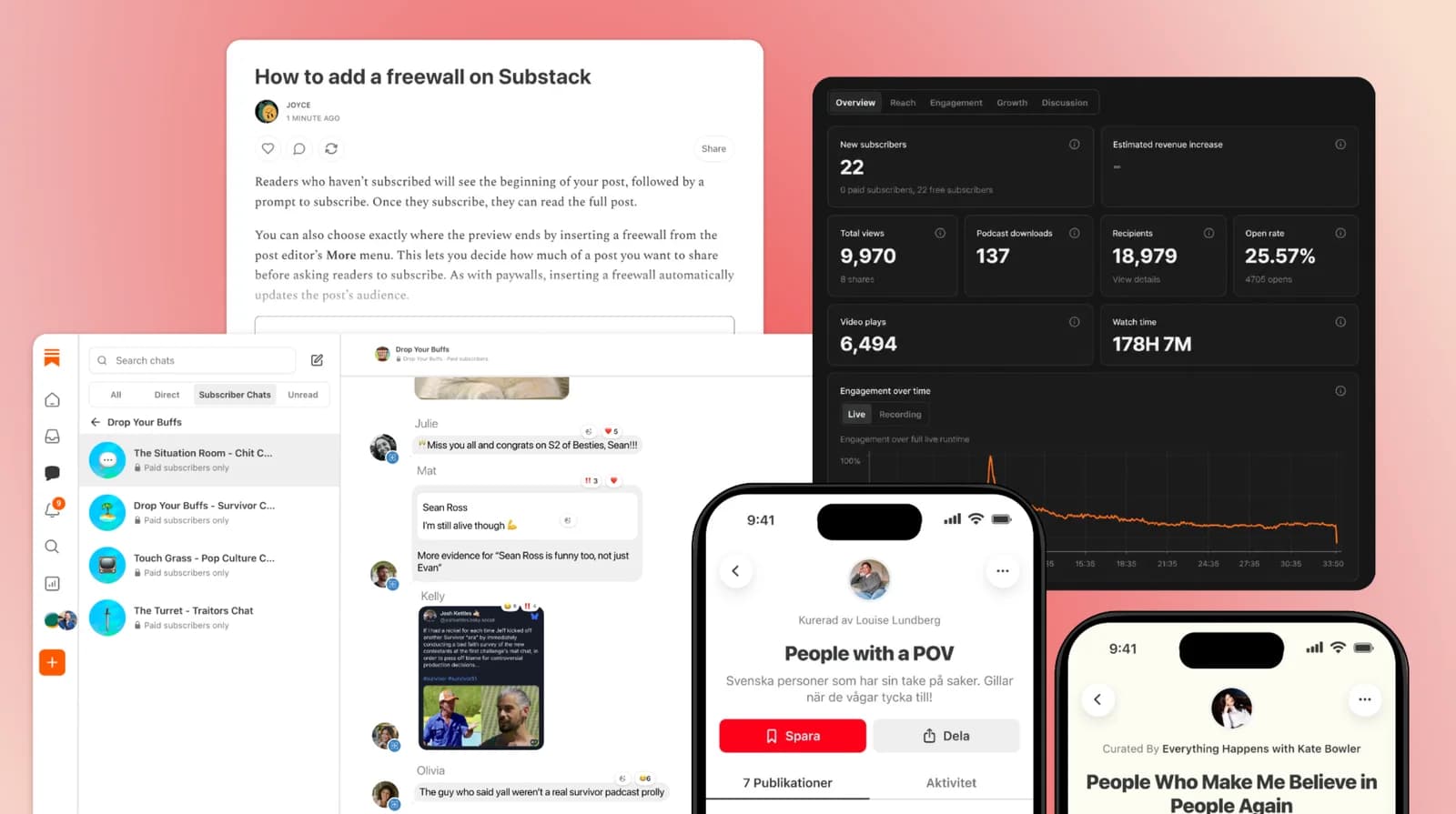
Campaigns have used Substack to communicate in a number of ways: through newsletters, podcasts, live shows, and direct chats with audiences. Here are some best practices to help candidates build a direct line to the people they hope to represent.
Post Notes regularly
Candidates use the short-form Notes feed to introduce themselves, share quick updates, and reach readers beyond their existing
- Maryland Rep. Jamie Raskin and Oklahoma Sen. Markwayne Mullin each used their first Note to say hello and introduce their plans for Substack:
Maryland and Oklahoma Sen. Markwayne Mullin each used their first Note to say hello and introduce their plans for Substack:
- Texas Sen.-elect James Talarico posted his celebratory Whataburger stop from election night:
Texas Sen.-elect James Talarico posted his celebratory Whataburger stop from election night:
- California Gov. Gavin Newsom posts direct-to-camera video updates straight to Notes.
California Gov. Gavin Newsom posts direct-to-camera video updates straight to Notes.
Use your first post to make a statement
Take advantage of the news cycle, or the news you want to break, to time your launch post.
- Former Vice President Kamala Harris launched as her book 107 Days was coming out, publishing an excerpt under the title “So — what do we do?”
Former Vice President Kamala Harris launched as her book 107 Days was coming out, publishing an excerpt under the title “So — what do we do?”
- North Carolina Sen.-elect Roy Cooper used his first post, “Together, we can keep North Carolina moving forward,” to announce his run for U.S. Senate.
North Carolina Sen.-elect Roy Cooper used his first post, “Together, we can keep North Carolina moving forward,” to announce his run for U.S. Senate.
Be personal
Connecting with the people you represent lets you show them who you are and what you care about.
- Illinois Gov. JB Pritzker offered a personal take on his use of GLP-1s.
Illinois Gov. JB Pritzker offered a personal take on his use of GLP-1s.
- Pennsylvania Gov. Josh Shapiro wrote about the arson attack on his home.
Pennsylvania Gov. Josh Shapiro wrote about the arson attack on his home.
- Roy Cooper posted his summer reading list.
Roy Cooper posted his summer reading list.
Go live or host videos and podcasts
Go live on your own channel and with others. You can also host and distribute a podcast natively from Substack or cross-post a show hosted elsewhere.
- Former Transportation Secretary Pete Buttigieg livestreamed a town hall to 13,000 people on Substack.
Former Transportation Secretary Pete Buttigieg livestreamed a town hall to 13,000 people on Substack.
- Virginia Sen. Mark Warner took extemporaneous questions from his livestream audience.
Virginia Sen. Mark Warner took extemporaneous questions from his livestream audience.
- New York Rep. Ritchie Torres sends produced videos straight to his subscribers’ inboxes.
New York Rep. Ritchie Torres sends produced videos straight to his subscribers’ inboxes.
- Kentucky Gov. Andy Beshear publishes a weekly podcast featuring unscripted conversations with leaders, educators, and innovators, and distributes it to YouTube and other platforms.
Kentucky Gov. Andy Beshear publishes a weekly podcast featuring unscripted conversations with leaders, educators, and innovators, and distributes it to YouTube and other platforms.
Partner with creators beyond the usual news and politics circuit, too. Having a conversation with someone from another corner of Substack can bring your perspective to a new audience.
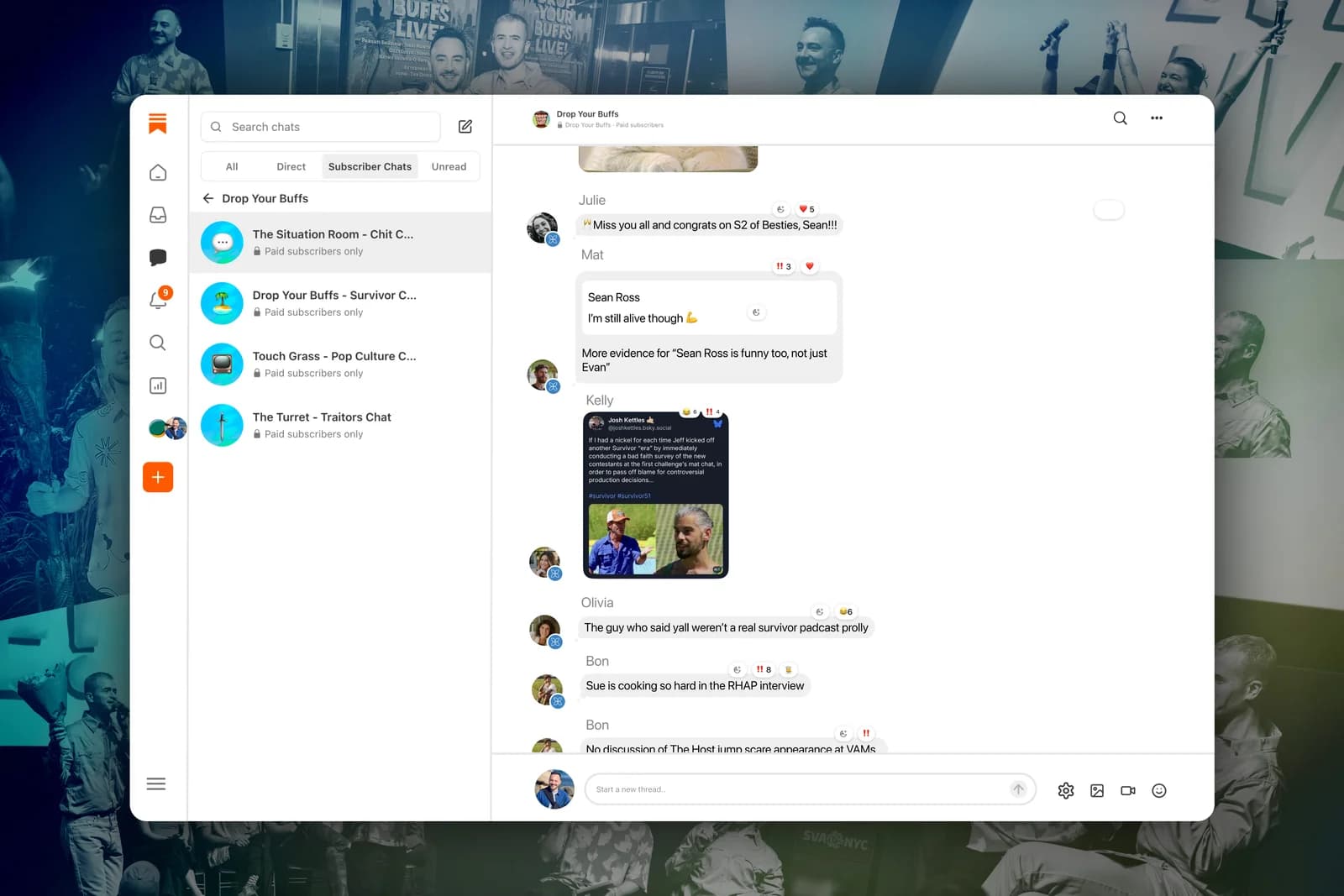
Open up Chat and answer questions
Put your most transparent foot forward with AMAs, and let people ask you questions directly. Or do a Q&A in a written post.
- Ohio Sen.-elect Sherrod Brown and Michigan Rep. Chairwoman Lisa McClain each published a Q&A:
Ohio Sen.-elect Sherrod Brown and Michigan Rep. Chairwoman Lisa McClain each published a Q&A:
Announce your Substack to your existing audiences on email and social platforms so that people know they can see more of your thinking and work on Substack.
- California Rep. Sam Liccardo introduced his new Substack with a video on X.
California Rep. Sam Liccardo introduced his new Substack with a video on X.
- Nevada Rep. Steven Horsford announced his Substack in an official press release.
Nevada Rep. Steven Horsford announced his Substack in an official press release.
One takeaway from this historic election? “Voters are tired of being talked at. The candidates who did well this year were the ones who connected with people directly,” Kellianne Jones notes. “Democrats used Substack to do that this political cycle, and there’s no reason Republicans can’t do the same in the next. Any candidate willing to be open and genuine with voters has a real opportunity to reap the rewards of direct relationships.”
If you’re ready to start building for 2028, get in touch: politics@substackinc.com.