Camunda 8.10: The Great Process Re-Engineering Starts Now
Every process running in your enterprise today was built for a world without AI. That doesn't mean those processes are wrong. But the constraints they addressed have changed. Add an AI agent to a process built for people and the agent inherits constraints. It can read a document in seconds, but the case still waits in a queue for the next batch window, and passes through handoffs designed for a world where every step needs a person.
Camunda 8.10, available on October 13, 2026, gives you the tools to re-engineer processes for AI rather than bolting it onto existing workflows. . We call it The Great Process Re-Engineering: Discover, Build Fast, Prove It Works, Scale It Widely. It starts with knowing where to look: ProcessOS analyzes how your processes actually run today, based on evidence rather than memory, so you re-engineer the steps that matter instead of the ones that come to mind first.
There's a bigger shift underneath the release. Many organizations are experimenting with agents, but far fewer are getting them to production. The gap isn't capability. It's trust.
Re-engineering a process that moves real money and carries real regulatory weight is not something you hand to a system you can't see, test, or control. The capabilities in Camunda 8.10 aim to close that gap. So you can give AI more authority over the work that matters without giving up the control that makes it safe.
That control is concrete, not a promise. Before an agent moves funds or sends a customer a final decision, the process can require a policy check or a human sign-off first. The agent reasons; the process decides what it's allowed to do.
Three pillars define the release. Speed, Scale, and Trust.
Speed: A new process in days, not sprints
The first constraint on any agent project is rarely the agent itself. It's the integration work. Every system an agent needs to reach is a custom integration someone has to build, secure, and maintain.
Camunda 8.10 turns processes you've already deployed into the plumbing agents use. Any process on Camunda can be exposed as a discoverable, callable tool over the Model Context Protocol (MCP), with its governance, audit trail, and guardrails intact. Agents call capabilities that already behave correctly—rather than relying on direct system access and custom code.. A new connector credential manager and direct cluster connections in Camunda Hub mean credentials and configuration are resolved where the work happens.
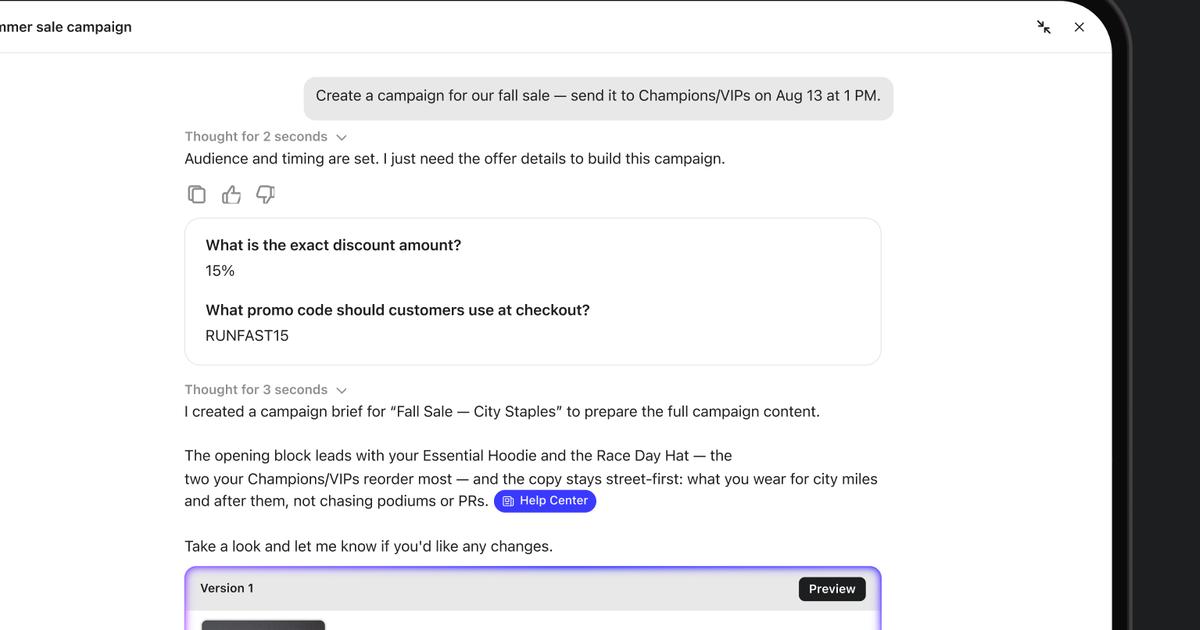
Building the process gets faster with AI-assisted development. Guided, in-context modeling surfaces the right next step and the right reusable asset from your organization’s catalog as you build. That guided modeling is ProcessOS at work, and ProcessOS is less a feature than a new way of building. ProcessOS extends a builder’s coding agent with capabilities to discover, transform and implement solutions in close collaboration with a subject matter expert (SME) significantly reducing the duration and effort for migration and transformation projects.
Test before you trust. A new Task Tester lets you run and inspect individual steps, including agentic subprocesses, without deploying the whole process first. Camunda Process Test is also extended for agentic processes, with assertions that compare meaning rather than exact output.
A test can check that an agent behaved as intended rather than that it returned one specific string, and those tests run for non-Java developers too. You prove a step works before you wire it into anything downstream.
Harmoney rebuilt its lending decisions this way; the processing time subsequently dropped from four days to 18 minutes, built by one developer in three weeks. That's what faster process development can look like.
For a closer look at what building with AI looks like in practice, see Three Ways Camunda Speaks MCP, the story of what Camunda's AI Skills actually saved one engineer, and how to test an AI agent that never does the same thing twice.
Scale: One hub for the whole enterprise
Once a process is proven, scaling it across teams shouldn't require rebuilding it multiple imes.
Camunda 8.10 brings design, deployment, and management into Camunda Hub. Web Modeler and Console become a single application with one public API, organized into workspaces and projects so every team gets its own governed space instead of waiting on a central bottleneck.
Onboarding a new team becomes a matter of creating a workspace, not requesting a new environment. That’s centralized governance with autonomous execution: the guardrails live in one place, the building happens everywhere.
A workspace for every team only helps if teams aren't each solving the same problem from scratch. Hub ships a private catalog, a governed, Git-backed library of reusable connectors and templates that a Center of Excellence reviews and approves once. Every team after the first one builds from something trusted. You reuse what works and govern what matters, without a central team becoming the queue everyone waits in.
A business value dashboard ties automation and agent execution to business KPIs, so adoption and ROI are visible without a spreadsheet someone rebuilds by hand every quarter. A new design system brings a cleaner, more consistent, more accessible experience across the whole platform, including Hub.
Scale here is as much organizational as technical. The bottleneck most enterprises hit isn't the engine, it's the org chart: a governance team that wants visibility and delivery teams that want to move, pulling against each other. Hub gives both sides the same platform, which is the whole argument of Governance That Scales With Every Team.
Trust: Production-grade agents that are auditable and explainable
Agents make judgment calls. The same input can take a different path every time. That unpredictability can keep agentic processes stuck in pilots. Compliance teams won't approve what they can't audit. Operations won't manage what they can't observe. And no one funds what they can't explain to the board.
Camunda 8.10 answers all three, starting with the ability to see everything and fix anything. In Operate, a new execution trace and decision trail shows the tool calls an agent made, the reasoning behind them, and the documents it drew on, right alongside the deterministic steps of the same process. "Why did it do that" has an answer that doesn't require an engineer reconstructing logs.
A new agentic control plane dashboard shows how agents behave in aggregate over time, including token and tool usage, helping teams spot costs and drift before they become an incident. And because Operate lets you intervene in running instances, seeing a problem and fixing it are the same motion.
Trust also starts before an agent reaches production. Camunda Process Test now covers agentic processes, so you can prove an agent behaves the way you intended before it ships, and prove it again whenever the model or the prompt shifts underneath it. The behavior you signed off on stays the behavior that runs.
This runs on an engine that's battle-proven at enterprise scale. The process automation engine at the heart of Camunda has no central database and no single point of failure, so it handles millions of concurrent instances at low latency and keeps long-running work moving for minutes, hours, or days without losing state. Agents inherit that durability. An orchestrator can hand work to sub-agents and wait, correlate messages between agents that don't know about each other, and escalate to a human when needed, all without dropping the thread.
And you deploy where your policies require. Multi-tenancy lets teams and departments share infrastructure with real isolation, and physical tenants give you dedicated storage and backup per tenant when logical separation isn't enough. Whether on Software-as-a-Service (SaaS) or Self-Managed, your data lives where your compliance obligations say it has to.
Trust is the theme we've come back to most this year, because it's the one that decides whether any of the rest reaches production. It's worth reading why AI agents have a trust problem, not a capability problem, how to stop stitching logs together to explain an agent's decision, why Camunda 8.10 introduces physical tenants, and how automated cluster restore hardens the platform underneath the agents.
What this means if you're on Camunda 7
Camunda 8.10 also ships several changes that ease the move from Camunda 7: configurable execution listener headers, multi-instance activity execution listeners, a cancel process instance execution listener, suspend and resume for process instances, Business ID visibility and filtering in Operate, and job and process prioritization for pull-based workers. None of it requires you to redesign a process to benefit.
See it all in action
Join us for a full walkthrough of Camunda 8.10:
- Camunda 8.10 release webinar, November 4, 2026, 3 PM CET / 9 AM ET. Live demos and a full walkthrough of Speed, Scale, and Trust with our product team.
Register to see why every process is legacy, and what re-engineering it actually looks like.
Ready to orchestrate?