Dev48
Language
  • About
  • Services
  • Industries
  • Technologies
  • Articles
  • Contacts
Book a call
    Home/Articles/Building a super affordable automated pcb inspection system
Dev48
info@dev48.org+375 29 320-40-96WhatsApp@isky_by

© 2026 · All rights reserved.

Building a super-affordable automated PCB inspection system

Source: Arduino Blog•October 15, 2026 at 12:57 AM

Building a super-affordable automated PCB inspection system

There is a vast gulf between making a one-off prototype and mass-production at scale. Within that gulf, there are innumerable small teams and businesses churning out PCBs in relatively low quantities – say dozens or hundreds a month. Inspection needs in that market are under-served, but…

Arduino Team — October 15th, 2026

There is a vast gulf between making a one-off prototype and mass-production at scale. Within that gulf, there are innumerable small teams and businesses churning out PCBs in relatively low quantities – say dozens or hundreds a month. Inspection needs in that market are under-served, but Mukesh Sankhla designed a solution: a very affordable automated PCB inspection system.

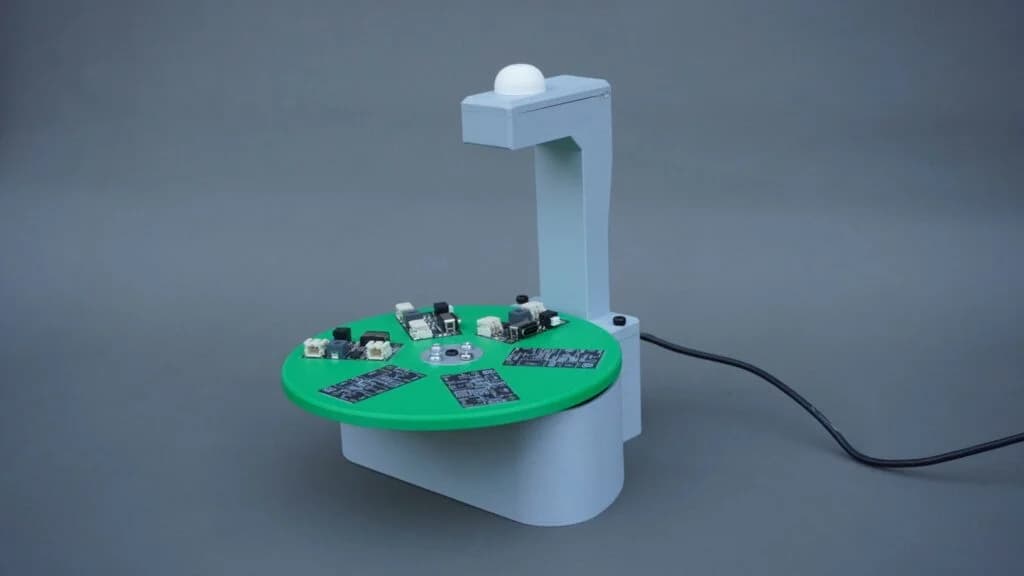
This is a small, desktop-friendly setup intended for vision-based PCB inspection. It has a turntable with six stations and can automatically rotate through those, analyzing the PCB in each slot. It can identify specific components and check for anything missing, as well as defects. It does so with a camera view and YOLO vision models, deployed using Edge Impulse.

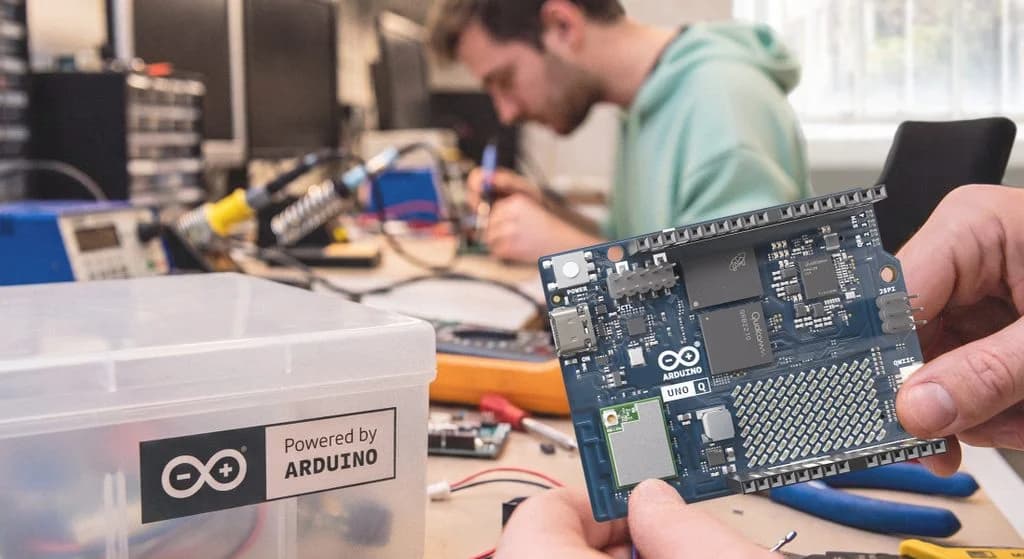
That is especially impressive because the system is easy and affordable to build. All it requires is an Arduino UNO Q board, a LED, a webcam, and a servo motor. The servo rotates the platform underneath the webcam, which resides in an overhead mount. The STM32 on the UNO Q is able to control the servo movement, while the Linux side can run the vision models.

The entire structure is 3D-printable and can be adapted to the user’s needs. The turntable, for example, is customizable to cradle the PCBs being inspected. It would also be simple to alter the size of the turntable and decrease or increase the number of stations. For instance, four stations would allow for a workflow that inspects both sides of unpopulated boards and both sides of populated boards.

Arduino, UNO, and the Arduino logo are trademarks or registered trademarks of Arduino S.r.l.

← All articles

What this article says

More in Consumer

All →
Small Actions, Big Impact: Give Back This Holiday Season With the Samsung Global Goals App
Samsung Electronics

Small Actions, Big Impact: Give Back This Holiday Season With the Samsung Global Goals App

Here’s what’s new in Arduino® Cloud: custom palettes and expanded RBAC
Arduino

Here’s what’s new in Arduino® Cloud: custom palettes and expanded RBAC

Make Your Move, Builders: Arduino Black Friday Deals End Soon
Arduino

Make Your Move, Builders: Arduino Black Friday Deals End Soon

Getting Sick This Season? How to Use Your Oura Data to Support Rest and Recovery
Oura

Getting Sick This Season? How to Use Your Oura Data to Support Rest and Recovery

Do Electric Cars Need Oil Changes?
Rivian

Do Electric Cars Need Oil Changes?

Het verschil tussen Approach S72 en S70 golfhorloge
Garmin

Het verschil tussen Approach S72 en S70 golfhorloge

More from Arduino

Here’s what’s new in Arduino® Cloud: custom palettes and expanded RBAC
Arduino

Here’s what’s new in Arduino® Cloud: custom palettes and expanded RBAC

Make Your Move, Builders: Arduino Black Friday Deals End Soon
Arduino

Make Your Move, Builders: Arduino Black Friday Deals End Soon

Engineering Scout automates reverse-engineering tasks
Arduino

Engineering Scout automates reverse-engineering tasks

Building your product on the original? Join Powered by Arduino® and let it show!
Arduino

Building your product on the original? Join Powered by Arduino® and let it show!

Want to learn Morse code? This Tamagotchi-like device will be your teacher
Arduino

Want to learn Morse code? This Tamagotchi-like device will be your teacher

Thea: exploring a wearable experience for people with allergies
Arduino

Thea: exploring a wearable experience for people with allergies