Summary
- Brand trust influences business growth. Consumers who trust your brand are more likely to make repeat purchases, recommend it to others and remain loyal over time.
- Authenticity matters more than ever. Consumers increasingly rely on firsthand experiences and honest recommendations to decide which brands deserve their trust.
- Every customer interaction shapes trust. Consistent messaging and responsive customer care help reinforce confidence in your business.
- Transparency helps brands earn credibility. Being open about AI use, choosing responsible influencer partners and backing up business claims with action can help protect your reputation.
A great product or clever marketing campaign might get someone interested in your business. But what convinces them to buy, recommend it to a friend or come back for more? It comes down to brand trust.
Consumers are getting more particular about where they place that trust. With AI-generated content raising new questions about what’s real, many are looking closer at product claims and seeking honest opinions from other customers. According to Sprout Social’s Q2 2026 Pulse Survey, 57% of consumers trust everyday product users most for recommendations, far ahead of subject matter experts (26%), mega-influencers (9%) and brand employees (8%).
This shift gives brands a chance to rethink how they earn consumer confidence. People want to know a business will deliver on its promises, and their experiences with a brand often speak louder than any marketing campaign. For brands that get it right, the payoff extends well beyond the initial sale.
Brand trust develops over time, shaped by everything from how a company communicates to how it handles customer concerns. Understanding what earns trust is essential to building lasting relationships.
Read on to learn what brand trust means today, why it matters for business growth and how to build, measure and maintain it.
What is brand trust?
Brand trust is consumers’ confidence in a business and its ability to meet their expectations. Several factors shape that confidence, including:
- Your brand values and mission
- The quality of your products or services
- Transparency around business practices and supply chains (e.g., AI disclaimers, certifications, eco-friendly, etc.)
- The honesty of your advertising claims (e.g., health claims, product longevity, research efficacy)
- Your treatment of employees and manufacturers
- An authentic brand voice that reflects your business’s values
- Responsible, brand-safe influencer partnerships
- Reliable customer service and care
Building trust means consistently following through on these commitments. Customers notice when a brand’s actions match its messaging, and when there’s a disconnect.
Authenticity plays an important role here. According to Sprout Social’s Q3 2026 Pulse Survey, authenticity is the number one trait consumers value in brands on social media. That desire for authenticity extends beyond social media. Consumers want to see the same honesty reflected in how a business operates and treats its customers.
Your reputation also matters to future buyers, too. A strong track record can give potential customers the confidence to choose your brand, even if they’re unfamiliar with your products or services.
Why is building brand trust important for a strong brand?
Brand trust is more than a “feel-good” goal. It’s a concrete way to drive profitability and expansion. While no brand can maintain a perfect reputation all the time, those that earn consumers’ trust over the long term are better positioned to compete and succeed in their industry.
Enhanced loyalty and retention
When consumers trust your brand, they’re more likely to choose your products over competitors. Positive experiences reinforce that confidence, helping improve customer retention and reduce churn.
Product quality plays a major role in maintaining trust and loyalty. According to Sprout Social’s Q3 2026 Pulse Survey, 44% of consumers say product or service quality is their top driver of brand loyalty. Consistently meeting customer expectations gives them a reason to stick around, even when other options are available.
Customer advocacy and evangelism
Trustworthy brands benefit from higher levels of customer advocacy, leading to valuable word-of-mouth recommendations and a stronger brand reputation. Brand trust can differentiate your brand from competitors, attract new customers, and create opportunities for future partnerships and collaborations.
This advocacy isn’t limited to customers; it can be even more impactful when it comes from key opinion leaders and thought leaders whose expert endorsements can strengthen a brand’s reputation.
Increased customer lifetime value
When consumers trust brands, they’re more likely to keep engaging over time, make repeat purchases, and upgrade to higher-value products or services. Consumers who trust a brand are also more likely to recognize the value of its products and services, making them more willing to pay a premium for the quality and experience they expect.
Building brand trust should be a key part of your wider customer retention strategy. Nurturing relationships over time can increase customer lifetime value and support more sustainable business growth.
How to build brand trust
While understanding what brand trust means is relatively straightforward, building it is much more complex. It requires a coordinated effort across your business, from internal operations to how you communicate with customers. Every department plays a role in earning and maintaining consumer confidence.
Maintain a consistent brand voice across communication channels
Consistent brand messaging helps customers recognize your business and know what to expect. Whether someone encounters your brand through an ad, visits your website or receives a marketing email, the underlying message should feel familiar.
Establish clear brand guidelines that define your tone of voice, visual identity and core messaging. These guidelines help teams stay consistent across campaigns and channels while adapting their approach to different audiences and formats.
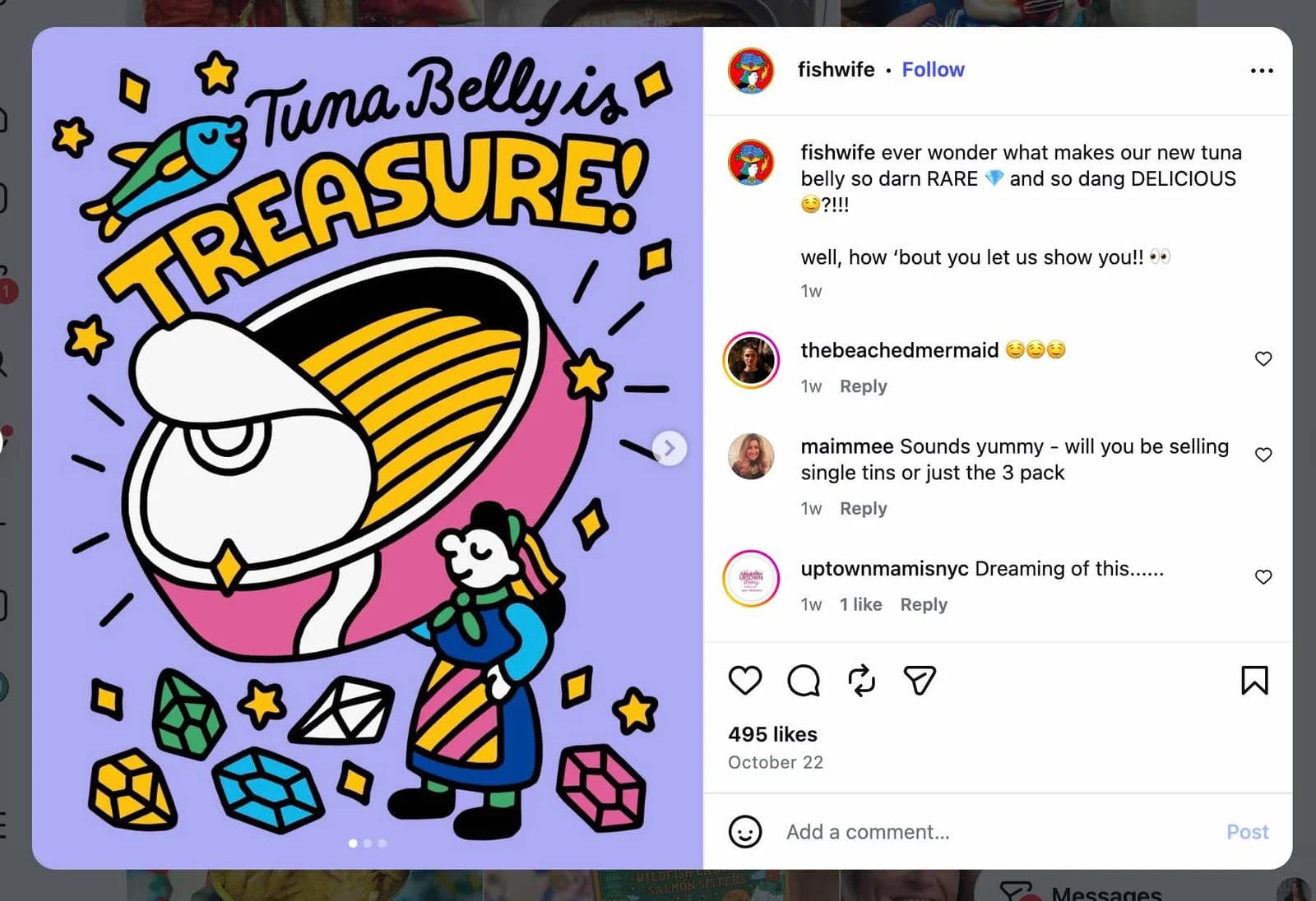
For example, tinned seafood brand Fishwife maintains a recognizable visual identity across its website and Instagram. Its colorful packaging, playful illustrations and bold typography appear across channels, while its conversational, humorous copy gives the brand a consistent personality. Even when promoting individual products, Fishwife maintains the same distinctive look and feel that customers associate with its brand.
Your brand doesn’t need to sound exactly the same everywhere. A playful Instagram caption might feel out of place in a customer service email, for example. What matters is that customers can recognize the same brand behind both interactions.
Consistency also matters throughout the buying journey. Consumers often research brands across multiple channels before making a purchase, and conflicting messages can create confusion or raise doubts about a company’s credibility. A recognizable brand identity helps build familiarity and trust over time.
Use AI thoughtfully and ethically
As AI becomes a bigger part of marketing, consumers are paying closer attention to how brands use it. According to Sprout Social’s Q1 2026 Pulse Survey, posting AI-generated content without labels was the top behavior consumers wanted brands to stop in 2026, cited by 28% of respondents.
And the consequences of poor-quality AI content are already showing up in consumer behavior. Half of Gen Z respondents say they’ve unfollowed, muted or blocked a brand or creator because their content felt like AI slop, meaning low-effort or repetitive AI-generated content. Across all generations, 66% of consumers say they’re more selective about the content they engage with than they were a year ago.
Consumers are also wary of brands replacing human creators with AI-generated personalities. Sprout’s Q2 2026 Pulse Survey found that 44% are uncomfortable with brands using AI influencers, while another 30% say their comfort depends on the situation.
These findings show why brands need to be thoughtful about how they use AI. Clearly disclose AI-generated content and review it for accuracy and quality before publishing. AI can also support research, streamline workflows and help teams spend more time on creative work that benefits from human judgment.
The goal is to use AI in ways that improve the customer experience without compromising the credibility you’ve worked to build.
Prioritize responsive customer care
It might seem simple, but leaving a positive impression on your customers is one of the easiest ways to build brand trust. A dedicated customer care strategy is essential to ensure people receive timely support, no matter how they contact your business.
Your customer care strategy should prioritize quick response times, especially on social media. According to Sprout Social’s Q3 2026 Pulse Survey, 38% of consumers expect brands to respond to social media customer care inquiries within two hours, including 14% who expect a reply within minutes.
This is also where AI can play a valuable role. While consumers have expressed concerns about some uses of AI in marketing, they’re more receptive when it helps them get faster support. The same survey found that 70% of consumers are at least somewhat comfortable with companies using AI, such as chatbots, to deliver faster customer service on social media.
Beyond chatbots, AI can also help teams manage incoming messages by identifying sentiment and prioritizing inquiries that need attention. For example, Care by Sprout Social uses AI-powered classification and automated workflows to spot urgent issues and route them to the right agents.
To keep up, improve your social media response times and stay on top of direct messages and comments. Acknowledge feedback, address concerns promptly and make sure customers get personalized support when their issues require more attention.
Work with the right influencers
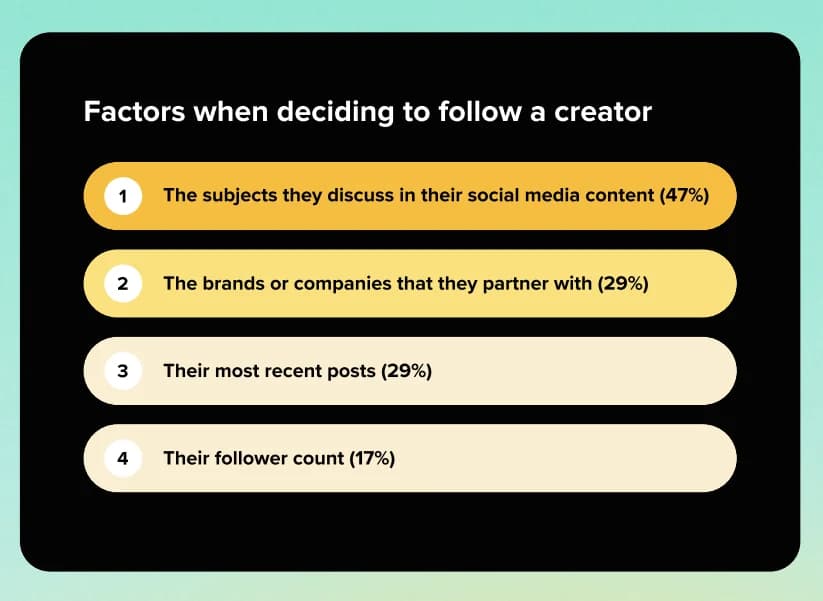
Influencer marketing is a valuable way to build trust in your brand, as long as you work with the right people. According to Sprout Social’s 2026 Influencer Marketing Report, only 17% of consumers check a creator’s follower count before deciding to engage with their content. Instead, audiences prioritize content relevance and style.
Finding the right influencer is about more than audience alignment. Vet potential partners to ensure their content and values reflect your brand’s. This is also an important part of brand safety, as a creator’s behavior and public reputation can influence how consumers perceive your business.
Before entering a partnership, review the creator’s past content and brand collaborations for potential risks. Set clear expectations around disclosures and product claims, while giving creators room to share their genuine experiences. These steps help protect your reputation and make recommendations more credible.
How to measure brand trust
The impact of brand trust (or mistrust) is palpable. But the exact metrics needed to measure and prove the effectiveness of your efforts can be harder to pin down. Here are a few key KPIs to consider when benchmarking your current level of brand trust and setting future goals.
Sentiment
Sentiment analysis describes the process of gathering information about a consumer’s perception of a product, service or brand. While social listening and sentiment analysis can be done natively on each network, using tools to monitor online conversations and sentiment makes it easier to track brand trust trends and shifts.
Engagement metrics
Tracking likes, shares and comments provides insight into how well a brand resonates with its community on social media. Higher levels of positive engagement typically indicate stronger trust and brand affinity.
Lower engagement metrics don’t necessarily indicate brand mistrust, but they do show room for improvement. Brands with engaged communities that prioritize audience interaction are seen as reliable sources of information and part of the cultural zeitgeist.
Ratings and reviews
Customer reviews and ratings on social platforms and review sites (e.g., Reddit, G2, Google Business Profile, Yelp) help marketers track brand trust over time. These reviews provide valuable voice of the customer feedback to refine product development and user experience.
Customer loyalty
Measuring retention, referrals and customer lifetime value is an essential pulse check for understanding your business’s health. If customers aren’t staying loyal, it may mean they aren’t getting enough value to justify sticking around.
Net promoter score
Collecting data directly from customers through surveys, polls and feedback forms can offer valuable insights into how customers perceive your brand. Marketers should ask specific questions related to trust, credibility and accountability to gauge customer sentiment accurately. Gain specific insight into your net promoter score—or how likely a customer is to recommend your product or service—by asking them to rate their likelihood of referring others to your business on a scale of zero to 10.
Media mentions
Media monitoring is a strategy that involves closely tracking national and global news about your brand. A dedicated media monitoring tool like NewsWhip by Sprout Social makes this much easier.
Media monitoring can uncover audience sentiment you might not have known about. It’s also an effective way to understand external social, political or environmental news that’s impacting your brand. Once you’ve gathered these insights, decide how to respond and preserve trust in your brand. For example, if new concerns emerge about material sourcing in the fashion industry, build a campaign around supply-chain transparency.
As with many brand trust strategies, proactive media monitoring helps you stay ahead of potential bad-news outbreaks.
3 companies putting brand trust at the forefront of their strategies
Building brand trust is a long game. But some companies are finding creative ways to put consumer confidence at the center of their strategies. Here are three examples of brands earning trust through their actions, along with lessons worth applying to your business.
Back Market: Backing up its promises with product guarantees
Refurbished electronics marketplace Back Market knows that convincing customers to buy secondhand technology requires overcoming concerns about quality. In July 2026, the company launched a campaign featuring its founder and CEO humorously staking his mother’s life on the quality of its refurbished phones.
Behind the unconventional marketing is a concrete commitment to quality. Devices undergo up to 100-point inspections, and customers receive free 30-day returns and a one-year warranty. By making these protections central to its messaging, Back Market addresses the concerns that might otherwise prevent someone from buying refurbished technology.
Takeaway: Trust starts with giving customers confidence in what they’re buying. Identify what makes people hesitant about your products and address those concerns with clear, verifiable commitments.
Aerie: Reinforcing authenticity in the age of AI
Aerie has built its brand around authentic representation, pledging in 2014 to stop retouching people and bodies in its advertising. In 2025, the company expanded that commitment to prohibit AI-generated people and bodies in its marketing. Its March 2026 “100% Aerie Real” campaign, featuring Pamela Anderson, brought renewed attention to that promise.
The campaign comes as consumers grow more skeptical of AI-generated content. Aerie’s approach shows how brands can respond to these concerns while staying consistent with their established values. The company also extends its no-AI and no-retouching requirements to creators and agency partners.
Takeaway: As technology changes, revisit how your brand’s existing commitments apply to new challenges. Clear standards for AI use and transparency can help maintain authenticity across your marketing and partnerships.
Tony’s Chocolonely: Making transparency part of its business model
Chocolate brand Tony’s Chocolonely has made addressing exploitation in the cocoa industry central to its business. Through its annual FAIR reports, the company shares detailed information about its sourcing practices and progress toward improving conditions for cocoa farmers.
Its 2024–2025 report doesn’t shy away from ongoing challenges. Tony’s reported identifying 3,448 cases of child labor across its supply chain and closing 813 cases during the reporting year. By publishing these figures alongside its progress, the company gives consumers a clearer picture of the work behind its ethical sourcing commitments.
Takeaway: Transparency means being open about challenges as well as achievements. Sharing measurable results and acknowledging where work remains helps customers evaluate whether your business practices align with your stated values.
Consumers need to trust your brand to spend with your brand
As competition grows and consumers become more selective, brand trust is more important than ever. People are looking closely at how businesses operate and increasingly relying on firsthand experiences to decide which brands deserve their money.
Building brand trust requires coordination across your internal teams and customer experience, from product development to marketing and sales. By maintaining consistent communication, prioritizing customer care and listening to consumer feedback, brands can earn the confidence that turns first-time buyers into long-term customers.
To see how well your brand is protected online, download Sprout’s brand safety checklist for social media managers today.
FAQs about brand trust
What is the difference between brand trust and brand loyalty?
Brand trust refers to consumers’ confidence in a business and its ability to meet their expectations. Brand loyalty describes their tendency to choose that business repeatedly over competitors. While trust often contributes to loyalty, customers may remain loyal for other reasons, such as convenience or pricing. Earning trust helps brands build loyalty that lasts beyond individual transactions or promotions.
How does brand safety impact brand trust?
Brand safety helps protect a company’s reputation by reducing the risk of its content or advertising appearing alongside inappropriate or harmful material. It also involves carefully vetting influencer partnerships to avoid associations that could damage consumer confidence. Strong brand safety practices help businesses maintain credibility and protect the trust they’ve built with their audiences.
How do you rebuild brand trust after a crisis?
Rebuilding brand trust starts with acknowledging what happened and taking responsibility where appropriate. Communicate openly with customers about the steps you’re taking to address the issue, then follow through on those commitments. Continue monitoring customer feedback and responding to concerns as they arise. Trust takes time to rebuild, so consistent action matters more than a single public statement.