Shoppers spent big this Black Friday, sales were up 11% with first-time buyers spending the most. Average order value (AOV) reached $138, up 2.6% on last year, the highest of the season and above any day of last year's peak.
Black Friday lifted Black Friday Cyber Monday (BFCM) 2026 with 11% year-over-year (YoY) growth in same-site sales for Klaviyo brands. Bigger orders did much of the work, and text messaging helped bring in new buyers.
For the 3 days still ahead, this data suggests retailers should work the carts shoppers filled on Friday, keep order values healthy, and start building the relationship that follows a first order.
Black Friday grew 11% on big days in the US and France
Black Friday's 11% YoY increase cements it as the biggest shopping day of the year. Growth was strongest in the US (14%) and France (15%), while the UK grew a more moderate 6%.
Home and garden led growth among verticals at 23.5%, more than twice the 11% average across all Klaviyo brands. Apparel (12.6%) also beat the average.
Repeat customers spent 12.5% more than they did last Black Friday, ahead of the 9.6% growth from new buyers. A strong Black Friday is meaningful, but the next few days will help determine a good or great season.
New buyers went big on Black Friday
New buyers' AOV hit $148.63 on Black Friday, up 3.3% from last year and more than $20 above the $128.43 repeat buyers spent per order. It's the highest new buyer AOV of the season, and it topped even last year's high.
The lift has been building. New buyers' AOV is up 2.2% season to date, while repeat buyers' AOV is down 1.5% over the same stretch. On Black Friday, the bigger baskets came from a combination of quantity and price: 2.36 units per order (up 2.2%) at an average selling price of $62.87 (up 0.9%).
That's a sign brands are getting first-order profitability right. The next job is turning those orders into new customer relationships, because lifetime value is built in the weeks after the sale.
Shoppers are filling carts they haven't checked out yet
The cart works as a wish list, and shoppers are filling it. Black Friday saw 6.6 add-to-carts per order, up 30%, or about 1.5 more per order than last year. Value brands saw the biggest jump at 6.9 (up 39%), followed by moderate brands at 6.2 (up 25%) and premium brands at 8.2 (up 23%).
Add-to-carts per order dipped on Black Friday as saved carts converted, but by less than last year. That points to plenty of intent still sitting in carts heading into the weekend. Some shoppers are likely fishing for an offer, but the signal is useful either way: what's in the cart tells you what each shopper wants, which makes it a blueprint for abandoned cart recovery and personalization.
Text brought in new buyers while email held repeat customers
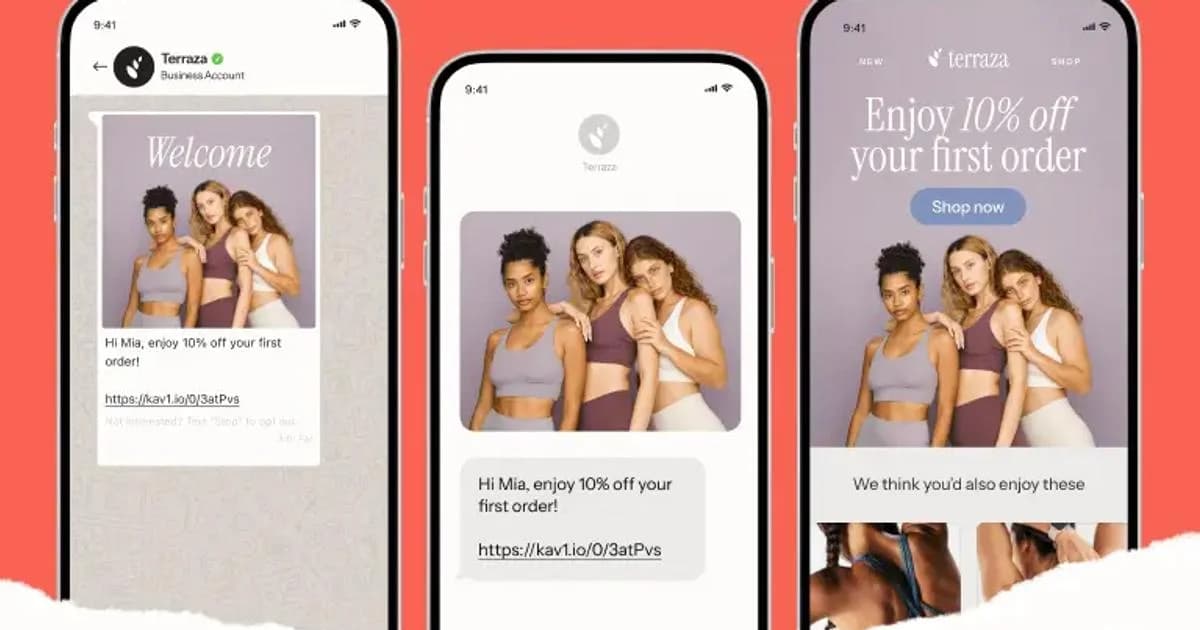
Email and text messaging drove 38.2% of Black Friday revenue among Klaviyo brands sending on both channels, compared with about 35% outside of BFCM. When shoppers are buying the most, these owned channels do even more of the work and each earned a different buyer's attention. Revenue from text messages (SMS, MMS, and RCS) grew 12.4% from new buyers. Email led for repeat customers, with revenue up 10.2%.
That matters because Black Friday is a day for new buyers, who brought in 53.3% of the day's same-site revenue, just under last year's 53.9%. They're the shoppers brands need to reach and convert on the biggest day of the year, and text messaging did its part.
Subject lines turned to urgency once BFCM began
Marketers leaned into last-chance messaging as BFCM arrived. Negative wording, the "don't miss out" and "last chance" kind, rose from 30% of email subject lines before Thanksgiving to 34% on Thanksgiving and 38% on Black Friday. Over the same stretch, positive wording slipped from 28% to 24%, and very positive wording fell from 15% to 12%.
Season to date is up 12.8%, with plenty still to come
Same-site revenue is up 12.8% season to date, with double-digit YoY growth on 21 of the 27 days of November so far. Thanksgiving and Black Friday combined for 10.8% growth.
Revenue from text messaging is up 16.6% season to date, ahead of other site revenue (13.4%) and email (10.7%). Repeat customers (13.5%) are growing a little faster than new buyers (12.1%). Germany (20.6%) and France (15.3%) are running hottest by market, the US (13.2%) is tracking just above the overall average, and the UK (9.9%) is just behind it. Home and garden leads the verticals at 16.7%.
Shoppers are pulling their spend earlier, and brands may need to pull more of their season plans earlier, too. But one strong day doesn't settle the season. Saturday, Sunday, and Cyber Monday are still ahead.
What to do with the rest of BFCM
Black Friday previewed the next 3 days, and it points to 5 moves.
- Work the carts. Saved carts converted on Friday, but plenty of intent is still sitting there. Make sure your abandoned cart flow is live for the weekend and shows the exact items, with a line like "Your cart is saved. Here's what's still in it."
- Build the offer around the basket. If new buyers are averaging nearly $150, a bundle or a free-shipping threshold just above that gives them a reason to add one more item without a deeper discount.
- Send on email and text. Text did the most for new buyer revenue and email did the most for repeat customers, so make sure your weekend sends reach subscribers on both. Keep texts to the offer, the deadline, and the link, and test a subject line that names the product instead of the countdown.
- Find the shoppers who haven't shown up yet. Last year's buyers and pre-season buyers who haven't purchased can still make a difference. Build segments for each and send them a reason to come back.
- Plan the second purchase. Set up a post-purchase flow for first-time BFCM buyers that helps them use what they bought, then follows with a reason to return.
Composer prompts for the rest of BFCM
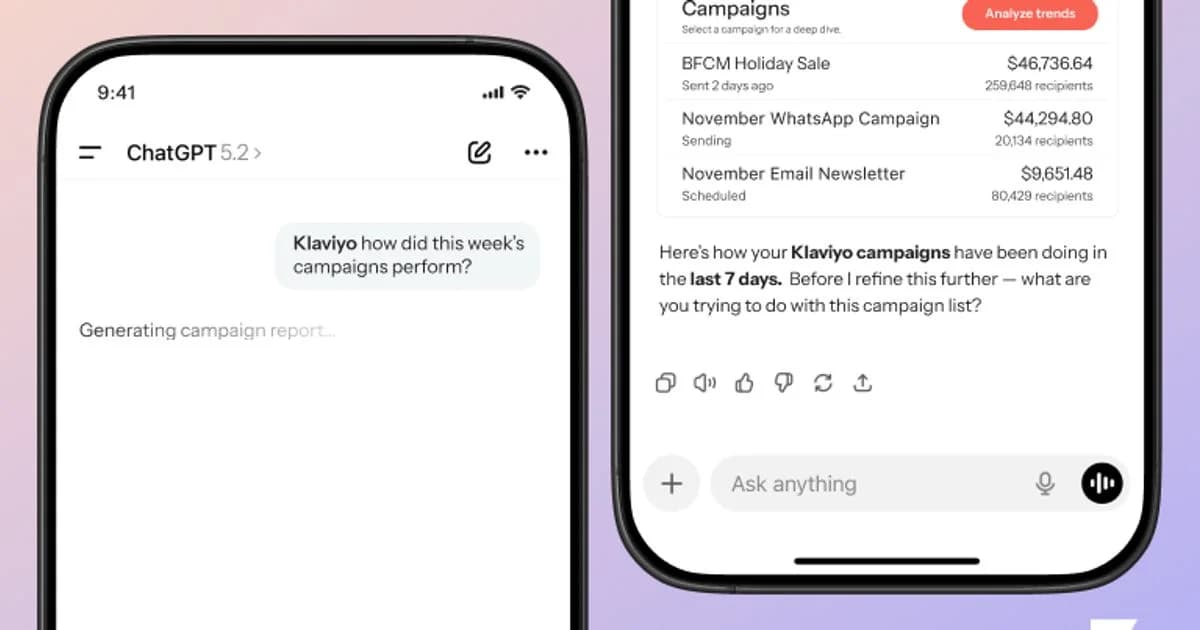
If your team is stretched this weekend, Klaviyo's AI marketing agent, Composer, can audit your active flows in one pass and draft campaigns for you to review and approve. Three of the tactics above have a ready-made prompt in Klaviyo's AI prompt library. Paste one into Composer as written, or edit it to fit your brand.
ComposerBFCM + peak seasonAdjust abandonment flows for peak weekRetune your abandonment flows for the speed and urgency of peak week.See full prompt
ComposerBFCM + peak seasonFind the right BFCM send volume and frequencyUse last year's results to find the right BFCM send volume and frequency.See full prompt
ComposerBFCM + peak seasonTurn one-time BFCM buyers into repeat customersAdd a flow that turns one-time BFCM deal buyers into repeat, full-price customers.See full prompt
Shoppers showed up for the biggest day of the season, and the new ones spent the most per order. The brands that work the carts shoppers filled on Friday and give first-time buyers a reason to come back have the most to gain from the 3 days left.
Follow BFCM 2026 live on Klaviyo's dashboard, with updates through Cyber Monday. See the dashboard
About the data: All figures are Klaviyo same-site sales, which compare the same brands year over year. Each day and period is measured against the same day last year, aligned on Black Friday. Black Friday results are projected from historical patterns using the roughly 93% of actual results in so far. Thanksgiving growth has been updated to 10.5% (from 9% in the Thanksgiving report) to include late-arriving activity. Text messaging figures show revenue from text messages across brands that send both email and text. Subject line sentiment covers US same-site brands.