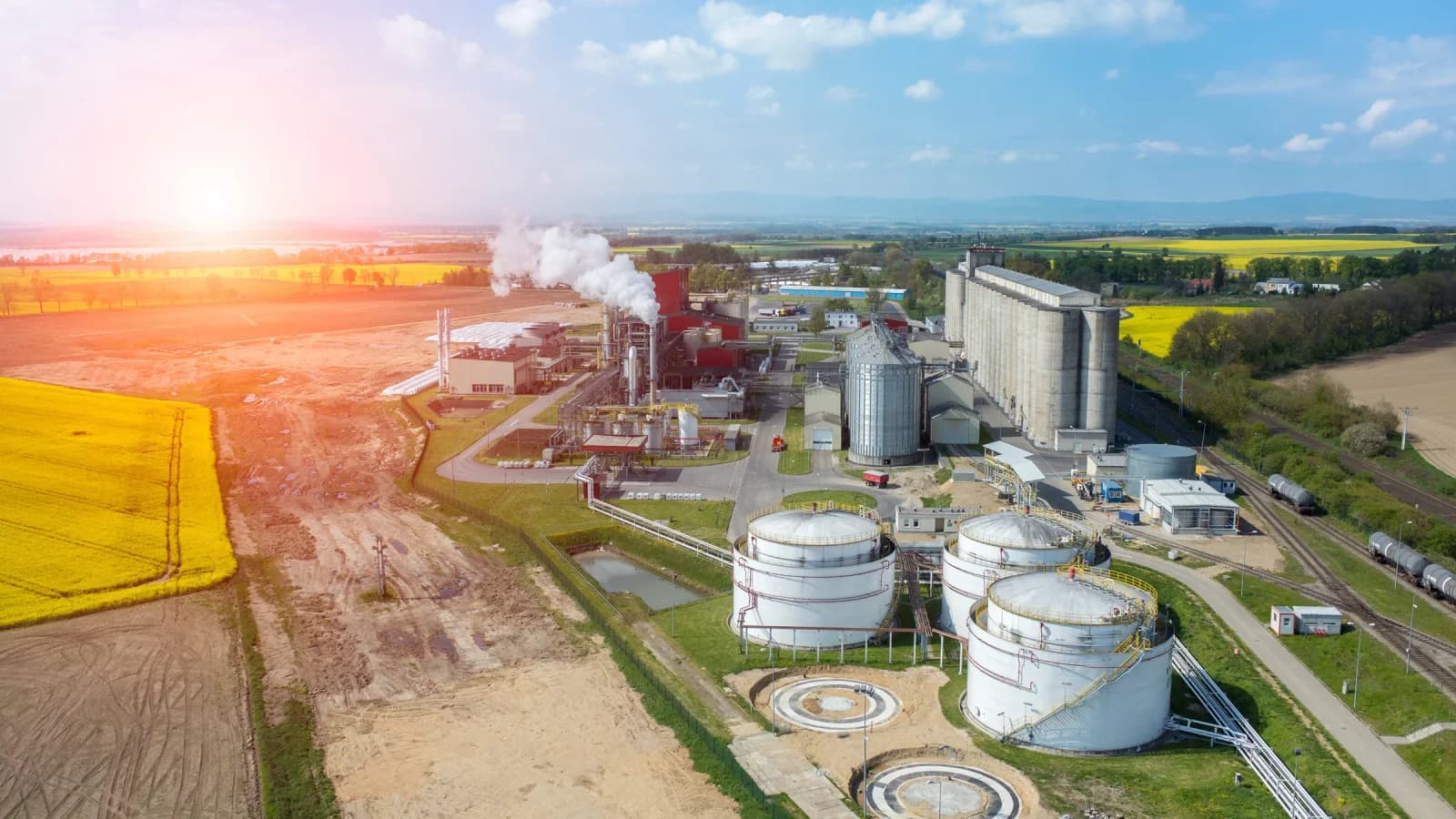
A leading renewable energy producer implemented Rockwell’s FactoryTalk® Analytics™ PavilionX™ Model Predictive Control (MPC) technology at its 30 million-gallon-per-year biodiesel facility. The facility converts animal fats and vegetable oils into biodiesel and glycerin, a valuable byproduct used in industries including food, feed, pharmaceuticals, cosmetics and lubricants. To maximize production while maintaining quality and efficiency, the facility sought greater control over complex process interactions across its operation.
Process variability, complex interactions and limited visibility challenged performance
The biodiesel facility wanted to increase production, reduce energy consumption and more consistently control critical process reactions. Producing high-quality biodiesel requires precise process control and careful balancing of operating conditions. However, changing feedstocks, complex process interactions and limited real-time visibility made it difficult to consistently operate at peak performance. In addition, the facility needed a control solution capable of automatically responding to process disruptions. For example, if a blockage occurred, the system needed to redirect flow among reactors to maintain the desired methanol balance and support stable operations.
Traditional control strategies were not designed to manage all these interconnected process variables simultaneously. As a result, operators often had to react to issues after they occurred, leading the plant to operate more conservatively to protect product quality and avoid process instability.
Model predictive control improves production performance while reducing energy and chemical consumption
The facility implemented FactoryTalk Analytics PavilionX Model Predictive Control across major biodiesel production processes, including transesterification, methanol and glycerin drying, and product purification. The goal was to increase production, improve reaction consistency, reduce energy and chemical consumption, and maintain product quality without requiring new capital investment.
PavilionX MPC uses predictive models and advanced analytics to determine optimal control actions that improve process performance while operating within process constraints. By continuously evaluating interactions among multiple process variables, the solution helps operators achieve more stable, efficient and profitable operations.
The solution coordinates key variables that influence biodiesel production performance, helping operators respond more effectively to changing process conditions. By managing these variables together rather than individually, the controller reduces bottlenecks, improves process stability and enables operation closer to production and quality targets.
One advantage of the solution is its ability to automatically respond to process disruptions. For example, when methanol flow restrictions occur, the controller can adjust flow among reactors to maintain the desired methanol balance and stabilize the reaction. This reduces the need for manual intervention and helps prevent minor process issues from impacting production rates or product quality.
The facility also implemented a Virtual Online Analyzer™ (VOA) application to estimate key quality parameters in real time. The application provides operators with faster visibility into process and product performance, reducing reliance on delayed laboratory results. With more timely insights, operators can make informed adjustments and operate closer to specification limits while maintaining quality and stability.
Moving from reactive to predictive control helped the plant operate as one connected system FactoryTalk Analytics PavilionX Model Predictive Control enabled this biodiesel facility to better manage complex process interactions throughout the production process. By optimizing reactor control, methanol recovery, glycerin drying, free fatty acid stripping and product purification, the solution improved process stability, enhanced visibility into product quality and enabled coordinated control across key plant areas.
As a result, biodiesel production increased by 5-6% and throughput increased by 15%, delivering a return on investment within a few months. The facility also reduced energy consumption by 10%, methanol usage by 4% and catalyst usage by 3.5%, while improving reactor yield, glycerin production, plant stability and product quality.