Introduction
Agentic commerce is shopping in which AI agents research, compare and buy products on a shopper’s behalf, within limits the shopper sets. Just like all things AI, agentic commerce is making waves across the market, no matter if you’re a retailer, brand or manufacturer.
If your business is exploring the size of the agentic opportunity and how it’s likely to evolve, consider the following trends and statistics as a starting point for your strategy. Here, we detail the latest data across various themes, including market size, consumer behavior and conversion success.
Let’s dive in!
What’s the market size for agentic commerce?
Agentic commerce is accelerating rapidly, with the US market forecast to be worth $300-500 billion by 2030 and account for 15-25% of total eCommerce sales, according to Bain.
At the same time, 20% of digital commerce transactions will be executed through AI platforms, either via on-platform checkout or via AI agents by 2030, says Gartner.
Other market size projections include:
- 10-20% of US eCommerce sales will be agent-driven by 2030, according to Morgan Stanley.
- Agentic commerce could account for up to 25% of US online sales by 2030, with the majority of that volume concentrated in recurring, low‑risk categories such as groceries and subscriptions, states J.P. Morgan.
- The total agentic commerce transaction value is expected to be $8 billion globally in 2026, growing to $3.5 trillion by 2031, driven by user growth from under 300 million to around 1.3 billion, according to Juniper Research.
- Across evolving levels of autonomy, 55% of US eCommerce spend could be agent-assisted and 18% driven by fully autonomous agents, implying roughly $1.3 trillion in impacted spend, with almost $400 billion mostly autonomous, estimated Stripe and BCG.
Some forecasts may be more optimistic than others, but the message is clear: AI-assisted shopping and agentic commerce will continue to upend the way consumers discover, compare and buy products and services. This will translate into a significant share of transactions in the years to come.
Are consumers adopting agentic commerce?
Market size is intrinsically linked to adoption, and consumers are already embracing AI-powered shopping at a rapid pace.
Nearly 50% of online shoppers are expected to use AI agents, according to Business Insider, which will account for ~25% of their spending and add $115B to the US eCommerce sector.
In the short term, Kearney estimates that 73% of consumers are familiar with AI tools and 60% expect to use AI agents for shopping within the next 12 months, signaling a near‑term inflection in intent.
There’s no question that AI-mediated shopping is underway. McKinsey’s 2026 European survey finds:
- 84% of consumers use AI tools in daily life.
- 38% already use AI to research products or inform purchasing decisions.
- Among those using AI for shopping, 63% compare brands, models, prices and reviews, 55% use it to learn about a category or product, and 46% use it for inspiration and discovery.
US consumers show similar patterns on the “research and compare” side, but remain cautious on execution. According to YouGov:
- About 65% of Americans trust AI to compare prices, yet only 14% trust AI to place orders on their behalf, with trust highest among Gen Z (29%) and millennials (30%).
- A separate YouGov study notes that just 13% mostly or completely trust AI for shopping advice, compared with 53% for personal recommendations, highlighting a trust gap for fully autonomous actions.
Internationally, openness to AI‑assisted decision‑making is high. A Stripe/Visa consumer survey across multiple markets finds a majority of shoppers are open to AI agents helping them make purchasing decisions, particularly for everyday categories.
In Australia, Stripe revealed that 62% of consumers are open to AI agents helping with purchasing decisions, and 32% already use AI for shopping advice, with strong interest in household items, subscriptions, gifts and travel.
Other insights that prove consumers are adopting AI with gusto include:
- 38% of US consumers have used generative AI for online shopping, and 52% plan to in the next year, per Adobe’s survey of 5,000 US shoppers. Among those who have used AI for shopping, 73% cite it as their primary source of product research.
- 55% of shoppers say they have knowingly used a retailer’s AI assistant (e.g., Amazon’s Rufus, Walmart’s Sparky), according to Wing.
While survey results may appear contradictory, the broader trend is clear: Consumer trust in fully autonomous AI transactions will take time to develop. Shoppers are still getting comfortable with AI and gradually exploring how far they can push the boundaries. At the same time, the infrastructure required for fully agentic commerce — payments, security, identity and authorization — remains too immature to support widespread autonomous checkout.
That said, the data clearly points to an ongoing shift. Consumer behavior is evolving, but not overnight. Adoption will happen unevenly, with some segments moving faster than others. For brands and retailers, the implication is straightforward: Being present in AI-driven channels is no longer optional. As usage continues to grow, more consumers will rely on these systems in some form, whether for discovery, comparison, or eventually, transactions.
How are AI-driven shopping traffic and referrals growing?
AI referrals continue to increase massively, with retail consistently among the fastest‑growing verticals:
- AI‑driven visits to US retail sites grew 693% YoY during the 2025 holiday season (Nov–Dec), with 769% growth in November and 673% in December, according to Adobe Analytics.
- That momentum has continued into 2026: Q1 2026 saw +393% YoY growth in AI‑referred retail traffic, and July 2026 was up +62% YoY, as AI moves from a seasonal spike to a structural referral channel, said Adobe Digital Insights.
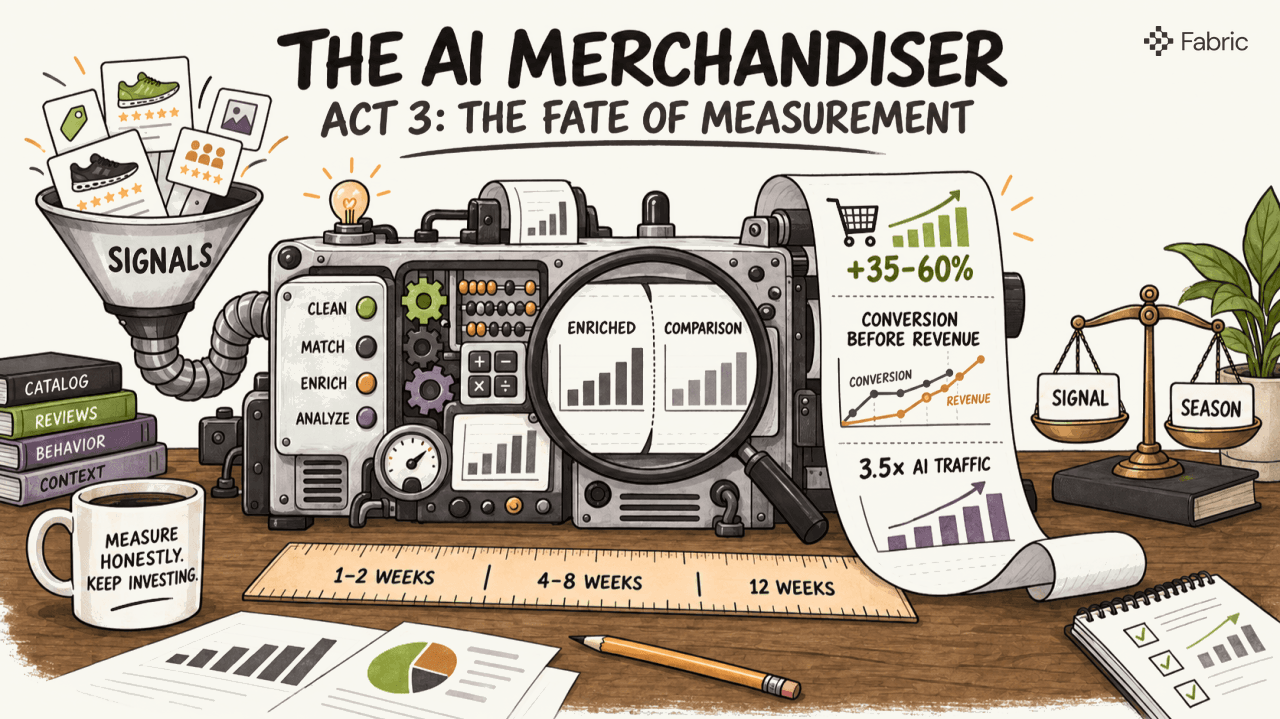
AI‑sourced traffic to US retail sites was up 89% YoY during peak events like Prime Day 2026, and those visitors converted 40% better than non‑AI channels, said Adobe for Business. Over the first five months of 2026 (Jan–May), AI traffic to US retail sites increased 235% YoY, underscoring sustained, above‑channel growth.
During seasonal events like Black Friday / Cyber Week 2025, the scale of AI influence became visible:
- AI-driven traffic influenced $14.2 billion in global online sales on Black Friday, including about $3 billion in the US, according to Reuters.
- AI agents and agentic commerce influenced roughly 20% of all Cyber Week 2025 purchases globally, equivalent to about $67 billion in sales, according to Hostinger.
- 300% growth occurred in third-party AI agent traffic to retailers in the first half of Black Friday, per Digital Commerce 360.
It’s important to see these enormous numbers in context. Last year, the share of AI-generated traffic was considerably lower, so growth is coming off a small base: AI‑driven sessions still sit below 0.2% of total eCommerce traffic, but they’re growing faster than any other channel, driven primarily by LLM‑based assistants such as ChatGPT, Copilot and Google’s generative AI tools.
Do AI agents convert better than traditional channels?
AI-assisted shopping shows strong early signals of higher intent. When consumers use AI tools, they often arrive with clearer constraints, preferences and purchase intent already defined.
Indeed, there’s no denying that AI-sourced referrals are growing. But are they converting more? The information to date has been mixed. Peer-reviewed work from Maximilian Kaiser and Christian Schulze at the University of Hamburg and the Frankfurt School of Finance & Management revealed that referral traffic from ChatGPT converts better than paid social, but it remains below direct, organic search and email referrals.
At the same time, Walmart saw conversion rates 3x lower for in-chat purchases than when redirecting users to its own website. The giant retailer changed course by integrating its own AI assistant, Sparky, into ChatGPT, with plans to expand to Gemini. The traffic from ChatGPT, however, is driving ~2x as many new customers as traditional search channels.
This gap is largely due to infrastructure limitations: Checkout flows, payments, identity and authentication aren’t yet optimized for agents.
Over time, this gap is expected to close as commerce systems adapt. In fact, one area where agents are already showing a strong fit is in categories where decision-making is simple and predictable, such as replenishment and repeat purchases.
The implication for businesses is clear: AI agents can outperform traditional channels, but only for companies prepared to support them.
What role does product data play in agentic commerce?
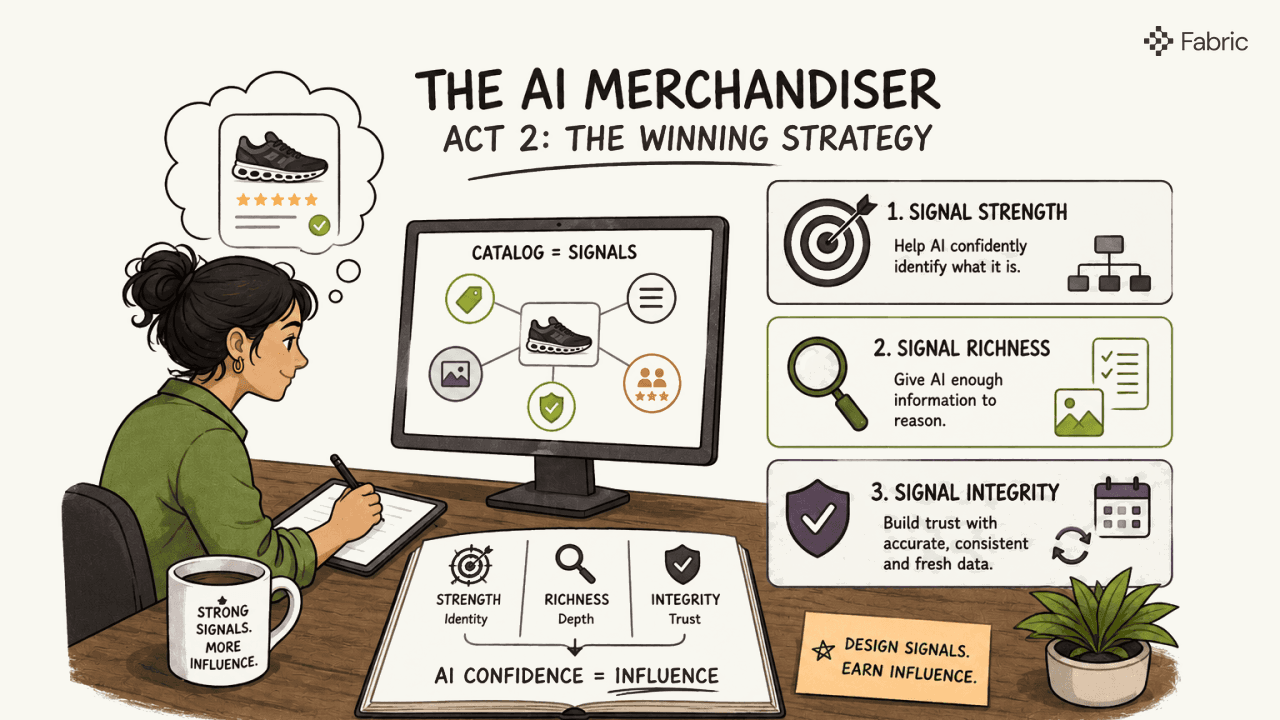
In traditional eCommerce, product pages, imagery and branding play a major role in influencing buyers. In agentic commerce, however, the primary “consumer” is a machine, which relies on structured, consistent and complete data to make decisions. For instance:
- 71% of pages cited by ChatGPT and 65% by Google AI Mode include structured data, according to Alhena.
- Pages with structured data are cited 3.1x more frequently in Google AI Overviews.
- Google’s AI Overviews now appear on 14% of shopping queries.
However, poor data remains the reality for businesses: 45% of retailers said they “sometimes” face data quality issues that affect business decisions, and 36% said it happens “often,” according to Rithum.
AI agents are less forgiving than humans. Where a shopper might tolerate missing details or inconsistent descriptions, an agent is more likely to skip products with incomplete attributes, ignore inconsistent and/or deprioritize listings with outdated inventory or pricing. So, if your product data is incomplete, your product may never even be considered by an AI agent.
For enterprise leaders, this marks a clear shift in investment priorities. Competitive advantage will increasingly depend on how effectively organizations can operationalize commerce data through:
- Structured, machine-readable product catalogs.
- Standardized attribute frameworks across channels.
- Real-time pricing and inventory availability.
- Interoperable, schema-based data models (e.g., Schema.org).
What are the security and fraud risks of agentic commerce?
As agentic commerce grows, so does the complexity of managing trust. AI agents introduce a new class of actors into commerce systems: Autonomous, scalable and increasingly indistinguishable from human users. This creates a materially different risk environment.
Early signals identified by Accenture highlight growing concern:
- 78% of financial institutions expect an increase in AI-related fraud.
- 87% of CTOs and heads of payments at financial institutions believe that trust will be the most significant barrier to the adoption of agentic payments.
Darwinium’s latest research corroborated these concerns and went further, showing that 97% of organizations have experienced an increase in AI-facilitated attacks in the past year and have suffered an average annual direct loss of $4.5 million from AI-enabled bad actors.
A Visa report cited in security‑focused commentary notes a 25% spike in malicious bot‑initiated transactions over a six‑month period, with a 40% surge in the US. This is framed as a direct outcome of fraudsters using AI agents and bots to automate account takeover, inventory spam and checkout flows.
Unlike traditional fraud, which is often tied to individual user behavior, agent-driven fraud can operate continuously at scale, adapt quickly to detection systems and mimic legitimate purchasing patterns.
At the same time, existing fraud detection models aren’t fully equipped to handle this shift, as many are still optimized for human session behavior, device fingerprinting and static identity verification.
As a result, a new framework is emerging: “Know Your Agent” (KYA). Similar to Know Your Customer (KYC), KYA focuses on verifying not just the end user, but the agent acting on their behalf, including its identity, permissions and behavioral patterns.
For enterprises, this means evolving security models across three dimensions:
- Identity: Is the agent legitimate?
- Authorization: What is it allowed to do?
- Behavior: Is it acting within expected parameters?
As agent adoption grows, organizations that invest early in agent-aware security frameworks will be better equipped to manage both risk and compliance in autonomous transaction environments.
What infrastructure do enterprises need to compete in agentic commerce?
The rise of agentic commerce requires a fundamental rethinking of commerce infrastructure. This transition is already underway: 40% of enterprise applications will embed AI agents by 2026, according to Gartner.
In an agentic context, these issues are amplified. AI agents depend on structured, consistent, and real-time data to function. If that data is incomplete or inaccessible, products may be excluded from consideration.
This is driving a shift toward what can be described as a “machine-readable commerce layer,” which means:
- Exposing product, pricing and inventory data via APIs.
- Ensuring consistency and completeness across product attributes.
- Enabling systems to initiate and complete transactions.
Enterprises that invest in API-first architecture, structured product data and interoperable systems will be better positioned to participate in agent-driven demand.
Key takeaways
AI is becoming a core interface for discovery and decision-making, with adoption accelerating even as infrastructure, such as payments and security, continues to catch up.
For enterprise leaders, this creates a clear priority: Prepare for a hybrid world where human and agent-driven journeys coexist, where competitive advantage will depend more on ensuring your products are accessible, understandable and actionable by machines.
Businesses that invest early in data quality, API-first infrastructure and agent-ready systems will be best positioned to capture this next wave of commerce.
White Paper
Navigating the Agentic Commerce Era On Your Terms
The practical guide to help you approach agentic commerce strategically — not out of FOMO.