As AI-driven automation continues to advance rapidly across the electronics industry and intralogistics, AGVs and AMRs have become key options for companies planning factory automation systems. When evaluating potential solutions, many manufacturers start with the same questions: What is the difference between an AGV and an AMR? And when comparing AGVs vs. AMRs, which is better suited to the needs of electronics manufacturing lines?
In practice, choosing between an AGV and an AMR involves more than differences in equipment. The decision also depends on how frequently production lines need to be reconfigured, the level of operational flexibility required, and the company’s long-term expansion strategy.
This article provides a structured comparison of AGVs and AMRs, covering their underlying technologies, application scenarios, key differences, and implementation processes. It also outlines the key considerations for selecting the right solution, helping companies make more informed decisions for their automation needs.
What Is an AMR?
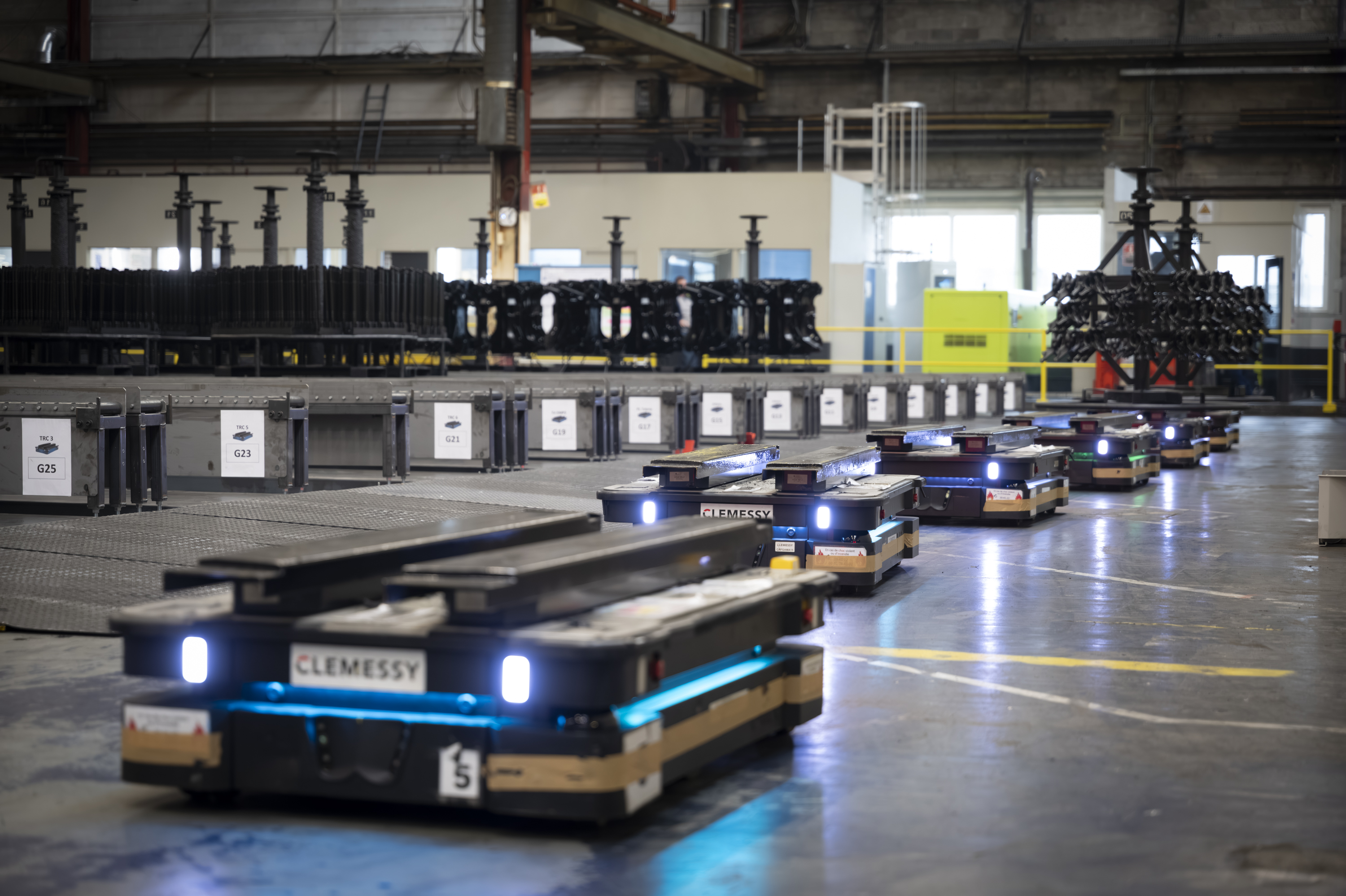
An AMR (Autonomous Mobile Robot) operates much like a vehicle equipped with an intelligent navigation system. It typically uses SLAM (Simultaneous Localization and Mapping), LiDAR, and multiple sensors to autonomously localize itself, navigate, and perceive its surroundings.
Depending on their system architecture, AMRs can be further classified as task-oriented or path-oriented. Task-oriented AMRs offer a high level of autonomy and can plan routes in real time based on assigned tasks. When encountering people or obstacles, they can actively reroute and continue their material-handling tasks. This makes them particularly suitable for environments where production lines are frequently reconfigured, humans and robots work in shared spaces, or future expansion is anticipated.
In contrast, path-oriented AMRs travel along predefined routes and offer less autonomous flexibility. Route changes typically require professional configuration, making their operational flexibility closer to that of conventional guided vehicles.
What Is an AGV?
An AGV (Automated Guided Vehicle) operates much like a train running on fixed tracks. It is a driverless material-handling vehicle designed to travel along predefined routes. AGV navigation typically relies on guidance infrastructure such as magnetic tape, magnetic markers, QR codes, or tracks, with travel routes planned and configured before deployment.
Because AGVs follow clearly defined operating logic, they perform well in stable production environments with fixed workflows. However, when production layouts or material-handling routes need to change, the guidance system generally needs to be reconfigured or modified. As a result, AGVs offer relatively limited flexibility when adapting to changes in production environments.
AGV vs. AMR: Key Technology Differences
The most critical difference between AGVs and AMRs goes beyond navigation technology. It lies in their ability to adapt to production changes and make operational decisions. Traditional AGVs are designed around standardized, predictable processes. As long as workflows remain stable, they can maintain a consistent operating pace over extended periods.
AMRs, in contrast, are designed for dynamic environments. Their key advantage is the ability to adapt to labor shortages, human-robot collaboration, unexpected task requests, and flexible workstation configurations. This makes AMRs better suited to evolving production lines and high-mix, low-volume manufacturing. Factory automation can therefore support changing production requirements rather than becoming a constraint.
In electronics manufacturing and intralogistics automation, AGVs and AMRs each have distinct application scenarios. AMRs are better suited to smart factories where production lines are frequently reconfigured, workstation connections are complex, and humans and robots operate collaboratively. Typical applications include WIP transfer between SMT workstations, cross-zone PCB transport, and automated material replenishment at testing stations. AMRs can also integrate with primary control systems, wireless communication networks, and fleet management platforms, enabling multiple vehicles to stay connected in real time, dynamically distribute tasks, and operate collaboratively.
AGVs, on the other hand, are better suited to environments with stable routes, fixed workstations, and straightforward material-handling cycles. Typical applications include long-distance material replenishment, warehouse inbound and outbound operations, and highly repetitive material-handling processes.
AGV vs. AMR Comparison: Key Factors for Factory Automation
AMR
AGV
Navigation
Autonomous navigation (SLAM, LiDAR, sensors)
Fixed-path navigation (magnetic tape, magnetic markers, QR codes, tracks)
Obstacle Avoidance
High — Detects obstacles and can automatically reroute using environmental sensing
Low — Stops when an obstacle blocks its path and typically requires manual intervention
Flexibility & Scalability
High — Routes can be adjusted through software. Deployment can start with a single robot and scale as needed, with multiple robots dynamically coordinated
Low — Route changes or expansion require additional infrastructure and equipment investment. Multiple AGVs operating simultaneously may cause traffic congestion
Operational Efficiency
Routine management can be handled by a small team, helping reduce long-term operating and maintenance costs
Each adjustment requires additional labor, increasing overall costs. Guidance infrastructure also requires regular maintenance
Deployment Speed
Fast
Slower
Human-Robot Collaboration
High — Can operate safely alongside personnel with advanced obstacle avoidance
Low — Typically requires segregated or designated operating areas
Future Expansion
High — Tasks and fleet size can be quickly adjusted or expanded as requirements change
Low — Expansion requires infrastructure work and hardware modifications
Best-Suited Environments
Environments where layouts or material flow routes may change, or where future expansion in fleet size and equipment is anticipated
Environments with stable routes, repetitive long-term material handling, fixed workstations, and straightforward workflows
How Can AMRs Help Electronics Manufacturers Stay Competitive?
Although automation is already widely adopted across the electronics and semiconductor industries, manufacturers can continue to benefit from ongoing advances in automation technology. Autonomous Mobile Robots (AMRs) provide electronics manufacturers with a wide range of opportunities for AI-driven intralogistics and material handling automation and can be deployed across various types of manufacturing facilities.
Here are several reasons why electronics manufacturers and semiconductor companies should consider adopting AMRs:
Increase Production Throughput
With autonomous navigation capabilities, AMRs can respond to changes in dynamic environments in real time and navigate around potential bottlenecks, helping keep workflows moving smoothly.
For example, the MiR250 can operate for approximately 160 minutes after just 10 minutes of charging, enabling near 24/7 continuous operation. This significantly reduces downtime while improving overall production capacity and material handling throughput.
Optimize Space Utilization
Flexible AMRs can operate alongside employees in shared workspaces without requiring additional guidance infrastructure, helping minimize the amount of production floor space dedicated to automation.
AMRs can navigate through confined spaces and narrow aisles while quickly adapting to changes in factory layouts and production configurations.
Reduce Material Handling Costs
Moving materials from point A to point B does not, by itself, create added value. AMRs allow manufacturers to reallocate their workforce to higher-value tasks while improving productivity and reducing material handling costs.
What Are MiR’s Advantages in the AMR Market?
After comparing AGVs and AMRs, many companies take the next step by evaluating established AMR brands on the market. MiR (Mobile Industrial Robots) is widely adopted in electronics manufacturing and the semiconductor industry, not only for its autonomous navigation capabilities but also for its mature systems and industrial integration capabilities.
MiR offers four core advantages:
- Proven Commercial Maturity: MiR has been operating reliably in large-scale manufacturing facilities across multiple countries for many years. Its stable software and mature fleet management system make it well suited for deployment in medium to large factories while helping reduce implementation risks.
Proven Commercial Maturity: MiR has been operating reliably in large-scale manufacturing facilities across multiple countries for many years. Its stable software and mature fleet management system make it well suited for deployment in medium to large factories while helping reduce implementation risks.
- Comprehensive Modular Design: From the MiR250 and MiR500 to the MiR600, MiR offers different payload capacities along with pallet lift modules, rack modules, and integration solutions. Companies can scale their deployments in phases based on operational needs, supporting a diverse range of intralogistics tasks.
Comprehensive Modular Design: From the MiR250 and MiR500 to the MiR600, MiR offers different payload capacities along with pallet lift modules, rack modules, and integration solutions. Companies can scale their deployments in phases based on operational needs, supporting a diverse range of intralogistics tasks.
- Strong Integration with Collaborative Robots: MiR can be integrated with Universal Robots collaborative robot arms to create a complete automation system that combines mobility and task execution. This transforms basic material transport into a mobile workstation, enabling more flexible production line operations.
Strong Integration with Collaborative Robots: MiR can be integrated with Universal Robots collaborative robot arms to create a complete automation system that combines mobility and task execution. This transforms basic material transport into a mobile workstation, enabling more flexible production line operations.
- Mature Fleet Management Platform: MiR supports multi-robot fleet coordination and task prioritization and can integrate with MES and WMS systems, facilitating integration into smart factory architectures.
Mature Fleet Management Platform: MiR supports multi-robot fleet coordination and task prioritization and can integrate with MES and WMS systems, facilitating integration into smart factory architectures.
AMR and AGV Automation: Implementation Case Studies
AMR/AGV Automation Case Study 1: Schneider Electric Improves Factory Efficiency with AMRs
1. Manufacturing Challenge: Legacy AGVs Lacked Flexibility and Made Logistics Adjustments Costly
Schneider Electric previously relied primarily on conventional AGVs for intralogistics. However, because AGVs lacked route flexibility, even minor changes to production layouts or material flow required route reconfiguration. This not only increased adjustment costs but also created the risk of logistics disruptions and reduced efficiency. In addition, the limited payload capacity of the existing equipment made it difficult to accommodate logistics operations involving multiple routes and frequent changes.
2. Solution: Replacing Guided AGVs with MiR500 AMRs to Build a Flexible Intralogistics Network
The MiR500 combines high payload capacity with SLAM-based autonomous navigation. Schneider Electric deployed the MiR500 across eight different logistics routes, each averaging approximately 140 meters in length, with operations running around the clock in three shifts.
During each shift, the MiR travels approximately 5.5–6 kilometers on average, reliably transporting products between the production line and warehouse. When minor production layout adjustments are required, on-site personnel can modify the relevant tasks and routes themselves without relying on an external engineering team, significantly improving system flexibility and deployment efficiency.
A powerful solution for medium- to large-scale logistics. Upgrade your heavy-duty material handling automation >> MiR600
3. Results: Lower Costs, More Available Space, and Improved Safety
By deploying MiR AMRs, Schneider Electric achieved multiple objectives simultaneously, including lower logistics costs, optimized load efficiency, reduced pallet usage, and improved overall operational safety. The company successfully upgraded its smart intralogistics operations without requiring major modifications to its existing facility.
AMR/AGV Automation Case Study 2: Stera Technologies Achieves an AMR Payback Period of Approximately 18–24 Months
1. Manufacturing Challenge: Long-Distance Heavy Material Handling Created Efficiency and Workforce Challenges
Stera Technologies had long faced challenges in recruiting and retaining employees, particularly for highly repetitive and physically demanding manual material handling tasks.
Its production facility also required heavy metal components to be transported over long distances between the warehouse and production lines. Each trip was time-consuming, while worker fatigue and inefficient material flow could easily create logistics bottlenecks.
2. Solution: Building a Flexible, High-Payload AMR Logistics System with MiR500
Stera Technologies deployed two MiR500 Autonomous Mobile Robots (AMRs) equipped with pallet lift modules to fully automate heavy material handling and improve operational efficiency.
The MiR500 can autonomously pick up and drop off pallets weighing up to 500 kg without human intervention and transport materials between warehouse and production areas. A key advantage is its ability to adapt directly to the existing factory layout, requiring almost no changes to the current production environment during implementation while providing both flexibility and rapid deployment.
3. Results: Workforce Reallocation, Stable Material Flow, and Efficient ROI
Following the deployment of MiR automation, Stera Technologies achieved an estimated return on investment (ROI) period of approximately 18–24 months. The system also replaced material handling work equivalent to approximately 1.5 full-time employees, reduced occupational safety risks associated with manually handling heavy loads, and maintained a consistent flow of materials.
AMR/AGV Automation Case Study 3: Mirgor Reduces Downtime by 90% with AMRs
1. Manufacturing Challenge: Manual Material Replenishment Created SMT Logistics Bottlenecks and Increased Workload
Mirgor previously relied on manual carts to replenish materials for its SMT (Surface Mount Technology) production lines, requiring components to be transported frequently between the warehouse and production areas.
This process was labor-intensive, and inconsistent replenishment cycles increased the risk of production line waiting time and downtime. It also placed additional physical strain on employees.
2. Solution: Building a Smart SMT Intralogistics System with MiR200
Mirgor deployed six MiR200 Autonomous Mobile Robots (AMRs) to improve component delivery efficiency between its warehouse and SMT production lines.
The MiR200 units were equipped with customized top modules designed to accommodate electronic component racks and material replenishment carts. Using SLAM and sensor-based navigation technology, the robots can navigate factory aisles safely and autonomously and operate alongside employees without requiring physical barriers.
This also reduces the waiting time and inconsistencies associated with manual cart transportation, making the SMT material replenishment process more stable and predictable.
An ideal solution for short-distance intralogistics. Discover the upgraded compact and efficient automation solution >> MiR250
3. Results: 90% Less Downtime, Improved Ergonomics, and Rapid ROI
After deploying the MiR200, Mirgor reduced production downtime caused by component delivery by 90% and achieved a return on investment within one year, effectively minimizing the impact of unstable logistics processes and inconsistent material flow on SMT production efficiency.
At the same time, AMRs replaced a significant amount of manual cart movement and repetitive material handling, allowing employees to shift their focus to higher-value tasks such as quality control, process optimization, and exception handling.
AMR/AGV Automation Case Study 4: Whirlpool Improves Intralogistics Safety with AMRs and Achieves ROI in Under Two Years
1. Manufacturing Challenge: Manual Material Handling Made It Difficult to Balance Efficiency, Safety, and Workforce Value
Whirlpool's facility in Łódź, Poland, previously relied primarily on manual labor to transport materials and door panels. In addition, component transportation and loading and unloading processes between production lines lacked integration, creating the potential for waiting time and disruptions in material flow.
2. Solution: Combining MiR AMRs with Karakuri for Automated Loading, Unloading, and Intralogistics
To address these challenges, Whirlpool deployed three MiR Autonomous Mobile Robots (AMRs) and integrated them with a Karakuri mechanical loading and unloading system. This enabled fully automated intralogistics for dryer door panels from the initial assembly area to the main assembly line.
Each MiR can transport 12 door panels per mission and autonomously travel to the assembly line. After completing the delivery, the robot transports empty packaging back to the production area on its return trip, creating a two-way logistics cycle that combines delivery and return.
Enter a new era of smart material handling with autonomous mobile robots >> Explore MiR Robots
3. Results: Higher Productivity, Faster ROI, and Improved Operational Safety
By transitioning from manual material handling to automated AMR delivery, Whirlpool improved overall production efficiency while allowing employees to focus on higher-value tasks such as final assembly and quality control.
The deployment also enabled Whirlpool to achieve a return on investment (ROI) in under two years while establishing a scalable smart intralogistics architecture.
5 Key Factors to Evaluate Before AMR Deployment
Before deploying AMRs, companies should evaluate their requirements from an overall operational perspective rather than focusing solely on price or payload capacity:
- Payload and Task Requirements: What types of materials need to be transported, such as racks, pallets, or finished products? Are lift modules required? These factors directly affect the selection of the appropriate AMR model and configuration.
Payload and Task Requirements: What types of materials need to be transported, such as racks, pallets, or finished products? Are lift modules required? These factors directly affect the selection of the appropriate AMR model and configuration.
- Multi-Robot Coordination: Is the AMR fleet likely to expand in the future? Does the fleet management system support dynamic coordination among multiple robots and task prioritization?
Multi-Robot Coordination: Is the AMR fleet likely to expand in the future? Does the fleet management system support dynamic coordination among multiple robots and task prioritization?
- System Integration: Can the AMR integrate with MES, WMS, ERP systems, or robotic arms to ensure seamless connectivity between intralogistics processes and production lines?
System Integration: Can the AMR integrate with MES, WMS, ERP systems, or robotic arms to ensure seamless connectivity between intralogistics processes and production lines?
- Ease of On-Site Deployment: Does the facility require modification? Can mapping and route planning be performed directly within the existing factory environment?
Ease of On-Site Deployment: Does the facility require modification? Can mapping and route planning be performed directly within the existing factory environment?
- Scalability and Maintenance Costs: Can internal personnel modify tasks independently, or is external engineering support required? Are long-term maintenance costs manageable?
Scalability and Maintenance Costs: Can internal personnel modify tasks independently, or is external engineering support required? Are long-term maintenance costs manageable?
Why Choose MiR for Safe and Efficient AMR Automation?
Mobile Industrial Robots (MiR), a Danish company, is a well-established AMR provider in the electronics manufacturing and semiconductor industries, backed by a mature system platform and comprehensive modular ecosystem.
MiR robots can be configured with a wide range of modules and peripheral equipment to meet different operational requirements, including mobile collaborative robots, pallet lift modules, rack handling modules, charging stations, towing hooks, and MiR Fleet fleet management software. Together, these solutions enable a comprehensive automation ecosystem for production lines.
Three Core Advantages of MiR:
1. High-Safety Design
- Equipped with two safety laser scanners for real-time 360° monitoring
Equipped with two safety laser scanners for real-time 360° monitoring
- Safety functions managed by an independent safety PLC
Safety functions managed by an independent safety PLC
- Compliant with the international safety standard for driverless industrial trucks and AMRs (ISO 3691-4)
Compliant with the international safety standard for driverless industrial trucks and AMRs (ISO 3691-4)
- Features personnel and obstacle detection, safe speed monitoring, and emergency stop functions, with a safety level of PLd Category 3
Features personnel and obstacle detection, safe speed monitoring, and emergency stop functions, with a safety level of PLd Category 3
- Dynamically adjusts protective fields according to travel speed, enabling early detection and safe stopping even when traveling at higher speeds
Dynamically adjusts protective fields according to travel speed, enabling early detection and safe stopping even when traveling at higher speeds
2. High Performance and Ease of Use
- Maximum speed of up to 2.0 m/s for more efficient intralogistics operations
Maximum speed of up to 2.0 m/s for more efficient intralogistics operations
- Using the MiR250 as an example, it can operate continuously for up to approximately 13 hours; a 10-minute charge provides approximately 100 minutes of operating time
Using the MiR250 as an example, it can operate continuously for up to approximately 13 hours; a 10-minute charge provides approximately 100 minutes of operating time
- Positioning accuracy of up to ±3 mm when used with positioning markers
Positioning accuracy of up to ±3 mm when used with positioning markers
- Capable of replanning routes while in motion and supports configurable slow-speed zones and restricted areas
Capable of replanning routes while in motion and supports configurable slow-speed zones and restricted areas
- Mapping, mission configuration, and destination setup can all be completed through a web browser, providing intuitive operation that allows on-site personnel to get started quickly
Mapping, mission configuration, and destination setup can all be completed through a web browser, providing intuitive operation that allows on-site personnel to get started quickly
3. High Scalability and System Integration
- Supports multiple communication interfaces, including I/O, emergency stop signals, Modbus TCP, and REST API
Supports multiple communication interfaces, including I/O, emergency stop signals, Modbus TCP, and REST API
- Flexible integration with top modules and external equipment based on production line requirements
Flexible integration with top modules and external equipment based on production line requirements
- Provides access to MiR Go, a comprehensive third-party application ecosystem that enables rapid deployment of a wide range of validated peripheral modules and solutions