New Dataiku/Harris Poll global study reveals mounting CIO scrutiny as agent sprawl outpaces governance:
- 84% of CIOs agree that employees are creating AI agents and applications faster than IT can govern them
84% of CIOs agree that employees are creating AI agents and applications faster than IT can govern them
- 88% of CIOs say their professional reputation or career trajectory will be shaped by their success with AI
88% of CIOs say their professional reputation or career trajectory will be shaped by their success with AI
- 76% believe their role as CIO will be at risk if their company fails to deliver measurable business gains from AI by the end of 2027
76% believe their role as CIO will be at risk if their company fails to deliver measurable business gains from AI by the end of 2027
- Nearly 3 in 4 CIOs (72%) can't consistently measure whether all their agents are delivering business outcomes
Nearly 3 in 4 CIOs (72%) can't consistently measure whether all their agents are delivering business outcomes
- 72% of CIOs said their AI budget is likely to be cut or frozen if performance targets are not met by the end of 2026
72% of CIOs said their AI budget is likely to be cut or frozen if performance targets are not met by the end of 2026
- 82% of U.S. CIOs regret at least one major AI vendor or platform selection made in the past 18 months
82% of U.S. CIOs regret at least one major AI vendor or platform selection made in the past 18 months
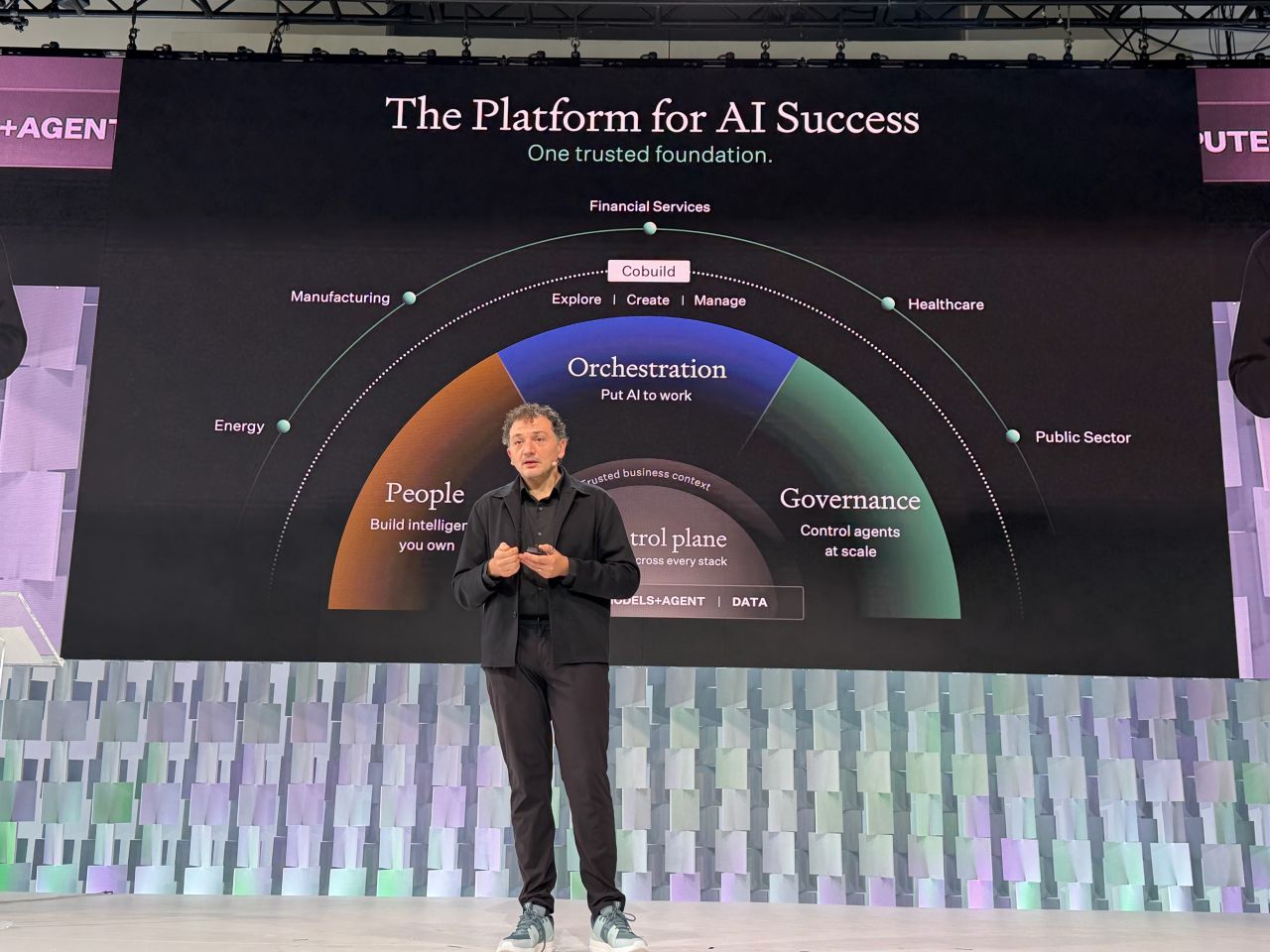
NEW YORK — September 24, 2026 — For years, the CIO's AI mandate was about building capability, proving the technology, and keeping pace with competitors. Now, access to AI is no longer the goal — controlling it is. Today, Dataiku, the Platform for AI Success, announced a new study at Succeed, the company’s annual flagship conference, highlighting how CIOs are managing an exploding agent population that's growing and becoming further ingrained in the business faster than their own processes can track.
The report, Global AI Confessions Report: CIO Edition, 2026, based on a Harris Poll survey of 685 global CIOs, found that 83% lack standardized agent lifecycle management across the organization, and 47% have already decommissioned more than 20 agents this year. That churn is happening largely in the dark. As agents multiply across teams and platforms, only 21% of CIOs report full, near-real-time visibility into AI costs with attribution by business unit, team, or use case.
“The industry sold CIOs on autonomy and forgot to mention the bill: autonomous systems need to be managed, not just monitored," said Florian Douetteau, Co-founder and CEO of Dataiku. "Monitoring tells you an agent is running. Managing tells you whether it's earned the right to keep running, and right now, almost nobody can fire an agent. Reliable control is now the key to maximized and repeatable AI performance."
Running AI agents isn't the same as proving they work
CIOs are managing something enterprises have never had to control before: fleets of autonomous agents, at a scale that has outrun the systems built to govern them. 67% of CIOs estimate 51 or more AI agents are actively running in production. Almost all CIOs (90%) say they're confident they have complete tracking of all those agents, yet:
- Nearly 3 in 4 CIOs (72%) can't consistently confirm whether those same agents are delivering the business outcomes they were built for.
Nearly 3 in 4 CIOs (72%) can't consistently confirm whether those same agents are delivering the business outcomes they were built for.
- 60% said they lack a central AI governance layer spanning their enterprise apps, tools, and IT environments.
60% said they lack a central AI governance layer spanning their enterprise apps, tools, and IT environments.
- 81% lack complete oversight of agents created entirely outside approved systems or formal channels.
81% lack complete oversight of agents created entirely outside approved systems or formal channels.
They're also diversifying what AI runs on: 75% plan to use more or different models to improve AI continuity, 74% are considering open-source or open-weight models as a hedge against future model unavailability, and 80% have conducted or plan to conduct AI dependency risk assessments.
CIOs are choosing distributed building over centralized control
Conventional wisdom says agent sprawl gets fixed by locking things down, restricting access, centralizing control, and slowing everything to a pace IT can monitor. The data shows CIOs are doing something different. 91% agree that the most effective AI strategy isn't to centralize every application and agent, but to let business teams build within a governed environment. That same instinct against putting all the weight on a single system extends to the models beneath it:
- 75% of CIOs say they plan to use more or different models to improve AI continuity
75% of CIOs say they plan to use more or different models to improve AI continuity
- 74% are considering open-source or open-weight models as a hedge against future model unavailability
74% are considering open-source or open-weight models as a hedge against future model unavailability
- 80% have conducted or plan to conduct AI dependency risk assessments
80% have conducted or plan to conduct AI dependency risk assessments
CIOs aren't just distributing where AI gets built — they're distributing what it runs on, too.
The guardrails haven't caught up
As organizations distribute where AI gets built, governance and measurement are struggling to keep pace. 84% of CIOs agree that employees are creating AI agents and applications faster than IT can govern them. Measurement presents another gap. Only 28% consistently measure both operational performance and business outcomes across all of their AI agents, while 76% say their organization lacks mature, highly capable ROI measurement across all or most AI initiatives. Even when an agent is flagged as a problem, accountability remains fragmented. CIOs are split on who's primarily responsible when agents go awry: shared teams (23%), central IT (21%), the data or AI team (20%), or security, risk, and compliance (18%).
The question is no longer whether to let go of central control — it's whether anyone can see what's happening, or prove it's working, once they do.
The pressure is coming from the top
The pressure is landing hardest on CIOs. 88% say their professional reputation or career trajectory will be shaped by their success with AI, and 87% say their CEO has expressed that their job security depends on AI outcomes — a level of personal exposure that outpaces what CEOs report facing themselves. 76% believe their own role will be at risk if their company fails to deliver measurable business gains from AI by the end of 2027. In Dataiku's Global AI Confessions Report: CEO Edition, 2026, only 80% of CEOs said their own role would be at risk under the same failure to deliver.
Boards have escalated in step. 97% of CIOs report at least some increase in board pressure to demonstrate measurable AI ROI, with 77% describing that increase as significant or moderate. None of this stays abstract for long: 72% of CIOs say their AI budget is likely to be cut or frozen if performance targets aren't met by the end of 2026. For CIOs, the message is no longer ambiguous: deliver measurable results, or lose the budget, the mandate, or the job.
In the U.S., the reckoning has already arrived
U.S. CIOs post some of the starkest numbers in the entire study, facing the sharpest budget consequences even as agent creation outruns their ability to govern it:
- 94% say employees are creating AI agents and applications faster than IT can govern them
94% say employees are creating AI agents and applications faster than IT can govern them
- 88% believe their role will be at risk if their organization fails to deliver measurable AI gains by the end of 2027
88% believe their role will be at risk if their organization fails to deliver measurable AI gains by the end of 2027
- 87% say their AI budget is likely to be frozen or cut if performance targets are not met by the end of 2026
87% say their AI budget is likely to be frozen or cut if performance targets are not met by the end of 2026
- 92% would currently stake their job on delivering measurable AI results
92% would currently stake their job on delivering measurable AI results
- 82% regret at least one major AI vendor or platform selection made in the past 18 months
82% regret at least one major AI vendor or platform selection made in the past 18 months
The full report, Global AI Confessions Report: CIO Edition, 2026, is available here: https://pages.dataiku.com/global-ai-confessions-cio-edition.
Harris Poll Survey Methodology
The research was conducted online by The Harris Poll on behalf of Dataiku from July 9–29, 2026. The survey was conducted among 685 CIOs in the United States, the United Kingdom, France, Germany, the UAE, Japan, South Korea, and Singapore.
About Dataiku
Dataiku is the Platform for AI Success, the enterprise orchestration layer for building, deploying, and governing AI. In a single environment, teams design and operate analytics, machine learning, and AI agents with the transparency, collaboration, and control enterprises require. Sitting above data platforms, cloud infrastructure, and AI services, Dataiku connects the full enterprise AI stack—empowering organizations to run AI across multi-vendor environments with centralized governance.
The world’s leading companies rely on Dataiku to operationalize AI and run it as a true business performance engine delivering measurable value. For more, visit the Dataiku blog, LinkedIn, X, and YouTube.