If you’ve tried to take a photo while in a moving vehicle, you know how hard it is to capture that image with clarity and sharpness. Now, imagine trying to accomplish that while traveling at 17,500 miles per hour (or 7.8 km per second).
That’s exactly what Vantor’s next-generation WorldView Legion satellites do every day, collecting 30 cm-class imagery of Earth that is extremely accurate, sharp, and clear from hundreds of kilometers above the planet’s surface. One of the keys to unlocking this capability is the satellite’s new satellite telescope, the imaging instrument that enables the satellite’s core functionality.
Vantor worked with its instrument partner Raytheon to develop a new instrument that offers consistent capability in a smaller, lower power design. Let’s take a closer look.
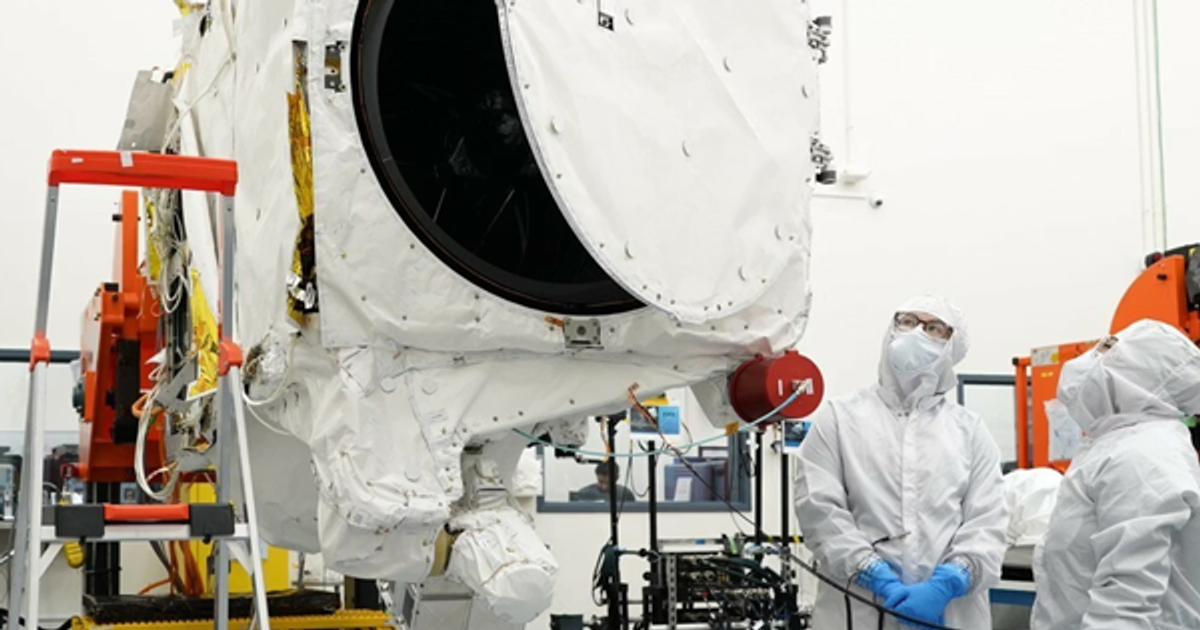
An aperture cover protected the WorldView Legion instrument during launch.
One of the biggest upgrades to the instrument was the use of new focal plane technology.
A focal plane collects the light from a telescope, turns that into an electrical signal which the instrument processor collects and sends to the ground. All six WorldView Legions use their focal planes to image light we can see with the human eye and will also collect wavelengths that are too long to see. This supports both visible and multispectral satellite imagery workflows.
The focal plane is a very sensitive part of the instrument. In the new design, we kept the quality we need for precision imagery but used fewer electronics boxes. That made it cheaper to manufacture, and it consumes an order of magnitude lower power. Put simply, the telescope packs more punch.
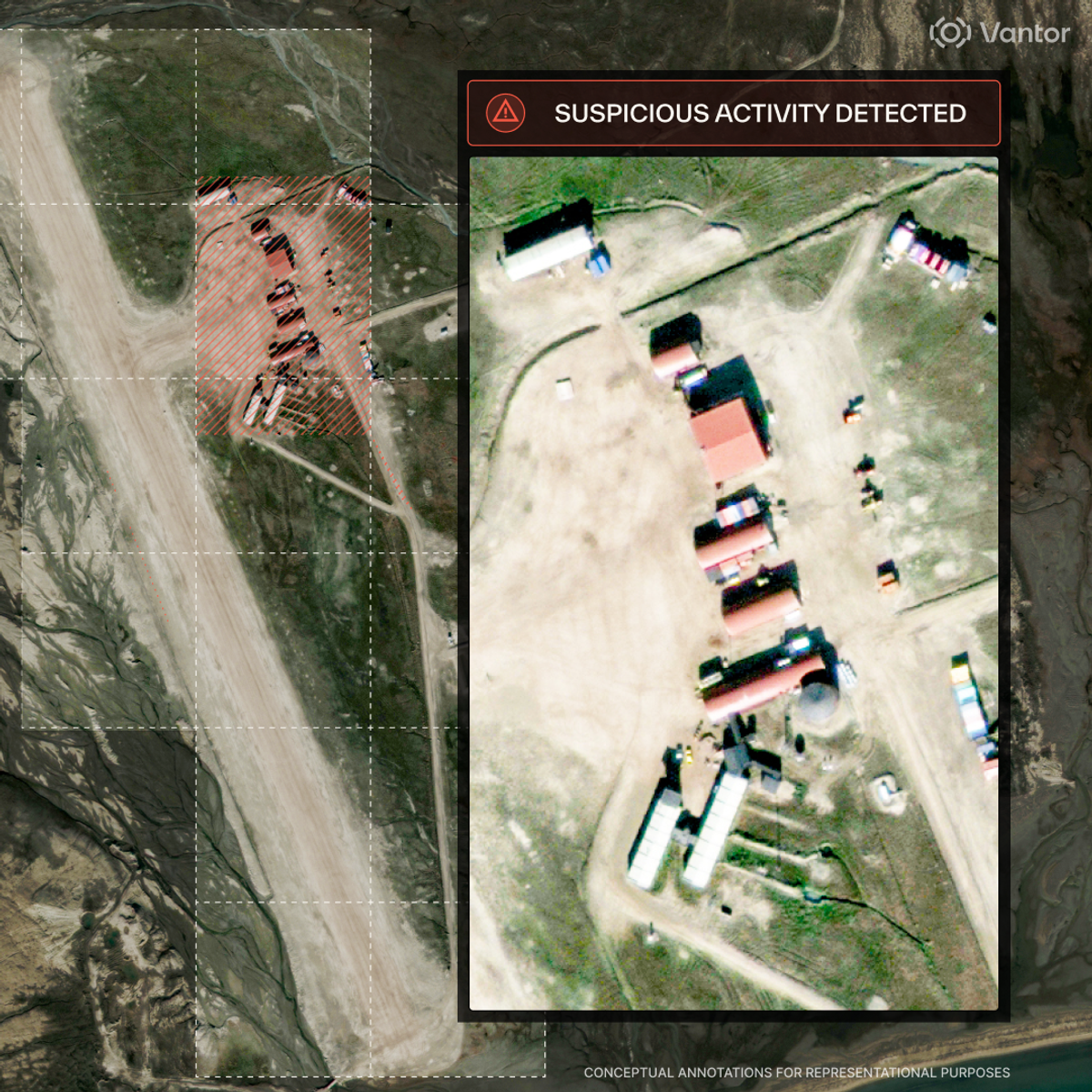
WorldView Legion will increase Vantor’s ability to collect highly accurate 30 cm-class imagery, which is in high demand across many of the missions that Vantor serves. These new satellites will also collect multispectral imagery, enabling Vantor’s customers to gain additional insights.
While the multispectral bands are similar to what our current satellites provide, what’s new on WorldView Legion is that our teams have more control to expose each band individually. These improvements allow customers to more easily determine what objects on the ground are made of using our satellite imagery and strengthen Vantor’s high-resolution Earth observation capabilities.
After the telescope reflects light onto the focal plane array, the rest of the instrument turns that light into an electrical signal that ultimately forms an image. The on-board instrument processor then takes that image and prepares it for delivery back to Earth.
This new telescope further expands the capabilities of Vantor’s imaging satellite constellation. Vantor can collect nearly 7 million sq km of imagery per day and revisit the most populated areas of the globe up to 15 times per day. This combined capability of high-resolution imagery at varied times throughout the day gives customers a stronger foundation for mapping, monitoring, and analysis. It also helps power real-time spatial intelligence across defense, intelligence, and commercial missions. For teams that need more context on how this capability translates into collection at scale, Vantor’s related coverage on dawn-to-dusk intelligence collection provides additional perspective on the operational value of the WorldView fleet.