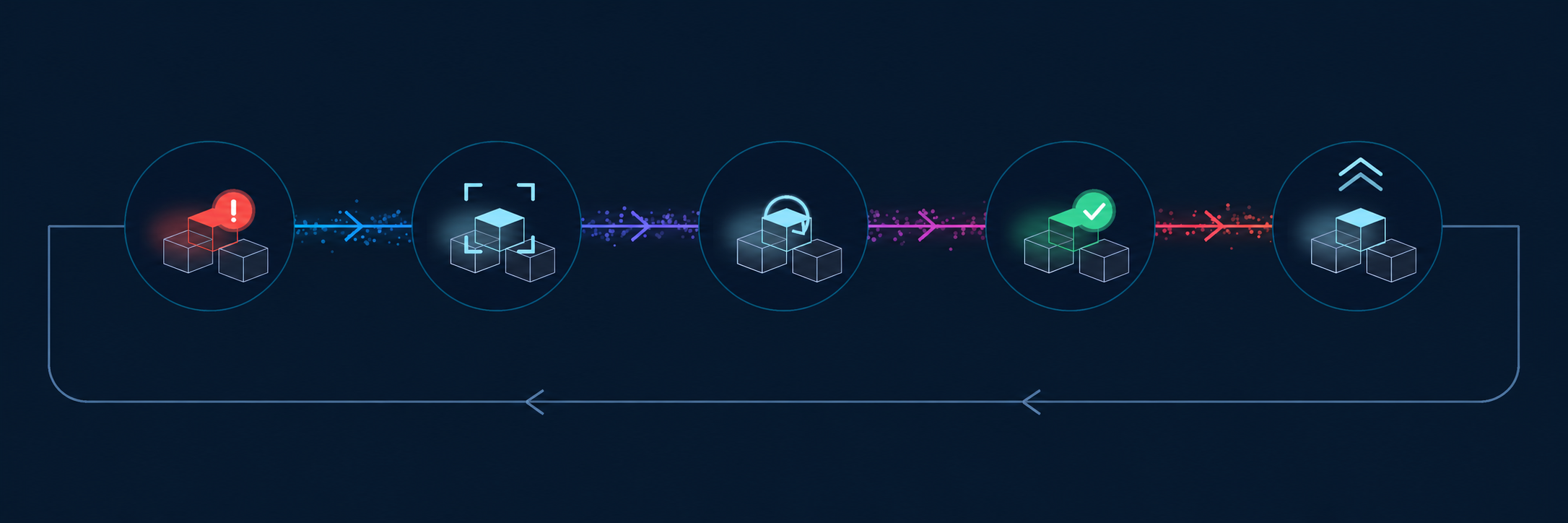
Data lineage tools are software applications that capture and visualize how data flows and changes across pipelines, from source systems to the reports, applications, and AI models that use it. They answer two questions that come up in data incidents and audits: Where did this value come from, and what depends on it?
For example, if a column changes in a source system, a regulatory report could break three systems later. Without lineage, someone might have to read SQL by hand to find every dashboard and model that used the column. With lineage, the tool shows the affected assets.
The category now has an open standard: OpenLineage, which collects lineage metadata from jobs as they run. Catalogs and cloud platforms, including Google Cloud’s Dataplex Universal Catalog, ingest its events.
This article covers how data lineage tools capture lineage, the main categories of tools with representative options, what to evaluate before choosing one, and why lineage needs data context to support governance.
Data lineage software keeps a lineage map current as pipelines change, so no one has to redraw it by hand. The underlying concept, and why it matters, is covered in “What Is Data Lineage.”
Lineage tools are often confused with data catalogs. A data catalog inventories and describes data assets: what exists, who owns it, and what it means. Lineage shows how those assets connect and change. Many platforms bundle both, but the capabilities are distinct, and a catalog without lineage cannot answer impact questions.
How data lineage tools capture lineage
Automated data lineage tools use three main capture methods. Many deployments combine more than one of them.
With static code and SQL parsing, the tool reads transformation code, stored procedures, ETL job definitions, and BI report definitions and infers lineage from them. This covers legacy systems that do not emit lineage on their own, including ETL jobs written years ago. Its weakness is anything decided at runtime, such as dynamically generated SQL.
With runtime or event-based capture, pipelines emit lineage events as jobs run, describing what each job read, what it wrote, and how. OpenLineage is the open standard for this method. Data processing engines that implement it publish at runtime the data sources a job reads, the processing it performs, and where the results go, and the model is extended through facets that carry additional metadata. Systems including Apache Airflow, Apache Spark, and Apache Flink have OpenLineage integrations, and Marquez is the reference implementation of the OpenLineage API. Because events come from the job itself, they reflect what actually ran in each data pipeline.
With platform-native capture, the warehouse or lakehouse records lineage from its own query history. This is the most thorough method inside one platform and the most limited across platforms.
Granularity also matters. Table-level lineage shows that one data set depends on another. Column-level lineage shows which fields produced which outputs, which is the level of detail impact analysis needs. OpenLineage’s column-level facet goes a step further and separates direct relationships, where an output column’s value is derived from an input field, from indirect ones, where an input such as a join condition or a filter affects the output without being its source. A change to a join key can alter a report without touching any column the report displays, and only indirect lineage shows that. The specification is still evolving, with newer lineage facets being introduced alongside the column-level facet.
Lineage tools also present two views. Technical lineage shows jobs, tables, and columns for engineers. Business lineage summarizes the same flow in terms that data stewards and auditors use, such as business terms and reports.
Types of data lineage tools
Data lineage solutions fall into five broad categories. The examples below are representative, not a ranking. Capabilities, names, and ownership in this space change often, so confirm each tool’s current features against its own documentation before evaluating it.
Open source tools
Open source data lineage tools give teams a standard and full control over hosting. OpenLineage with Marquez provides event collection and a lineage store. DataHub and OpenMetadata are open source metadata platforms that include lineage and can ingest OpenLineage events. There is no license fee, but the team has to run, scale, and integrate the platform itself.
Data catalog and governance platforms
Enterprise catalog and governance platforms combine lineage with business glossaries, stewardship workflows, and policy. Examples include Atlan, which ingests OpenLineage events into its catalog; Collibra, which offers a dedicated data lineage product; and Informatica, which offers automated, end-to-end lineage across supported data sources. These platforms typically capture lineage through connectors and parsing, and many also accept OpenLineage events.
Platform-native lineage
Major data platforms capture lineage for workloads that run on them:
- Databricks Unity Catalog: Captures lineage automatically for queries run on Databricks, down to the column level, across workspaces attached to the same metastore
- Snowflake: Records lineage between Snowflake objects, including column lineage, and displays it in the Lineage tab in Snowsight
- Google Cloud Dataplex Universal Catalog: Records lineage automatically for supported Google Cloud services and can import OpenLineage events from other sources
Platform-native lineage is often the fastest to turn on, but it covers only that platform. Pipelines that cross systems usually need another tool to connect them.
Transformation and observability tools
Transformation tools such as dbt build a dependency graph from the models they manage, and data observability vendors such as Monte Carlo and Datafold position lineage alongside their monitoring and testing capabilities. Lineage here supports incident response and change testing rather than serving as a governance record.
Code-parsing specialists
Some tools focus on deep static analysis of SQL, ETL, and BI code across complex or legacy estates. Cloudera Data Lineage (formerly Octopai), for example, automates metadata harvesting and lineage mapping, with data discovery across hybrid environments.
How to evaluate data lineage tools
The best data lineage tools for a team are the ones that cover its stack. When choosing a data lineage tool, these questions help compare options:
- Coverage: Does it connect to every system data flows through, including legacy databases, SaaS applications, and AI pipelines, or only the warehouse?
- Granularity: Does it capture column-level lineage, and does it record indirect lineage such as joins and filters?
- Standards: Does it emit or ingest OpenLineage events, or does lineage stay locked inside one product?
- Freshness: Is lineage captured continuously as jobs run, or rebuilt on a schedule?
- Views: Does it offer technical lineage for engineers and business lineage for stewards and auditors?
- Context: Can it show which flows carry sensitive or regulated data, either through its own classification or by integrating with a discovery and classification tool?
- Openness: Are there APIs and export options, so lineage can feed catalogs, access policies, and audit evidence?
Lineage is often part of the evidence that a compliance program works. It supports several of the practices in Everpure’s 10 data compliance best practices, including data retention and removal schedules, documenting what data is collected and why, and anonymizing sensitive data — each of which requires knowing where regulated data lives and where it travels.
Why lineage needs data context
A lineage graph shows movement and transformation. On its own, it does not say which nodes hold personal, health, or regulated data; who owns them; or who is allowed to see them. A complete graph still cannot tell a governance team where a sensitive field ends up.
Discovery and classification add that information. When data assets carry classification and context, such as sensitivity, ownership, and permitted use, lineage can answer governance questions directly. Which downstream reports does a column containing customer identifiers reach? Which AI training sets drew on a table that includes health data? That context is the subject of metadata management [LINK TK: metadata management PK URL to confirm], and it lets lineage support access and governance controls.
As teams feed enterprise data into model training, retrieval-augmented generation (RAG), and vector databases, lineage combined with classification is how sensitive data is traced into those pipelines. Without both, a team can know that a data set fed a model, but not whether that data set should have.
How Everpure helps
Everpure Data Intelligence provides the data context that lineage graphs lack. It is not a lineage tool. It works upstream of lineage and catalog tools:
- Discovery across the estate: Automatically scans, identifies, and categorizes data sets across the Everpure Platform, SaaS applications, public cloud, vector databases, mainframes, and third-party storage
- Sensitive data identification: Identifies PII, PHI, and other sensitive data, so the nodes in a lineage graph can be marked by what they contain
- Semantic context: Generates context for each data set, so the tools that map data flows can show which flows carry sensitive or regulated data
Conclusion
Data lineage tools differ mainly in how they build the graph. Code parsing reaches legacy systems, runtime events reflect what actually ran, and platform-native lineage is most thorough inside a single platform. Column-level detail, indirect lineage, and support for open standards such as OpenLineage determine whether the graph can answer real impact questions.
On its own, lineage cannot show which flows carry sensitive data. Combined with discovery and classification, lineage can also support governance and AI programs.
Data lineage tools FAQs
What is a data lineage example?
A common example is a revenue figure on an executive dashboard. Lineage traces that figure back through the BI report, the warehouse table that feeds it, the transformation job that aggregates orders, and the source order system. If a column in the order system changes type, the same graph shows every table, report, and model downstream that the change affects, before anyone ships it.
Why do companies invest in data lineage tools?
Companies invest in data lineage tools for impact analysis, incident response, and compliance. Lineage shows what will break before a schema change ships, speeds up root-cause analysis when a report is wrong, and provides evidence for auditors about where regulated data came from and where it went. Each of those tasks is slow and error-prone when lineage is reconstructed by hand.
What is the difference between data provenance and data lineage?
Data provenance describes the origin and history of a specific piece of data: where it came from, who created it, and how it was handled. Data lineage maps the flows and transformations that connect data sets across systems. The terms overlap, and many tools record both, but provenance focuses on a record’s history, while lineage focuses on the paths between systems.
Can data lineage be captured manually?
Lineage can be documented manually, but manual lineage goes stale as soon as pipelines change, and it rarely reaches column level. Automated capture, through code parsing, runtime events, or platform-native tracking, keeps the graph current as jobs run. Manual documentation is typically reserved for gaps that automated tools cannot reach.
Do data lineage tools work across cloud and on-premises systems?
Some do, and coverage varies widely. Platform-native lineage generally covers only workloads on that platform. Catalog platforms, open source tools, and code-parsing specialists aim to span multiple systems through connectors, parsing, and OpenLineage events. Confirming connector coverage for every system in a pipeline, including on-premises databases and SaaS applications, is part of any evaluation.