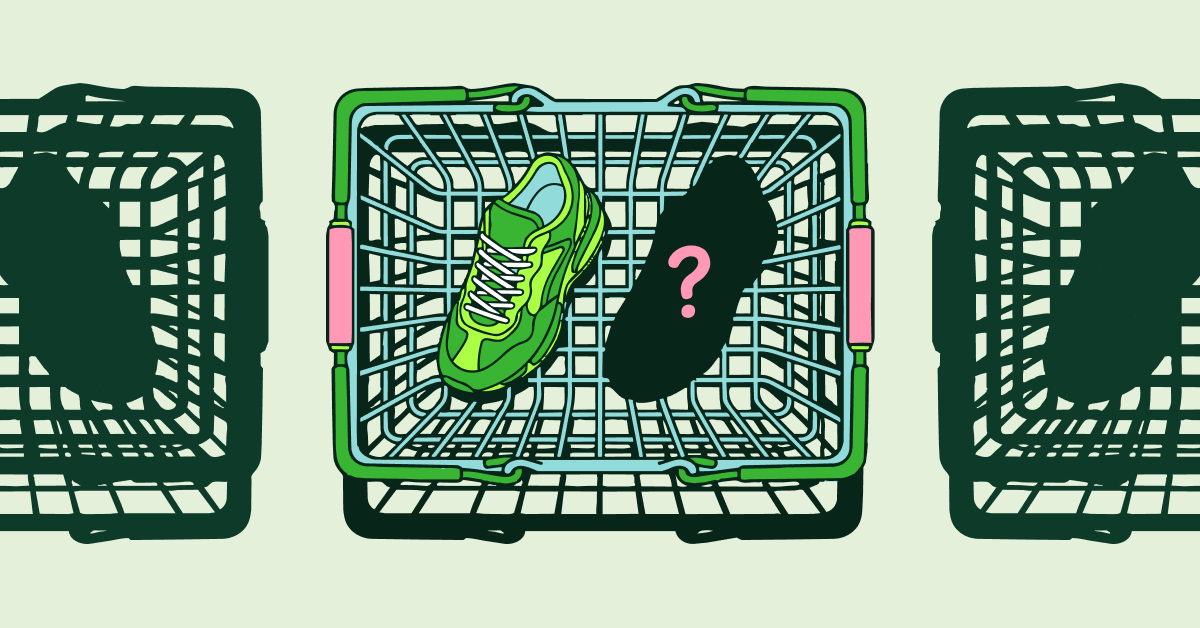
I've wanted to buy Jordans for years. The Jordan 1s. Red and black, high top. I never do, because there's always a more pressing pair of shoes to get first. So the intent just sits there, in my head, year after year.
Now imagine the night the inspiration finally strikes. I ask my assistant to find me the Jordan 1s. Instead of a list of links, it shows me the pairs in my style, in my size (10), with the easiest delivery, and asks, "Do you want to buy these from nike.com?" I say yes, let me confirm everything first. It fills the cart, I check it, and I say yes, thank you.
Sixty seconds, and I have new shoes.
We could debate whether that's inspiration or impulse. But notice something simpler. That intent lived in my head for years, and Nike had no way of knowing it existed.
The second consumer
The web started out one-directional. Someone published, and someone else read. Then it became bidirectional, and Reddit, Facebook, and Discord turned the internet into a conversation.
We were happy. Yeah, it had some issues. One question meant seven tabs and an afternoon of stitching the answer together.
Then the web picked up a second consumer, and it reads your site. Answer engines and AI summaries condense it and cite it. The person reads the summary instead of your page. My own habits changed first: I open Claude or ChatGPT more than Google now, and on Google I read Gemini's summary before the links.
If you work in marketing, you've probably felt the side effects. Machine traffic climbs, and bottom-of-funnel conversions don't follow. Seth Besmertnik of Conductor made the point at Opticon New York in September: AI systems make a huge number of requests to sites for every response that actually cites one. Old-world funnel metrics count that as traffic. But we never cared about traffic itself, only what it turned into.
The picture has one bright spot. The leads that do reach your sales process may carry higher intent, because an agent has already done the comparing for them. Hold on to that.
Besmertnik's framing stuck with me. Websites don't get replaced. They start serving two audiences: humans, and the agents acting for them.
So great, Mario, I already knew that. What's next, structured metadata?
No. That conversation is about being read. This one is about what happens next, because the second consumer is learning to act.
If you work in marketing, you've probably felt the side effects—machine traffic climbs; bottom-of-funnel conversion don't follow.
Dark intent: the demand you never see
Think about what Nike's analytics would have seen during all the years I wanted those shoes. Nothing. No session, no bounce, no abandoned cart.
We measure abandoned carts obsessively. The Baymard Institute's average across 50 studies is about 70% of carts abandoned. But an abandoned cart is intent that reached your site and stalled. The bigger number is probably the intent that never shows up at all.
B2B marketers already have a name for part of this: the dark funnel. In 6sense's 2025 B2B buyer research, buyers were 61% of the way through their journey before they talked to a seller, and 94% had already ranked their favorite vendors. You never see that research.
I call the next layer down dark intent: the demand that sits in people's heads, never typed into your search box, never turned into a visit. It might be the biggest market nobody measures, and the second consumer is about to walk it up to your front door.
Avg cart abandonment
That's intent that reached a site and stalled. Dark intent never gets that far.
*Based on 50 studies
From reading to doing
The first stage of the agentic web is informational: what does it cost, is it open, which one fits me. That stage is well underway. The next stage is operational: book it, buy it, return it, change it.
Today the agent mostly stalls at that step. At your checkout it's operating a site built for human eyes and hands. It reads the layout, guesses which button does what, and usually ends up apologizing and handing you a link.
Most of what we call an agent is a set of prompts sequenced by ordinary code. That makes this a normal engineering problem, and normal engineering problems get solved.
A proposed web standard called WebMCP is one fix. A site publishes the actions an agent can take there, like search products, check availability, or start a return, and the agent asks for the thing you wanted instead of guessing. It's in an origin trial in Chrome today, and my earlier piece covers how it works.
Replay my Jordans with that in place. My agent skips the clicking around on nike.com and asks for the Jordan 1s in red and black, size 10. nike.com answers. (Nike is my stand-in here. I'm describing what's possible, not a live integration.)
Intent with a label on it
My agent knew my size, my colorway, and how fast I wanted them. Nike didn't have to guess any of it, because I told my assistant, and my assistant told Nike.
We've spent a decade building personalization engines (cookies, segments, recommendation models) that infer what you want from what you click. An agent visit arrives with the intent spelled out: the shoe, the color, the size, the deadline.
Agents bring you the customer, and you keep the relationship: the account, the order history, the profile. What changes is what lands in it. For the first time, you can see what someone actually asked for and add it to their profile. That's information we never had. Now it's direct.
This is dark intent, walking through your front door with a label on it.
The funnel folds into the yes
Follow that into your funnel. Awareness happened inside my agent, and so did consideration. By the time anything touched nike.com, I was at the moment of decision.
That's where I'd expect the higher-intent leads to come from. The funnel folds up inside the agent without disappearing, and your site meets the customer at the bottom.
What's left for you is one moment: the yes. "Buy these from nike.com?" "Book the 7:30?" "Start the return?" That confirmation is becoming most of the customer experience. Your brand lives there now, and so does trust.
"We've spent years designing landing pages and checkout flows. The next thing we design is the yes."
Amazon patented 1-Click ordering in 1999 and built a business partly on making the yes as small as possible. The next yes isn't a button. It's one sentence an agent reads back to you: what, how much, when it arrives. That sentence is your checkout now.
Add attribution
Trust the contract, not the model
The yes is also where the fear lives: an AI with my card, acting while I'm not looking. The fear is fair. Models are probabilistic, and no sane business wants a guess near its checkout.
But software has always worked by containing uncertainty. The model should do what it's good at, which is understanding what I want. Everything around it should be boring and exact: am I allowed to do this, do the details match, did it go through. In a well-built flow, nothing that costs money happens until I say yes.
You get two controls, and neither depends on the other. I decide what my assistant can do for me. The business decides what it offers my assistant, and through the contract, an agent can't call an action nobody published.
Simply put, a business doesn't have to trust the model. It has to trust the contract.
Simply put, a business doesn't have to trust the model. It has to trust the contract.
You decide what your assistant can do
You set what your assistant may do on your behalf. In a well-built flow, nothing that costs money happens until you say yes.
CONTROL 2 • THE BUSINESS
The business decides what it offers
The business publishes the actions it offers your assistant. Through that contract, an agent can’t call an action nobody published.
Remember pinch and zoom?
On your first smartphone, you pinched and zoomed your way through desktop websites and tapped a link three times because it was the size of a grain of rice.
For a while, mobile was an afterthought. Then in April 2015, Google started rewarding mobile-friendly pages in mobile search. The sites that had done the work got found. A few years later, mobile-first was simply how you built a website.
The agent shift rhymes with that. The sites that are easy for agents to use will be the sites agents pick.
From found to converted
For 20 years, the goal was to be found. That's SEO. Then the goal became being cited. That's AEO, and it matters. Now an agent can act on your site, and that's what WebMCP opens up. But the finish line is still the question you get asked today: did it convert.
Here's the loop I'd run. Every action your site publishes has a name and a description that a model reads to decide whether to use it. That's your new headline. So you watch what agents ask for and where they come up short. Maybe the agent says, "I can get you shoes, but I can't get you the Jordan 1s." That gap is intent you're losing. You build the missing action, and the next agent gets a yes. Then you measure it like a marketer: baseline, conversions, uplift. Agent conversion becomes a number you can see and improve.My bet, and I'm calling it a bet, is that agent platforms will send tasks to the sites where tasks succeed. The sites that keep improving get picked more, and that compounds, just as it did for the sites that went mobile early.
The intent was always there
One caution before I close. Machines already read you far more often than they mention you. If agents take all of it and give nothing back (no visits, no purchases, no credit), they starve the web that feeds them. The businesses building for agents should want a fair exchange more than anyone.
Now back to my Jordans. Customers like me have always been out there, wanting things, putting them off, never showing up in a dashboard. You couldn't see us, and you couldn't convert us.
So pick the one journey your customers would hand to an agent first. Make it work this quarter, and measure whether it converts. This new layer of the internet is being created today. Get on it early.
The intent was always there. Now it can find you.