Embodied AI for the Factory Floor
Many industrial facilities have bought into AI as the solution to their data problems. For example, they might have cameras with computer vision systems, sensors trained to detect anomalies, and CMMS or ERP software equipped with large language models. The technology is there, but the value is not compounding the way it should because everything works in siloes. Although each system is smarter, operators are stuck manually bridging the gaps to surface meaningful insights.
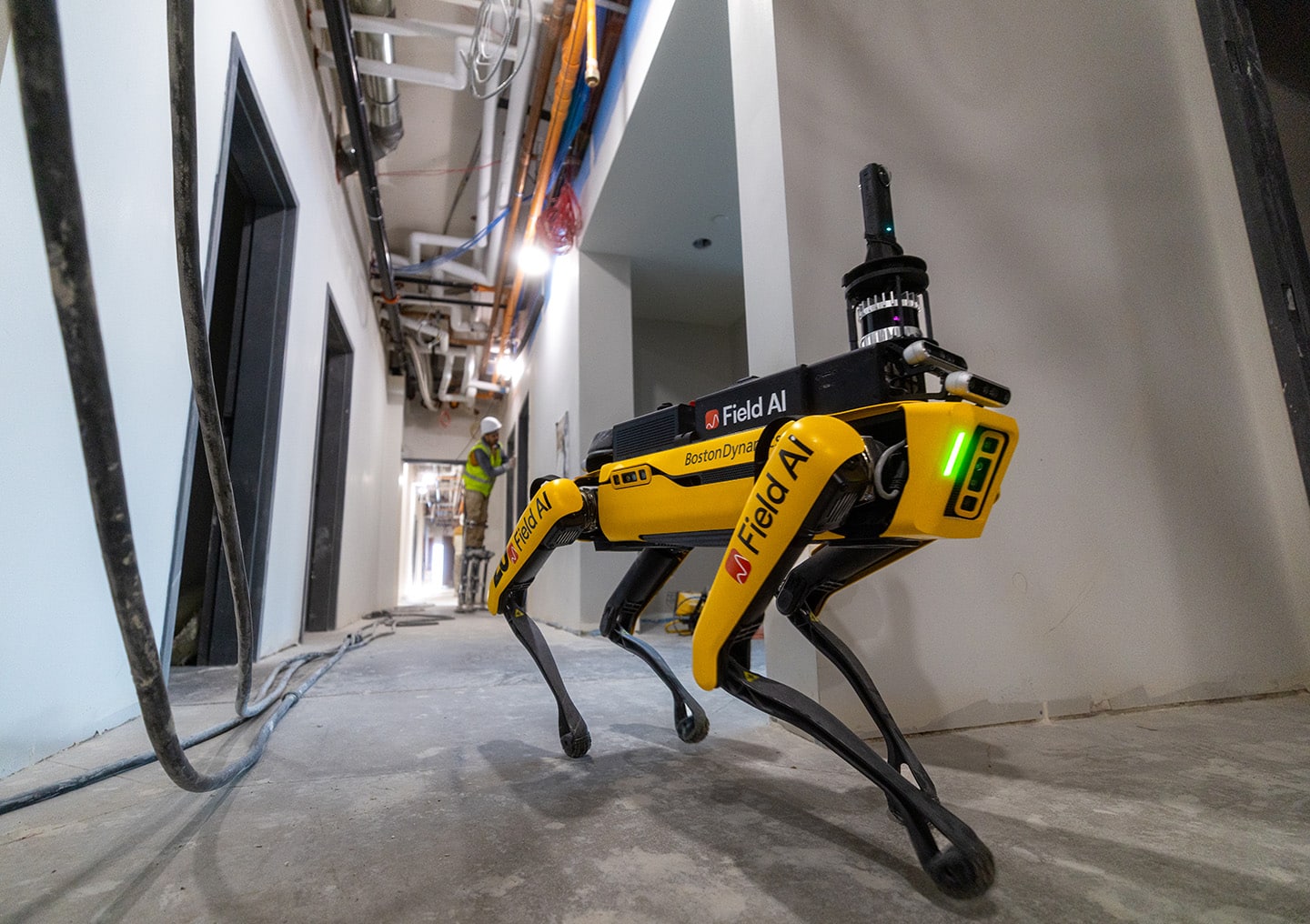
Spot 5.2 provides the connective layer needed to unlock total site intelligence. This release enables agentic workflows that reason across your systems to deploy Boston Dynamics Spot® robot where it is actually needed. Orbit AIVI—now powered by Google Gemini—extends this further by increasing the types of inspections Spot can perform. Everything is organized in new asset-centric dashboards for an efficient view of overall site health.
Your World, in Orbit
Data connectivity is the backbone of this release, beginning with a refresh to Orbit’s architecture. The Orbit™ software now organizes data around assets instead of inspections, mirroring your core enterprise systems (e.g. CMMS, MES, EAM). In both new and existing Orbit instances, users can import asset hierarchies with metadata and then link assets to inspections.
Adding metadata like location, asset type, criticality, manufacturer, and model makes more alert filters and dashboard drill-downs possible. For example, an administrator could subscribe engineers working specifically on pumps to alerts about pump anomalies only. In Orbit’s new asset dashboard, a plant manager could quickly see trends in anomalies across all assets in the facility, all the pumps in the facility, or only the pumps in a specific area of the facility.
Orbit is not limited to only data collected by Spot. This release provides the API flexibility needed for deeper integration with your tech stack. Practically, this means users can connect inputs from external sources (e.g. PLC sensors, security cameras). This lays the foundation for a new MCP layer, allowing AI agents to autonomously deploy Spot when business logic is present. For instance, for reliability missions you could send Spot to collect more data when a fixed sensor alerts, or to only collect data when the equipment is running. For security missions, you could dispatch Spot to an area when a CCTV or other third party sensor detects a movement. Orbit becomes a pipeline between physical robot operations and your enterprise systems.
Spot Gets Smarter
Spot continues to expand its inspection capabilities with this release, introducing enhanced visual intelligence as well as all new inspection modalities.
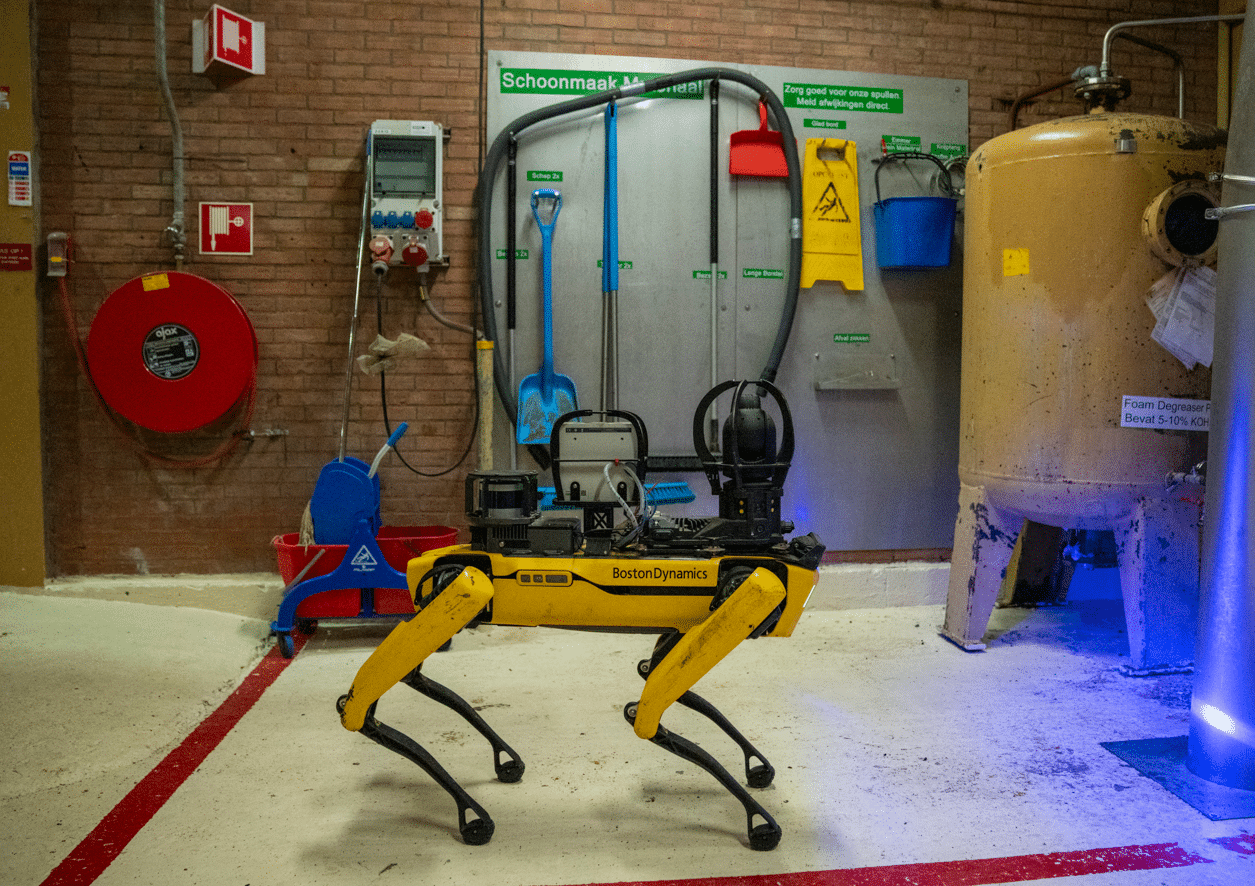
As previously announced, visual inspections are now powered by Google Gemini. The model is trained on industrial data to handle specialized inspections like 5S boards, sight glasses, pallets, and gauges with increased accuracy.
This intelligence now extends to new video inspections, only available with AIVI-Learning. Since anomalous conditions aren’t always obvious in static images, 5.2 introduces the option to capture videos. Video inspections can help identify issues like water drips from pump and motor systems that might result in hazardous puddles or corrosion, slipping conveyor lines that could result in unplanned downtime, and indicator lights flagging malfunctioning equipment.
This release also introduces the ability to continuously monitor your facility for transient risks, like a spill, a person in a restricted zone, or a suspicious backpack. Unlike traditional inspections that are tied to specific assets or locations, Site Scans use the AIVI-Learning model to analyze Site View 360° images for risks anywhere in the facility. By default, Site Scans monitor the entire facility, but users have the option to configure specific zones and time ranges for these checks.
Finally, 5.2 adds three new predictive maintenance capabilities: gas sensing, visual vibration analysis, and partial discharge detection. Integration with the MFE Spot Connected Gas Detection Solution allows Spot to autonomously monitor over 20 gas types in real-time, streaming atmospheric data directly into Orbit during routine missions. Like mechanical inspection and acoustic change detection, visual vibration analysis is another way to monitor machine health. It works by amplifying sub-visible motion the naked eye can’t catch. Partial discharge monitoring uses the Sorama L642 to inspect high voltage equipment—like cables, bushings, and transformers—for early indicators of insulation issues.
To learn more about what’s new in Spot and Orbit:
Update your software: Spot 5.2.0 Release Notes
Learn more in our webinar: From AI Insights to Autonomous Action