Southeast Asia has one of the world’s fastest-growing economies. In the 1980s, the combined economy of the region was about $200 billion, roughly equivalent to the market capitalization of McDonald’s Corporation, explained Jon Huntsman, former U.S. ambassador to Singapore and China who now oversees Strategic Growth at Mastercard. Now it is on track to become the fourth largest economy in the world by 2030.
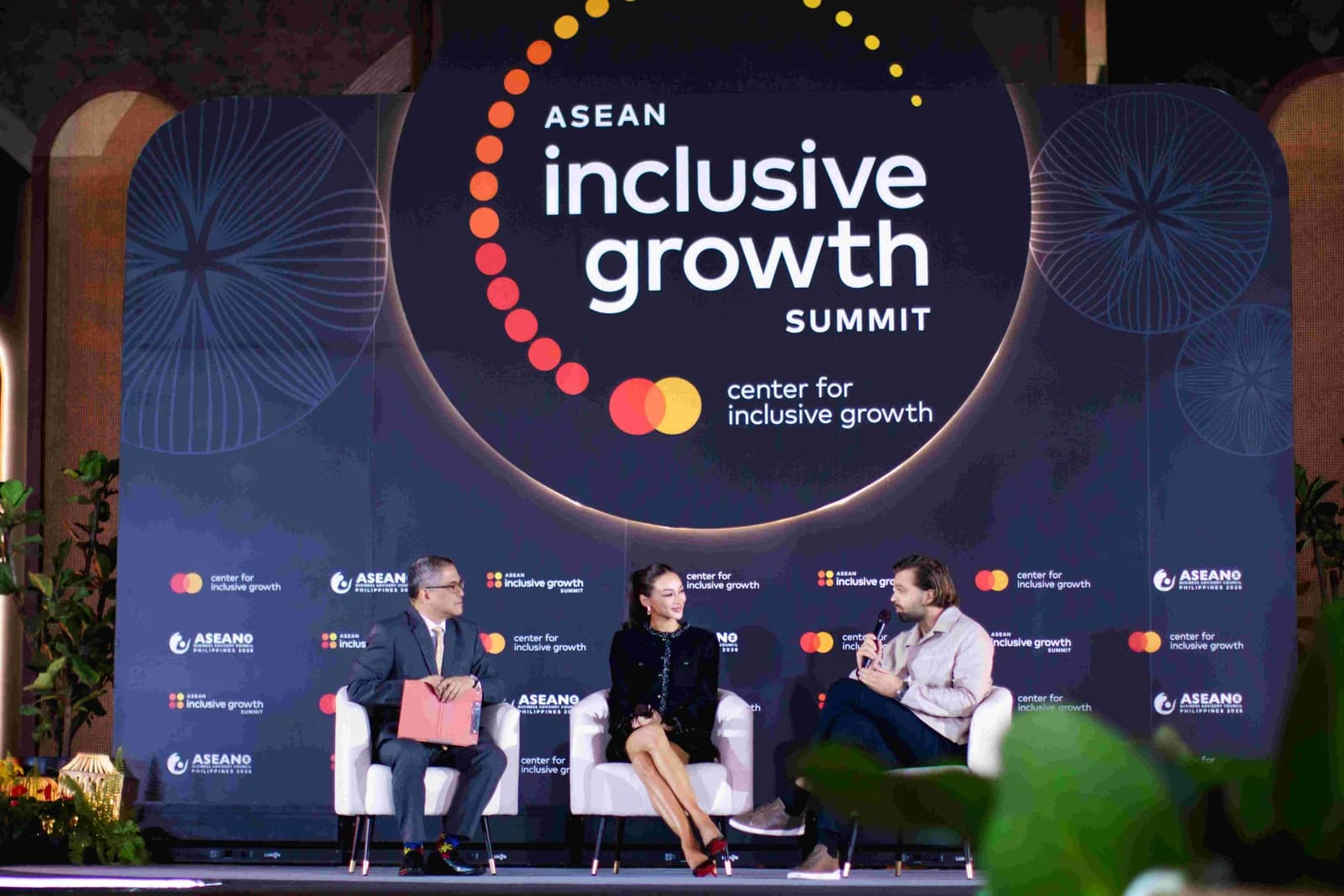
“I have lived to witness one of the truly extraordinary, if not unprecedented, economic miracles in the modern world,” Huntsman said last week in Manila at the second annual Association of Southeast Nations (ASEAN) Inclusive Growth Summit organized by the Mastercard Center for Inclusive Growth.
Supporting that kind of spectacular growth, however, requires more of everything: more energy, broadband connections and digital infrastructure, transportation, more support for up-and-coming creatives, and financial management education. It will also require resilience in the face of natural disasters and economic tremors.
The ASEAN Inclusive Growth Summit was held on the sidelines of the 49th ASEAN Summit, in which representatives from 11 nations discussed socioeconomic and political issues related to the region. At the daylong summit, economists, bankers, business leaders, nonprofit leaders, government officials and humanitarian advocates discussed how Southeast Asia can maintain its rapid growth while making that progress more inclusive and resilient.
The most essential strategy, they agreed, was cooperation: between national governments, between public and private organizations, and between institutions and the individuals they serve.
Mastercard’s Shamina Singh opens the ASEAN Inclusive Growth Summit with a call for collective action, challenging leaders across sectors to work together to ensure the digital and AI economies create opportunity for everyone.
“In a world where so much is pushing us towards fragmentation, unity, connection, and collaboration are needed now more than ever,” said Shamina Singh, the founder and president of the Center for Inclusive Growth and executive vice president for Sustainability, Mastercard.
“As we look at Southeast Asia and ASEAN as a body, we think in terms of what has been a succession of shocks in recent years and clearly with negative effects on the economies across the region,” said Scott Morris, vice president of East and Southeast Asia and the Pacific of the Asian Development Bank.
With ASEAN poised for its next era of growth, leaders, including Mastercard's Jon Huntsman, second from left, discuss how the region can stay open, connected and competitive while ensuring that small businesses and communities share in the opportunities ahead.
Those shocks include the COVID-19 pandemic, supply chain reordering, natural and climate-related disasters, and the rising cost of fuel. “And yet at the same time, when you look closely, you both see the resilience of these economies but also what it has done to the political-level commitment around ASEAN and the drive toward integration."
Here are a few ways Southeast Asians can work together to build a better and more sustainable future.