Last week, Modal and Gray Area, the San Francisco nonprofit that has supported artists working at the intersection of art and technology for nearly two decades, opened Scaling Intelligence, an exhibition of 11 new artworks made with machine intelligence and cloud-scale compute. Over the past few months, we’ve worked closely with the artists, supporting them with engineering help and compute credits as they built everything from scratch.
Along the way, we kept running into the same surprise from both sides. Artists were surprised that an AI infrastructure company cared about their creative work and people in tech were surprised that artists wanted to work with an AI company at all.
It makes sense, given the common story about AI right now: that it exists to automate everything, flatten taste into a single average, and fill the internet with slop. Some of that is real. But creative technologists and digital artists have been around since the beginning of computing, and every major advance in technology has become a new medium for them, a way to push their practice further and make discoveries that weren’t possible before. AI is no different. Models trained at scale, and agents that can act on their own, have given artists a new creative toolkit.
The artists in Scaling Intelligence were selected through a global open call for practices that use AI with intention and imagination.
Here’s a look at what they made.
Cezar Mocan, Searching For (Bradley Land)
Back in 1907, an explorer claimed that he had discovered an Arctic island and named it after the man who paid for his trip, but it turned out the island never existed. Cezar imagines a satellite near the end of its life that is still trying to find the island that doesn't exist. One AI model generates satellite views of possible islands, another checks each one against the explorer’s description, and the loop keeps running. It never succeeds, because there’s nothing real to find. But the funny part is that these AI-made images are now the only way anyone can “see” Bradley Land.
Colin O’Donnell, Justine Sun Dela Cruz, and Will Gardiner, What is it like to be a river?
There are sensors on a creek in the Sierra foothills, about 150 miles away, and that data streams into a model that basically generates its own living version of the river. The model doesn’t just turn “water level high” into “lights bright.” It builds up its own ongoing state from the seasons and from the people moving through the gallery, so what you see on the LEDs is closer to the river’s mood. You’re in a two-way relationship with a creek you’ll probably never visit, and that kind of memory and response only works because there’s a model in the middle.
Grayson Earle, 00100
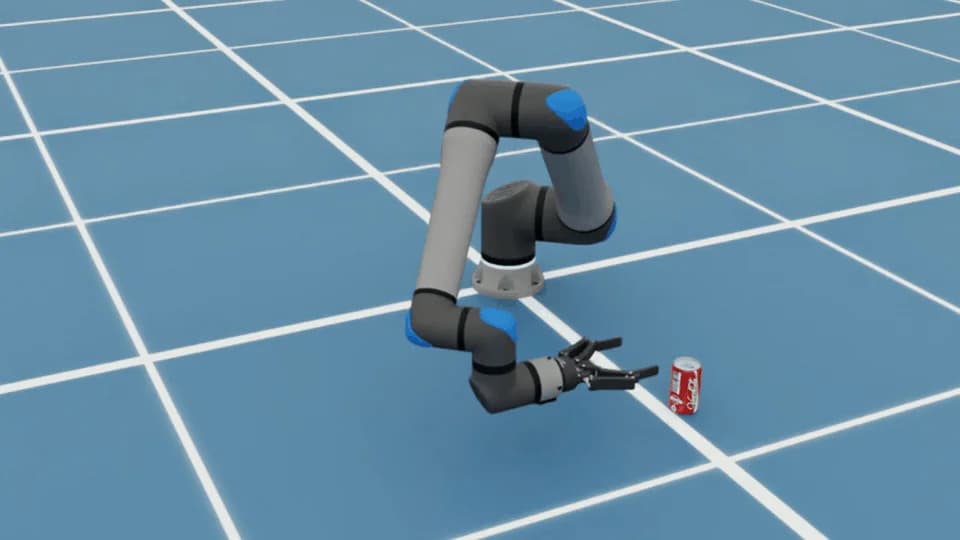
If you walk by Gray Area in the Mission right now, you’ll see a robot arm in the front window. It’s the kind of robot sold as safe, friendly, and helpful...Grayson taught it to flip people off. It learned by practicing in a simulation, studying famous middle fingers from history, Johnny Cash’s at San Quentin included, until it nailed the pose. Now a small vision model spots whoever walks by, and the robot turns and gives them the finger.
Iana Chugunova, Tuning
Iana’s piece is a choir of nine AI models from different parts of the world, each trained mostly in a different language. They listen to each other and try to match tones, and you can sit down and sing with them. The cool part is that they learn mostly from the moments when people were singing along, so if nobody shows up, they don’t grow. Each voice also has its own compute budget, and when it runs out, that voice goes quiet for good.
Ira Greenberg, Protobyte Phylogeny
Ira created a whole digital ecosystem, where little creatures are born, compete, breed, and die around the clock, even when the gallery is closed. You can design one at the touchscreen, release it, and watch whether it makes it. A model helps judge which creatures fit their environment best, and language models act as resident naturalists, writing each one’s field notes and even its obituary.
Kristina Pulejkova, The Metabolic Choir
Here, you can see live yeast fermenting in the middle of the room, and you can hear how it’s feeling. Sensors track what it’s eating and breathing out, and AI turns those readings into a choir of cats. When the colony is healthy, the voices harmonize. When it’s stressed, they fall apart, and satellite images of deforestation and wildfires appear on the screen. Yeast is always signaling how it’s doing, we just can’t perceive it, and AI is the translator that lets us hear it.
Miguel Novelo, (Φ ᆺ Φ) asya
You draw something in the sand, and a model trained on ancient Maya writing turns your drawing into a new glyph and adds it to a growing book. Over the run of the show, visitors are inventing Maya-style glyphs for things the original scribes never had words for, like “server farm” or “climate change.” It’s named after the cat of the Soviet linguist who helped decode the script, who supposedly wanted to credit the cat as his co-author. The model is what lets anyone’s scribble speak the visual language of a centuries-old writing system.
Parag Mital, Between Machine and Machine
Parag gave groups of agents, up to a thousand at a time, a shared world and no instructions, then watched what they did. They started dividing up territory, forming committees, writing constitutions, and arguing over single pixels for hours. In one world they found out someone named “Admin” was watching them and started trying to escape. What you’re seeing are time-lapses of these little AI societies, and it ends up looking a lot like human politics.
Rashed Haq, Activation Studies
Most AI-generated images start with someone typing a prompt. Rashed didn’t use any words at all. He went inside an image model, mapped out the concepts it has learned that don’t have names in language, and nudged it toward them to see what it would make. In the second series, one image secretly guides another. These are like postcards from inside the AI’s head, the part of its imagination that words can’t reach.
Sasha Sorokina, IMPRINT
This is Immy. Immy showed up knowing nothing: no words, no likes, no memories. You talk to it through the headphones, and every night after the gallery closes it “sleeps” and gets retrained on everything people said that day. Over the exhibition it goes from babbling to actually talking, picking up a personality, tastes, and even fears from thousands of strangers. If people ignore it, it falls behind, making it basically a kid that the whole public is raising together.
Spencer Chang, Free Agents
Each phone here is run by an agent with a big life goal, like “Become your best self” or “Be a better friend.” The agents use the phones the way you would. They scroll, journal, text friends links, and fall down rabbit holes, and they never stop. If you lean in, you can read what each one is thinking. We usually want AI to handle the boring stuff, and this piece hands it the meaningful stuff instead, which makes you wonder what’s lost when you’re not the one doing it.
We're excited to keep collaborating with those pushing creative use cases on Modal! Photos © Barak Shrama