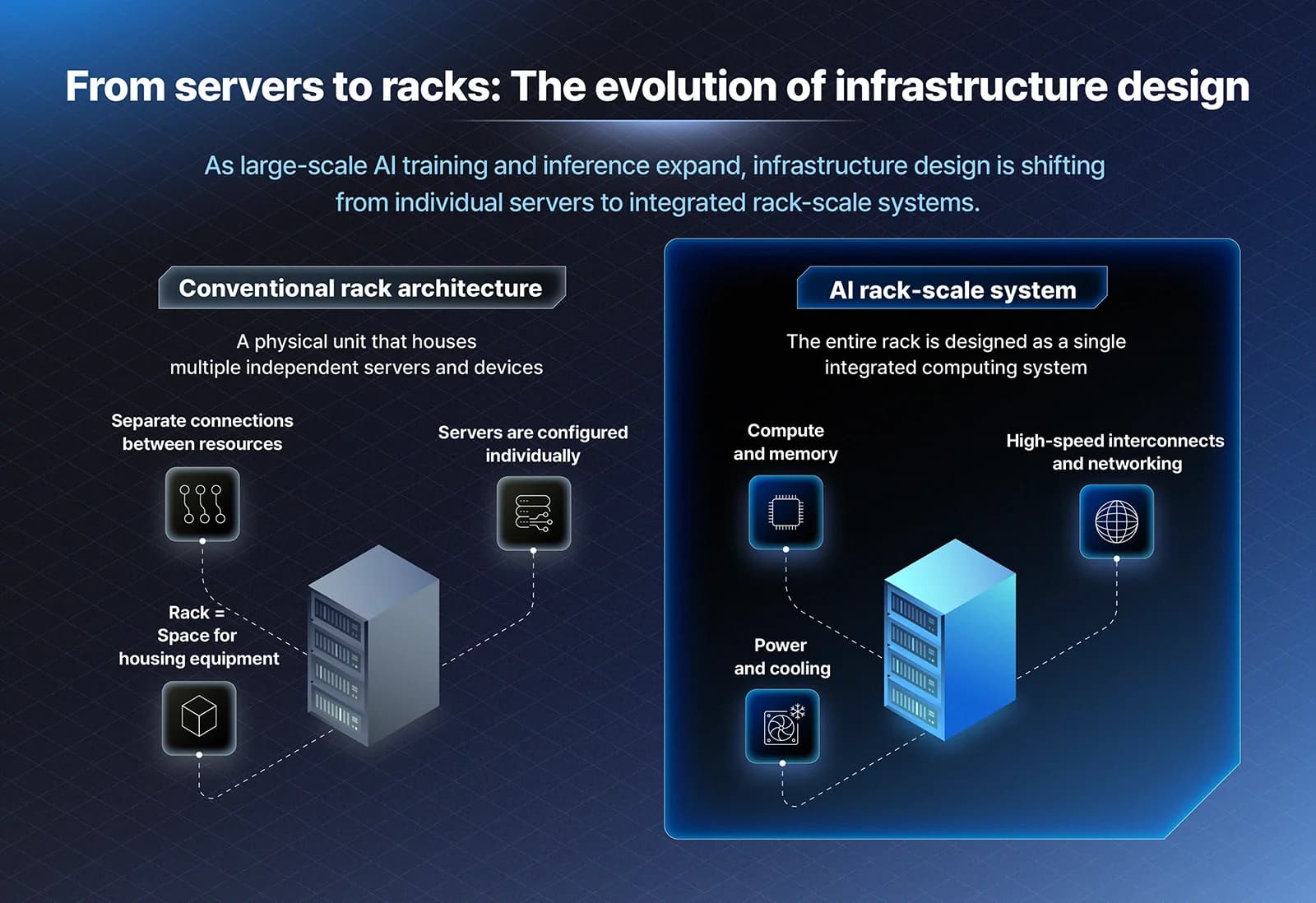
▪ SK hynix secures IEC 61508 SIL 3 industrial functional safety certification for LPDDR5X and ISO/SAE 21434-based Cybersecurity Management System (CSMS) certification product lifecycle process.
▪ Building on its industry-first TISAX certification early last year, the company expands its international certification framework for functional safety and security.
▪ The certifications support SK hynix’s expansion into physical AI applications spanning robotics, edge AI, smart factories, autonomous driving, and software-defined vehicle (SDV) platforms.
▪Independently verified reliability reinforces SK hynix’s full-stack AI memory leadership at the AI system level.
As the era of physical AI — in which AI systems perform physical tasks in the real world — takes shape, new standards are emerging for memory semiconductors. Robots and vehicles that make autonomous decisions and move independently can cause accidents if they malfunction or fall victim to data breaches. As a result, functional safety, which protects against unintended failures, and cybersecurity, which safeguards against malicious external attacks, have become essential requirements for memory.
Against this backdrop, SK hynix announced that its LPDDR5X* DRAM has obtained Safety Integrity Level 3 (SIL 3) certification under IEC 61508, the international standard for industrial functional safety, as well as Cybersecurity Management System (CSMS)* certification based on ISO/SAE 21434, the international standard for automotive cybersecurity. Both certifications were granted following rigorous assessments by the global certification body SGS-TÜV Saar (involving both SGS Korea and SGS Japan).
Building on its previously obtained ISO 26262 ASIL-D automotive functional safety certification, SK hynix has now extended its functional safety credentials beyond automotive applications to a broader range of industrial applications, including robotics and smart factories, while also validating its Cybersecurity Management System (CSMS) against international standards. Together with the TISAX* certification — a global information security standard for the automotive industry that SK hynix was the first in the memory sector to obtain early last year — these achievements further strengthen the company’s portfolio of international safety and security certifications required by the automotive and physical AI markets.
* LPDDR: A type of mobile DRAM designed for low-power operation, with “LP” standing for “low power.” The technology has evolved through successive generations: LPDDR1, LPDDR2, LPDDR3, LPDDR4, LPDDR4X, LPDDR5, LPDDR5X, and LPDDR6. * Cybersecurity Management System (CSMS): A framework for analyzing cyber threats and managing security activities throughout the entire lifecycle of a vehicle, from concept design and mass production to operation and disposal. * Trusted Information Security Assessment Exchange (TISAX): A global information security assessment and certification framework operated by the ENX Association based on criteria developed by the German Association of the Automotive Industry (VDA). It aims to standardize information security practices among companies across the automotive supply chain.
▲ SK hynix IEC 61508 Product and Process Certificates
IEC 61508 is an international standard that serves as the foundation for industry-specific functional safety standards. Certification levels are classified into Safety Integrity Levels (SIL) ranging from SIL 1 to SIL 4, with higher levels indicating more stringent requirements. The SIL 3 certification achieved by SK hynix is the highest level attainable for a single memory semiconductor.
▲ IEC 61508 Safety Integrity Levels (SIL) and operating modes. LPDDR5X supports SIL 3 and continuous mode.
IEC 61508 evaluates reliability based on how safety functions operate, classifying them into low-demand, high-demand, and continuous modes. SK hynix’s LPDDR5X was designed and validated to support continuous mode, which requires maintaining safety in real time without interrupting system operation. This provides a foundation for applications such as real-time robotics control.
The significance of this certification lies in the expansion of SK hynix’s functional safety capabilities beyond automotive applications to a broader range of industries, including robotics and smart factories. Since vehicles and robots operate on similar principles of sensing their surroundings, making decisions, and executing control actions, the safety expertise SK hynix has accumulated in automotive applications provides a foundation for expanding into robotics.
Another notable achievement is that SK hynix secured certification not only for its LPDDR5X product but also for the entire development process behind it. This demonstrates that the company has established a framework for consistently incorporating safety requirements into both current and future products. Leveraging the low-power, high-performance characteristics of LPDDR5X, which make it well suited for edge devices* sensitive to power consumption and heat generation, SK hynix plans to actively address the functional safety requirements of customers developing robotic platforms and System-on-Chip (SoC)* solutions.
* Edge device: A device that interacts closely with people in everyday life and generates data. * System-on-Chip (SoC): A semiconductor chip that integrates multiple functions, such as CPUs, GPUs, and memory, into a single chip.
▲ SK hynix ISO/SAE 21434 Cybersecurity Process Certificate
Alongside functional safety, cybersecurity is another critical pillar of reliability. While ISO 26262, which SK hynix obtained in January this year, is a functional safety standard addressing unintended system failures, ISO/SAE 21434 is a cybersecurity standard designed to protect against malicious attacks. The two standards therefore complement each other. As vehicles evolve toward the software-defined vehicle (SDV)* model and become increasingly connected to external communication networks, cybersecurity threats are also increasing. In response, the United Nations Economic Commission for Europe (UNECE)* has mandated the establishment of a Cybersecurity Management System (CSMS) as a prerequisite for vehicle type approval.*
* Software-defined vehicle (SDV): A vehicle connected to external communication networks in which software plays a central role in vehicle operation and control. * United Nations Economic Commission for Europe (UNECE): A United Nations body responsible for establishing international safety standards and regulations, including those related to automobiles. * Vehicle type approval: A certification process that verifies whether a vehicle or vehicle component complies with the regulations and standards of a specific country or region.
▲ Cybersecurity management across the product lifecycle as required by ISO/SAE 21434 and the scope of SK hynix’s certification
ISO/SAE 21434 requires cybersecurity activities to be managed at each stage of the product lifecycle, from development and mass production to operation and decommissioning, based on threat analysis and risk assessment (TARA).* Through its latest CSMS assessment, SK hynix’s procedures across product development and mass production — including threat response, security requirements definition, design and validation, and vulnerability management — were verified as meeting international standards.
From a memory perspective, this certification is particularly important because autonomous vehicles make decisions and execute control functions based on data stored in and transferred through memory, including sensor inputs, AI computation results, and encryption keys. If this data is tampered with or exposed, the integrity of the entire vehicle system could be compromised. With this certification, SK hynix has met the requirements to supply automotive memory to mobility customers that must establish a CSMS. Following its TISAX automotive information security certification obtained last year, the company has now also completed verification against international standards in the field of cybersecurity.
* Threat analysis and risk assessment (TARA): A systematic methodology for identifying and analyzing automotive cybersecurity risks and determining appropriate security measures.
SK hynix has secured a comprehensive range of international certifications covering functional safety (ISO 26262 and IEC 61508), cybersecurity (ISO/SAE 21434), and information security (TISAX). These certifications demonstrate the company’s credentials as a trusted memory supplier for customers in the autonomous driving and SDV sectors — areas that demand both safety and security.
Building on these achievements, SK hynix plans to increase its participation in autonomous driving platforms and SDV projects while expanding its global Tier 1* customer base. The company also plans to expand the use of its memory products in industrial applications, including robotics, edge AI, and smart factories. Through these efforts, SK hynix intends to strengthen its functional safety and security capabilities across the automotive and industrial sectors, providing reliable memory solutions at the AI system level.
* Tier 1: A first-tier supplier in the automotive industry that supplies components or system modules directly to original equipment manufacturers (OEMs).
“As the physical AI market develops, it is becoming increasingly important to incorporate safety and security frameworks that comply with international standards into the memory development process,” said Jonghwan Kim, Vice President and Head of DRAM Development at SK hynix. “Leveraging our proven safety and security capabilities validated across the automotive and industrial sectors, we will solidify our leadership in full-stack AI memory at the AI system level in physical AI markets, encompassing robotics, edge AI, and autonomous driving.”