You’ve heard it from mentors, recruiters and that coworker who posts on LinkedIn every morning: You need a personal brand. Truth is, you already have one, because people form a public perception of your brand whether you shape it or not. This guide shows you how to take control of that perception and turn it into real opportunities.
Personal branding once sounded like a celebrity-only game. Today, founders, marketers, job seekers and employees use it to stand out in crowded feeds and earn trust before they ever say hello. It’s how people decide whether to follow you, hire you or buy from you.
Branding yourself feels daunting when you don’t know where to start. But the strongest personal brands are built on who you already are.
You don’t need a massive following, a big budget or a magnetic personality. You need well-defined goals, a sharp sense of your value and the habit of showing up.
Ready to build yours? Let’s dig in.
What is personal branding?
Personal branding is how you present yourself as an individual to your audience. It’s the mix of expertise, values and personality people associate with your name. Our glossary definition covers the short version, and this guide shows you how to build one.
The idea isn’t new. Management writer Tom Peters popularized it in 1997 with his Fast Company essay “The Brand Called You.” Social media turned his idea into something anyone with a phone can act on.
Think about how corporate branding works. We associate specific feelings, values and expectations with brands we trust. Every company has a story and image.
The same applies to you and your personal brand. The difference comes down to who owns it, how it sounds and what it’s for.
Personal branding
Corporate branding
Focus
You as an individual
A company, product or service
Owner
You
The company’s marketing and leadership teams
Voice
First person, shaped by your experiences and opinions
A shared brand voice guided by style guidelines
Goal
Trust, influence and opportunities for you
Awareness, customers and revenue for the business
Where it lives
Your social profiles, newsletter, talks and portfolio
Brand social accounts, website, ads and packaging
People often treat personal branding as a synonym for being an influencer. It doesn’t have to be. A software engineer, a nurse and a small business owner can each build a personal brand without chasing fame.
Your brand should highlight your human side. Voices and personalities set brands (and people!) apart. Branding yourself means aligning your online persona with your real-life one.
Building your brand goes beyond just marketing yourself. Here are the key pieces of a personal brand:
- Voice and values. That is, what you say and what you believe. Your brand voice shouldn’t be one-size-fits-all or robotic.
Voice and values. That is, what you say and what you believe. Your brand voice shouldn’t be one-size-fits-all or robotic.
- Content. What you create, and how you present it, attracts your audience. If you write long-form newsletters, mastering Substack SEO gets those deep dives discovered by new readers.
Content. What you create, and how you present it, attracts your audience. If you write long-form newsletters, mastering Substack SEO gets those deep dives discovered by new readers.
- Creativity. You don’t need to be a creative genius to build a personal brand. But some sort of creative trademark helps you stand out from the crowd.
Creativity. You don’t need to be a creative genius to build a personal brand. But some sort of creative trademark helps you stand out from the crowd.
- Personality. There’s no one-size-fits-all personality type for your brand. Energetic, laid back or suit-and-tie, you do you.
Personality. There’s no one-size-fits-all personality type for your brand. Energetic, laid back or suit-and-tie, you do you.
- Authenticity. Your personal brand shouldn’t feel manufactured or made up. Align your online persona with who you are offline and your brand will never feel forced.
Authenticity. Your personal brand shouldn’t feel manufactured or made up. Align your online persona with who you are offline and your brand will never feel forced.
Why is personal branding important?
Here is why building a personal brand is worth the effort.
Standing out from the crowd
The people who’d benefit the most from a personal brand are often focused on building something else. A company, art, you name it.
Like it or not, everyone’s a content creator now. That means who we are and what we make are often one and the same.
Among the countless creators and marketers out there, growth is daunting. Your audience only has so much attention to give.
With a compelling brand and consistent content, you give yourself a chance to shine. People don’t grow audiences or garner influence by accident. And both your personal brand and what you create sit within your control.
Relatability and authenticity matter to modern audiences
According to The 2025 Sprout Social Index™, consumers rank authenticity and relatability as two of the three most important brand content traits. Apply the same logic to individuals. This matters even more in an era where “influence” can feel manufactured.
That’s your edge as an individual. Nobody else has your experiences, your opinions or your sense of humor.
Making stronger connections with your community
Your voice and values shape your ability to grow your audience. Putting your personality front and center attracts like-minded followers.
That also means engaging with your audience to understand their needs and challenges. This goes hand in hand with establishing trust and building meaningful relationships.
When followers feel seen, they comment, share and come back for more. That’s how an audience becomes a community.
Opening doors to career and business opportunities
A strong personal brand puts your expertise on display before anyone asks for it. Recruiters, clients, collaborators and event organizers find you, instead of the other way around.
The 2025 Edelman-LinkedIn B2B Thought Leadership Impact Report found that thought leadership builds trust and opens doors where ads and traditional sales methods fall short. When you share your expertise in your own voice, you become the kind of thought leader buyers want to hear from.
What makes a strong personal brand?
A strong personal brand is specific, consistent and rooted in real value. Before you post anything, get well-defined answers to these questions.
- Purpose: Why you’re building a brand at all (a new role, clients, a community or a product launch).
Purpose: Why you’re building a brand at all (a new role, clients, a community or a product launch).
- Niche: The narrow topic you want to be known for. Precision is memorable and breadth is forgettable.
Niche: The narrow topic you want to be known for. Precision is memorable and breadth is forgettable.
- Audience: The specific people you want to reach and the problems they need solved.
Audience: The specific people you want to reach and the problems they need solved.
- Value: What you give that audience that no one else does (expertise, perspective, entertainment or community).
Value: What you give that audience that no one else does (expertise, perspective, entertainment or community).
- Story: The experiences that explain why you care and why people should listen to you.
Story: The experiences that explain why you care and why people should listen to you.
Pull those answers into a short personal brand statement. For example: “I help early-stage founders turn customer conversations into content that sells.”
Use that statement as a filter. If a post, bio or partnership doesn’t support it, skip it.
What are examples of successful personal branding?
Anyone can build a personal brand—not just celebrities. In fact, employee advocacy and personal branding overlap every time employees post on behalf of their brands.
Here are a few examples of people who’ve built personal brands across industries:
- Founders like SparkToro co-founder Rand Fishkin. Rand has keynoted hundreds of marketing and tech events, and his research has been cited by outlets like the Wall Street Journal, according to his SparkToro bio. In a 2020 interview, he said personal branding comes in two varieties: brands that grow up around people as a byproduct of building something, and personas people construct on purpose, which can feel authentic or inauthentic.
Founders like SparkToro co-founder Rand Fishkin. Rand has keynoted hundreds of marketing and tech events, and his research has been cited by outlets like the Wall Street Journal, according to his SparkToro bio. In a 2020 interview, he said personal branding comes in two varieties: brands that grow up around people as a byproduct of building something, and personas people construct on purpose, which can feel authentic or inauthentic.
- Twitch streamers like Pokimane. With more than 9.46 million followers as of June 2026, she’s the most-followed female streamer on Twitch. Her brand travels well beyond Twitch, too, with millions of followers on TikTok, YouTube, Instagram and X (formerly known as Twitter).
Twitch streamers like . With more than 9.46 million followers as of June 2026, she’s the most-followed female streamer on Twitch. Her brand travels well beyond Twitch, too, with millions of followers on TikTok, YouTube, Instagram and X (formerly known as Twitter).
- Celebrities like Dwayne Johnson. Despite being one of the most famous celebrities in the world, Johnson isn’t afraid to give a peek into his personal life. In a May 2023 Instagram post, he opened up about mental health and urged men to take theirs seriously.
Celebrities like Dwayne Johnson. Despite being one of the most famous celebrities in the world, Johnson isn’t afraid to give a peek into his personal life. In a May 2023 Instagram post, he opened up about mental health and urged men to take theirs seriously.
- Politicians like Maxwell Frost. Frost is making a name for himself as the first member of Gen Z elected to Congress. His candid posts and sense of humor signal a new brand of politician that’s far from the norm.
Politicians like Maxwell Frost. Frost is making a name for himself as the first member of Gen Z elected to Congress. His candid posts and sense of humor signal a new brand of politician that’s far from the norm.
How to build your personal brand in 7 steps
Brand-building takes conscious effort. Here are seven actionable steps you can take to get yours off the ground.
1. Figure out where your brand stands today
Building a successful personal brand means having a following. After all, followers validate that what you’re doing is valuable to others.
It’s a classic chicken-and-egg problem: you need followers to establish a brand, but you can’t establish a brand without followers.
So start from square one by asking yourself:
- How many followers do you have right now?
How many followers do you have right now?
- What communities can serve as the basis for a bigger audience?
What communities can serve as the basis for a bigger audience?
- Where am I most active? Where is my audience most active?
Where am I most active? Where is my audience most active?
- What are my goals? Followers, traffic, sales?
What are my goals? Followers, traffic, sales?
Then run a quick personal brand audit to see what other people see:
- Search your name and note what shows up first
Search your name and note what shows up first
- Review every profile and bio for outdated or mismatched details
Review every profile and bio for outdated or mismatched details
- Ask a few trusted peers for three words that describe you
Ask a few trusted peers for three words that describe you
Compare their answers to how you want people to see you. The gap between the two is your starting point.
To avoid spreading yourself thin, we recommend prioritizing growth on one platform at a time. Having a presence is one thing, but building a brand on a platform is serious work.
2. Choose your audience and platforms
Your personal brand can’t speak to everyone. Pick the specific people you want to reach, then go where they already spend their time.
Each social media platform rewards a different kind of content. Use this table to match your audience and strengths to the right home base.
Platform
Best for
Content that works
B2B professionals, executives and job seekers
Industry insights, career lessons and text posts
Creators and lifestyle or visual niches
Reels, carousels and Stories
TikTok
Reaching new audiences with entertainment and education
Short-form video, tutorials and trends
YouTube
Deep-dive education and evergreen search traffic
Long-form tutorials, explainers and Shorts
Real-time commentary and industry conversations
Quick takes, threads and live event posts
Threads
Casual conversation and community building
Text-first posts, questions and replies
Substack
Long-form thought leadership and an owned audience
Newsletters, essays and podcasts
Start with the platform where your audience is most active and your strengths shine brightest. Add a second one once your first feels like a habit.
3. Brainstorm ways to provide value to your audience
Followers and clout don’t happen by accident.
What value you provide varies depending on your industry and audience. In most cases, building a unique personal brand means creating something, well, unique. New ideas and resources. That includes:
- Educational content (tips, tutorials, how-tos)
Educational content (tips, tutorials, how-tos)
- Personal anecdotes and experiences
Personal anecdotes and experiences
- Ratings and reviews on products or brands relevant to your audience
Ratings and reviews on products or brands relevant to your audience
- Original artwork or music
Original artwork or music
- Fresh perspectives and opinions
Fresh perspectives and opinions
- Motivational content
Motivational content
Don’t sweat your follower count. Data from the 2026 Sprout Social Influencer Marketing Report shows only 17% of consumers check a creator’s follower count before deciding to engage. Audiences prioritize subject relevance and content style instead.
You need to create something that highlights your value and influence. People need a reason to follow you. Creating valuable content on a steady schedule is how you start.
4. Be consistent when putting yourself out there
Creating value is only half the equation—consistency makes it stick.
Building your brand means maintaining your brand, too. Sharing and creating content on a regular basis is a must-do. You can’t let your account gather cobwebs, and the same goes for responding to comments from followers.
Staying consistent takes sustained effort, and it’s what separates a personal brand from a one-off post.
If your audience is split across Instagram and TikTok, you must adapt to each platform’s publishing frequency. Maintaining that cadence takes dedicated effort.
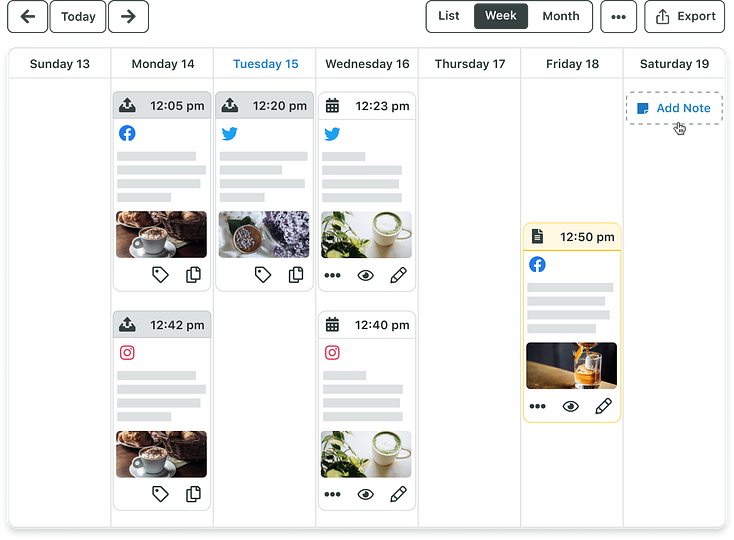
Growing across platforms is easier with social publishing tools like Sprout Social. Scheduling and cross-posting means you can publish to multiple platforms at once. That means less chaos and no need to bounce between apps.
Consistency also matters when it comes to your personal branding across platforms. This is where your creatives like logos and color schemes come into play.
5. Prioritize trust, authenticity and relatability
Building a personal brand doesn’t require a magnetic personality. You can be introverted or even “quiet” and still build a valuable brand.
The key is being relatable and real. That means sharing content and experiences that speak to your audience. Think challenges you overcame or resources that solve a problem.
Before posting anything related to your personal brand, always ask yourself:
- “How does this build trust?”
“How does this build trust?”
- “Am I being real with my audience?”
“Am I being real with my audience?”
- “Who does this post or piece of content speak to?”
“Who does this post or piece of content speak to?”
If you can confidently answer all three, you’re ready to post.
6. Measure what’s working and adjust
Personal brands evolve, and your strategy should, too. Check your results every month and double down on what works.
Focus on the signals that tie back to your goals:
- Engagement: Comments, shares and saves show whether your content resonates.
Engagement: Comments, shares and saves show whether your content resonates.
- Follower quality: New followers should match the audience you chose in Step 2.
Follower quality: New followers should match the audience you chose in Step 2.
- Profile visits: Rising visits signal that your posts make people curious about you.
Profile visits: Rising visits signal that your posts make people curious about you.
- Inbound opportunities: Job offers, client inquiries and speaking invites are the clearest proof your brand works.
Inbound opportunities: Job offers, client inquiries and speaking invites are the clearest proof your brand works.
Pay attention to the conversations you’re not tagged in, too. Social listening surfaces mentions of your name, your niche and the topics you want to own across public networks.
Sprout’s social media analytics pull performance from your connected profiles, including LinkedIn personal profiles, into one place, so you spot trends without juggling spreadsheets.
7. Be conscious about avoiding brand burnout
Personal branding is a long game. Protect your energy so you can keep showing up.
- Don’t make personal branding too personal. There’s a fine line between being vulnerable and oversharing. Set boundaries for what you’re willing to put out there.
Don’t make personal branding too personal. There’s a fine line between being vulnerable and oversharing. Set boundaries for what you’re willing to put out there.
- Don’t overdo it. As your brand grows, you’ll feel pressure to post more. Don’t sacrifice quality for quantity.
Don’t overdo it. As your brand grows, you’ll feel pressure to post more. Don’t sacrifice quality for quantity.
- Don’t overthink it. “Be yourself” sounds like cliché advice. But brand authenticity matters and people can tell when you’re faking a persona.
Don’t overthink it. “Be yourself” sounds like cliché advice. But brand authenticity matters and people can tell when you’re faking a persona.
How do personal brands drive business value for brands?
Personal brands don’t stop at the individual. When employees and executives build credible voices on social, the brands they work for gain reach and trust they can’t buy.
The 2026 Sprout Social Influencer Marketing Report shows 40% of consumers discover new products or services through employee-generated content every month. Audiences also find frontline workers more authentic than polished brand accounts.
- Executives: Leaders who post about industry challenges and brand values build trust with buyers, investors and candidates. Our guide to LinkedIn for executives shows you where to start.
Executives: Leaders who post about industry challenges and brand values build trust with buyers, investors and candidates. Our guide to LinkedIn for executives shows you where to start.
- Employees: Subject-matter experts extend reach to audiences a brand account never reaches.
Employees: Subject-matter experts extend reach to audiences a brand account never reaches.
Infor proves it at scale. After rolling out Employee Advocacy by Sprout Social, the company onboarded 1,500 employees in a single day. It generated $100K in earned media value in one month.
How are you building your personal brand?
There’s no universal rulebook for building a personal brand—and that’s your biggest advantage. It’s entirely unique to you.
Don’t let the process intimidate you. Start by sharing helpful content in your authentic voice, and build from there.
Sticking to the steps above puts you on the right track. If you haven’t already, check out our 30-day social media plan to jumpstart your branding journey.
Ready to see which posts grow your brand fastest? Start a free trial or request a demo to explore the platform’s features.
FAQs about personal branding
Can you build a personal brand for free?
Yes. Social profiles, newsletters and a steady posting habit cost nothing but time, and paid tools make it easier to scale and measure once you grow.
How long does it take to build a personal brand?
Plan on steady effort over the long haul. Most people see early traction after a few months of consistent, niche-focused posting and keep refining from there.
What is a personal brand statement?
A personal brand statement is one or two sentences that sum up who you serve, how you serve them and what makes you different. Pin it to your bios, speaker introductions and pitch emails so every first impression tells the same story.
Should your personal brand be separate from your employer’s brand?
Your personal brand belongs to you and should outlast any job. It works best when it aligns with your employer’s values and social media policy.