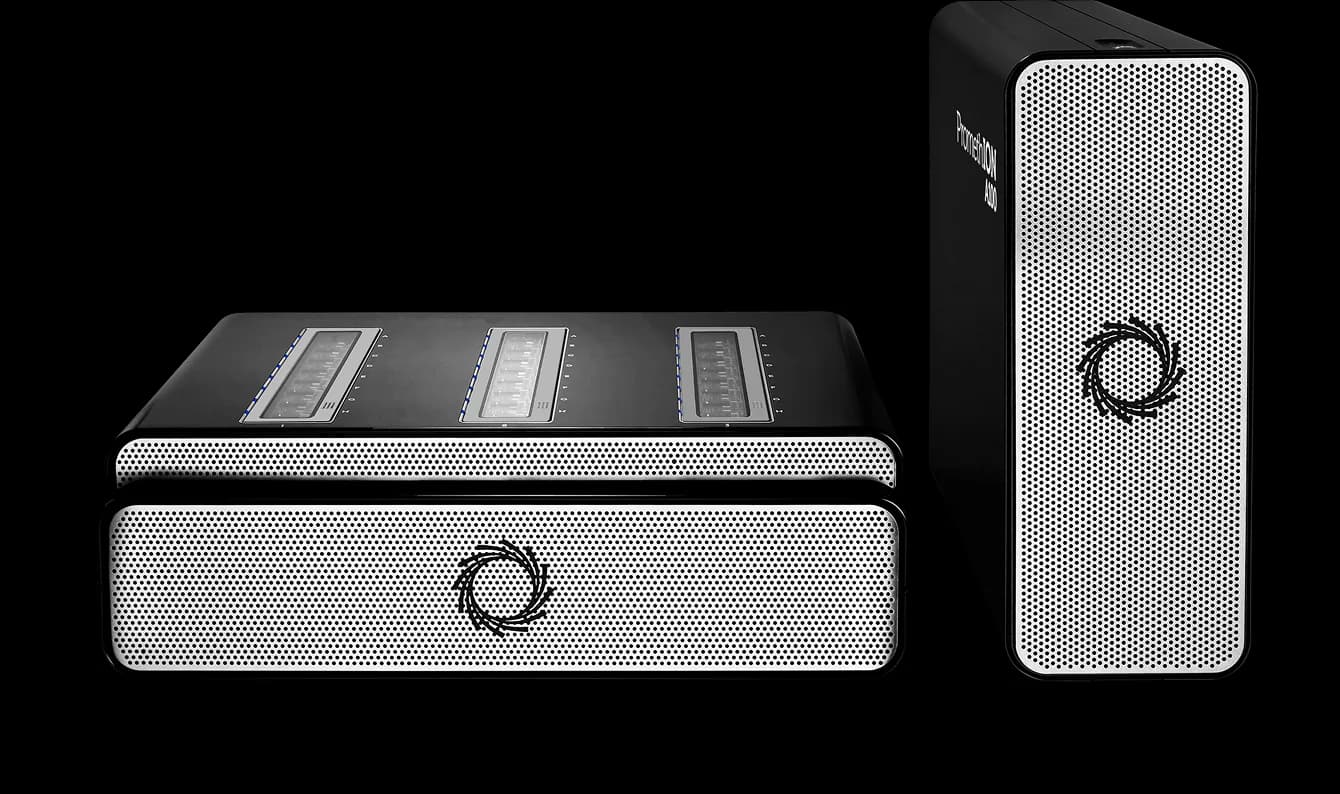
MinION, which sequenced DNA aboard the ISS in 2016, is now featured in the Smithsonian’s new At Home in Space exhibition and is set to travel to the Moon as part of the Artemis IV mission in 2028.
OXFORD, UK, Nov. 12, 2026 – Oxford Nanopore Technologies is marking ten years since its MinION device enabled NASA to perform the first DNA sequencing in space. The technology is now part of a new exhibition at the Smithsonian National Air and Space Museum in Washington, DC., and the story is set to continue to the Moon.
The crew of Artemis IV, planned for launch in 2028, will use MinION as part of their Microbiology of the Built Environment project, and it will also support microbial surveillance in the development of Moon Base, humanity’s first lunar outpost.
In August 2016, NASA astronaut Kate Rubins used a MinION aboard the International Space Station (ISS) to sequence DNA in space for the first time, demonstrating that nanopore sequencing could operate successfully in microgravity. Small enough to take into space and able to generate data in real time, the technology opened up the possibility of analysing biology where it happens, rather than depending entirely on laboratory work once samples reach Earth.
In the years since, NASA researchers have used nanopore sequencing to identify microbes aboard the ISS and explore its potential for microbial monitoring, crew health and future biological research. NASA’s recent astronaut recruitment video highlights nanopore sequencing as an example of the science awaiting future space explorers.
Today, MinION features in the Smithsonian’s new At Home in Space exhibition, which explores more than 50 years of learning how humans can live and work in space and how that experience is informing the next era of human exploration.
Francis Van Parys, Chief Executive Officer of Oxford Nanopore Technologies, commented: “Ten years ago, MinION proved that DNA could be sequenced in space. To see it in the Smithsonian today is quite a moment. We’re incredibly proud of what our teams and colleagues at NASA have achieved together, and even more excited about where the science could take us next.”
Sarah Wallace, Technical Lead, Microbiology at NASA Johnson Space Center, added: “Being able to sequence DNA in space opened up entirely new possibilities for biological research. A small, portable sequencer that can generate live data gives us the ability to study biology where it happens, rather than relying on samples being returned to Earth. That becomes increasingly important as we look towards longer and more distant missions.”