June 18, 2025
Integrating ERP data into Snowflake with Matillion unlocks your business’s full potential by turning complex, scattered data into reliable, actionable insights.
Why Move ERP Data to Snowflake?
ERP systems such as SAP, NetSuite, and Microsoft Dynamics 365 hold critical business data across key areas such as finance, HR, Ops, and supply chain.
But, typically, you will find that this data is trapped in siloed systems, legacy API, or on-premises infrastructure. This makes the data team's job of delivering timely, accurate insights next to impossible in many cases.
Snowflake has changed the data landscape. A cloud-native data platform, it has been specifically designed for scalability, flexibility, and governance. This makes it the ideal foundation for consolidating ERP data into an easily accessible, single source of truth.
Just one question remains: how to best integrate data into Snowflake from ERP systems?
TL;DR
Matillion and Snowflake streamline ERP data integration from SAP, NetSuite, and Dynamics 365. Their combined platform automates and scales data pipelines, unlocking faster, reliable insights and advanced analytics with less coding and maintenance.
Integrating ERP data into Snowflake
Matillion complements Snowflake by providing a low-code, powerful data integration platform tailored for ERP systems. Working in tandem, they enable data teams to:
- Seamlessly move and transform SAP, NetSuite, and Dynamics 365 data into Snowflake
- Automate complex Snowflake ELT workflows without heavy engineering overhead
- Speed up analytics delivery and decision-making
- Support advanced use cases like AI, forecasting, and operational dashboards
Integrating ERP data into Snowflake with Matillion unlocks your business’s full potential by turning complex, scattered data into reliable, actionable insights.
Snowflake Architecture Benefits for ERP Integration
The design of Snowflake's architecture lends itself perfectly to the challenges presented by ERP data.
Separation of Compute and Storage
Handle growing ERP volumes efficiently with Snowflake ETL processes by scaling compute resources independently from storage. This flexibility means you only pay for what you use and can optimize workloads like heavy ELT transformations without bottlenecks.
Virtual Warehouses
Run multiple ERP data pipelines in parallel without performance drops. Snowflake’s isolated compute clusters let you ingest SAP, NetSuite, and Dynamics data simultaneously, even during peak business periods.
Multi-Cluster Warehouses
Support many users and workloads at once, from finance to analytics teams, without queuing delays. Snowflake automatically scales clusters to meet demand, ensuring fast query response and smooth operations.
Time Travel and Fail-Safe
Easily recover from data mistakes or audit your ERP data changes. Snowflake’s time travel and fail-safe features protect data integrity, critical for complex ERP pipelines.
How Matillion Simplifies ERP to Snowflake Integration
Matillion is built to tackle ERP data complexity and accelerate integration into Snowflake.
Pre-Built ERP Connectors
Matillion offers native connectors for:
- SAP (ECC, S/4HANA, BW)
- NetSuite (SuiteTalk, SuiteAnalytics Connect)
- Dynamics 365 (Finance, Supply Chain, CRM)
These connectors eliminate custom API work, reduce errors, and speed up time to value.
ELT-First Architecture
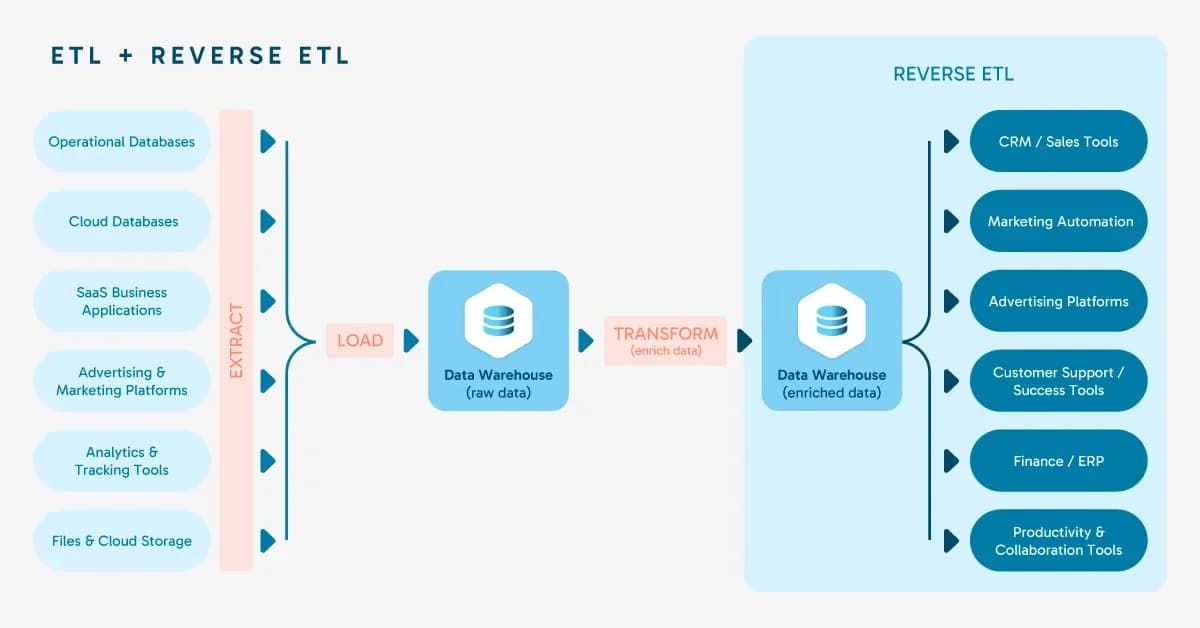
Matillion pushes heavy data transformations directly into Snowflake. This means you leverage Snowflake’s compute power to handle nested structures, historical data, and complex joins, essential for ERP data.
Example workflows:
- Flattening SAP finance transactions for reporting
- Normalizing NetSuite custom records for sales insights
- Combining Dynamics 365 CRM and ERP data into unified customer views
Orchestration & Monitoring
Schedule ERP data loads, trigger dependent jobs, and track pipeline health, all from a single dashboard. Teams get alerts on failures and can retry or troubleshoot quickly, minimizing downtime.
Traditional ERP Integration vs. Matillion + Snowflake
Challenge
Traditional Approach
Snowflake + Matillion Approach
Custom API Development
Months of custom coding for each ERP connector
Pre-built connectors for SAP, NetSuite, Dynamics 365
Schema Changes
Manual pipeline updates and testing after ERP upgrades
Full data lineage plus low code interface means quick updates after schema drift
Scalability
Vertical scaling with performance bottlenecks
Elastic scaling with separate compute and storage
Data Transformation
ETL processing on limited middleware servers
ELT processing leveraging Snowflake's cloud compute
Multi-ERP Integration
Point-to-point connections create complexity
Unified platform handling multiple ERP sources
Cost Management
Fixed infrastructure costs regardless of usage
Pay-per-use model scaling with actual workloads
Performance Optimization
Manual tuning and resource allocation
Automated optimization with virtual warehouses
Maintenance Overheads
70% of time spent on pipeline maintenance
Automated monitoring
ERP-Specific Implementation Patterns
SAP to Snowflake Integration: Enterprise-Scale Financial Data
Moving SAP data to Snowflake addresses one of the most complex ERP integration challenges in enterprise environments. SAP systems typically contain decades of financial history across multiple modules, with custom ABAP code and complex organizational structures.
Key Integration Capabilities:
- Multi-Module Extraction: Connect to FI/CO (Finance), MM (Materials Management), SD (Sales & Distribution), and PP (Production Planning) modules simultaneously
- Real-Time and Batch Processing: Support both RFC calls for real-time data and batch extraction via ODP (Operational Data Provisioning)
- Custom Object Handling: Automatically detect and extract custom tables, fields, and ABAP programs without manual mapping
- Historical Data Migration: Efficiently move years of transactional data while maintaining referential integrity
Common SAP to Snowflake Use Cases:
- Consolidating financial data across multiple SAP instances for global reporting
- Creating real-time supply chain visibility dashboards combining MM and SD data
- Building comprehensive customer analytics by joining SAP CRM and ERP modules
- Enabling predictive maintenance analytics using SAP PM (Plant Maintenance) data
SAP integration complexity has traditionally been a barrier to cloud analytics adoption. With Matillion and Snowflake, we're seeing enterprises move their entire SAP landscape to the cloud in weeks rather than months, unlocking insights that were previously trapped in silos.
Ian Funnell
Data Engineering Advocate Lead
Matillion
NetSuite to Snowflake Integration: Multi-Subsidiary Financial Consolidation
NetSuite's popularity among growing businesses creates unique integration challenges, particularly around custom fields, SuiteScript logic, and multi-subsidiary financial consolidation.
NetSuite-Specific Integration Features:
- SuiteTalk API Optimization: Efficiently handle NetSuite's API rate limits while maintaining data freshness
- Custom Field Mapping: Automatically detect and map custom records, fields, and workflows created in NetSuite
- Multi-Subsidiary Support: Consolidate financial data across subsidiaries with different currencies and accounting standards
- SuiteScript Integration: Extract data from custom SuiteScript logic and workflows without code modification
Typical NetSuite to Snowflake Scenarios:
- Creating unified financial reporting across acquired companies using NetSuite
- Building comprehensive sales analytics combining NetSuite CRM and ERP data
- Enabling real-time inventory optimization across multiple warehouses and subsidiaries
- Supporting compliance reporting with audit trails from NetSuite transaction logs
NetSuite's flexibility is both its strength and integration challenge. Organizations often have highly customized NetSuite instances that traditional ETL tools struggle with. Matillion's metadata-driven approach automatically adapts to these customizations, making NetSuite to Snowflake integration seamless.
Ian Funnell
Data Engineering Advocate Lead
Matillion
Dynamics 365 to Snowflake Integration: Unified CRM and ERP Analytics
Microsoft Dynamics 365's integrated CRM and ERP capabilities create opportunities for comprehensive customer and operational analytics, but also present complex relationship mapping challenges.
Dynamics 365 Integration Strengths:
- Cross-Module Connectivity: Seamlessly integrate Sales, Service, Finance, and Supply Chain modules
- Dataverse Integration: Native connectivity to Microsoft's Dataverse for comprehensive entity relationship mapping
- Power Platform Synergy: Leverage existing Power BI and Power Apps investments while extending to Snowflake
- Hybrid Deployment Support: Handle both cloud and on-premises Dynamics 365 deployments
Strategic Dynamics 365 to Snowflake Applications:
- Building 360-degree customer views combining sales, service, and financial data
- Creating operational dashboards that span CRM activities and ERP fulfillment
- Enabling advanced analytics on customer lifetime value using integrated Dynamics data
- Supporting sales forecasting models that combine CRM pipeline with ERP historical performance
The power of Dynamics 365 lies in its integrated approach to customer and operational data. When you move that integrated dataset to Snowflake, you unlock analytics possibilities that simply aren't available in traditional ERP reporting.
Ian Funnell
Data Engineering Advocate Lead
Matillion
Build Reliable ERP Data Pipelines with Matillion and Snowflake
ERP data is essential for operational insights and strategic decision-making, but unlocking it requires the right tools.
Snowflake's cloud-native, scalable platform, combined with Matillion's ERP-focused data integration capabilities, enables fast, efficient, and secure ERP data pipelines. This powerful duo empowers your business to accelerate reporting, improve data quality, and prepare for AI-driven analytics.
Ready to streamline your SAP, NetSuite, or Dynamics 365 integration with Snowflake? Book a demo to see how Matillion simplifies ERP data pipelines and unlocks business value.
FAQs: ERP to Snowflake Integration with Matillion
Use Matillion’s SAP connectors (RFC, ODP) to extract and load data. Combined with Snowflake’s scalable compute, you can handle high-volume SAP transactional data efficiently.
Yes. Matillion’s NetSuite connector supports saved searches, custom fields, and SuiteScript without custom development.
Financials, sales, inventory, customer data, HR info, and more, across SAP, NetSuite, and Dynamics 365 modules.
No. Matillion’s metadata-driven design automates pipeline adjustments, reducing maintenance.
Use Matillion's SAP connectors (RFC, ODP) to extract and load data directly into Snowflake. Combined with Snowflake's scalable compute, you can handle high-volume SAP transactional data efficiently using modern ELT approaches that leverage Snowflake's processing power.
Traditional ETL processes data on separate middleware servers with limited resources. Snowflake ETL (ELT) pushes transformations directly into Snowflake's cloud compute, enabling you to handle complex ERP data structures, large volumes, and real-time processing without performance bottlenecks.