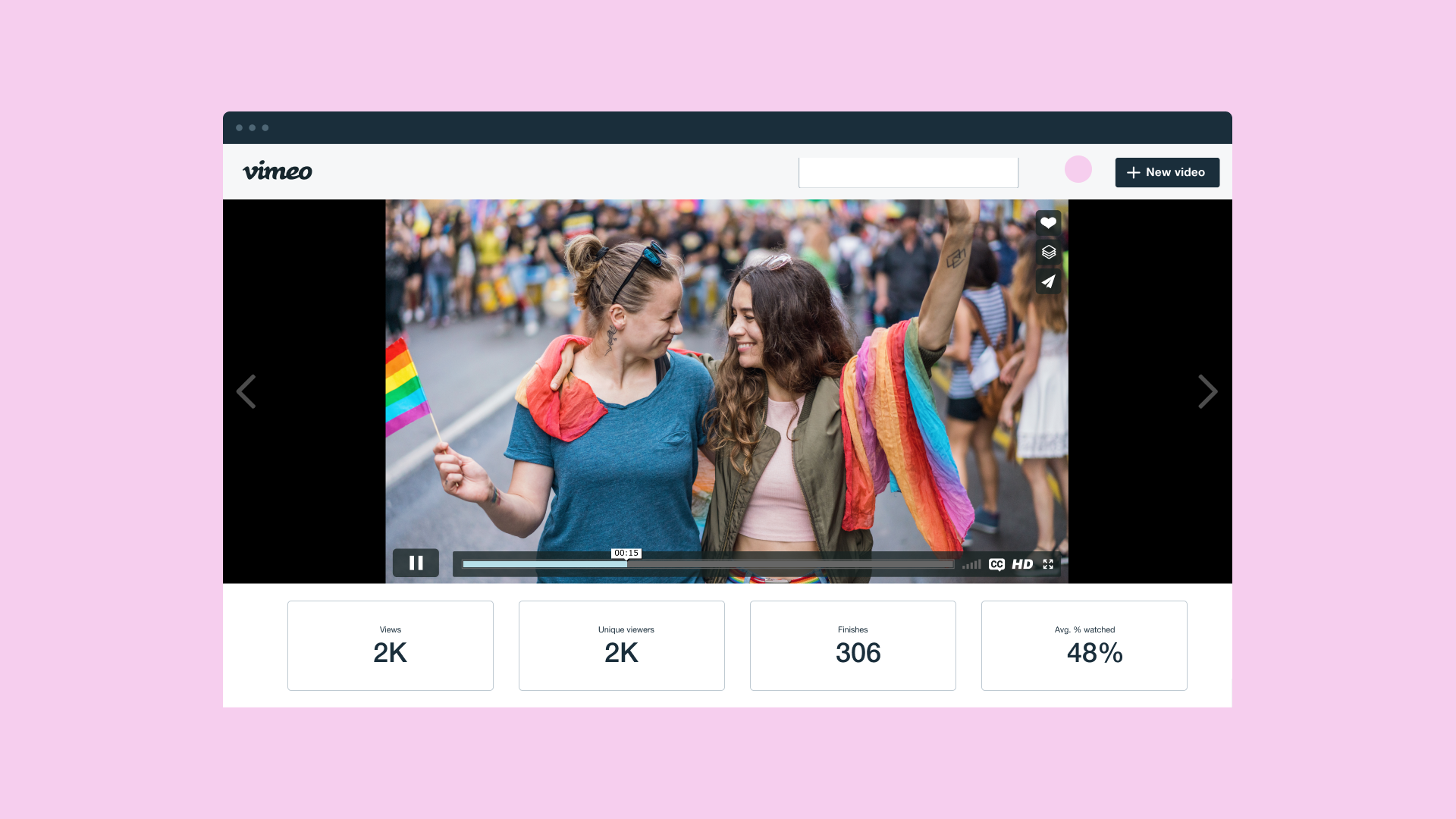
What are video metrics?
Video metrics (or analytics) are the data points that show how your audience interacts with your videos. You can track simple numbers like view counts, along with more complex information like which audience segments clicked most often on a specific call to action (CTA). This data shows you what's working in your content, where viewers lose interest, and whether videos accomplish their goals.
6 key video metrics to watch
Let’s look at six important video metrics that reflect content effectiveness and business impact.
1. View count
View count is the number of times a video has been watched. This isn't the same as reach, since one person can generate multiple views by replaying the video. Also, what counts as a view can vary by platform — for example, a person may need to watch at least 10 seconds for their engagement to be recorded.
It's best to treat view count as a distribution signal, not a standalone measure of performance. Pairing this metric with watch time and retention data can help you figure out how to get more video views that actually convert.
2. Average view duration
Average view duration is the total watch time for your video across all users, divided by the total views. Platforms apply this data point differently: YouTube separates total watch time from average view duration, for example, while Instagram calls the metric average watch time.
Strong view duration shows that people tend to engage with your video, instead of just scrolling past after a few seconds. This metric also impacts how often platform algorithms show the video to relevant searchers.
3. Audience retention
Audience retention data builds on watch time by showing how the percentage of remaining viewers changes throughout a video. Many platforms show this metric as a retention graph so you can spot drop-off points.
If many viewers close the video at the same moment, that could indicate a weak intro, confusing pacing, or a misplaced CTA. Just keep in mind that this metric shows where viewers left, not why, so you’ll need to use other data points to identify the problem.
4. Video completion rate
Video completion rate is the percentage of viewers who watch a video to the end. This metric is calculated by dividing completed views by the total people who started the video.
Completion rate tends to be most useful for short and mid-length content, especially when getting to the end is important to grasp the full message. For longer videos, average view duration often tells you more, since full completion is a high bar to clear regardless of the content’s quality.
5. Engagement rate
Engagement rate measures direct interactions that go beyond views. Engagement can include actions such as likes, comments, shares, and saves.
It’s important to track each engagement rate separately, since different actions offer distinct insights. Likes are easy to leave, for example, while comments and shares require more effort. A save implies that the viewer is interested enough to return to the video later, which is why platforms like Instagram and TikTok use save rates as ranking signals.
6. Click-through and conversion rate
Click-through rate (CTR) is the percentage of viewers who click on a link, usually a CTA, that’s embedded in or included alongside your video. This metric shows both how relevant your CTAs are to viewers and how effectively the video convinces them to click through.
Conversion rate goes a step further to show how many viewers took a desired action after clicking through, like signing up for a trial or making a purchase. A video can generate strong engagement and plenty of clicks, but still underperform if it doesn’t get people to act. For paid campaigns, conversion rate and CTR are the video advertising metrics that tie ad spend to results.
What video metrics to track based on your goals
Which video metrics are most important depends on what you're trying to achieve. If you want to improve brand awareness, you'll watch different numbers than if you're trying to build a community.
Here are a few common priorities and the analytics that can help.
Trying to track every metric on each piece of content makes it hard to see if your video marketing metrics move meaningfully. Pick two or three data points to focus on that match your current goal, and revisit this list each time your objective changes.
A metric only helps if it shows you what to fix. Let’s look at some common warning signs and how to respond to them.
Edit your videos with Vimeo →
Low watch time or high early drop-off points
If people don’t watch very far into the video, that often points to a weak opening. It can also mean the thumbnail and headline promised something the video didn't deliver right away. However, technical issues like slow loading and muffled audio can cause similar results. So start by verifying the video’s performance, then test different starting hooks to see which one drives longer watch times.
Low completion rate
Later drop-offs can mean the video runs too long, especially if viewers get what they came for quickly and have no reason to stick around until the end. If the engagement graph shows a steady decline in viewers, you might want to tighten the video’s pacing and cut scenes or segments that don’t add value. If there’s a big drop right after the video’s main message, that may not be a problem, especially if other engagement and conversion metrics remain strong.
Low CTR on the video thumbnail
Poor CTRs are usually a problem, but they're even more concerning when they mean potential viewers don’t click through to the video itself. Start by reviewing the video’s thumbnail image, title, and any descriptive text. Make sure these introductory elements grab attention and tell people what they stand to learn or gain from watching.
Low engagement rate
If watch times are fine but engagement is low, the video might not give viewers a clear reason or motivation to act. Fortunately, there are plenty of ways to increase video engagement, such as asking direct questions or offering small incentives for shares.
Low conversion rate
Poor conversion rates can have a variety of causes, but start with the video’s primary CTA. Make sure it’s prominent, and it’s placed at a point in the content when viewers know how they’ll benefit from clicking through. Also, check to see if your video fulfills the promise from the landing page or ad that leads to it — if not, the problem might be that you’re not speaking to the right audience.
Track and analyze your video metrics with Vimeo
Reviewing all the key video analytics by hand across spreadsheets or tools wastes time, and it’s hard to pull out actionable insights. Plus, as your video library grows, it gets difficult to compare results across campaigns and audiences.
Vimeo’s Analytics tools bring your core video metrics into a centralized, real-time dashboard. You can see how viewers find your content, what devices they watch on, how they engage, and where they tend to drop off. This gives you the information you need to gauge performance and make changes that drive results.
FAQ
What’s a good video engagement rate?
Video engagement rates vary based on platform, industry, audience, format, and calculation method. There’s no one benchmark to aim for, so compare your results with your own historical data and relevant competitors.
What’s the difference between watch time and audience retention?
Watch time is the total amount of time viewers spend playing your video. Audience retention shows how the proportion of viewers changes at each point in the video, helping you identify where attention is maintained or lost.
Which metrics matter most for social videos versus on-site videos?
Social video metrics usually emphasize reach, views, engagement, and follower growth. For videos embedded on your website, you’ll often focus on play rate, watch time, retention, and conversions. Keep in mind that the most important metrics ultimately depend on the video’s objective, not just where it’s hosted.