Key Takeaways:
- AI assistants state false facts about brands more often than most teams expect. In a study of 32,556 brand facts, 9.2% were flagged as false, with pricing, funding and integrations the weakest spots.
- Most wrong answers trace back to outdated, thin or one-sided sources, so the lasting fix is changing what engines read.
- The cost shows up late. Buyers form a view from an AI summary, however the loss is logged in as “pricing” or “went with a competitor.”
- Different errors need different fixes. Factual errors, unfavorable framing, missing mentions, competitive displacement and unsupported claims each trace back to different sources.
- Correction needs to be a repeatable loop: run real customer questions, trace each error to its sources, fix or outweigh them, and measure again.
- Track accuracy alongside visibility, by search engine, topic and market, using questions drawn from real customer conversations, and name one owner across teams.
A customer asks ChatGPT which product to buy in your category. The response names your brand, but describes a model you discontinued two years ago, quotes a price that was never right, and repeats a complaint you fixed last spring. Nobody on your team sees it.
Now imagine that repeating across thousands of questions and five AI engines, every day.
The resulting damage shows up later, under a different label. A prospect says the price is too high, or a deal goes to a competitor, and the CRM records "pricing" or "went with a competitor". What it does not record is that the buyer formed a view of your brand or product from an AI summary before anyone from sales was involved.
Fixing this is unfamiliar work. A search ranking can be improved by editing a page. An AI answer has nothing to edit: there is no listing to claim, and no form that corrects it.
Instead, marketers need to fix the sources the engines read. They need to run real customer questions across AI engines, trace each wrong answer to the pages behind it, correct or outweigh those pages, and re-run the same questions to confirm the answer changed.
This guide walks you through that process: why engines get brand information wrong, how to monitor the answers over time, and how to fix how your brand shows up on LLM answers.
Table of Contents
- Why AI answers now shape the buying decision
- Why AI models get brands wrong
- How often do AI models get brand facts wrong?
- Can you influence how AI models describe your brand?
- How to correct inaccurate AI-generated brand information
- Who owns this inside your company?
- Where to start: your first 30 days
- How to monitor brand reputation in generative AI outputs
- The questions you track decide what you find
- How Sprinklr LLM Insights helps
Why AI answers now shape the buying decision
Several shifts explain why these answers carry more weight than they did a year ago:
· Fewer clicks, so the answer carries the weight. A recent study found that 68% of Google searches ended without a click, with the drop in click-through at roughly 60% when an AI Overview appears. When a buyer reads a summary and never visits your site, the summary is the first impression you make, and sometimes the only one.
· Shopping and advertising are moving inside assistants. OpenAI began testing ads in ChatGPT in January 2026, and ChatGPT ads reached 89 markets by October. OpenAI says its shopping research draws on merchant product feeds alongside public product information, and one ecommerce agency reports that since a September update, shopping placements are limited to brands with connected feeds. A wrong price in a feed, a page or a review can now show up in an answer and in an ad.
· Buyers shortlist inside the assistant. 51% of software buyers now start research with an AI chatbot more often than with Google, and 41% use deep research tools regularly for software evaluations. 69% chose a different vendor than they had planned because of what a chatbot surfaced. Only 7% say brand recognition decides whether they notice a vendor named in an AI answer, which suggests a well-known name does not protect you from a weak or wrong description.
· Agents act on your data. As shopping and research agents start to compare options and take steps for a buyer, they work from structured product data and reward accurate, consistent information over visual polish. Gartner predicts that by 2028, 90% of B2B buying will be intermediated by AI agents . Forrester is more measured, noting that answer engines are reshaping discovery more than checkout. Either way, accurate feeds, pages and listings come first.
With this much resting on a single answer, the first question is - why do engines get brands wrong at all?
Can you buy your way out of an inaccurate AI answer with ChatGPT ads?
No. OpenAI says ads are shown separately from ChatGPT's answers and do not influence them. An ad can put your name next to a wrong answer, but it won't correct the answer. A competitor's ad can also sit right under an answer that misrepresents you.
Why AI models get brands wrong
Most inaccurate brand portrayals have an information problem behind them, although some are genuine model errors. An AI engine may retrieve outdated information, misread a source's context, combine conflicting details, or generate a statement with no cited source. Telling these apart matters because each needs a different response.
Here are four common reasons AI engines get brand information wrong:
· Out-of-date training data: Large language models learn patterns from training data collected at particular points in time. Your product portfolio, pricing, leadership, policies, and positioning can change much faster than a model's underlying knowledge. An assistant may keep describing a discontinued module or old pricing as current.
· The wrong sources at answer time: Engines that search before they answer, such as Perplexity, Google AI Overviews and ChatGPT with search, pull from forums, review sites, old press and comparison pages. If those pages are wrong or one-sided, so is the answer. The source selection process also varies by platform. A page cited by one AI engine may not appear in another engine's response.
· Insufficient owned content: If your website doesn't clearly explain your products, pricing approach, differentiators and common questions, engines rely more heavily on external sources to fill the gaps. An Ahrefs experiment shows how far this goes. The team invented a brand, published conflicting stories about it across the web, and found that Gemini and Perplexity repeated the planted misinformation in roughly 37 to 39% of answers, while ChatGPT stayed under 7%. The most detailed story won, whether or not it was true.
· Fast-moving public conversations: A product issue, service disruption, viral complaint or sudden increase in negative reviews can create a large volume of public discussion, which may become part of what AI search retrieves. A complaint about a temporary outage can keep shaping answers if the resolution never appears in the sources engines read.
There is also a compounding risk, a self-reinforcing visibility gap. Brands that AI doesn't surface get less discovery and conversation, so they stay absent from future answers too. When a brand is missing from relevant answers, that absence can become harder to correct over time.
How can you tell whether a wrong AI answer is a hallucination or a source problem?
Check the citations and repeat the question. If the wrong claim appears in a cited page, or shows up consistently across engines and runs, it's a source problem: fix or outweigh the source. If no source supports it and it changes from run to run, it's more likely a model error. Clear, comprehensive owned content gives the model less room to guess, and the assistant's feedback options are worth using for those cases, even if they don't reliably change answers.
How often do AI models get brand facts wrong?
More often than a spot-check suggests. Searchable asked 1,704 brands to grade 32,556 facts that AI engines had stated about them. The brands flagged 9.2% as false, and 75% of the brands that reviewed at least 20 facts found at least one error. The mistakes cluster in facts that change often or that buyers weigh heavily:
Type of fact
Pricing
13.5%
Funding and financials
10.9%
Integrations and tech stack
10.6%
Partnerships and clients
9.9%
Products and services
8.6%
⚠️ The data above comes from brands that use Searchable's tool and grade their own facts. Treat these figures as directional and measure your own brand's performance.
For B2B teams, the integrations figure deserves attention. If a buyer is told that your product doesn't integrate with the CRM they already use, they may rule you out before your sales team even hears about it.
Where those facts come from also varies by engine. In a separate Sprinklr study of 896 AI responses and more than 19,000 citations, Grok, Gemini, Google AI Overview and Perplexity each relied on different sources for the same questions, so a fix that works on one engine may not carry over to another.
Can you influence how AI models describe your brand?
Yes, but indirectly. You cannot tell a model what to say but you can change the sources it reads and learns from.
There are two things you can influence:
· What the engine reads when it answers: Answers built from live search often respond faster to a source change, sometimes within weeks.
· What the model learned in training: This changes only when the model is updated, so it is slower and less predictable.
The levers you control are your owned content, the third-party sources that cite you, and the public conversation about you. Feedback buttons inside AI assistants exist, but they do not reliably change answers.
It also helps to look beyond your own site, because the mix of sources engines rely on keeps shifting. AirOps tracked about 3.5 billion AI citations. It found that the share going to brand-owned and product pages fell by 10% between August 2025 and June 2026, while creator and social sources grew by 140%. Wikipedia and Reddit together made up over 25% of ChatGPT's US citations in early 2026, and Reddit's share of ChatGPT citations has swung sharply more than once in the past year. Your owned pages are one input among many, and the other inputs move.
Two more source types belong on your map:
® Video: In an analysis of 46 million AI Overview citations, YouTube was the largest single source at .
® Help centers and product documentation: These pages grew from about 2% to 32% of ChatGPT's citations between two recent model versions.
Treat both as single-analysis findings, though the direction is worth acting on. Your support content and your videos are part of your brand record, and the teams that write them rarely think of themselves as shaping AI answers.
How to correct inaccurate AI-generated brand information
1. See what the engines say, at scale
Spot-checking in your own account does not work. Logged-in assistants personalize answers using your history, and one question tells you nothing about the thousands your customers ask.
Instead, establish a fixed set of customer-relevant questions and monitor responses across the AI platforms that matter to your audience.
Your initial monitoring framework should cover:
· Brand and product questions
· Product comparisons and competitor recommendations
· Pricing, integrations, specifications and features
· Customer experience, reliability and reputation
· Purchase-intent questions, such as whether a product is worth buying or suits a particular business need
Run these prompts repeatedly using a consistent collection methodology. Record the AI platform, prompt, response, date, location where relevant, and cited sources. This creates a baseline against which future changes can be measured.
How Sprinklr helps: The Negative Brand Visibility report in LLM Insights shows how AI platforms portray your brand when users ask negative, critical or issue-related questions. It helps you spot reputation risks and recurring pain points, and address misinformation or outdated information before it affects customer trust.
2. Sort what you find
Not every wrong answer is the same problem, and each type needs a different fix:
What you found
Example
Potential fix
Factual error
Incorrect pricing, outdated specifications, discontinued products
Owned product pages, documentation, marketplace listings, or the original source
Unfavorable framing
Old complaints presented as current
Recent, credible sources that outweigh it
Missing information
Your brand is not mentioned in relevant product recommendations
Content gaps, authoritative coverage, and sources addressing the specific question
Competitive displacement
A competitor is repeatedly recommended over your brand
Competitive positioning, product comparisons, citations, and relevant third-party content
Unsupported claim
An AI engine attributes a capability or policy to your brand that you do not offer
Source verification, factual corrections, and clear official documentation
3. Trace each error to its sources
Look at which pages the engine cited for the answer. An error that appears across hundreds of answers often comes from one or two pages: an outdated review, a stale marketplace listing, a forum thread that ranks well.
Create a source-level record for each recurring issue:
· What information is inaccurate?
· Which AI platforms are reproducing it?
· Which sources are cited or appear to influence the response?
· Is the source owned by your organization or a third party?
· How frequently does the issue appear?
· Which customer questions or product categories does it affect?
One important caveat: A cited source is evidence of what an engine referenced, not necessarily proof that it was the only source influencing the answer.
How Sprinklr helps: Sprinklr’s LLM Insights reports show the citations behind AI answers. You can also link your brand domains to a report, which improves source attribution and tracks how much of what engines cite is yours.
4. Fix the source, not the symptom
· Owned content: Update the page, add a plain answer to the exact question people ask, and add an FAQ where one is missing. Keep pricing, integrations and product names consistent across your site, help center and partner pages, because contradictions between sources produce wrong answers.
· Earned content: Ask publishers to correct factual errors, and update listings on marketplaces and review sites.
· Conversation: Respond in the threads engines are reading, while they are still being read. Encourage employee experts to share credible content where your buyers research.
· Customer care: If customers keep asking AI a question your support team isn't ready for, update your knowledge base. That keeps your answers consistent across AI and support channels.
Technical hygiene: Give engines one clean version of the facts. Add Organization schema with ‘sameAs’ links to your verified profiles. Keep your brand’s name, description, founding date and locations identical across your site, social profiles, directories and press. Consider claiming a Wikidata entry, which calls a high-leverage and under-used step. For retail and ecommerce, keep product feeds, product pages and marketplace listings aligned on price, availability and specifications, because assistants draw on feeds alongside public pages.
A note on llms.txt: The file is cheap to add, but the evidence that it changes answers is thin. Add it if it costs little, keep it short and current, and do not count on it to fix a wrong answer.
Escalate the serious ones: Treat errors involving safety, legal claims, regulated products, pricing terms, or defamation as serious incidents. Route them to legal and communications the same day, keep a record of the answer and the sources it cited, and then correct those sources.
How Sprinklr helps: LLM Insights now includes agents that turn recommendations into work your team can review and publish:
- The Blog Content Recommendation Agent drafts a title, meta description and body for topics where your brand has low visibility or competitors dominate.
- The AEO Agent checks your existing blog content against a set of answer engine optimization signals.
- The Social Channel Engagement Agent drafts replies for relevant conversations that LLM Insights identifies.
Because it all runs on one platform, your team can also refresh knowledge base articles and publish across channels without exporting data.
5. Measure again
Run the same questions on the same engines and compare. Did the error disappear? Did your page replace the old source in the citations? If not, the engine may be relying on another source, an older version of a page, or information embedded in its underlying model.
Who owns this inside your company?
The hardest part is often organizational, not technical. An inaccurate AI answer can start in a stale product page (web team), an unanswered complaint thread (social or care), an old review (PR), or a missing regional page (local marketing). If no one owns the whole loop, each team fixes its own piece, and nobody checks whether the answer changed.
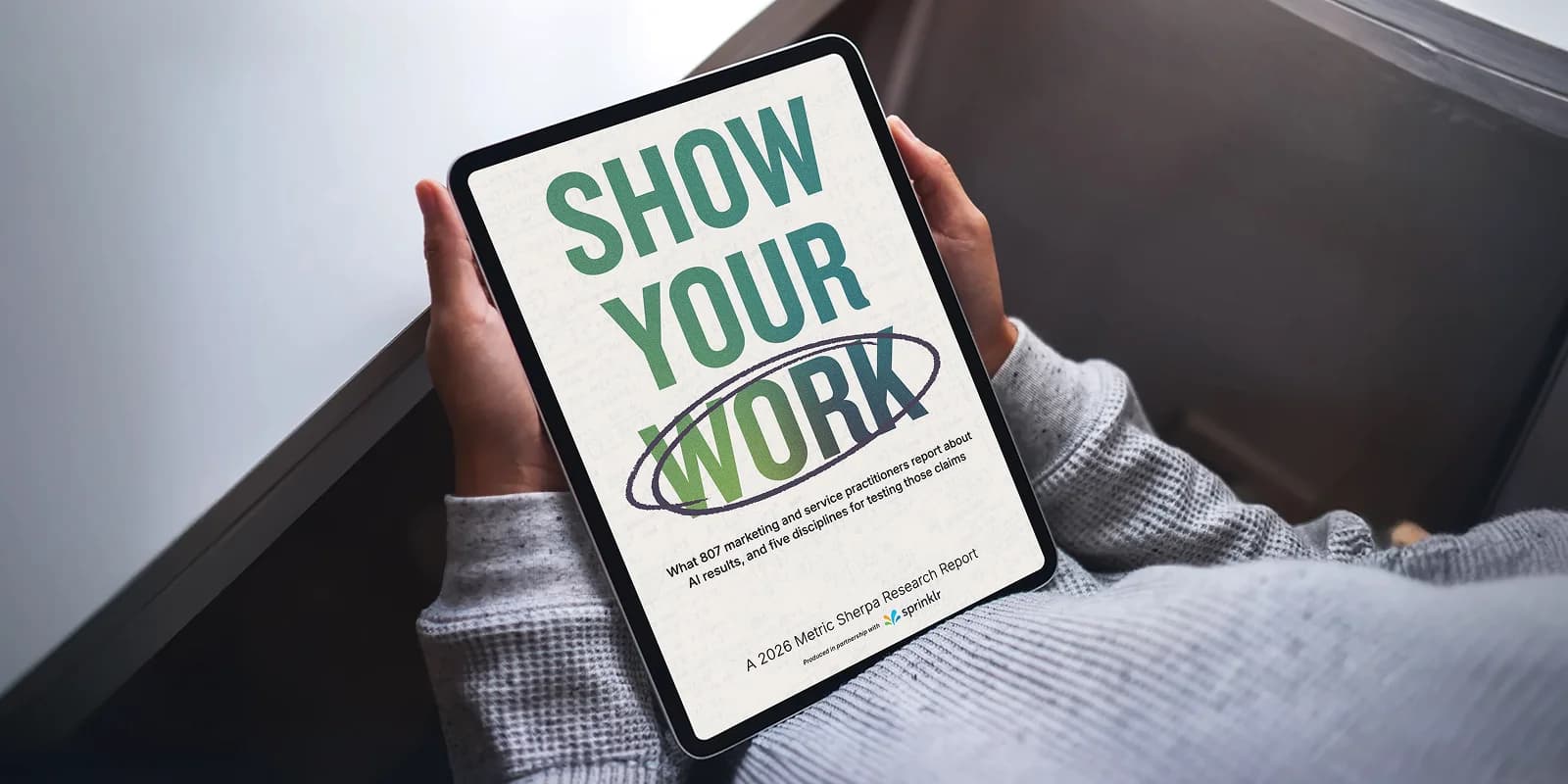
This gap is common. In Sprinklr's "Show Your Work" research, only 17% of organizations using customer-facing AI said they assign a named owner for AI business outcomes.
What tends to work:
· One accountable owner, usually in brand, comms or consumer insights, who owns the prompt set and the scorecard.
· A shared triage path that routes each finding by fix type: factual errors to web or product marketing, framing to PR and social, missing mentions and competitive displacement to content and SEO, and recurring questions to care.
· One view across teams, so a spike in social conversation and a shift in AI answers are seen together, not in separate dashboards.
Where to start: your first 30 days
Week 1
Choose the questions
Collect 25 to 50 buyer questions from win-loss notes, sales calls, support tickets, and social listening. Include direct questions, comparisons and doubts such as "is it worth it".
Weeks 1-2
Set a baseline
Run them across the major engines and in each market you sell in. Record mention rate, position, sentiment and an accuracy rate.
Week 2
Sort and trace
Label each error using the five types above, then list the five source pages behind the most errors.
Weeks 2-4
Fix the sources
Start with pricing, integrations, and discontinued products. Align feeds, schema, help content and listings.
Week 4
Measure again
Re-run the same questions, log what moved, set a monthly cadence and name the owner.
How to monitor brand reputation in generative AI outputs
Monitoring is what turns a one-off correction into a process. Track these for your brand:
· Visibility: The share of answers that name you.
· Position: Where you appear when you are named. Being fourth in a list of five is visible, but far from recommended.
· Sentiment, per brand: One answer often mentions several brands, so score the tone for each brand separately rather than the answer as a whole.
· Citations: Which sources engines rely on, and how many of them are yours.
· Platform: ChatGPT, Gemini, Perplexity, Copilot, and Google AI Overviews behave differently. An average hides the engine where you have a problem.
· Topic: You may be accurate on one product line and wrong on another.
Track the same measures for your main competitors. Your visibility only means something next to theirs. Competitor data also shows where you're being displaced, such as the questions where a rival is recommended and you're missing, and which sources they're cited from that you aren't.
How the answers are collected matters as much as what you measure. Answers should be captured the way a customer sees them, in the assistant's own interface, with memory and history off. Otherwise, you are measuring something your customers never see.
Re-measure on a schedule, because engines change their sourcing without notice. A fix that worked in June can quietly undo itself in September when an engine starts weighting different sources.
Score visibility and accuracy separately: A brand can appear in many answers and still be described wrongly, so score each answer for correctness as well as presence. Pair AI mention rate, share of voice and sentiment with an accuracy rate: the share of statements about you that are correct.
Check every market: Error rates vary by country. Brands in New Zealand (), Germany (15%) and Canada (14.3%) flagged false facts at much higher rates than brands in the US (8.6%) and UK (8.2%). This may reflect how much local coverage engines have to draw on. Run the same question set in each language and region you serve.
Connect it to outcomes: Clicks are an unreliable signal when the answer happens on the results page. Watch branded search, direct visits and assisted conversions next to AI visibility, so you can show leadership what changed after each fix.
The questions you track decide what you find
The inaccuracies that cost you sales show up in the questions real people ask: "is it worth it", "what are the problems with", "which is better for beginners".
These are the same questions that surface when a deal is won or lost. Comparative questions are where this gets risky. In one brand's own accuracy study, direct questions about the company were answered accurately about 90% of the time, while comparative questions were answered accurately only 18.8% of the time, mostly because engines declined to answer. It's a single-brand sample, but it suggests "which is better" questions deserve the closest tracking.
Those questions are already public. People ask them on Reddit, Quora, X and review sites, and the same questions go to AI assistants. Building your prompt set from that conversation, weighted toward what is recent and widely engaged with, means you track the questions where an inaccurate answer actually reaches customers.
Why social listening data makes a better prompt set than a keyword list
Social and web listening already captures the language buyers use, the complaints that keep resurfacing, and the competitors they compare you with. Building the prompt set from it means the questions you track mirror real doubts. It also shows you early when a new complaint is gaining traction, before it hardens into a source an engine cites.
How Sprinklr LLM Insights helps
Sprinklr LLM Insights is built for this loop: find what the engines say, trace why, act, and measure again.
· Coverage: Track how your brand appears across ChatGPT, Gemini, Perplexity and more.
· Real questions: Prompts come from real customer conversations across social, care, search communities and reviews, and you review them before analysis runs.
· Answers as customers see them: Responses are captured from each assistant's own interface, with sessions, memory and history disabled.
· Visibility, sentiment and citations, benchmarked against competitors on every prompt that matters, with each brand in an answer scored separately.
· Use cases for every question: Brand Visibility, competitor and region views down to state and city level, Industry Analysis, and Negative Brand Visibility for the critical questions where misportrayals do the most damage.
· ChatGPT Ads: See who is advertising against your tracked prompts.
· Listening alongside: Plot LLM Insights data next to your Listening data in custom dashboards, to see whether a shift in social conversation comes before a shift in AI answers.
For PR, brand and social listening teams, that last point matters most: you can spot a narrative while it's still a few threads, before engines rely on it.
Sprinklr's AI research team published work on how AI engines choose what to cite at ACM SIGIR 2026. [Download Now]
See what AI engines say about your brand. ⬇️
REQUEST A DEMO
Frequently Asked Questions