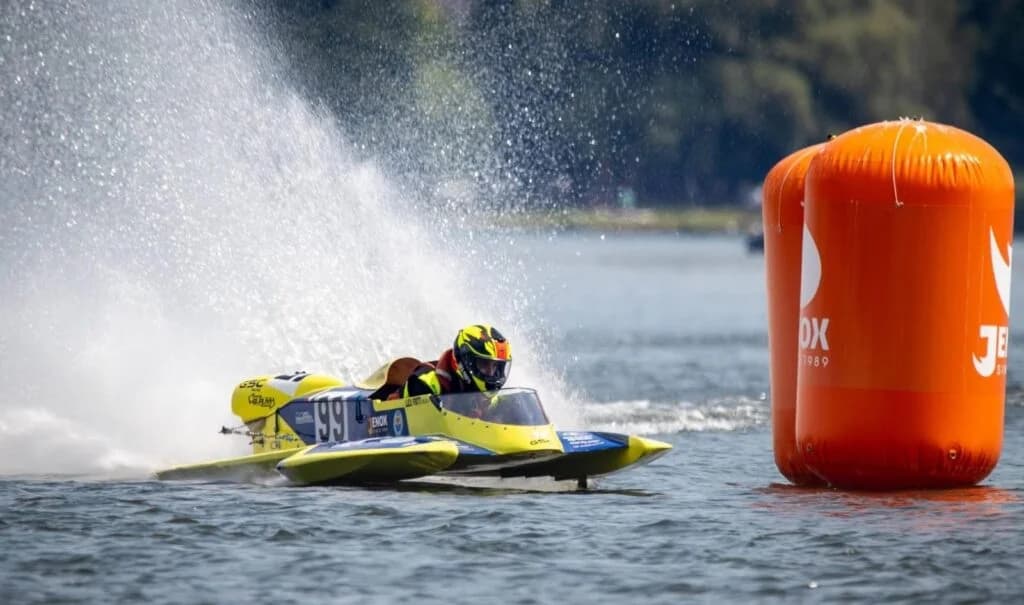
Luca Finotti is a 2023 F125 world champion, an industrial automation engineering student, and a professional PLC programmer. He is also, in his own words, “someone who likes to build devices of all kinds using Arduino” – and who decided there was no reason to keep that hobby separate from his racing career.
The result is a collection of custom-built electronics that, according to Finotti, have supported his performance on the water. Not because the rulebook required it, but because he saw an opportunity and went after it.
From spectator to competitor – and then to engineer
Finotti came to motorboat racing through his father, who started taking him to motorsport events when he was just two years old. He took part in his first competition in 2016, after the Italian Motorboat Federation opened a test day to the public: he couldn’t resist signing up! From there, he focused not only on speed, but also on better understanding his boat’s performance.
“I started creating projects for use in competitions because I believe electronics can give you an extra edge,” Finotti explains. “In Formula 1 and MotoGP, electronics have become fundamental. I wanted to try to create devices that could give me advantages, assistance, and supervision of on-board systems.” The categories he competes in are relatively bare from an electronics standpoint, and regulations are simple enough to leave plenty of room to experiment.
His first Arduino project was a thermocouple selector: a simple tool to switch between exhaust temperature and cooling water temperature readings at the press of a button, solving a problem his instrumentation couldn’t handle and his budget couldn’t fix with an off-the-shelf solution. But the project that made the biggest difference was the one he built around air density.
Air density is one factor in engine carburetion. An improper carburetion setting can affect engine performance and may increase the risk of engine damage. Finotti custom built an air density meter that gives him an immediate reference point for how to set up the carburetion before heading out on the water, which, according to Finotti, helps him select a carburetion setup before going on the water and may save time during free practice and qualifying.
Alongside that, he developed an in-race carburetion variator. In his category, carburetion can only be adjusted when the boat is stationary at the starting pontoon. Once on the water, there’s no way to change anything. Finotti’s device – built with buttons, a display, and a stepper motor – changes that. It allows fine adjustments to carburetion even while driving.
Finotti says he used that device during the final round of his 2023 world-championship season. “In the last round of the world championship, I had decided to go with a conservative setup to avoid engine failure and not risk losing the title,” he says. “But this conservative approach turned out to be a disadvantage, so I was able to vary the carburetion while racing and shift the engine to a more aggressive setup to recover positions. Then, by reconfiguring the carburetion, I managed to reduce the risk, finish the race in first position, and win the world title.” His 2025 season confirmed the approach: he claimed the Italian championship title, took third on the European podium, and finished runner-up at the world level, all in the F125 class.
Engineering on the water: humidity, vibration, and resin printing
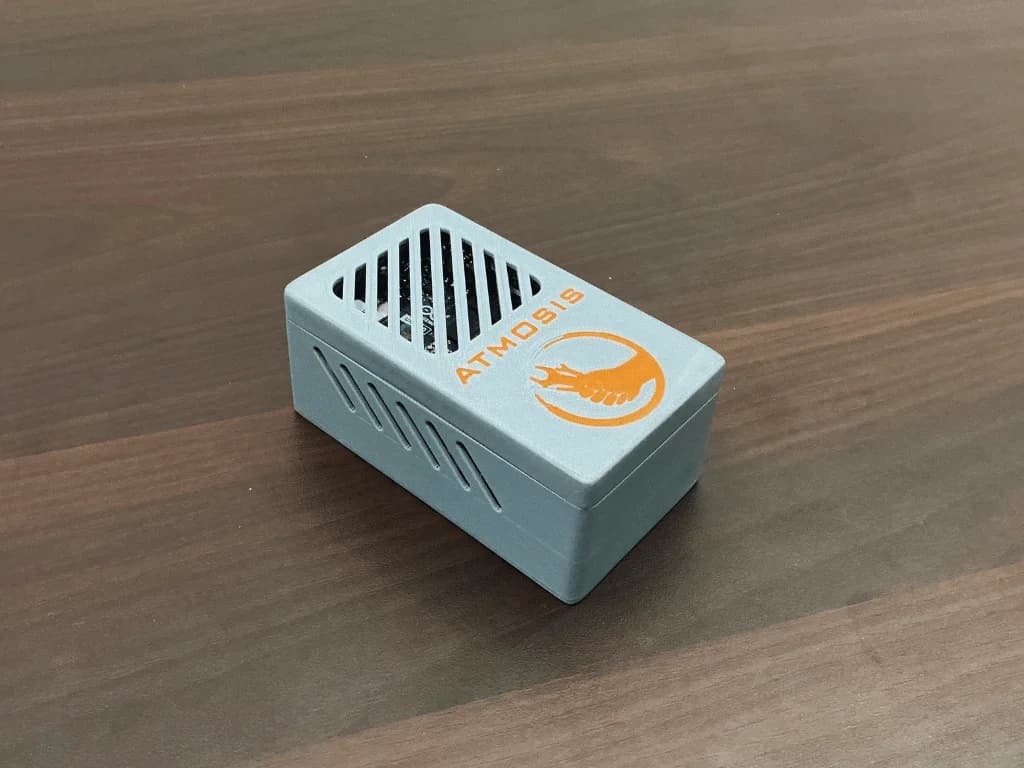
Building electronics for motorboat racing is not the same as building for the bench. Humidity and vibration are constant enemies, and a device that works in the workshop may perform differently at racing speed on the water. Finotti’s solution has evolved alongside his skills: in recent years he’s added resin 3D printing to his toolkit, combined with the CAD modeling he’s learned through his engineering studies. Custom enclosures, vibration dampers, and purpose-built mounts are now part of every project.
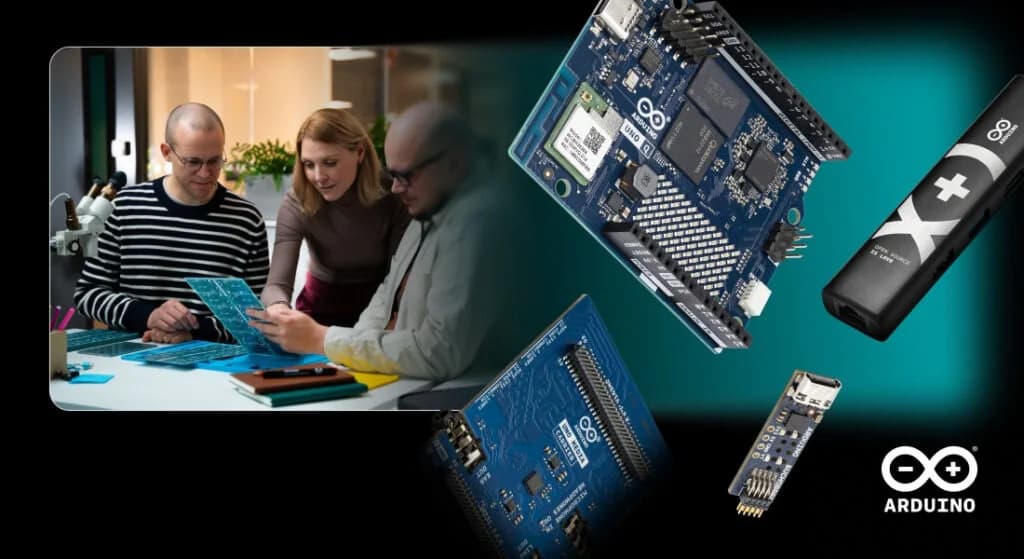
His most-used boards are a simple Arduino Nano for compact, low-I/O applications and Arduino UNO board for bench development – choices driven by size constraints as much as functionality. Every gram matters on a racing hull.
What’s next
Finotti’s current projects are ambitious. He’s developing a test bench that has PLC and Arduino working together to simulate and collect engine data in the workshop – a setup intended to let him evaluate certain modifications in the workshop before testing them on the water, which may reduce some on-water testing. He’s also working on an airflow variator with a mass flow meter, capable of opening additional air intakes in the hull and compensating with extra fuel injection to maintain the correct air-fuel ratio. And further down the line: his own custom ECU to replace the carburetor system entirely with injection, controlled by electronics of his own design.
His advice for athletes who don’t have his technical background but want to start using Arduino in their own sport is direct: “Electronics is the future and it’s within everyone’s reach. It’s a world so vast that it allows you to find a solution to any problem. Don’t give up, and believe in every project to the end. Failure is normal. But a failure will always remain one if you give up at the first difficulty. The satisfaction of seeing something work that previously existed only in your imagination is something extraordinary.”
We’ll be following Finotti on Instagram and TikTok to keep up with his progress!
Arduino, Nano, and UNO are trademarks or registered trademarks of Arduino S.r.l.