Key takeaways
- Employee experience is shifting from system-centric interactions to employee-centric, conversational support
- Agentic AI can move beyond answering questions to understanding intent, retrieving information and completing tasks
- A unified conversational interface can connect employees to services across IT and other enterprise functions
- Enterprise AI needs governance and security built into authentication, access, privacy and workflows
- The goal is service fulfillment, not just ticket resolution, improving productivity while allowing support teams to focus on higher-value work
As organizations invest in digital workplace technologies, employees still often have to navigate multiple applications, portals and knowledge repositories to find information or complete routine requests. The result can be a fragmented experience that takes time away from higher-value work.
What if employee support began with a conversation rather than a ticket?
In the latest episode of HCLTech’s Decoding the Ws podcast series, Gaurav Malhotra, Head of EMEA ServiceNow Business and Global Alliances, HCLTech, speaks with Kavya Sharma, Senior Manager, Digital Foundation Services (DFS) Marketing, HCLTech DFS Marketing, HCLTech, about how organizations can shift from system-centric workplace experiences to employee-centric models powered by conversational AI and Agentic AI.
Moving from system-centric to employee-centric experiences
Traditionally, employees have had to determine which application or portal to use for a particular need. That puts the burden on the employee to understand the organization’s underlying systems.
Malhotra describes the opportunity differently: “At its core, employee experience is about shifting from a system-centric workplace to an employee-centric workplace.”
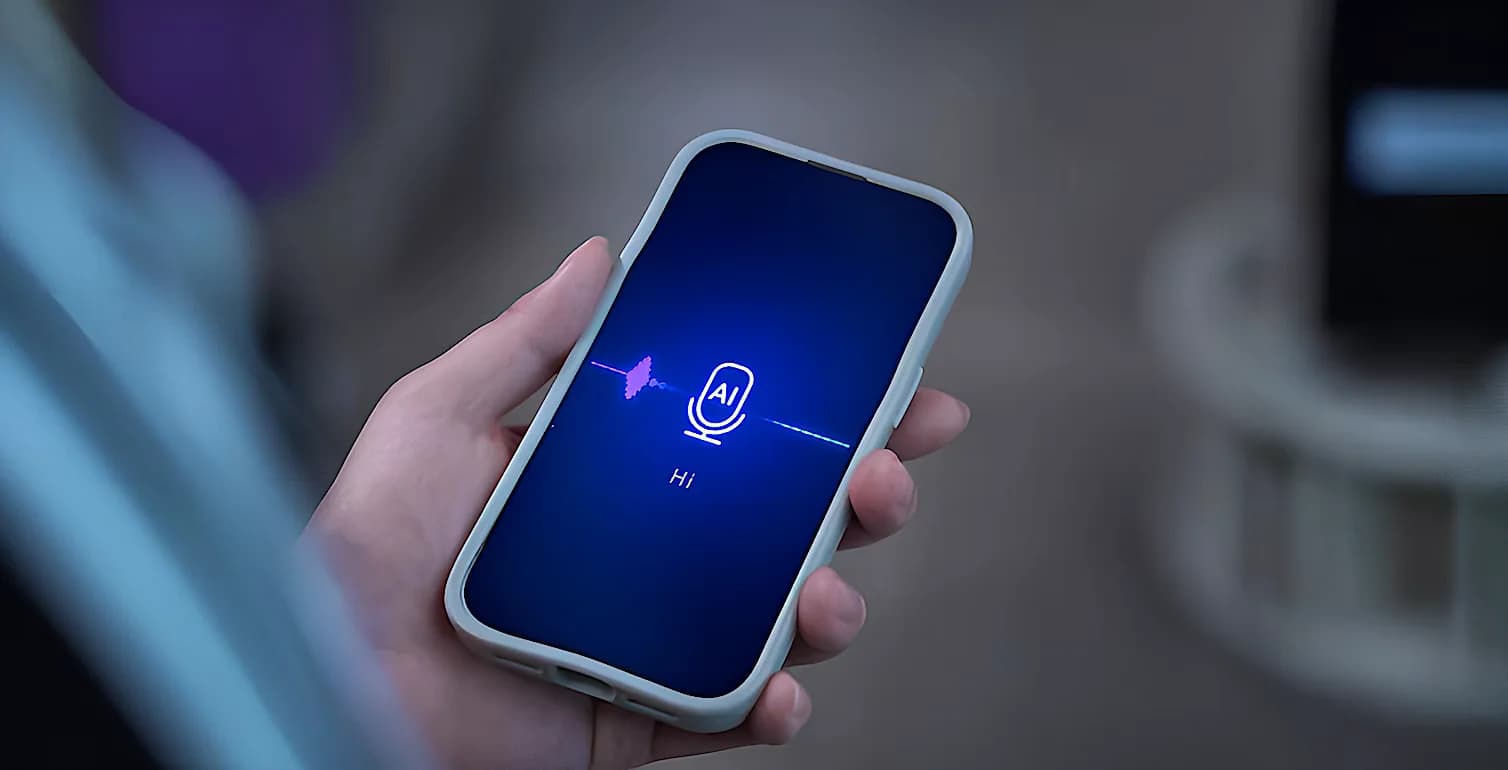
Agentic AI can change that interaction model. Instead of moving between applications, employees can use a single conversational interface to ask questions or request support in natural language. Behind the scenes, the platform can understand intent, access enterprise systems, retrieve information and, where appropriate, execute actions.
The result is a workplace experience designed to feel simpler and more intuitive, while reducing the effort required to access enterprise services.
Beyond chatbots and self-service
Many organizations already use chatbots and self-service portals, but Malhotra says the next step is not simply introducing another conversational interface.
“Organizations are not really looking for another chatbot. They are looking for tangible outcomes.”
Traditional chatbots generally depend on predefined scripts, workflows or decision trees. They can work well for predictable interactions, but can struggle when requests require context or fall outside expected paths.
Agentic AI takes a different approach. It can understand the employee’s intent, evaluate context, access enterprise knowledge and take action where appropriate.
Malhotra illustrates the distinction with a simple example. An employee who cannot access a VPN might receive a knowledge article or be directed to raise a ticket through a conventional chatbot. An agentic approach can go further by understanding the issue, initiating relevant actions, guiding the employee through the resolution and, in some cases, resolving the problem without human intervention.
“That’s a shift from information delivery to issue resolution,” says Malhotra.
Turning support into measurable business value
For organizations, the value of this shift ultimately comes down to outcomes.
Malhotra says many organizations are achieving Tier 1 ticket deflection rates of 40%–65%, reducing support volume and operational overhead. Employees can receive assistance faster, spend less time waiting for support and experience fewer delays, while support teams can focus on more complex issues rather than repetitive requests.
The impact extends beyond support efficiency. A conversational experience can help employees spend less time searching for information and navigating systems, creating more time for their core responsibilities.
The speed at which organizations can begin seeing benefits is another consideration. Because Moveworks can integrate with existing enterprise ecosystems, Malhotra says organizations can begin seeing measurable benefits within the first few months rather than waiting for lengthy transformation programs to mature.
One employee experience across the enterprise
Employee needs rarely fit neatly into organizational silos. An employee does not think in terms of whether a request belongs to IT, HR, finance, procurement or legal. They simply want an answer or an outcome.
“Employees don’t think in terms of organizational silos,” says Malhotra. “They simply want answers and outcomes.”
This creates an opportunity to extend conversational support beyond IT. Instead of creating separate experiences for different functions, organizations can move toward a unified employee support model in which a consistent interface connects employees to services across the enterprise.
Malhotra describes this as a move “from isolated service experience to a unified employee support model.”
The objective is not to add another application to an already crowded digital workplace. Instead, Moveworks can act as a “front door” to the applications and services employees already use, allowing them to access those capabilities through a single conversational layer.
Security and governance must be built in
As AI takes on a larger role in employee support, security cannot be treated as an afterthought.
“Security is absolutely foundational,” says Malhotra. Organizations want the benefits of AI, but also need assurance that employee data, processes and information remain protected.
That requires enterprise AI solutions to incorporate governance, privacy and security into the experience itself. Malhotra points to capabilities including secure authentication, rule-based access controls, encryption, compliance frameworks and privacy safeguards. Responses and actions should also remain governed by employee permissions and organizational policies.
The broader shift is significant. Security is increasingly being viewed not as a barrier to AI adoption, but as part of the foundation that makes enterprise-scale adoption possible.
From technology deployment to sustainable employee experience
Technology is only one part of the transformation. Organizations also need a clear approach to identifying high-value use cases, defining adoption frameworks, measuring outcomes and expanding automation over time.
Our approach brings together Moveworks and ServiceNow capabilities with digital workplace services, enterprise automation and transformation expertise. Malhotra emphasizes that Moveworks should not be viewed as a standalone implementation, but as part of a broader employee experience strategy.
“The objective isn’t simply launching a platform,” he says. “The objective is creating a scalable and sustainable model for employee experience transformation.”
That perspective shifts the focus from deploying another AI tool to building an employee support model that can continuously evolve with changing workplace needs.
Making enterprise systems work for employees
The future workplace may ultimately be defined less by the number of applications an organization deploys and more by how easily employees can access information, complete tasks and receive support.
Malhotra leaves leaders with a simple question: “Are we still asking employees to navigate our systems, or are we enabling our systems to work for our employees?”
That question captures the broader shift underway. The opportunity for AI in the digital workplace is not simply to automate responses, but to make enterprise services easier to access, more responsive and more closely aligned with how employees actually work.
As Malhotra puts it, the future is moving “from service delivery to service fulfillment” and from employee effort to employee empowerment.