- Blog
- Email Marketing For Franchises
November 12, 2026
Email marketing for franchises works at scale when headquarters (HQ) builds the system once. Each location then personalizes inside it. Corporate needs every email on-brand, and each location needs email that feels local and timely.
Picture the version without that system. One location sends an off-brand promo from a personal Gmail account. Another hasn’t sent anything in six months. HQ can’t see either one.
A campaign calendar tells locations what to send. An operating system gives them the accounts, templates, approvals, automation, and reporting to send it well.
This guide covers how to pick an execution model and what infrastructure HQ needs. It also shows how to make email feel local and how to measure results across your network. For the wider picture, see our overview of franchise marketing.
Choosing the right model to execute franchise email marketing
The right model for franchise email marketing depends on network size, franchisee marketing skill, and how much control HQ wants.
Most franchises start in one of two places. Either HQ sends emails on behalf of locations, or each location runs its own email. Both approaches have breaking points.
Corporate-managed email tends to strain somewhere between 25 and 100 locations, once HQ is writing and swapping local details for every one. Franchisee-managed email breaks when HQ loses visibility and hears secondhand that locations are using off-brand imagery and language. That’s usually when the guardrails go up, and brands bring in a platform, an agency, or an in-house hire.
Skipping the decision costs the most. Giving up on email leaves one of the most cost-effective marketing channels unused and leaves franchisees without support.
Here’s how the five common execution models compare:
Common mistake: one shared account
One account segmented by location looks like the best of both worlds. It’s called the consolidation mirage, and it breaks somewhere between 50 and 200 locations. Segments get unwieldy, wrong-location sends happen (a Texas promotion reaching customers in Florida), and franchisees lose faith.
The path from one model to the next depends on how the brand started and how fast it grows. A brand that stays small can run the same setup for years before the pain builds. A brand that started franchisee-run, moved email to HQ, and then outgrew HQ’s capacity often lands at an agency or a platform.
Capacity is the usual culprit. A one-person marketing team often juggles social, events, and content alongside email.
If they wear a lot of different hats, that’s where things start to get complicated, and that’s when things kind of fall off. If they’re having to manage digital marketing and social media marketing and email marketing and content and boots on the ground marketing, and then work on events marketing too, something’s got to give, and usually email tends to give first.
If they wear a lot of different hats, that’s where things start to get complicated, and that’s when things kind of fall off. If they’re having to manage digital marketing and social media marketing and email marketing and content and boots on the ground marketing, and then work on events marketing too, something’s got to give, and usually email tends to give first.
Painting with a Twist shows both sides. Before ActiveCampaign, locations used a mix of email tools, even personal Gmail accounts. HQ had no visibility, and some locations sent nothing.
The brand now runs a centralized platform with local execution. HQ sends one national campaign a month, and franchisees send weekly local campaigns from HQ-built templates. The network reached 95% franchisee adoption, 65% more email volume, and 25% more revenue attributed to email.
If you run dozens to hundreds of locations with mixed marketing skill, choose a centralized platform with local execution. With only a handful of locations, corporate-managed email may be enough for now. A brand that’s starting out should keep email at HQ from day one, and bring it in house quickly if franchisees already run it.
How to build an operating system for franchise email marketing
Franchise networks need infrastructure underneath their email campaigns. The six steps below let HQ scale control without slowing anyone down.
Where to start
If HQ can fix only one thing first, start with accounts and templates. When franchisees send their own email, templates and pushdown campaigns matter most. When HQ sends everything, quick account access and ready templates matter most, and approvals matter less.
1. Structure your franchise email accounts and permissions
The strongest structure is one corporate account connected to each location’s own account and contact list. Permissions keep locations to their own customers, and multi-unit owners can manage several locations from one login.
Access speed matters as much as structure. If HQ signs in and out of every location account to change names, addresses, and phone numbers, the work gets tedious fast. Email is usually the first thing to slip.
ActiveCampaign HQ is built for this structure. Add every location’s account to one HQ account and manage everything from a single place.
When a franchisee says, “I already have my own list and my own tool,” keep the list. Then make the case that HQ-run templates, pushdowns, and brand standards save the franchisee time and money.
2. Govern campaigns with a prebuilt template library
Brand-approved templates are the central fix for consistency. Locations start from finished, on-brand assets instead of a blank page.
Build a library that covers the calendar year:
- Welcome series
- Seasonal offers
- Local events
- Holiday promotions
- Re-engagement campaigns
- Review requests
Brand template syncing in ActiveCampaign HQ pushes approved templates from the HQ account to local accounts, and each location still sends its own messages. The AI Brand Kit imports fonts, colors, and logos from a website URL, so every location starts on-brand. Saved Modules let franchisees drop in reusable sections for event details or local promotions in a few clicks.
Decide in advance what franchisees can change:
- Location name and city: open to edit, since localized naming is low risk.
- Imagery: limited to an HQ-approved library.
- Core content: locked, with Saved Modules for local events and promotions.
- Owner branding: no personal photos or names beside the logo.
Painting with a Twist works this way. HQ builds templates once, and franchisees plug in their local promotion or event and send.
3. Push campaigns and automations down to every location
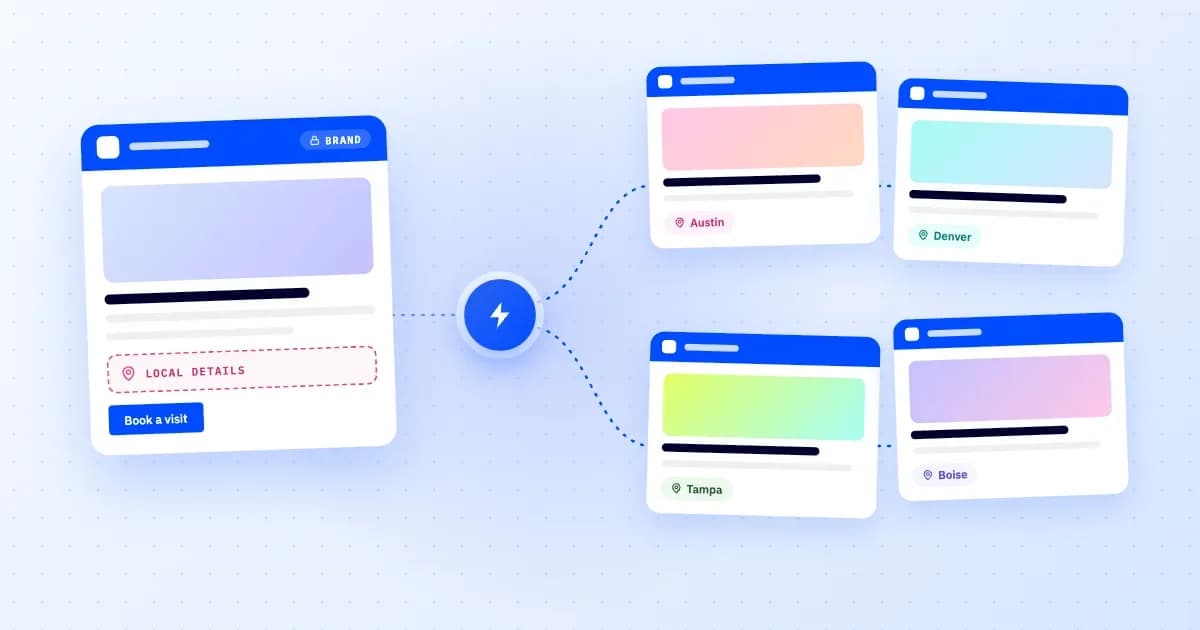
HQ builds a campaign or automation once, and it lands in every location’s account. ActiveCampaign HQ Pushdown Workflows sync approved campaigns and automations to each location instantly, so franchisees never rebuild assets from scratch.
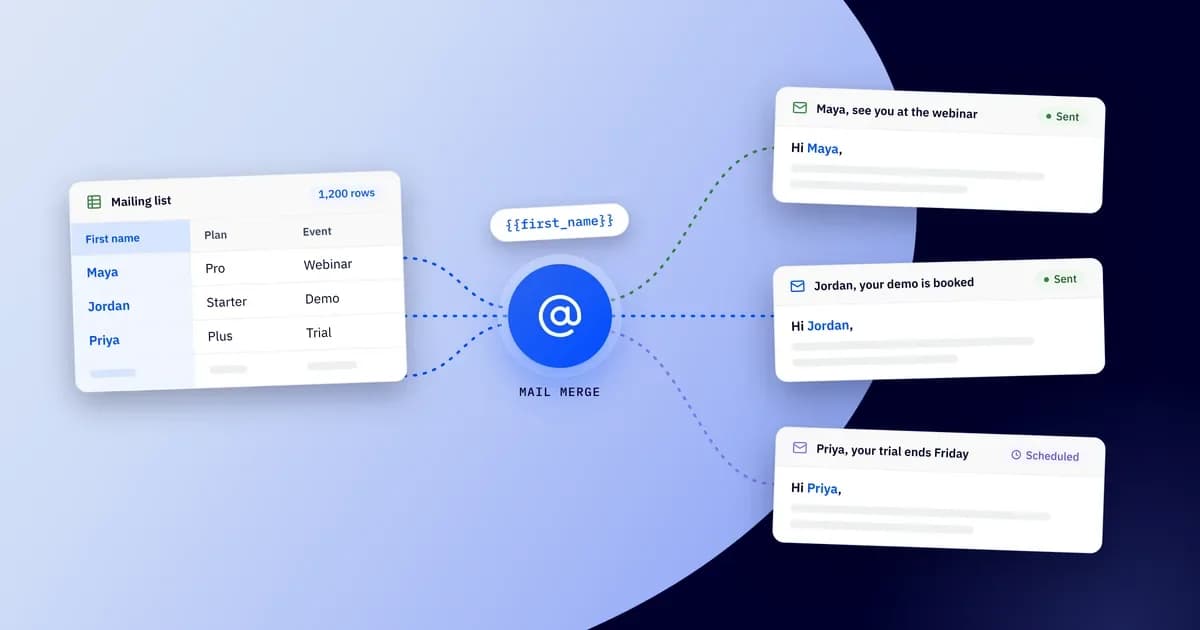
Message Variables, also called localization tags, fill in each location’s name, address, phone number, and hours automatically. One grand-reopening template can read as fully local in 150 inboxes. Brand Monitoring, part of Active Intelligence, tracks changes to your site’s content and promotions. That keeps campaigns in sync when local and national offers change often.
Pushdown campaigns matter most when franchisees do the sending. They get a ready campaign that goes out on time and stays on-brand.
ActiveCampaign in action
HQ used to sign in to each location account and copy the same email, so sends were rare. Now HQ builds once, and Pushdown Workflows deliver it everywhere. That means you can run the weekly local program every location needed, with results in one view.
4. Build approvals and compliance guardrails
Good approvals protect the brand without driving franchisees away. Solo owner-operators wear every hat, and most can’t hire an email marketer until the business has run for years. Tight approval rules cost you adoption.
If they set the control dial too tight, then typically franchisees don’t comply. They’re just like, this is way too much red tape to go through. If you have to get every piece of content approved, all your images approved, all your links approved, and the list goes on and on, that’s a control dial set way too tight. Most of them don’t have any history of email marketing. They’re experts in their field. They’re plumbers, or gym owners, or pet sitters. They’re not email marketers, right? So if corporate starts to make the hoops really tight to jump through, and there’s a lot of them, that’s where you start to see a lot of fall-off on the franchisee side.
If they set the control dial too tight, then typically franchisees don’t comply. They’re just like, this is way too much red tape to go through. If you have to get every piece of content approved, all your images approved, all your links approved, and the list goes on and on, that’s a control dial set way too tight. Most of them don’t have any history of email marketing. They’re experts in their field. They’re plumbers, or gym owners, or pet sitters. They’re not email marketers, right? So if corporate starts to make the hoops really tight to jump through, and there’s a lot of them, that’s where you start to see a lot of fall-off on the franchisee side.
ActiveCampaign HQ Three-Tier Testing and Sending Approvals check communications against brand guidelines and legal requirements before they go out. HQ can customize the enforcement settings and review messages before locations send them.
Tier approvals by risk. Template-based local sends can get lighter review, while net-new content and regulated offers get a hard gate.
Start your hard gates with the items that can do the most damage:
- Local special offers: a buy-one-get-one deal at one location creates disputes when customers at another location bring the coupon.
- New images: a phone photo of a Friday celebration with drinks in frame can hurt the brand.
- Free-form copy: spelling errors and off-topic content reach the full list.
Where the gates sit varies by brand. Set them too loose and anything goes. Set them too tight and nobody sends.
Active Intelligence adds a safety net. Intelligence to Action checks the account for list hygiene, tagging, and deliverability issues and flags them. One location’s poor list practices then don’t hurt sending reputation across the network.
5. Connect your data flows and integrations
Disconnected location-level tools trap leads and block segmentation. ActiveCampaign’s 1,000+ native integrations connect POS, CRM, and loyalty software into one source of truth.
Two integrations stand out for multi-location brands. SOCi syncs business listing data, and Google Business Profile syncs location details.
6. Nurture prospective franchisees
Email also grows the network itself by nurturing prospective franchisees. A franchise-candidate sequence can open with the opportunity, follow up with details, and close on a clear next step. It’s one channel in broader franchise digital marketing.
Painting with a Twist uses automated sequences when a studio is up for sale, and many new owners come from its existing customers.
Making franchise email feel local
Franchise email feels local when it reads as if the owner sent it. Customers open email from their location, whether that’s their store, their hotel, or their studio.
The vernacular, the photos, and the small details all signal who is talking. Standardized text and catch-all images read as corporate.
Compare a generic national blast with an email that names the reader’s nearby location, its hours, and an offer they can use this week. The second one reads as a message from the place they actually visit. See more on localized marketing.
The need is widespread. According to the ACHQ Franchise Marketing Report, 98% of franchise marketers say personalization across locations is important. Yet 48% say sending the right message to the right audience is difficult.
Two moves close the gap. Localization tags fill in each location’s details, and an approved image library lets franchisees upload their own photos for HQ to approve.
Common mistake: over-localizing
Custom images and rewritten intros in every send take real time, and there’s little data showing they beat a well-built corporate send. Spend local effort on details customers act on: hours, address, offers, and events.
The localization engine: segments, automations, and templates
Personalization at scale depends on clean segments and automations that run without franchisee effort. For a deeper look, read about personalizing franchise marketing emails.
Franchise segments usually start with five dimensions:
- Location: customers who bought at one studio
- Purchase history: guests who booked a party package
- Visit frequency: lapsed members at one studio
- Lifecycle stage: first-time hotel guests in one region
- Preferences: customers who chose weekend events in a preference center
aiqfome segmented by city, order history, and engagement, and lifted open rates above the market average.
Automations then act on those segments across every location. The Painting with a Twist re-engagement flow sends contacts who’ve been inactive for four months a three-email sequence. It re-engaged tens of thousands of customers network-wide.
One template with conditional content adapts images, offers, and pricing per location and segment. Message Variables fill in each location’s name, address, and hours. In the ACHQ report, marketers who rate their personalization “very effective” are twice as likely to use automation.
3 campaign types to start your shared franchise library
Start your shared library with these three campaign types:
- Local newsletters and location updates. Build a monthly template with fixed brand sections and flexible local sections for new staff, store hours, and community news. A restaurant can feature a new seasonal menu, a hotel its local events guide, and a fitness studio its new class schedule.
- Seasonal and local-event offers. Pair national seasonal campaigns with local event modules for grand openings, community fundraisers, and in-store classes. In the ACHQ report, 61% of franchise marketers use seasonal offers and 58% use location-based offers. External Signals in Active Intelligence factors in holidays relevant to your industry and geography. ActiveCampaign HQ time zone and working-hours delivery lands each send at the right local time in Florida or Hawaii. Route local offers through HQ approval (see step 4).
- Multilingual sends for multi-region networks. One campaign has to reach many languages. AI Email Translations detects a contact’s preferred language and translates the full email into 75+ languages from a single campaign. See multilingual email marketing for more.
Where AI fits in franchise email marketing
AI fits franchise email best where the work repeats and the writer is stuck, such as weekly newsletters, seasonal campaigns, and first drafts. Franchise owners are experts in their trade. Few have the time or training to write fresh email every week.
Use AI to turn expert knowledge into short emails. A pest control owner who knows every local bug can build a four-week seasonal series on the insects waking up in spring. AI can also condense a long white paper into a bite-size email.
Give it your brand kit so it matches your voice, and treat the output as a starting point to review. Long, technical guides that need a human touch are a weaker fit.
AI is there to not necessarily do everything for us or take over for us, but just be a good starting point, a good jumping-off point. I wouldn’t say it’s a set-it-and-forget-it.
AI is there to not necessarily do everything for us or take over for us, but just be a good starting point, a good jumping-off point. I wouldn’t say it’s a set-it-and-forget-it.
Active Intelligence puts this inside the platform. Upload your brand kit once, and it drafts campaigns from your contact data and CRM history, with no tab-hopping between tools. Your team reviews and approves what goes out.
Measuring franchise email performance across your network
Measure franchise email at two levels: network-wide results for brand leadership and location-level results for coaching.
Attribution is the usual fight. Corporate and locations both claim the sale, which complicates co-op fund decisions. Consolidated Revenue Reporting in ActiveCampaign HQ gives one view of revenue and engagement, from a single location to the global network. Leaders can then see what co-op spend produced.
Unsubscribes are a sleeper metric in franchise email. Low opens paired with rising unsubscribes point to the wrong list or the wrong message. If people open and then unsubscribe, the content wasn’t relevant to them. Five emails in two weeks can push away customers who like the brand.
Content Performance in Active Intelligence identifies the subject-line, creative, and messaging patterns driving opens and clicks, and flags assets losing effectiveness. That makes it easier to spot what works across the network.
Use that data to coach underperforming locations, with top performers as the proof. Showing lagging locations what top performers send, and the results behind it, reads as guidance instead of a penalty.
Most of them look up to their top performers already, because they all start at ground zero, and they look up to the ones who’ve been in business for 5, 10, 15, 20 years and have grown an empire. They paved the way. They’ve shown that the model works. So I think using them as case studies, and showing the lagging locations, hey, this is what the top performers are doing. If you emulate what they’re doing, there’s a really good chance that you’ll get the same type of success.
Most of them look up to their top performers already, because they all start at ground zero, and they look up to the ones who’ve been in business for 5, 10, 15, 20 years and have grown an empire. They paved the way. They’ve shown that the model works. So I think using them as case studies, and showing the lagging locations, hey, this is what the top performers are doing. If you emulate what they’re doing, there’s a really good chance that you’ll get the same type of success.
Give every location email that feels local and stays on-brand
Franchise email scales when HQ builds the system once and locations personalize inside it. On day one, align every location on one strategy. The cost of waiting grows with every location you add.
The wider those guardrails get, the longer you allow those guardrails to go on for or be off the rails, the harder time you’re going to have when it comes to trying to rein this all in.
The wider those guardrails get, the longer you allow those guardrails to go on for or be off the rails, the harder time you’re going to have when it comes to trying to rein this all in.
Most franchise owners are in business to run their trade, not their email program. Taking email off their plate leaves them free to grow their location.
ActiveCampaign HQ is built for franchises and multi-location brands. It pushes brand-approved templates and campaigns to every location, personalizes each send for local audiences, and consolidates performance in one view. For more on the franchisor’s role, read how to support franchise marketing.
Push approved templates to every location, personalize each send, and report results across your network. Start your free trial of ActiveCampaign and and build your first shared template.
Franchise email marketing FAQs
- Should corporate or franchisees control franchise email marketing?HQ should own templates, guardrails, and data, while locations send within them. Corporate-managed email breaks under volume, and franchisee-managed email loses brand control and visibility. A centralized platform with local execution gives both sides what they need.
Should corporate or franchisees control franchise email marketing?
HQ should own templates, guardrails, and data, while locations send within them. Corporate-managed email breaks under volume, and franchisee-managed email loses brand control and visibility. A centralized platform with local execution gives both sides what they need.
- How do franchises keep email consistent across locations?Use brand-approved templates pushed from HQ to every location, with approved imagery and locked core content. ActiveCampaign HQ syncs templates and campaigns to each location account, and approvals check messages before they go out.
How do franchises keep email consistent across locations?
Use brand-approved templates pushed from HQ to every location, with approved imagery and locked core content. ActiveCampaign HQ syncs templates and campaigns to each location account, and approvals check messages before they go out.
- How can franchisees personalize emails without going off-brand?Let locations edit local details only, such as name, address, hours, events, and offers inside approved modules. Message Variables and Saved Modules fill in those details, while HQ keeps imagery and core copy locked.
How can franchisees personalize emails without going off-brand?
Let locations edit local details only, such as name, address, hours, events, and offers inside approved modules. Message Variables and Saved Modules fill in those details, while HQ keeps imagery and core copy locked.
- How do you measure email ROI across franchise locations?Report at two levels: network-wide revenue and engagement for leadership, and location-level results for coaching. Consolidated Revenue Reporting in ActiveCampaign HQ shows both in one view. Track unsubscribes alongside opens and clicks.
How do you measure email ROI across franchise locations?
Report at two levels: network-wide revenue and engagement for leadership, and location-level results for coaching. Consolidated Revenue Reporting in ActiveCampaign HQ shows both in one view. Track unsubscribes alongside opens and clicks.
- How do franchises protect email deliverability across many senders?Bring sending into one shared platform so one location’s poor list habits become visible. Intelligence to Action in Active Intelligence checks the account for list hygiene, tagging, and deliverability issues and flags them for your team.
How do franchises protect email deliverability across many senders?
Bring sending into one shared platform so one location’s poor list habits become visible. Intelligence to Action in Active Intelligence checks the account for list hygiene, tagging, and deliverability issues and flags them for your team.