Six hours of total operational paralysis. Over 700 supermarket stores in France plunged into chaos. Tonnes of fresh produce discarded, yielding estimated losses in the hundreds of millions of Euros. Beyond the staggering financial tally lies widespread human disruption and systemic, long-term supply chain volatility—all triggered by a single cyber attack targeting French retailers
Adversaries successfully hijacked remote-access refrigeration controllers, manipulating system parameters to force industrial units into catastrophic, continuous defrost cycles. This drove temperatures in fridges and freezers to reach as high as 80°C while disabling alarm logic.
This incident is far from an isolated event; supply chains have long represented an attractive vector for threat actors targeting retail infrastructure. However, the rapid emergence of frontier AI and autonomous agents marks a profound shift in adversary capabilities across the digital supply chain. Modern autonomous agents can systematically analyze complex source code to uncover hidden vulnerabilities, map critical exploit pathways, and execute machine-speed attacks at an unprecedented global scale.
The contextual awareness of frontier AI models enables adversaries to identify, map, and exploit digital supply chain vulnerabilities at a pace human-driven correlation cannot effectively counter. Organisations therefore need automated, cross-business defensive frameworks that can operate at machine-speed. Without these frameworks, AI-enabled threat actors will retain their significant advantage.
Trust can be a significant security risk
Modern enterprise infrastructure relies heavily on update mechanisms and open-source dependencies – and these are inviting targets for cyber adversaries, who are continually developing new methods to exploit new digital supply chain attack vectors. Real-world examples of digital supply chain compromise include SolarWinds, Log4Shell, and Mini Shai-Hulud, where attackers exploited vulnerabilities within third-party tools, applications, and services to facilitate a wide range of malicious activities. Frontier AI makes this process much easier for attackers, turning trusted vendor relationships into primary attack vectors.
What’s more, software vendors are routinely shipping new AI capabilities, agents, and integrations into enterprise software stacks through traditionally unremarkable updates. As a result, C-suite executives are often unaware of the AI tools operating inside their perimeter and subsequently lack the governance frameworks to monitor them. There’s also the risk of ‘Shadow AI’. The massive adoption of AI – not only by enterprise IT but also by individual users – has created an even higher level of complexity and cyber risk. If an external AI service used by an employee or well-meaning partner is compromised, it creates an unmonitored backchannel straight into corporate data lakes.
The 72-minute exfiltration window
Alarmingly, the time from an attacker’s initial access to data exfiltration has collapsed from weeks or days to just minutes. This means the traditional ‘zero-day clock’ and patching window have effectively been eliminated, and human-speed defences are no longer fast enough to stop machine-speed attacks.
Data from Palo Alto Networks Unit 42 reveals that the fastest quartile of sensitive data exfiltration now occurs in less than 72 minutes from initial compromise, highlighting the new defensive speed baseline required of modern security operations. Most security operations centres typically rely on human review cycles where alert triage takes at least 15 minutes, further investigation often requires requests to be raised manually, and containment of an affected system can take days.
Seize the initiative for digital supply chain resilience
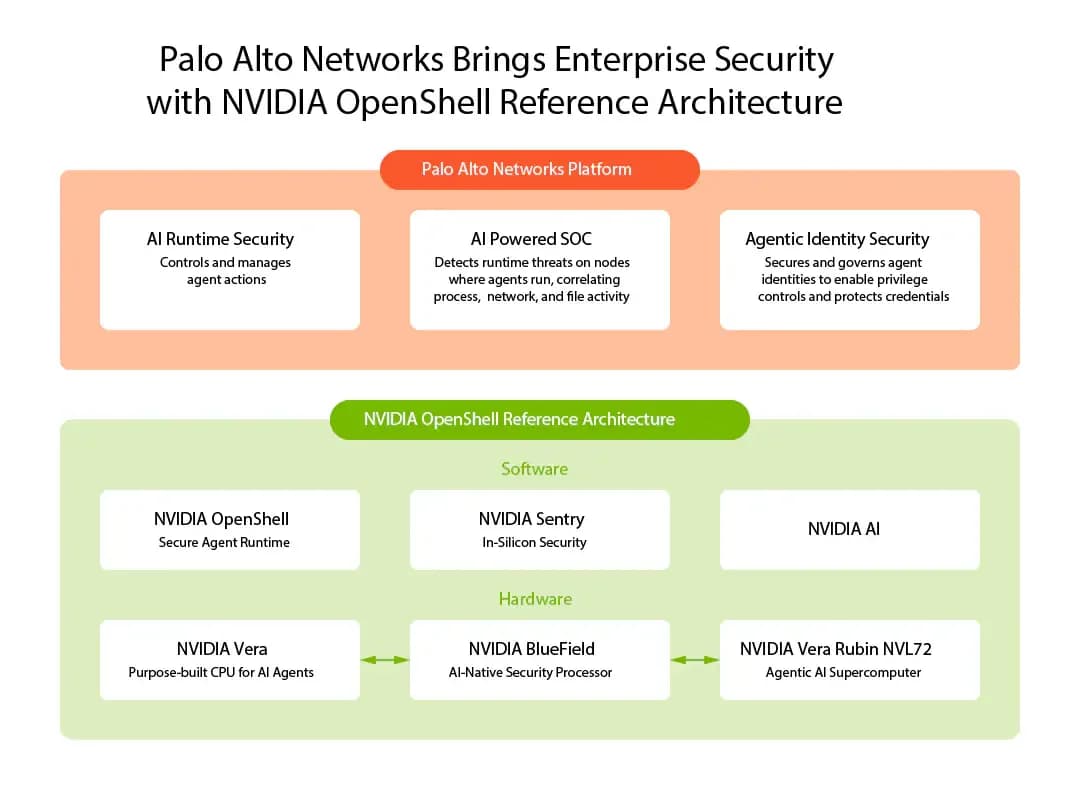
To identify machine-speed threats across complex ecosystems, organisations must increase visibility and reduce complexity through a unified security architecture. Crucially, autonomous threat management must ensure detection and response happen in seconds rather than hours or days.
Learn how to secure the digital supply chain, including five key questions CXOs need to ask and answer to achieve digital supply chain resilience in the AI age, in our new whitepaper: Defending the digital supply chain in the era of frontier AI. Clickhereto download the whitepaper.