Before natural disasters force people to seek shelter or entire regions begin to evacuate, a voice AI-based agent works exactly as promised in a flawless presentation. But will the model perform properly when policyholders flood the claims intake line?
With a fivefold increase in normal call traffic, an AI agent begins to deviate significantly from promised key performance indicators (KPIs). It exhibits that very eerie latency at the exact moment of highest customer frustration—if the call even reaches it. Some policyholders hear delayed prompts and start repeating themselves. Others hang up before the claims intake or First Notice of Loss (FNOL) registration begins.
A failure or dropped call during a natural disaster is as much a customer experience (CX) issue as it is an IT incident. It can increase claims settlement costs and give the policyholder one more reason to switch insurers at renewal. Frustration also reflects on satisfaction scores: overall customer satisfaction scores are more than twice as high (777) when customers say it is very easy to interact with their insurer, compared to those who find it very or somewhat difficult (337). [1]
Evaluate the cost of downtime during catastrophe (CAT) season
Voice AI will not be able to simplify claims intake if the network is struggling under the influx of calls during a CAT period. IT specialists have far more tasks that require the right solution than was assumed in the presentation.
How your carrier lets you down during claims intake
When CAT events cause an increase in claims intake or FNOL calls, the best customer service scripts or empathetic closing phrases will not help contact centers cope with the influx. Increased volume subjects the infrastructure to a three-way stress test long before the policyholder interacts with the agent.
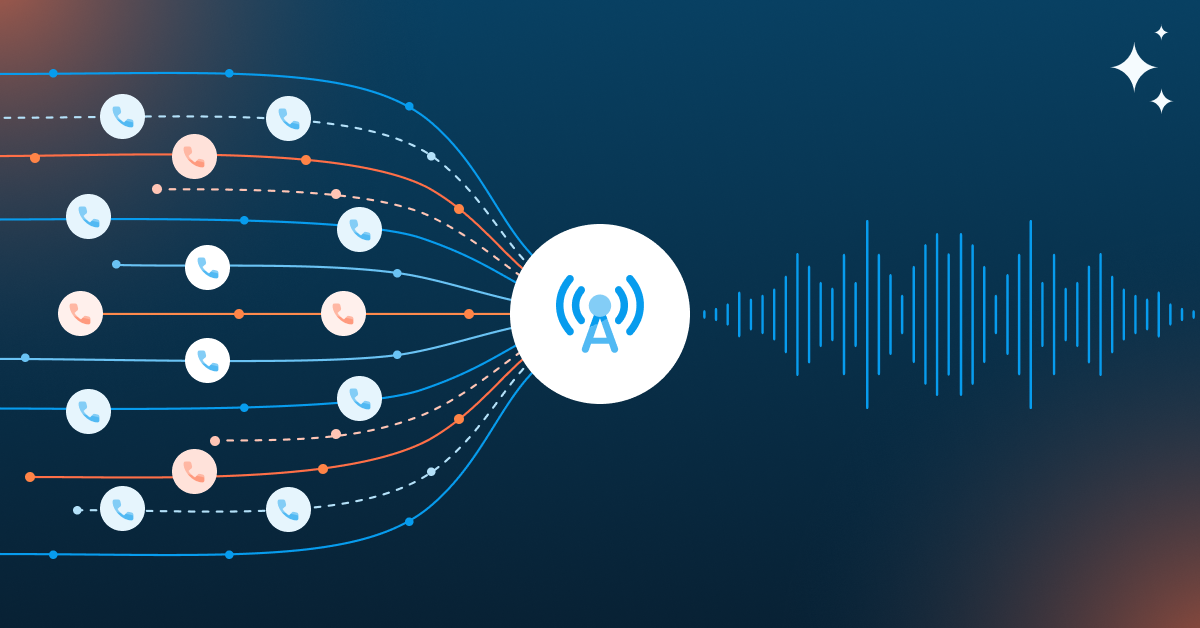
- Is the carrier capable of absorbing a spike in call volume? Hurricanes and wildfires can increase claims call volume by 2–10 times in a matter of hours. The carrier receives and routes these calls, and every active connection counts toward the configured concurrent call limit. The IT department should check this threshold, as new callers may not be able to connect once the available capacity is exhausted.
- Does the carrier meet the latency intolerance threshold? Voice AI operates in a target range of 200 to 500 milliseconds. As the audio signal travels through the carrier's network to the STT-LLM-TTS chain and back, the network consumes part of the allowable latency. Network latency increases response time, and no model tuning can recover the milliseconds spent in transit.
- Is the carrier equipped to fight a surge in fraud? Fraudulent claims enter the intake queue on par with real losses, so you need early screening to filter out high-risk calls faster. Contact center security comes into play at the network layer, where calls are assigned a spoofing and fraud score in real time before the voice AI agent collects claim details.
All three tests fall under the carrier's area of responsibility. A CCaaS vendor's Service Level Agreement (SLA) only reports whether the platform is available. The network layer creates the main barrier to AI agent performance when processing FNOL traffic and claims intake under CAT conditions.
The latency problem that a fast AI model won't solve
There is a reason why you keep tuning the model, yet it hallucinates or misidentifies intent.
1.4–1.7 seconds vs. 200–400 milliseconds
Median response latency of industrial voice AI compared to the threshold of human conversation
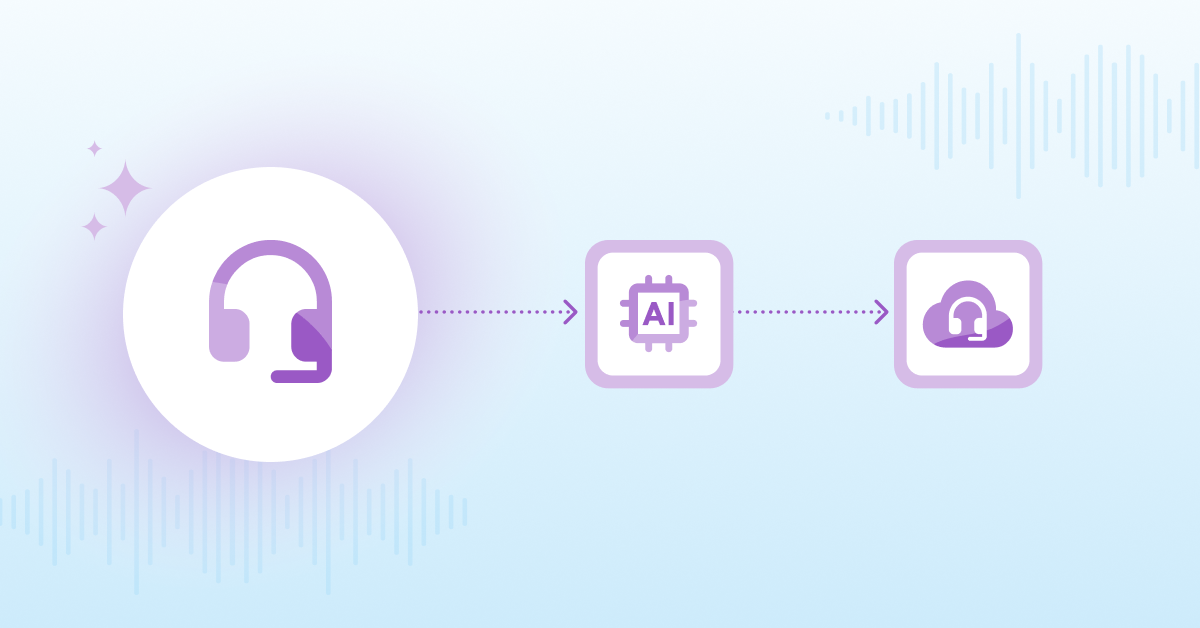
The call path shows where the extra latency comes from. The caller's audio recording enters the PSTN and passes through the carrier's SIP trunk to the speech-to-text (STT) system. The LLM model takes the STT transcript and writes a response. The speech synthesizer (TTS) turns the response into synthesized audio, and the carrier returns it to the policyholder. IT departments often tune AI processing in the middle of the chain, while delays occur at the network layer on both sides.
Insurance contact centers that rely on resold network capacity have it worse. Traffic during CAT season adds latency at the network layer when a regional route is congested. While network owners reroute traffic themselves, network capacity resellers must request routing changes from their upstream carrier.
Engaging a carrier that owns its own network has its advantages
For example, as a network owner, Bandwidth manages routing patterns for its customers. Because Bandwidth controls the network route, the company updates patterns and performs over 1,000 proactive routing changes per year due to call path quality degradation, regional outages, and market disruptions.
What does the right carrier infrastructure for voice AI claims intake look like?
Insurance contact centers that are serious about using voice AI for claims intake should check their network layer for the following factors:
- Direct ownership of the PSTN, not resold network capacity: proprietary networks directly control routing. Resellers depend on upstream carriers when incidents occur. The definition of a "proprietary network" can differ for each carrier. Here is how you can distinguish IP ownership from PSTN infrastructure ownership.
- Network latency that protects the AI latency budget: the call path should leave as much of the 200–500 ms window intact as possible for STT, LLM, and TTS.
- Separate architecture: decisions regarding the network and the AI vendor remain separate. When you combine AI with an unreliable network, you get two points of failure inside a single "black box."
- Compliance at the network layer: SOC 2 Type II, PCI DSS, etc. requirements must extend to telephony, not just the AI stack.
- Uninterrupted operation during peak loads, backed by an SLA: 99.995%+ uptime across a wide geographic region and customer base indicates that the carrier can withstand CAT volume spikes. Look for the geographic and architectural redundancy offered by this network provider.
The convenience of bundling AI with a carrier has its pitfalls
Insurance IT departments that have gone through UCaaS or CCaaS migrations with bundled calling plans know how vendor lock-in affects cost and control. Bundling voice AI and a carrier under one provider entails similar trade-offs.
Less independence when troubleshooting.
Degraded audio quality and incorrect model responses may be linked to different points of failure, but they arrive in the same support queue. If diagnostics are delayed, troubleshooting is also delayed, and the claims intake line remains faulty for longer.
Fewer perspectives from the network side.
The same provider becomes a point of failure for both the network and the model. It will be harder to rule out or confirm the network as the source of the problem.
Less flexibility in switching providers.
A separate architecture allows IT specialists to independently replace the AI or the carrier. If combined, replacing one layer might affect the other.
Other industries are reaching this conclusion faster. Bookline separated AI and telephony instead of choosing an all-in-one provider. The company kept conversational AI in its own technology stack and used Bandwidth for telephony. The company reported a 40% cost saving through telecommunications consolidation over 18 months and a 95% reduction in troubleshooting efforts.
What insurers get from an AI-ready carrier infrastructure
The first notice of loss quickly turns into a second or third call attempt when an obstacle arises in the call path. AI readiness at the network level reduces disruptions at the start of the call, so insurers have to deal with fewer issues during spikes.
Resilience to peak loads: A carrier's own network with core uptime of over 99.999% (including peak load periods) indicates that carrier reliability will not decrease during peak loads.
Authentication before data transfer to AI: Suspicious calls first undergo additional verification at the network level. ANI verification, machine learning-based fraud database checks, call pattern and voice biometrics verification, and deepfake detection allow for identifying higher-risk callers before the AI agent decides on further actions regarding claims intake or First Notice of Loss (FNOL).
Direct control over PSTN connectivity: Insurers get a provider that manages the telephony component of claims calls. An IP trunk alone does not provide this level of control, as you depend on an upstream carrier for the PSTN portion of the call.
Bandwidth is a facilities-based CLEC under the Telecommunications Act of 1996. At the local level, Bandwidth maintains direct interconnection with the PSTN through agreements with ILECs, including AT&T, under the supervision of the FCC. FNOL calls are initiated and terminated on Bandwidth-owned infrastructure, and the company is legally responsible for the PSTN connection.
Compliance checks at the carrier level
Calls for policy renewals and payment workflows may be subject to PCI DSS, while automated outbound claims reminders may trigger TCPA compliance requirements.
The IT department should ensure the carrier has the necessary coverage rather than assuming it is covered by a CCaaS agreement.
Bandwidth's voice infrastructure for AI is designed for HIPAA-compliant environments and undergoes annual SOC 2 Type II compliance audits. Its services support PCI DSS and TCPA requirements in insurance workflows.
Demand no less from the network layer than from the AI model
In CAT traffic conditions, a carrier issue may look like an AI issue because callers experience it through the agent's response or lack thereof. But it is the network layer that determines whether policyholders can start filing a claim on the first call or if they will have to try again.
Eliminating symptoms at the model level will not fix issues in the call path. Talk to a Bandwidth specialist about AI-ready voice infrastructure for insurance contact centers.