From motorsport to aerospace, carbon fiber has earned its reputation as a material that combines strength, low weight, and precision engineering. Its distinctive woven construction is instantly recognizable, but there’s more to carbon fiber than its appearance.
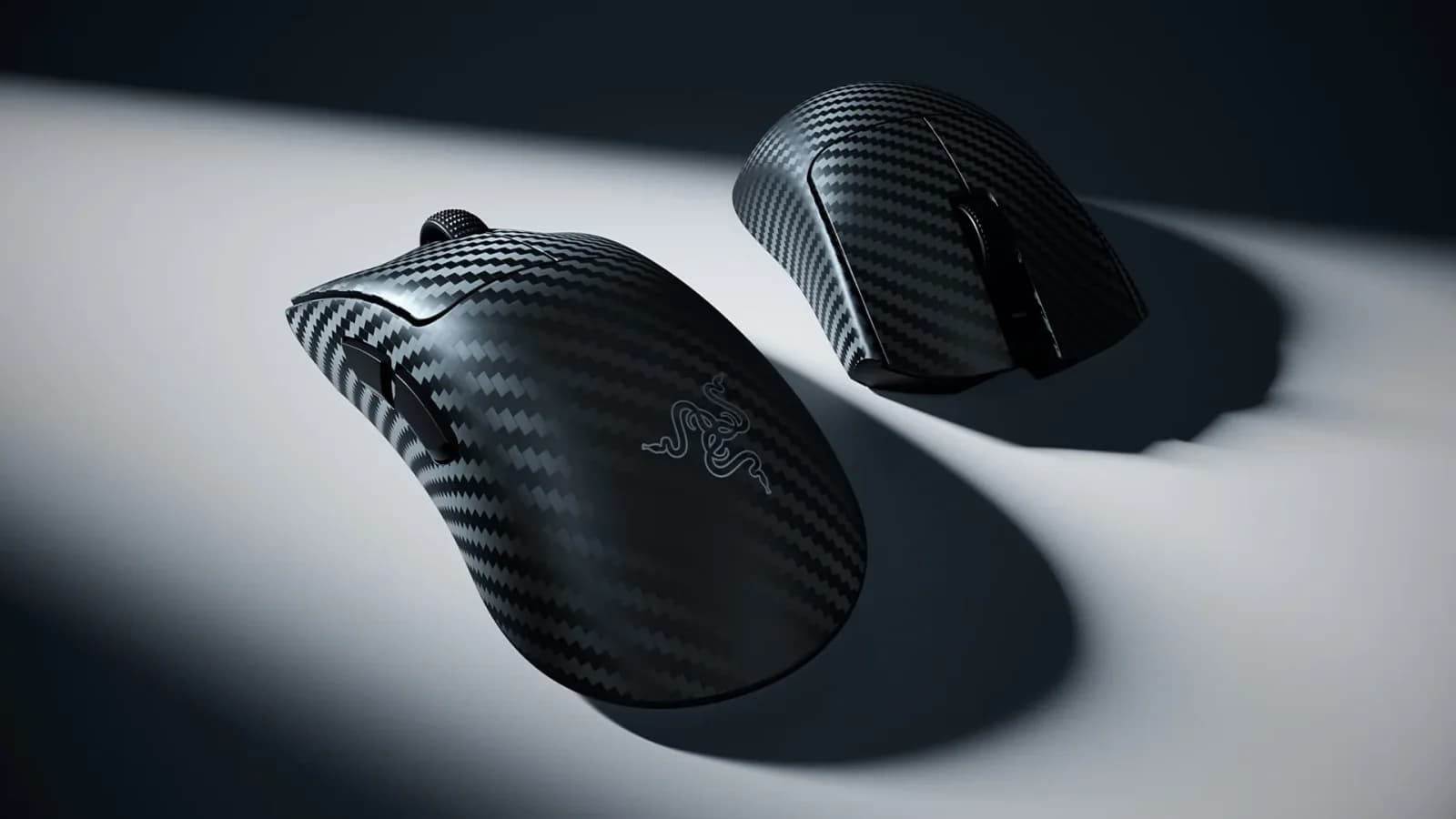
With the Razer Carbon Fiber Collection, we’re bringing this material to two established esports shapes: the Razer Viper V4 Pro Carbon Fiber Edition and Razer DeathAdder V4 Pro Carbon Fiber Edition.
Both retain their familiar competitive shapes, now reimagined with genuine carbon fiber shells that combine distinctive craftsmanship with exceptional strength-to-weight properties.
Real Carbon Fiber: Built Through Precision Engineering
Creating a carbon fiber mouse shell requires careful control over how the material is woven, shaped, and finished. Carbon fiber makes up 40% of each mouse.
Carbon filaments are woven into a 2×2 twill, formed into sheets, and pre-soaked with a precisely controlled amount of resin. The material is then cured under heat and pressure, transforming the composite into a rigid, lightweight shell that holds its intended form.
The weave is left visible, so the pattern you see is the structural material itself, rathher than a print or decorative finish. A clear, UV-cured coating completes the shell, helping protect against sweat, scratches, and everyday wear while preserving its distinctive appearance.
Make Your Setup a Statement
Carbon fiber’s distinctive woven pattern is instantly recognizable, bringing the character of high-performance engineering directly to your setup. With the weave visible beneath a protective coating, the Razer Viper V4 Pro Carbon Fiber Edition and Razer DeathAdder V4 Pro Carbon Fiber Edition make their statement through the material itself, whether on a desk, on stream, or on stage.
Engineered for Strength and Rigidity
Carbon fiber is valued for its exceptional strength-to-weight properties, allowing structures to remain rigid without adding unnecessary mass.
For the Razer Carbon Fiber Collection, this translates into shells designed to resist flex and creaking under grip pressure, maintaining a solid, reassuring feel in hand.
Compared with ABS plastic, a material commonly used in gaming mouse shells, the carbon fiber shell measures up to 53% stronger while maintaining a thin, lightweight construction.
Lightweight by Design
Every gram contributes to how a mouse feels in hand, especially during repeated flicks, tracking adjustments, and rapid repositioning.
The Razer Viper V4 Pro Carbon Fiber Edition weighs 47 g, while the Razer DeathAdder V4 Pro Carbon Fiber Edition weighs 49 g. Both retain their familiar shapes, with carbon fiber construction allowing each mouse to achieve a lighter overall weight.
For gamers who prefer an especially lightweight mouse, the reduced mass means less weight to move during quick adjustments while preserving the grip and shape they’re accustomed to.
Proven Performance at the Core
The Razer Carbon Fiber Collection builds on the competitive foundations of two established esports mice, retaining the technologies and designs that define each model.
The Razer Viper V4 Pro Carbon Fiber Edition carries over the performance of the Razer Viper V4 Pro, including the Razer Focus Pro 50K Optical Sensor Gen-3 and up to 180 hours of battery life. Its carbon fiber construction introduces a new material and weight profile while preserving the performance characteristics of the original.
For the Razer DeathAdder V4 Pro Carbon Fiber Edition, the carbon fiber construction is accompanied by additional performance enhancements. It retains the signature right-handed ergonomic shape of the Razer DeathAdder V4 Pro, pairing its carbon fiber shell with the Razer Focus Pro 45K Optical Sensor Gen-3, up to 180 hours of battery life.
Choose Your Shape: The Razer Carbon Fiber Collection
With the Razer Carbon Fiber Collection, two established esports designs take on a new identity through genuine carbon fiber craftsmanship. The collection brings the distinctive character and engineering advantages of carbon fiber to the competitive performance at the heart of each mouse.